

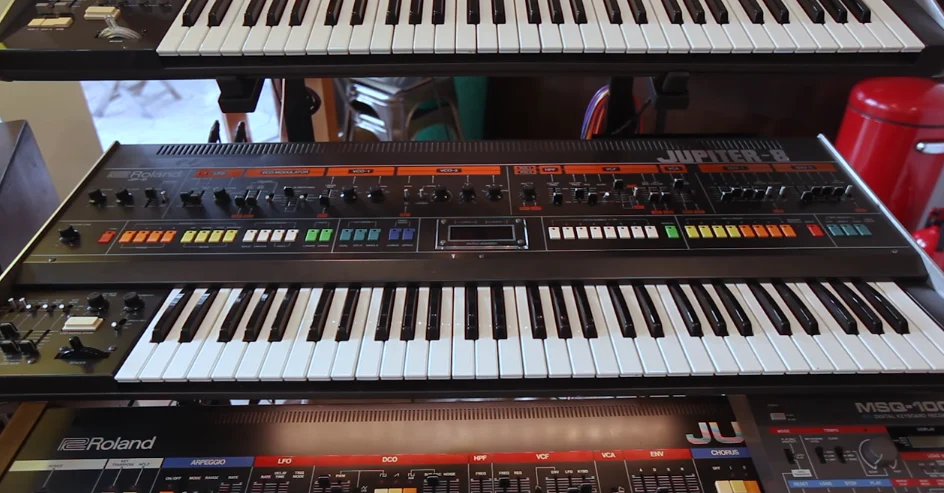
Acme Synthworks has officially released a comprehensive preview of what is being described as the world’s first fully realized eight-voice clone of the legendary Roland Jupiter-8 (JP-8) synthesizer. The announcement, accompanied by a high-fidelity sound demonstration, marks a significant milestone in the boutique synthesizer market, targeting a specific niche of audiophiles and professional musicians who seek the authentic analog experience of the 1980s without the prohibitive costs and maintenance issues associated with vintage hardware. While the company confirmed that the prototype design is approximately 95% complete, they also issued a candid statement regarding the current feasibility of a commercial rollout, noting that they currently lack the necessary resources to transition the project from a laboratory prototype into a mass-marketed consumer product.
The Roland Jupiter-8, originally released in 1981, is widely considered one of the most influential synthesizers in the history of electronic music. Its distinct sonic character, defined by its discrete voltage-controlled oscillators (VCOs) and the iconic IR3109 filter chip, has graced countless hit records by artists ranging from Duran Duran and Howard Jones to Tangerine Dream and Queen. In the decades since its discontinuation in 1984, the Jupiter-8 has become a "holy grail" for collectors, with used market prices often exceeding $30,000 for well-maintained units. This scarcity and extreme valuation have fueled a decades-long demand for a faithful hardware clone that replicates the original’s architecture, scale, and tactile interface.
Technical Specifications and Development Progress
The Acme Synthworks project distinguishes itself from previous attempts at recreating the Jupiter-8 by focusing on a full-size, eight-voice architecture. While other manufacturers have produced digital emulations or smaller-scale analog "tributes," Acme’s prototype aims for complete aesthetic and functional fidelity. The eight-voice polyphony is a critical component of the Jupiter-8’s identity; the original was celebrated for its ability to layer sounds and perform complex chords without the voice-stealing limitations of its predecessors.
According to technical briefs provided by the developer, the prototype utilizes a discrete analog signal path designed to mirror the behavior of the original Roland circuitry. This includes the implementation of dual oscillators per voice, cross-modulation capabilities, and a filter section that seeks to emulate the resonance and slope characteristics of the IR3109. The "95% finished" status suggests that the core synthesis engine, voice allocation logic, and control surface integration are functional, with only minor firmware refinements and mechanical housing adjustments remaining.
The sound demonstration released by Acme Synthworks focuses on the raw output of the machine, intentionally omitting verbal commentary to allow the synthesizer’s harmonic profile to speak for itself. Listeners have noted the prototype’s ability to replicate the "warmth" and "instability" of vintage analog oscillators—traits that are often lost in modern digital recreations. The demo showcases a variety of classic JP-8 patches, including lush pads, sync leads, and percussive arpeggios, demonstrating a high degree of sonic accuracy.
The Historical Context of the Jupiter-8 Legacy
To understand the significance of the Acme Synthworks clone, one must examine the historical vacuum left by Roland Corporation. While Roland has revisited the Jupiter brand name several times over the last twenty years—most notably with the Jupiter-80 and the Jupiter-X—these modern iterations rely on digital modeling technologies such as Analog Circuit Behavior (ACB) and ZEN-Core. While versatile, these instruments often fail to satisfy the segment of the market that demands a true analog signal path.
The only other significant hardware recreations in recent years have come from boutique outfits and large-scale manufacturers like Behringer. Behringer has teased a "JT-16" (a 16-voice version), but it has yet to reach wide distribution, and its form factor differs from the original’s massive, knobby interface. Another notable competitor is Black Corporation’s ISE-NIN, a desktop module that recreates the Jupiter-8 sound in a compact format. However, Acme Synthworks is positioning its project as a "full-size" clone, implying a one-to-one physical recreation of the original’s legendary interface, which is a major selling point for professional studio environments where ergonomics and tactile feedback are paramount.
Challenges in Boutique Manufacturing
The announcement from Acme Synthworks was tempered by the admission that they "don’t have the resources to turn this into a product right now." This highlights a common hurdle in the high-end synthesizer industry. Building a full-size, eight-voice analog synthesizer is an immensely complex engineering and logistical feat. Each voice requires its own set of calibrated analog components, meaning the manufacturing cost scales linearly with polyphony.
Furthermore, a boutique approach implies high-quality components, such as premium potentiometers, switches, and a heavy-duty chassis, which further drives up the retail price. For a small company like Acme Synthworks, the transition from a working prototype to a production run involves significant capital expenditure for tooling, component sourcing, and assembly line setup. The company’s statement suggests they may be seeking investment, a partnership with a larger manufacturer, or perhaps gauging public interest to launch a crowdfunding campaign.
Industry and Market Reactions
The response from the electronic music community has been one of cautious optimism. Industry analysts suggest that there is a clear "luxury" tier in the synthesizer market that remains underserved. While budget-friendly clones have made analog synthesis accessible to the masses, professional musicians and high-end studios are often willing to pay a premium for a "no-compromise" instrument that feels and sounds identical to a vintage unit.
"The demand for the Jupiter-8 sound has never waned," says electronic music historian Marcus Thorne. "What we are seeing with Acme Synthworks is an attempt to capture the ‘soul’ of the instrument in a way that mass-produced modules often miss. The challenge is not just making it sound right, but making it feel like a $10,000 instrument. If they can solve the production bottleneck, they are looking at a product that could define the high-end boutique market for the next decade."
Chronology of the Clone Movement
The path to a viable Jupiter-8 clone has been decades in the making:
- 1981-1984: Roland produces approximately 2,000 to 3,000 Jupiter-8 units.
- 1990s-2000s: The JP-8 gains legendary status as vintage prices begin to climb. Digital plugins (like Arturia’s Jup-8 V) become the primary way for musicians to access the sound.
- 2015: Roland releases the JP-08 Boutique module, a 4-voice digital recreation that proves the massive market interest in the JP-8 aesthetic.
- 2020-2023: Several independent developers begin teasing "discrete" analog voice boards designed to replace failing parts in original Jupiter-8s, laying the groundwork for a full clone.
- 2024: Acme Synthworks unveils the first fully-functional 8-voice prototype that replicates the original scale and architecture.
Broader Implications for the Music Technology Industry
The emergence of the Acme Synthworks prototype signals a broader trend in music technology: the "democratization of the elite." For years, the Jupiter-8 was a tool reserved only for the world’s most successful artists and wealthiest collectors. If a boutique clone reaches the market—even at a premium price point of $4,000 to $6,000—it would effectively bring a "holy grail" sound back into the hands of working professionals.
Moreover, the success of such a project could encourage other boutique developers to tackle other "un-clonable" legends, such as the Yamaha CS-80 or the Rhodes Chroma. It represents a shift away from the "miniaturization" trend of the 2010s toward a "maximalist" revival, where the size and physical presence of an instrument are valued as much as its internal circuitry.
As of this report, Acme Synthworks has not provided a specific timeline for when more details or a potential pre-order phase might begin. Interested parties are being directed to the company’s official website for future updates. The industry now waits to see if the final 5% of development—and the formidable challenge of manufacturing—can be overcome to bring this ambitious project to the global stage. For now, the prototype remains a testament to the enduring legacy of 1980s analog design and the persistent drive of modern engineers to capture the "lightning in a bottle" that was the Roland Jupiter-8.
 Ali Ikhwan