

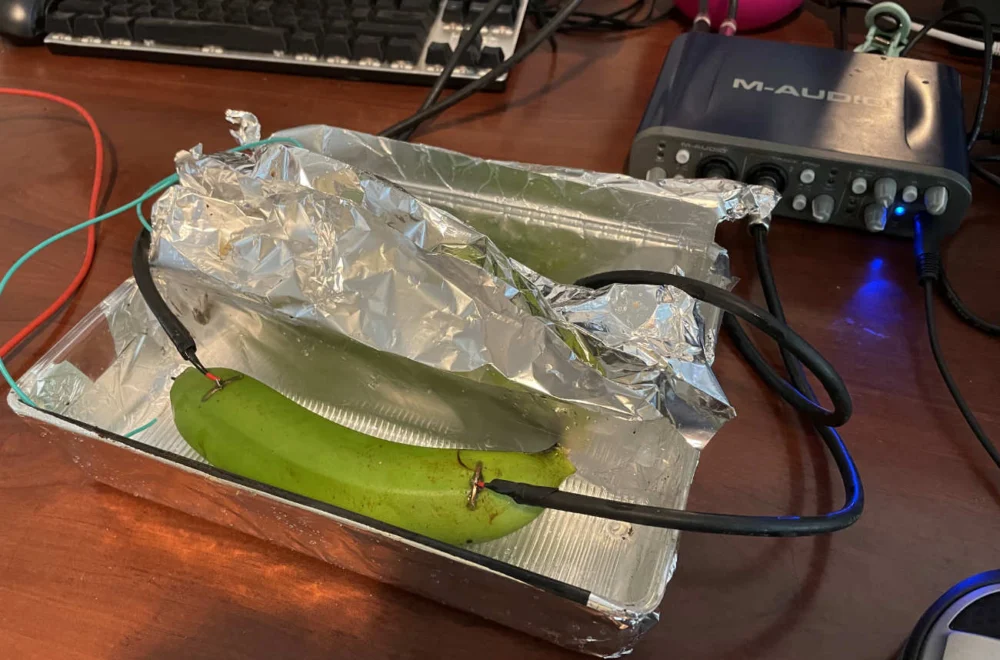
The long-standing debate regarding the efficacy of high-end "audiophile" cables has reached a new level of scrutiny following a series of unconventional blind listening tests. Within the high-fidelity audio community, proponents often argue that premium materials, specialized shielding, and exotic manufacturing processes are essential for maintaining signal integrity and sonic "warmth." However, recent empirical experiments conducted by independent researchers and audio enthusiasts suggest that the human ear may be incapable of distinguishing between professional-grade copper wiring and absurd alternatives, including wet mud and fruit.
A significant portion of this discourse originated from a detailed investigation hosted on diyAudio, a prominent forum dedicated to audio engineering and high-end sound reproduction. In a thread titled "Copper wire vs. bananas vs. mud," a community member organized a controlled listening test designed to challenge the necessity of expensive interconnects. The methodology involved recording audio signals passed through three distinct mediums: standard high-quality copper wire, a container of wet mud, and a physical banana.
Methodology and Statistical Outcomes of the diyAudio Experiment
The experiment was structured as a blind test to eliminate visual bias and the "placebo effect" often associated with luxury branding. Participants were provided with several audio files: the original source material and re-recorded versions of that source after it had been routed through the different conductive mediums. To ensure the integrity of the test, the organizers encouraged participants to listen using their own high-end home systems, focusing specifically on perceived nuances in clarity, frequency response, and spatial imaging.
The results, once tabulated, revealed a striking lack of consensus among the self-identified audiophiles. The distribution of guesses regarding which file corresponded to which medium was essentially random. Statistically, participants were no more likely to identify the "mud" or "banana" recordings than they were to identify the copper wire. This outcome suggests that for line-level signals over short distances, the physical composition of the conductor—provided it maintains electrical continuity—has a negligible impact on the audible characteristics of the sound.

While the "mud" experiment may seem anecdotal, it aligns with a broader history of skepticism within the audio industry. In 2008, a famous (though less formally documented) test reportedly showed that a group of audiophiles could not distinguish between expensive Monster Cables and a common wire coat hanger. The recent diyAudio test serves as a modern, digitally verifiable iteration of this skepticism, providing a data-driven look at the limits of human psychoacoustics.
The Role of Carrots and Improvised Connectors
The exploration of unconventional conductors has not been limited to forum threads. Julian Krause, a respected audio hardware reviewer known for his technical analysis of audio interfaces, conducted a similar experiment involving carrots. In a video demonstration, Krause utilized pieces of carrots to bridge connections between audio cables, effectively using the vegetable as a makeshift adapter.
Krause’s findings mirrored those of the diyAudio community. In most listening scenarios, the introduction of a biological conductor did not produce a discernable degradation in audio quality that could be identified by the average listener. This phenomenon is explained by the high input impedance of modern audio equipment. Because the receiving device (such as an amplifier or an audio interface) requires very little current to register a voltage change, even a relatively poor conductor like a carrot or a banana can transmit a line-level signal with surprising accuracy over a short distance.
The Digital-to-Analog Converter (DAC) Controversy
The skepticism surrounding cables has naturally extended to other components of the signal chain, most notably Digital-to-Analog Converters (DACs). Proponents of high-end audio often invest thousands of dollars in DACs, claiming they offer superior "soundstages" and "transparency" compared to budget alternatives.
AP Mastering, a professional audio engineering channel, recently conducted a large-scale blind test to address this claim. The study compared a DAC costing several thousand dollars against a budget unit priced in the low hundreds. To ensure the results were robust, the test involved over 1,000 participants, providing significant statistical power.

The results of the AP Mastering study were definitive: there was no statistically significant ability among the participants to distinguish between the high-end unit and the budget unit. In his analysis of the results, the creator of the test noted that modern pro-audio DACs are built around a small selection of high-quality chips produced by companies like ESS Technology and AKM. Because these chips have reached a level of performance that exceeds the limits of human hearing (often featuring a dynamic range and signal-to-noise ratio far beyond what the ear can perceive), the surrounding "boutique" circuitry often adds more to the price tag than to the actual sound quality.
"As there were significantly more than 1000 participants, the statistical power is compelling here," the researcher stated. "It really shows that nobody was able to hear any difference. Audiophiles, just face it, you can’t hear the difference, as good pro audio quality DACs are transparent."
Technical Analysis: Measurement vs. Perception
The tension between the "subjectivist" and "objectivist" camps in the audio world often stems from a misunderstanding of what can be measured versus what can be heard. It is a scientific fact that a banana is a worse conductor than a 99.9% oxygen-free copper cable. If measured with a laboratory-grade oscilloscope or a spectrum analyzer, the signals passed through mud or fruit would undoubtedly show higher resistance and perhaps some minor fluctuations in the noise floor.
However, the "audiophile BS" argument is not based on the claim that all conductors are identical in a laboratory setting. Rather, it is based on the claim that the differences are so minute that they fall well below the threshold of human perception. The "Just Noticeable Difference" (JND) in psychoacoustics suggests that for a human to perceive a change in volume, a difference of approximately 1 decibel (dB) is required. Many of the deviations introduced by "inferior" cables are measured in fractions of a decibel, rendering them effectively silent to the human ear.
Practical Implications for Musicians and Engineers
For electronic musicians and home studio owners, these findings provide a practical framework for purchasing equipment without falling prey to "snake oil" marketing. While the "mud" and "banana" tests show that expensive cables are often unnecessary for sound quality, they do not imply that all cables are equal in a professional environment.

Experts suggest that when choosing cables, the focus should be on durability and interference rejection rather than exotic materials. Key recommendations for audio professionals include:
- Prioritizing Balanced Connections: For studio monitors and microphones, using balanced (XLR or TRS) cables is far more important than the brand of the cable. Balanced cables use phase cancellation to eliminate electromagnetic interference (EMI) and radio frequency interference (RFI), which are much more likely to ruin a recording than the lack of "premium" copper.
- Focusing on Connector Quality: The most common point of failure in an audio system is the physical connector. Investing in cables with high-quality connectors, such as those made by Neutrik or Amphenol, ensures a secure fit and longevity under heavy use.
- Cable Length Management: High-capacitance cables can act as a low-pass filter, rolling off high frequencies if the cable run is excessively long (usually over 20-30 feet). Keeping cable runs as short as possible is a scientifically proven way to maintain signal integrity.
- Shielding in High-Interference Areas: In environments with many power bricks, wireless routers, and computers, well-shielded cables are necessary to prevent "hum" and "buzz." This is a functional requirement of the cable’s construction, not a mystical property of the conductor.
The Economic Impact of Audio Marketing
The "audiophile" market is a multi-billion dollar industry that thrives on the premise that there is always a higher level of "fidelity" to be achieved through incremental hardware upgrades. When tests demonstrate that a $1,000 cable performs identically to a $10 cable (or a piece of fruit) in a blind test, it challenges the economic foundations of high-end audio retail.
Critics of the industry argue that the marketing of these products relies on "confirmation bias," where a consumer who has spent a large sum of money on a product "hears" an improvement because they expect one. This psychological phenomenon is well-documented in various luxury markets, from wine tasting to high-end watches.
Conclusion
The series of experiments involving copper, mud, bananas, and carrots serves as a provocative reminder of the limitations of human hearing. While the pursuit of perfect sound is a noble endeavor for many enthusiasts, the data increasingly suggests that the "weakest link" in the audio chain is often not the cable, but the listener’s own perception and the acoustic environment of the room.
As digital technology continues to mature, the transparency of audio equipment—from DACs to interconnects—has reached a point where even budget-friendly gear can provide professional-grade results. For the modern musician and audiophile, the evidence suggests that the best investment may not be in "magic" cables, but in acoustic treatment, high-quality transducers (speakers and headphones), and, most importantly, the training of the ears to appreciate the music itself rather than the gear used to play it.
