

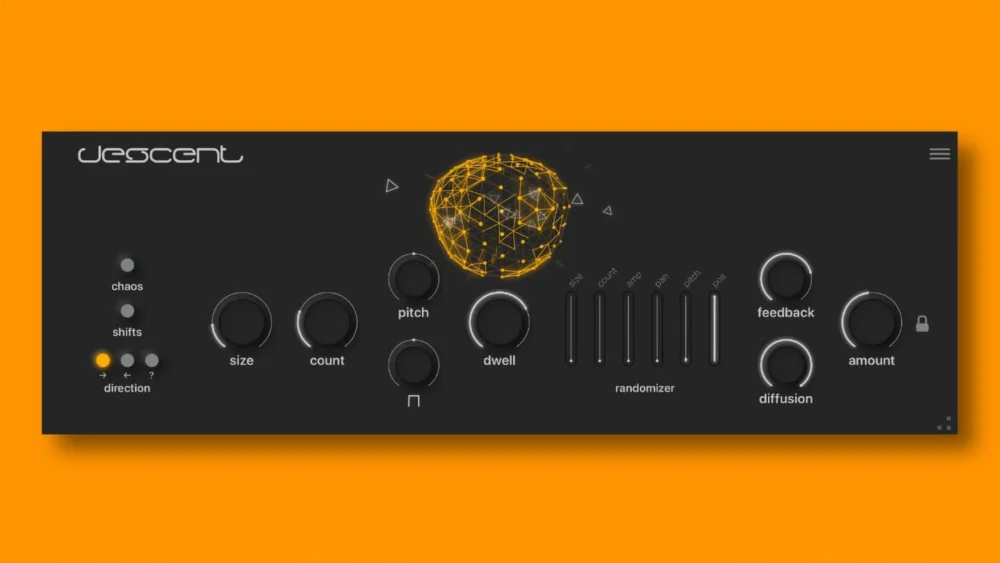
Audio Damage, a prominent developer in the digital signal processing and music software industry, has officially announced the release of Descent, a specialized granular delay and reverb effect designed for Linux, macOS, and Windows environments. This new tool represents a significant addition to the company’s extensive catalog of creative effects, focusing on the transformation of standard audio signals into complex, evolving textures through the application of granular synthesis. By capturing incoming audio and decomposing it into discrete "grains"—ranging from a few individual fragments to dozens of simultaneous streams—Descent allows users to manipulate sound across the dimensions of time and pitch. This architectural approach enables a wide spectrum of sonic outcomes, from subtle rhythmic enhancements and thickening effects to expansive, frozen soundscapes and ethereal, pitch-shifted clouds often associated with modern ambient and cinematic production.
The Mechanics of Granular Transformation
At its core, Descent utilizes granular synthesis, a method of sound synthesis that operates on the micro-temporal level. Unlike traditional delays that repeat an entire signal or reverbs that use feedback networks to simulate space, granular processing breaks the audio into millisecond-long segments. Descent provides the user with granular control over these segments, allowing them to be scattered, re-pitched, and layered.
The plugin’s engine is designed to handle high grain densities, which is essential for creating the "frozen" effect where a single moment of audio is stretched infinitely without the metallic artifacts often found in lower-quality time-stretching algorithms. By varying the pitch of individual grains, Descent can generate "shimmer" effects, a popular technique in contemporary film scoring and electronic music where the reverberant tail of a sound is shifted up an octave or more to create a sense of air and light. Conversely, shifting grains downward can produce dark, cavernous textures suitable for experimental and industrial genres.
Technical Specifications and Platform Compatibility
Audio Damage has positioned Descent as a versatile tool for a broad range of producers by ensuring cross-platform compatibility. The plugin is available for Windows (10 or newer), macOS (10.13 or newer, including native support for Apple Silicon), and Linux (Ubuntu 20.04 or newer). This commitment to Linux support distinguishes Audio Damage from many other mainstream plugin developers, catering to a growing niche of professional musicians and engineers who utilize open-source operating systems for audio production.
The software is delivered in multiple formats, including VST3, AAX, and CLAP (Clever Audio Plugin). The inclusion of the CLAP format is particularly noteworthy; as an open-source standard developed by Bitwig and u-he, CLAP offers improved performance and better integration with modern Digital Audio Workstations (DAWs) compared to older, proprietary formats. Descent also features a vector-based user interface that is fully resizable, ensuring high-fidelity visuals on high-resolution monitors and 4K displays.
Historical Context and Product Evolution
The release of Descent follows a long history of innovation from Audio Damage, a company founded by Chris Randall and Adam Schabtach. Since the early 2000s, the duo has been known for creating "character" plugins—tools that do not merely replicate hardware but offer unique digital manipulations. Descent can be seen as a spiritual successor or a specialized companion to previous Audio Damage offerings such as Discord (a pitch-shifting delay) and Quanta (a full-scale granular synthesizer).
While Quanta is a synthesizer that uses granular engines to generate sound from samples, Descent is an effect processor designed to be placed in an insert or return track within a DAW. This allows it to act upon live input, such as vocals, guitars, or hardware synthesizers, in real-time. The development of Descent reflects a broader industry trend where granular synthesis, once a complex technique reserved for academic computer music, has become an accessible and essential component of the modern producer’s toolkit.

Strategic Pricing and Market Positioning
Audio Damage has introduced Descent with an aggressive pricing strategy. The plugin is currently available at an introductory price of $29 USD, a discount from its standard retail price of $39 USD. This pricing model is consistent with the company’s "no-nonsense" approach to software sales, which includes a lack of intrusive copy protection (using simple license keys instead) and a "buy it once, own it forever" philosophy that avoids subscription-based models.
In the current market, Descent competes with other granular effects such as Output’s Portal, Soundtoys’ Crystallizer, and Arturia’s Efx Fragments. However, Descent’s lower price point and streamlined interface target a segment of the market looking for high-quality results without the steep learning curve or high CPU overhead sometimes associated with more bloated "multi-effect" granular processors.
Implications for Sound Design and Media Composition
The utility of a granular delay and reverb like Descent extends beyond traditional music production into the realms of sound design for film, television, and video games. In these fields, the ability to create "otherworldly" textures from organic sound sources is invaluable. A simple foley recording of a metallic scrape, when processed through Descent’s granular engine, can be transformed into a massive cinematic riser or a haunting background ambience.
The "frozen soundscape" capability is particularly relevant for game audio designers who need to create loopable, non-repetitive environmental textures. By freezing a grain and modulating its position and pitch slightly over time, Descent can generate an infinite variety of sonic backgrounds that do not fatigue the listener’s ear—a common challenge in interactive media.
Technical Analysis of Feature Set
While the official feature list emphasizes the "evolving" nature of the plugin, a technical analysis reveals several key parameters that define Descent’s performance:
- Grain Size and Density: Users can define how large each grain is and how many are active at once. High density leads to smooth, pad-like textures, while low density creates rhythmic, stuttering effects.
- Pitch Manipulation: The ability to pitch-shift grains independently of the original signal’s tempo allows for harmonic layering and dissonant, "glitchy" explorations.
- Temporal Scattering: By randomizing the delay time of individual grains, the plugin avoids the "comb filtering" effect that can occur with static delays, resulting in a more natural and lush spatialization.
- Feedback Loops: Like traditional delays, Descent includes feedback paths, but because the feedback consists of grains rather than a continuous signal, the buildup of sound is more textured and less prone to the harsh oscillation found in analog-style delays.
Industry Response and Future Outlook
Early feedback from the sound design community suggests that Descent is being welcomed for its efficiency and specific focus. Unlike "all-in-one" workstations, Descent is viewed as a "surgical" tool that does one thing exceptionally well. Professional users have noted that the plugin’s low CPU footprint makes it viable for use in large-scale orchestral templates, where dozens of instances of an effect might be required across various tracks.
As Audio Damage continues to update its product line, the release of Descent signals a continued focus on the "AD0xx" series of software, which prioritizes modern coding standards and cross-platform accessibility. The move toward the CLAP format and Linux support suggests that Audio Damage is positioning itself to remain relevant as the landscape of audio production shifts away from the long-dominant VST2 and AU standards.
In conclusion, Descent represents a sophisticated yet accessible entry into the world of granular processing. By combining the characteristics of a delay, a reverb, and a granular synthesizer into a single, affordably priced plugin, Audio Damage has provided musicians and sound designers with a powerful tool for sonic exploration. Its release underscores the ongoing democratization of complex synthesis techniques, placing high-end sound manipulation capabilities within reach of a global audience of creators. As the boundaries between traditional composition and sound design continue to blur, tools like Descent are likely to become staples in the digital studios of the future.
