

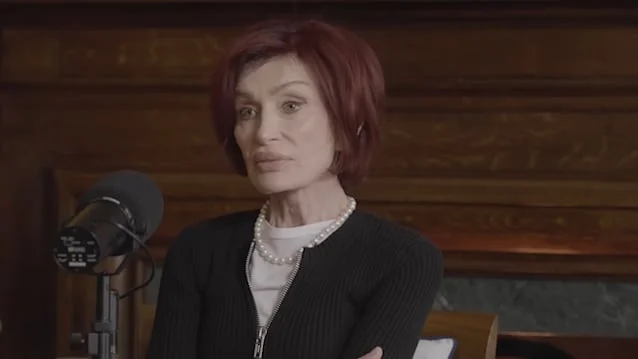
Sharon Osbourne, the formidable matriarch of rock music management and television personality, has officially confirmed that Ozzfest, the pioneering heavy metal and hard rock festival, is slated for a grand return in 2027. The announcement came during her appearance at MIDEM 2026 in Cannes, France, where she expressed a resolute commitment to reviving the beloved traveling festival. This news ignites anticipation among legions of fans who have long awaited the resurgence of a platform that has become synonymous with the spirit of heavy music and the nurturing of emerging talent.
"Yes, absolutely. Yeah, we’re gonna do it," Osbourne declared, her voice resonating with unwavering conviction. The decision to resurrect Ozzfest marks a significant moment for the Osbourne family and the broader music landscape, particularly given the festival’s last iteration in 2018, which was overshadowed by Ozzy Osbourne’s subsequent health struggles. "Well, the last one we did was 2018. It was just a month before Ozzy got sick, and that was at the Forum in L.A. And there was no plans to stop it," she recalled, painting a picture of a festival that was far from its final curtain call. The unforeseen health crisis that befell her husband, the legendary frontman of Black Sabbath, necessitated a pause that has stretched for years.
The conversation surrounding Ozzfest’s future has been a recurring theme, often initiated by Ozzy himself. "Ozzy and I would talk about it, and he’d say, ‘Do you think Ozzfest would work without me?’" Sharon revealed. Her response, however, was always rooted in the festival’s inherent strength as a brand: "’Yeah, it’s a brand. It will work without you.’ And he said, ‘We should do it.’" This dialogue underscores Ozzy’s deep-seated belief in the festival’s enduring legacy and his personal commitment to its continuation, even in his potential absence from the stage.
A Legacy of Heavy Music and Emerging Talent
Ozzfest’s genesis can be traced back approximately three decades, establishing itself as a groundbreaking national music festival exclusively dedicated to the hard rock and heavy metal genres. Prior to Ozzfest, large-scale, touring festivals of this magnitude and singular focus were virtually nonexistent in the United States. The festival’s innovative model, often described as a "summer camp for kids" by Sharon Osbourne, provided an invaluable platform for developing artists to perform alongside established titans of the industry. This crucial element of talent discovery was a cornerstone of Ozzfest’s identity, differentiating it from many other music events that prioritized established headliners above all else.
"It was something Ozzy was very passionate about: giving young talent a stage in front of a lot of people," Sharon explained in a recent interview with Billboard magazine, where she also disclosed preliminary discussions with Live Nation, a prominent live entertainment company, regarding Ozzfest’s potential revival. "We really started metal festivals in this country. It was [replicated but] never done with the spirit of what ours was, because ours was a place for new talent. It was like summer camp for kids." This ethos of fostering new blood within the metal scene has been a defining characteristic of Ozzfest, contributing to its cult status and enduring appeal.
Evolving Visions for a New Era
Sharon Osbourne has articulated a desire to evolve Ozzfest’s musical palate for its next incarnation. "I’d like to mix up the genres," she stated, hinting at a broader, more inclusive approach to the festival’s programming. This proposed diversification suggests a departure from Ozzfest’s traditional, genre-specific confines, potentially incorporating elements of punk, alternative rock, or even more avant-garde heavy music subgenres. Such a move could attract a wider demographic of music enthusiasts and inject fresh energy into the festival’s established format, while still honoring its core heavy music roots.
The history of Ozzfest as a traveling festival has seen various configurations. Since its last full-scale touring engagement in the U.S. in 2007, the festival has adopted different formats. The 2007 edition was notably a "free" event, a significant gesture to fans. Following this, it transitioned to one-off events, a hiatus in 2009, and a limited six-city run in 2010. The 2017 Ozzfest, an all-day affair, drew over 17,000 attendees, with Ozzy Osbourne headlining. This was also the year Ozzfest merged with Slipknot’s Knotfest for a two-day heavy metal spectacle, a collaboration that showcased the synergy between two of metal’s most influential acts.
The most recent Ozzfest event, a special New Year’s Eve performance on December 31, 2018, at The Forum in Los Angeles, attracted 12,465 fans. Produced by Live Nation, this single-night festival generated $1.2 million in ticket sales, with prices ranging from $59.50 to $179.50. The lineup was a testament to Ozzfest’s enduring appeal, featuring Ozzy Osbourne, Rob Zombie, Marilyn Manson, Jonathan Davis of Korn (in a solo set), and Body Count. A second stage outside the main venue hosted Zakk Sabbath, a Black Sabbath tribute band fronted by Ozzy’s long-time guitarist Zakk Wylde.
Challenges and Considerations: The Business of Ozzfest
The financial realities and logistical complexities of orchestrating a festival of Ozzfest’s caliber have been a recurring topic of discussion for the Osbourne family. In a January 2024 episode of "The Osbournes" podcast, Sharon addressed the perennial challenge of managing band and manager expectations regarding compensation. "It always comes down to" whether bands and managers are "realistic" about their financial demands, noted their daughter Kelly. Sharon concurred, expressing frustration over what she perceives as unrealistic financial expectations from management teams. "It’s great. That’s what we wanted – everybody to do spin-offs and do their own festivals, and it’s great. It’s great for fans; it’s brilliant. But why is it when it comes to us that everybody thinks that we are trillionaires, and so that every manager who wants their band on our festival wants one of the fucking trillions they think we’ve got to put on the festival?" she lamented.
Ozzy himself raised the possibility of focusing on lesser-known acts to mitigate escalating costs, a strategy Sharon acknowledged has merit, particularly for a "baby stage" designed to showcase new talent. However, she emphasized the indispensable need for headliners to draw substantial crowds. "You can do it for a baby stage, but you still need the headliners. It’s always great to have the baby stage, I mean, that’s what it’s all about – breaking new bands. That’s why we did it," she reiterated. The transition for burgeoning bands from smaller stages to the massive audiences of a main festival stage presents a significant hurdle, as Sharon pointed out: "It’s very hard for acts who are not known to suddenly go and be in front of 50,000 people on a main stage at a festival and understand what they’re meant to do. It’s very intimidating. You could have maybe five thousand people at that baby stage, and then to go from five to fifty to sixty thousand people, and it’s really, really hard for baby bands. They’ve pay their dues anyway. That’s what it’s all about."
The influence of Ozzfest on the modern festival circuit has not gone unnoticed. Jack Osbourne, Sharon and Ozzy’s son, observed that many recently launched rock festivals in the United States appear to be "basically just Ozzfest." Sharon embraced this observation as a testament to Ozzfest’s pioneering impact. "Well, it’s the same bands just going around and around and around. But that’s what’s so good, because we started something, people have taken it, and it’s still great for the genre. It’s really good," she stated, highlighting the positive ripple effect on the genre’s overall health and accessibility.
The Financial Straits of Ozzfest’s Past
In an earlier discussion on "The Osbournes" podcast in October 2023, Sharon provided a candid explanation for Ozzfest’s eventual hiatus. She described the festival as a "very weird beast" where personal relationships with bands were often strained by the business demands of their managers. "All the bands were our mates, but the managers were greedy and for some reason they thought that we were making billions on it and we weren’t," she explained. "We made a profit. But it was not like – we couldn’t retire on it. And managers and agents wanted more and more and more, and it just wasn’t cost effective anymore. We stopped, because it just wasn’t cost effective."
Sharon recounted a specific incident from an early Ozzfest, potentially the second or third iteration, where a band refused to take the stage until their demand for an additional $10,000 was met. When pressed by Jack to identify the band, Sharon named Glenn Danzig. Jack’s incredulous response, "Why are you gonna protect that twat?" underscored the contentious nature of such negotiations. Despite the pressure, Sharon asserted that she ultimately did not concede to the demand, stating, "They went on and played, and I went, ‘Fuck you. You signed a contract, your agent agreed it, and you’re just gouging.’" This anecdote vividly illustrates the operational challenges and the tough decisions Sharon Osbourne had to make to keep Ozzfest viable.
The Broader Impact and Future Implications
The confirmation of Ozzfest’s return in 2027 signals a significant development for the heavy music community. The festival’s legacy is deeply intertwined with the evolution of the genre, providing a crucial incubator for bands and a unifying experience for fans. Its absence has been keenly felt, and its revival, particularly with Sharon Osbourne’s stated intention to innovate and expand its musical scope, holds the potential to revitalize the festival landscape.
The challenge of balancing artistic integrity with financial viability remains a constant for any large-scale event. However, Sharon Osbourne’s determination, coupled with her deep understanding of the music industry, suggests a well-considered approach to the festival’s relaunch. The involvement of Live Nation, a powerhouse in concert promotion and production, further bolsters the likelihood of a successful and impactful return.
As 2027 approaches, the music world will be watching closely to see how Ozzfest redefines itself. Will the genre-bending vision translate into a cohesive and compelling experience? Can the festival navigate the complexities of artist fees and managerial demands to offer a cost-effective yet star-studded lineup? The answers to these questions will shape the next chapter of a festival that has not only showcased iconic talent but has also played an instrumental role in shaping the careers of countless musicians and the broader culture of heavy music. The return of Ozzfest is more than just a concert series; it is a reaffirmation of a genre’s enduring power and a testament to the tenacity of the Osbourne family’s commitment to the music they love.
