

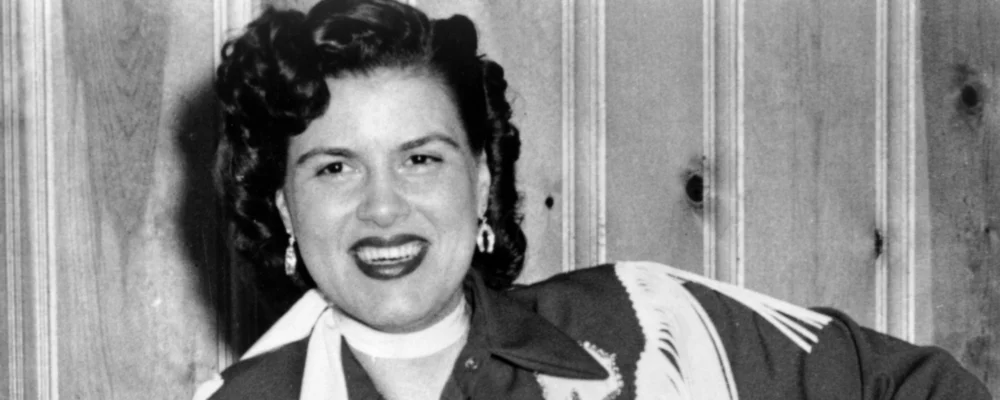
On March 3, 1963, the Soldiers and Sailors Memorial Hall in Kansas City, Kansas, hosted a benefit concert that would inadvertently become a somber milestone in the history of American music: the final public performance of country music icon Patsy Cline. Gathered to raise funds for the family of "Cactus" Jack Call, a prominent local disc jockey who had perished in a vehicular accident in January of that year, the event featured a roster of the era’s most significant country stars. While the evening was intended to be a tribute to a fallen friend, it ultimately served as the final curtain call for Cline and several of her colleagues, who would lose their lives in a plane crash just two days later.
The Context of the Kansas City Benefit
The benefit concert was organized as a gesture of solidarity within the country music community. "Cactus" Jack Call was a beloved figure at KCKN radio, known for his promotion of the "Nashville Sound" in the Midwest. His sudden death left a young family in financial uncertainty, prompting his peers in Nashville to organize a massive three-show event.
Patsy Cline was not an original fixture of the lineup. Despite her growing fame, her schedule was demanding, and she was battling a severe bout of the flu during the first week of March. However, as advance ticket sales for the Kansas City event lagged, promoters reached out to Cline’s management, recognizing that her star power was essential to ensure the fundraiser’s success. At 30 years old, Cline was at the absolute zenith of her career, having transitioned from a regional country singer to a cross-genre superstar with hits that resonated on both the country and pop charts. She accepted the invitation, traveling to Kansas City despite her illness, driven by a professional commitment that had defined her rise to the top of the industry.
A Career at Its Zenith: Patsy Cline in 1963
To understand the impact of the March 3 performance, one must look at Cline’s standing in the music industry at the time. By 1963, she had become the first female country artist to headline her own show in Las Vegas and was a primary driver of the "Nashville Sound"—a polished, sophisticated production style that utilized strings and background vocals to appeal to a broader audience.
Following her recovery from a near-fatal car accident in 1961, Cline had released a series of monumental hits under the guidance of producer Owen Bradley. "I Fall to Pieces" had reached number one on the country charts and crossed over to the Billboard Hot 100. This was followed by Willie Nelson’s "Crazy," which became her signature song, and "She’s Got You." At the time of the Kansas City concert, she was promoting her latest work and was arguably the most famous woman in country music, breaking barriers for female performers who had previously been relegated to secondary status on tours.
Chronology of the Final Performance: March 3, 1963
The benefit at the Soldiers and Sailors Memorial Hall was structured as a marathon of talent, featuring three separate shows scheduled for 2:00 PM, 5:15 PM, and 8:00 PM. The lineup included a "who’s who" of the Grand Ole Opry: George Jones, Dottie West, Billy Walker, Cowboy Copas, and Hawkshaw Hawkins.
Despite her high fever and persistent cough, Cline insisted on fulfilling her commitment. Eyewitness accounts from the day describe her as appearing pale and exhausted backstage, yet transforming the moment she stepped into the spotlight. For her final set, she wore a signature white chiffon dress.
The setlist for these final performances included her major hits, closing with "I’ll Sail My Ship Alone," a song originally recorded by Moon Mullican. Observers noted that her voice remained remarkably powerful and clear, showing no signs of the respiratory strain she was under. Dottie West, who performed on the same bill, later recalled that Cline’s performance was "electric," and that the audience in Kansas City was unaware they were witnessing the final notes of a legend.
Premonitions and the Fateful Decision
The narrative of Patsy Cline’s final days is often overshadowed by her reported premonitions of an early death. Following her 1961 car crash, which had left her with visible scars and chronic pain, Cline frequently spoke to friends about her belief that she would not live much longer.
Loretta Lynn, a close friend and mentee, later documented conversations where Cline suggested her time was short. During the Kansas City trip, these sentiments became even more pronounced. After the final show on the night of March 3, Dottie West and her husband, Bill, offered Cline a ride back to Nashville in their car. The drive would have been long, but it was a safer alternative to the small private aircraft Cline was scheduled to board.
Cline reportedly declined the offer, famously telling West, "Don’t worry about me, Dottie. When it’s my time to go, it’s my time to go." She opted to stay in Kansas City to rest and wait for the private plane piloted by her manager, Randy Hughes, which was also carrying fellow performers Cowboy Copas and Hawkshaw Hawkins.
The Timeline of the Tragedy: March 4–5, 1963
The departure from Kansas City was delayed by a day due to inclement weather. On Monday, March 4, thick fog and heavy rain grounded all flights at the local airport. Cline and her companions spent an extra night at the Town House Hotel, waiting for a window of clear sky.
The final timeline of the flight on Tuesday, March 5, 1963, is as follows:
- 12:30 PM: The Piper PA-24 Comanche (registration N7000P) departs Fairfax Airport in Kansas City.
- 1:30 PM: The plane lands in Rogers, Arkansas, to refuel.
- 3:00 PM: The group arrives in Little Rock, Arkansas, where they wait for weather updates.
- 5:00 PM: The flight continues toward Tennessee, landing at Dyersburg Municipal Airport at approximately 6:00 PM.
- 6:07 PM: Despite warnings from the airfield manager about low visibility and high winds, Randy Hughes decides to push through the final leg to Nashville.
- 6:20 PM: The aircraft disappears from radar.
The plane crashed in a heavily wooded area near Camden, Tennessee, approximately 90 miles west of Nashville. There were no survivors. Investigations later determined that the pilot, Randy Hughes—who was not trained in instrument flight rules (IFR)—likely became disoriented in the severe weather, leading to a "graveyard spin" into the terrain.
Impact on the Country Music Industry
The loss of Patsy Cline, Cowboy Copas, and Hawkshaw Hawkins in a single event sent shockwaves through the music world. Copas, known as the "Country Gentleman," and Hawkins, a baritone star and husband of Opry legend Jean Shepard, were major figures in their own right.
The immediate reaction in Nashville was one of profound grief. The Grand Ole Opry held a memorial service that drew thousands of fans and industry professionals. For the first time, the industry was forced to grapple with the logistical risks of the heavy touring schedules that had become standard for top-tier talent.
The death of Cline, in particular, created a vacuum in the industry. She had been the primary bridge between rural country and urban pop. Her death occurred just as she was preparing to record more material that likely would have further cemented her crossover appeal.
Data and Historical Significance
The 1963 crash remains one of the most significant aviation accidents in the history of entertainment, often compared to the 1959 "Day the Music Died" crash that killed Buddy Holly, Ritchie Valens, and The Big Bopper.
Statistically, the event marked a turning point for the Grand Ole Opry’s management of its stars. In the years following the crash, there was an increased emphasis on professional travel arrangements and a move away from "barnstorming" in small, private aircraft piloted by managers or the artists themselves.
From a commercial perspective, Cline’s posthumous success was unprecedented. Her Greatest Hits album, released four years after her death, eventually earned Diamond certification, selling over 10 million copies. She became the first woman to be inducted into the Country Music Hall of Fame in 1973, a testament to the enduring influence of the career that ended in a Kansas City auditorium.
The Legacy of the Kansas City Show
Today, the Soldiers and Sailors Memorial Hall stands as a site of pilgrimage for music historians. The benefit concert for Cactus Jack Call is remembered not just for the tragedy that followed, but as a demonstration of the communal spirit of early country music.
The fact that Cline performed three sets while ill, just to help the family of a radio DJ she respected, has become a central part of her lore. It highlights the professional grit that defined her character. While the recordings of that night are lost to time—as the show was not officially taped—the accounts of those present remain a vital record of the final moments of a woman whose voice continues to define the emotional landscape of American music.
The events of March 3, 1963, serve as a reminder of the fragility of life at the peak of fame. Patsy Cline’s final notes in Kansas City were a gift to a grieving family, delivered by a woman who, perhaps sensing her own end, chose to spend her final hours on stage, doing exactly what she was born to do.
