

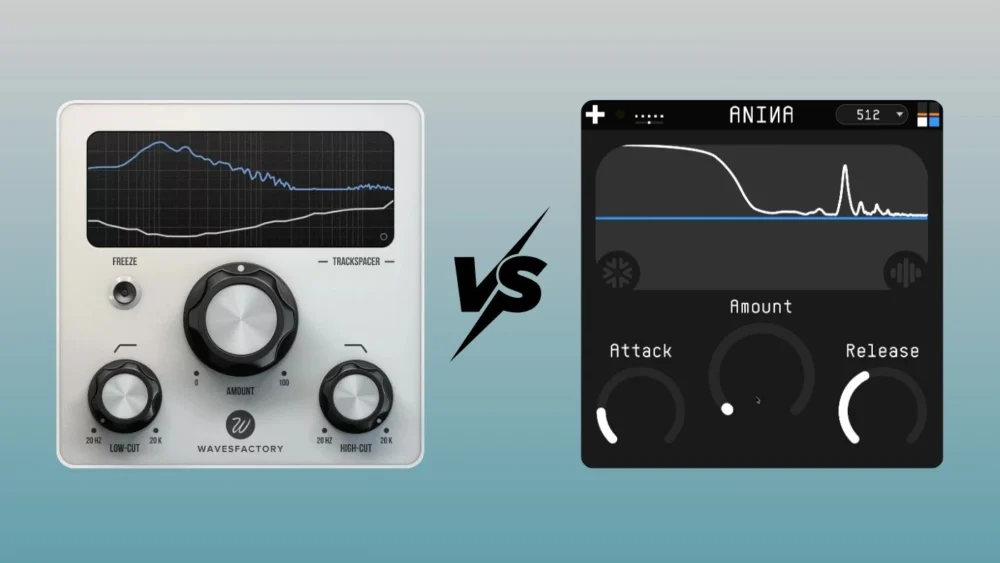
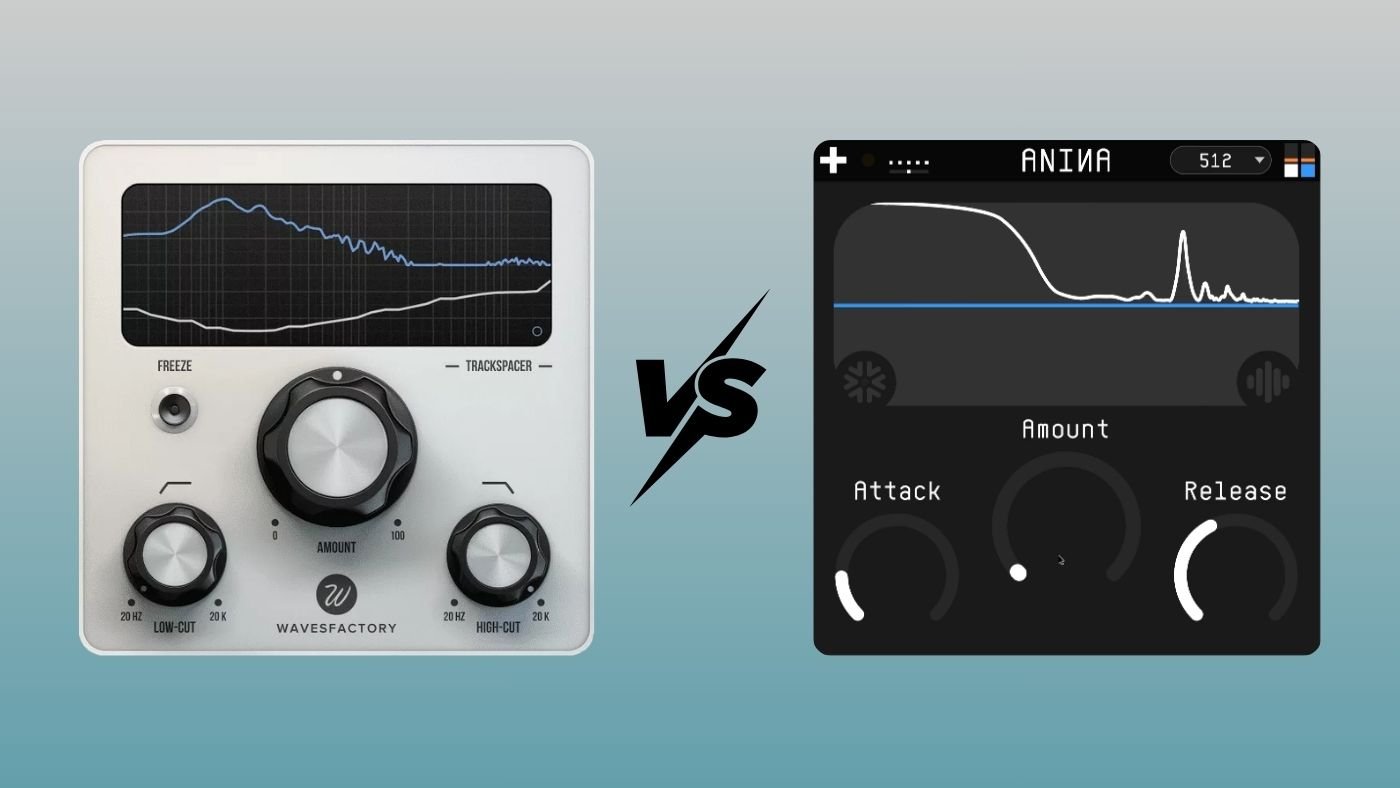
The once exclusive domain of advanced audio processing, spectral ducking, has undergone a significant democratization, fundamentally altering how music producers approach frequency masking and mix clarity. For years, Wavesfactory’s TrackSpacer stood as the industry benchmark, a commercial plugin priced at $59, revered for its ability to surgically carve space in a busy mix where traditional sidechain compression proved too blunt. However, a recent surge of innovation from both independent developers and academic institutions has introduced powerful, free alternatives, challenging the established order and making sophisticated spectral processing accessible to all. This development marks a pivotal moment, empowering a wider spectrum of creators to achieve polished, professional-grade mixes without financial barriers.
The Evolution of Mix Clarity: From Sidechain to Spectral Ducking
The perennial challenge for audio engineers and music producers lies in ensuring that individual elements within a track occupy their distinct sonic space without clashing, a phenomenon known as frequency masking. Historically, sidechain compression emerged as a prevalent technique to address this. Originating in radio broadcasting for ducking music under spoken word, sidechain compression applies a global volume reduction to a target track whenever a specific source signal (the "sidechain") exceeds a threshold. While effective for creating rhythmic "pumping" effects, particularly between kick drums and basslines, its inherent limitation is its bluntness: it attenuates the entire frequency spectrum of the target signal, regardless of whether all frequencies are actually clashing. This often leads to a noticeable "sucking" sound or a loss of perceived power in the ducked instrument, compromising the mix’s transparency and energy.
The advent of dynamic equalization provided a stepping stone, allowing for frequency-specific attenuation triggered by a threshold. However, spectral ducking represents a far more sophisticated evolution. Instead of applying a static EQ curve or a broadband volume reduction, spectral ducking plugins perform real-time frequency analysis of both the sidechain source and the target track. Utilizing algorithms like the Fast Fourier Transform (FFT), they identify the specific frequency bands where masking occurs. Subsequently, an inverse EQ curve is generated and dynamically applied only to those clashing frequencies on the target track, allowing non-clashing frequencies to remain untouched. This surgical precision results in a far more transparent and natural separation between instruments, preserving the harmonic integrity and perceived presence of each element while ensuring optimal clarity for lead components like vocals or snares.
Wavesfactory’s TrackSpacer, released several years ago, pioneered this dedicated plugin category, quickly becoming an indispensable tool for many professional and amateur producers alike. Its ease of use, coupled with its effective 32-band internal EQ that dynamically reacted to sidechain signals, established it as the go-to solution for unmasking. Prior to the recent free offerings, the market for spectral ducking or unmasking tools was dominated by commercial products. Besides TrackSpacer, other notable contenders include Techivation M-Blender, Sonible’s smart:comp 2 and pure:unmask (which leverage AI for intelligent processing), Waves Curves Resolve, iZotope Neutron’s Unmask module (part of a larger mixing suite), and UnitedPlugins VoxDucker. These solutions typically range in price from $59 to $199, positioning them as significant investments for many independent producers or those operating on tight budgets. The financial barrier, while justifiable for professional-grade tools, limited access to this advanced mixing technique for a considerable segment of the creative community.
A Timeline of Free Innovation in Spectral Ducking
The landscape began to shift demonstrably with the emergence of powerful, no-cost alternatives. This timeline highlights the key releases that have reshaped the accessibility of spectral ducking:
-
March 2024: TheMasker by LIM (Laboratory of Music Informatics, Milan University)
- This project, born from the "Development of Technologies for Music Production" course at Milan University, marked one of the first significant free spectral ducking plugins. Developed by students, it demonstrated the potential for academic research to directly benefit the wider music production community. Its release as beta software underlined its ongoing developmental nature but immediately provided a viable, free option.
-
November 2024: Florah Lite by Ewan Bristow
- Independent developer Ewan Bristow introduced Florah Lite, a spectral shaping plugin that offered promising spectral ducking capabilities. While innovative, it came with a significant caveat: it required PlugData, a Pure Data-based environment, to run. This additional setup step proved to be a "dealbreaker" for many users, as evidenced by community feedback, highlighting the demand for standalone, user-friendly solutions.
-
February 20, 2026: ANINA by Ewan Bristow
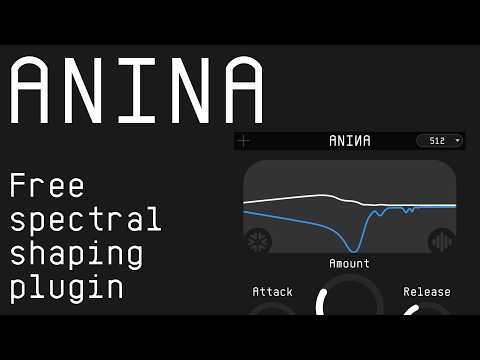
- Responding directly to the feedback received for Florah Lite, Ewan Bristow launched ANINA. This release was a game-changer, presenting a fully standalone plugin available in AU, VST3, and CLAP formats for macOS, Windows, and Linux. ANINA was not merely a repackaged Florah Lite but a comprehensive upgrade, solidifying Bristow’s position as a key innovator in accessible audio tools.
Deep Dive into the Free Contenders
The two leading free spectral ducking plugins, ANINA and TheMasker, each offer distinct features and approaches, providing producers with robust alternatives to commercial offerings.
ANINA by Ewan Bristow (Released February 20, 2026)
ANINA represents a significant leap forward in free spectral processing. Building upon the foundational work of Florah Lite, Bristow engineered ANINA as a fully standalone plugin, eliminating the PlugData dependency that deterred many users from its predecessor. This move alone addressed a major user pain point and positioned ANINA as an immediate contender for widespread adoption.
Technically, ANINA is exceptionally powerful. It boasts up to 1024 bands of compression, a stark contrast to TrackSpacer’s 32 bands. This vastly increased band count translates directly into finer spectral resolution and more surgical precision. With 1024 bands, ANINA can analyze and react to extremely narrow frequency ranges, ensuring that only the most precise areas of clash are attenuated, leading to unparalleled transparency in the mix. The plugin also incorporates low and high filter-signal cutoff controls, allowing users to define the frequency range within which the ducking effect operates, further refining its precision. A real-time visual display provides critical feedback, illustrating the input and filter spectra, enabling producers to see exactly how the plugin is influencing the audio.
Key parameters like Attack, Amount, and Release govern the behavior of the spectral curve. "Attack" emphasizes transients, allowing for dynamic reactions to sharp signal peaks. "Amount" controls the depth of the frequency reduction, from subtle unmasking to aggressive ducking. "Release" dictates the decay time of the effect, influencing how quickly the attenuated frequencies return to their original level, thereby shaping the perceived transparency and fluidity of the ducking. An adjustable block size parameter offers a trade-off between tighter timing response (smaller block size) and superior frequency resolution (larger block size), allowing users to optimize the plugin for different mixing scenarios.

Beyond its core ducking capabilities, ANINA distinguishes itself with powerful sound design features. The "Freeze" button allows users to capture a spectral "fingerprint" of the sidechain signal, applying it as a static processing shape to the target track. This opens up creative possibilities, enabling unique tonal shaping or filtering based on an external source. The "Delta" function is another innovative addition; it isolates and allows users to hear only the frequencies that the plugin is removing from the signal. This not only serves as a valuable diagnostic tool for precise mixing but also transforms ANINA into a "resonance isolator," capable of generating wonderfully unusual and experimental sonic textures. While offering immense power, it is worth noting that spectral processing, by its nature, can introduce a small amount of latency (approximately 11ms in ANINA’s case), which is a common characteristic of such advanced algorithms.
TheMasker by LIM (Released March 2024)
Developed by students at the Laboratory of Music Informatics (LIM) at Milan University, TheMasker provides a more straightforward yet highly effective approach to frequency-masking compensation. Its academic origin as part of the "Development of Technologies for Music Production" course underscores a growing trend of university labs contributing valuable tools to the public domain, bridging the gap between theoretical research and practical application.
The core functionality of TheMasker mirrors that of TrackSpacer: it analyzes a sidechain signal and applies dynamic EQ corrections to a target track to attenuate overlapping frequencies. The workflow is designed for simplicity: load the plugin on the track to be revealed, route the masking instrument to the sidechain input, and the plugin handles the analysis and correction.
TheMasker features a clear visual interface that displays the input signal (white), the sidechain signal (yellow), and a purple "Delta" display. This Delta visualization is crucial, showing precisely which frequencies are being affected and by what magnitude, offering immediate feedback to the user. Controls include "Sidechain Level" for fine-tuning the incoming sidechain volume, and a unique "Bury or Reveal" toggle. Users can choose to "Bury" masked frequencies (the typical spectral ducking application) or "Reveal" clear frequencies, offering flexibility in how the unmasking effect is applied. The "Clean Up" slider controls the width of the affected frequency range, allowing for broader or narrower surgical cuts. The "AMT" (Amount) knob facilitates parallel blending of the processed signal, enabling users to dial in the desired intensity of the effect without over-processing.
As a university project, TheMasker is officially designated as beta software. This implies that while functional and effective, users might encounter minor stability issues. Reports from some users, particularly within FL Studio, noted occasional distortion, which could often be resolved by enabling "fixed-sized buffers" in the DAW’s wrapper settings. On macOS, users might also need to manually approve the unsigned plugin in their security settings, a common procedure for software not distributed through official app stores. These minor caveats are typical of beta releases but do not detract from the plugin’s core utility and its value as a free tool.
Comparative Analysis: Free vs. Commercial Leaders
When evaluating ANINA and TheMasker against the established commercial leader, TrackSpacer, a nuanced picture emerges:
| Feature | TrackSpacer (Wavesfactory) | ANINA (Ewan Bristow) | TheMasker (LIM) |
|---|---|---|---|
| Price | $59 | Free | Free |
| Processing Bands | 32 | Up to 1024 | Dynamic / Continuous |
| Formats | VST, AU, AAX | VST3, AU, CLAP | VST3, AU |
| Best For | Polished, zero-friction pro mixes | Deep tweaking & creative sound design | Quick, straightforward unmasking |
| Cons | Price tag | ~11ms latency (spectral processing) | Beta software, potential minor bugs |
| Key Differentiator | Established reliability, M/S processing | High resolution, creative sound design tools | Academic project, intuitive visualization |
TrackSpacer retains its position as the most polished and reliable option. Its cross-DAW compatibility, robust stability, and additional features like mid/side processing make it a staple in professional studios where consistency and a seamless workflow are paramount. Its interface is clean, intuitive, and designed for immediate productivity.
ANINA, however, arguably surpasses TrackSpacer in raw processing power and creative versatility. With its 1024-band compression, it offers a level of spectral precision unmatched by its commercial counterpart. Its "Freeze" and "Delta" functions push beyond simple unmasking, transforming it into a powerful sound design instrument. For producers who thrive on deep tweaking, experimentation, and leveraging tools for purposes beyond their primary function, ANINA is an exceptional choice, despite the inherent latency common to such high-resolution spectral processing.
TheMasker fills a crucial niche as a straightforward, accessible mixing tool. It performs the core spectral ducking task effectively, with a clear visualization that aids in understanding the process. While its "beta" status means it might not offer the bulletproof reliability of a mature commercial product, its ease of use and immediate effectiveness make it ideal for producers seeking a quick solution to frequency masking without being overwhelmed by complex features. It’s particularly valuable for educational settings or for those just beginning to explore spectral ducking.
For budget-conscious producers, both ANINA and TheMasker provide robust solutions that handle the fundamental task of unmasking, the very capability that brought TrackSpacer to prominence. Even existing TrackSpacer users may find value in these free alternatives, particularly ANINA’s Delta mode, which unlocks creative possibilities not present in the commercial plugin.
Broader Impact and Implications for the Music Production Landscape
The rise of high-quality, free spectral ducking plugins signifies a transformative shift in the music production industry, with far-reaching implications:
- Democratization of Advanced Techniques: The most immediate impact is the lowering of the barrier to entry for advanced mixing techniques. Spectral ducking, once a premium feature, is now accessible to anyone with a Digital Audio Workstation (DAW), regardless of their budget. This empowers bedroom producers, students, and aspiring engineers to achieve professional levels of mix clarity, fostering greater creativity and higher production quality across the board.
- Catalyst for Innovation: The availability of powerful free alternatives creates a competitive pressure on commercial plugin developers. To maintain their market position, commercial entities may be prompted to innovate further, adding more advanced features, refining user interfaces, improving performance, or exploring entirely new paradigms in audio processing. This dynamic benefits all users by accelerating the pace of technological advancement.
- Validation of Open Source and Academic Contributions: The success of ANINA, developed by a solo independent developer, and TheMasker, a university project, highlights the significant contributions that open-source communities and academic institutions can make to the commercial software landscape. It underscores the value of collaborative development and the sharing of research-grade tools with the public. This trend could encourage more universities to release their research as practical tools and inspire more independent developers to pursue complex audio plugin development.
- Educational Enhancement: These free tools are invaluable for educational purposes. Audio engineering students can now experiment with spectral ducking concepts without financial constraints, gaining hands-on experience with cutting-edge technology. This fosters a deeper understanding of frequency management and mixing theory, preparing the next generation of audio professionals.
- Shifting Market Dynamics: While unlikely to completely displace established commercial giants, the presence of strong free alternatives will undoubtedly influence purchasing decisions. Producers may opt to invest their budget in other specialized tools, or only purchase commercial spectral ducking plugins if they require specific, high-end features (e.g., zero-latency performance, advanced AI integration, comprehensive plugin ecosystems) that free options currently do not provide.
In conclusion, the emergence of free and powerful spectral ducking plugins like ANINA and TheMasker marks a significant milestone in audio production. It not only democratizes access to a previously premium mixing technique but also exemplifies the vibrant innovation driven by independent creators and academic research. The landscape of mix clarity is now more open, more dynamic, and more exciting than ever before, promising a future where sophisticated audio tools are within reach for every aspiring and established music producer.
