

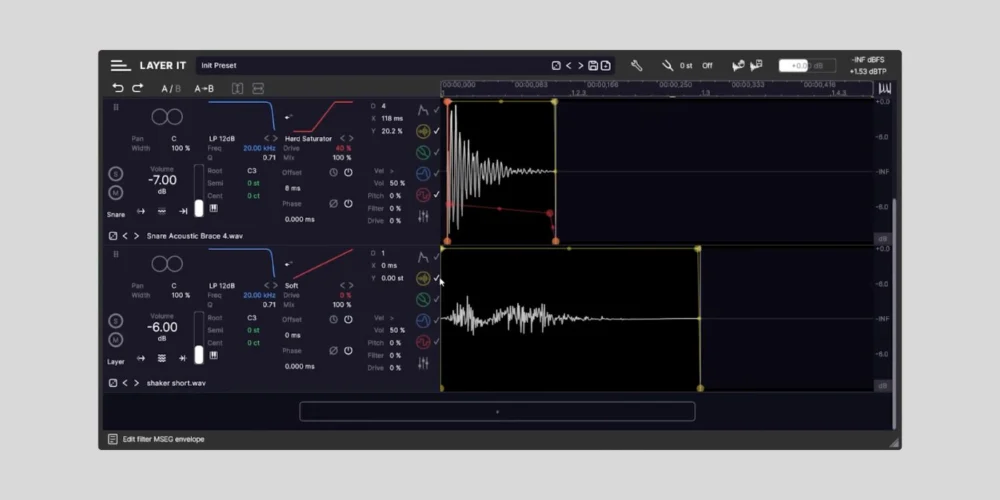
Diginoiz, a prominent developer in the digital audio plugin sector, has recently announced the release of Layer It Lite, a complimentary version of its acclaimed Layer It drum layering plugin, available for both Windows and macOS operating systems. This strategic offering aims to democratize advanced drum sound design techniques, providing a foundational tool for music producers while simultaneously serving as an entry point to its more comprehensive full-featured counterpart. The introduction of Layer It Lite signifies a continued trend within the music technology industry to leverage freemium models as a means of market penetration and user acquisition.
Layer It, at its core, is a specialized sampler meticulously engineered for the intricate process of layering drum sounds. It empowers users to load multiple audio samples, visualizing them as stacked waveforms, and subsequently trigger this entire stack with a singular MIDI note. This streamlined workflow facilitates rapid experimentation and sound sculpting. Key functionalities of the full version include the ability to precisely offset the timing of individual layers, independently shape each component through dedicated controls, and ultimately export the amalgamated result as a cohesive audio file. The architecture of Layer It is designed to foster creative exploration, allowing producers to achieve richer, more complex, or entirely novel percussive textures that might be challenging to create with single drum samples alone.
Detailed Feature Breakdown and Strategic Limitations of Layer It Lite
While Layer It Lite inherits the fundamental layering workflow from its premium sibling, Diginoiz has implemented specific limitations to differentiate the free version and encourage upgrades to the full product. Understanding these distinctions is crucial for prospective users evaluating its utility within their production ecosystem.
The Lite version is bundled with a curated collection of 50 samples and 50 presets, offering a taste of the plugin’s capabilities. Crucially, it imposes a maximum of two layers per sound stack. In stark contrast, the full version of Layer It boasts an expansive library of 1,300 samples and 230 presets, and significantly, supports up to 16 individual layers. This substantial difference in layering capacity directly impacts the complexity and depth of sounds that can be created, positioning the full version as a tool for more sophisticated sound design.
Further differentiating the two versions, Layer It Lite provides a limited selection of two filter types and two distortion types. The full version expands these options considerably, offering six distinct filter types and 18 varied distortion algorithms, allowing for a much broader palette of tonal shaping and sound coloration. Advanced features such as user sample import, the ability to export layered stacks as individual audio files, custom preset saving, A/B comparison functionality, a dedicated equalizer for each layer, and random sample generation are all exclusive to the full paid version. The Lite version, however, does retain random preset functionality, which can be useful for quickly exploring different sonic combinations from its included library.
The Freemium Model: A Balancing Act
The decision by Diginoiz to offer a feature-limited free version aligns with a prevalent strategy in the software industry, particularly within the competitive music technology market. The freemium model, a portmanteau of "free" and "premium," aims to attract a broad user base with a no-cost entry point, hoping that a percentage of these users will eventually convert to paying customers for enhanced features, libraries, or an unrestricted experience.
For developers like Diginoiz, the freemium model serves multiple strategic objectives. Firstly, it acts as a powerful marketing tool, generating brand awareness and allowing potential customers to experience the core functionality of the product firsthand without financial commitment. This "try before you buy" approach can be more effective than traditional advertising, as it builds trust and demonstrates tangible value. Secondly, it can significantly expand the user base, leading to a larger community, potential feedback for future development, and organic word-of-mouth promotion. Thirdly, it caters to beginners or those with limited budgets, providing access to professional-grade tools that might otherwise be out of reach.
However, the success of a freemium model hinges on a delicate balance: providing enough utility in the free version to be genuinely useful and engaging, but withholding sufficient key features to incentivize an upgrade. Diginoiz’s implementation with Layer It Lite reflects this careful calibration.
The User Sample Import Conundrum: A Point of Discussion
Among the limitations imposed on Layer It Lite, the absence of user sample import functionality stands out as a particularly significant point of discussion among music producers and industry observers. This feature, which allows users to load their own custom audio files into the plugin, is often considered a fundamental requirement for integrating a tool into an established production workflow.
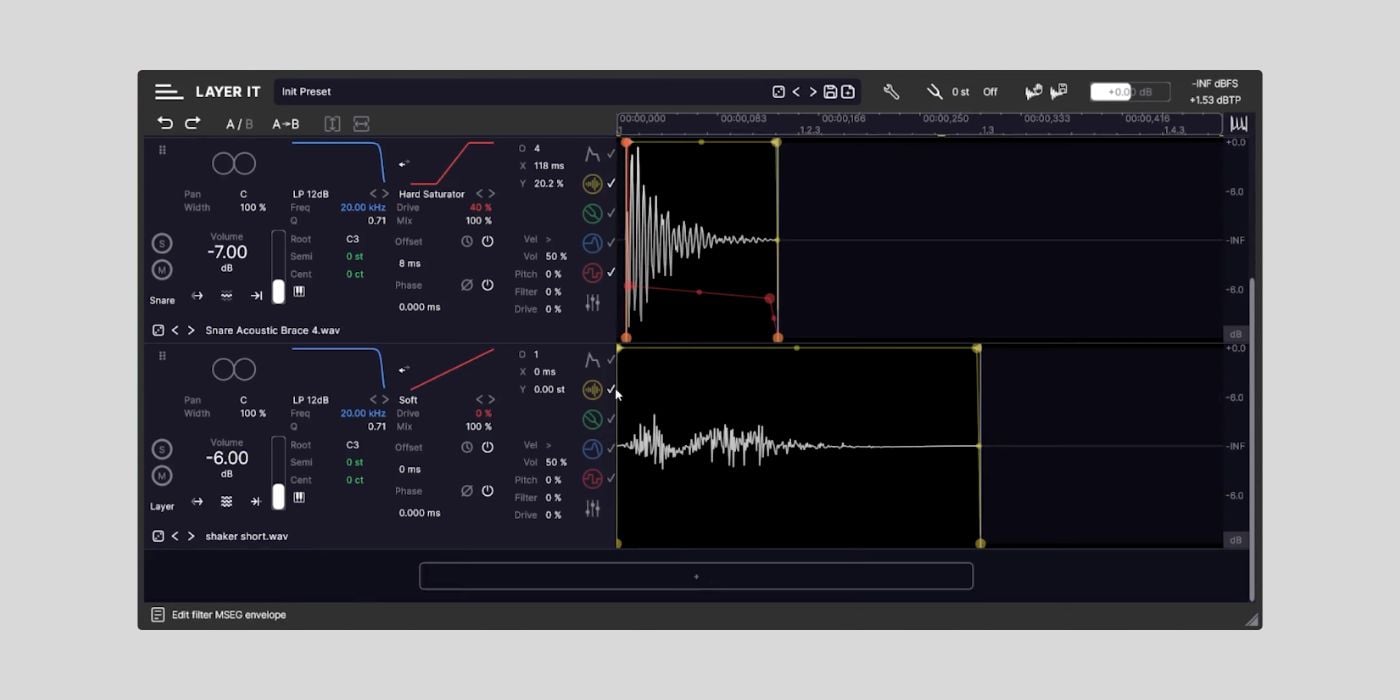
From a user’s perspective, the inability to import custom samples restricts Layer It Lite to functioning primarily as a standalone sound generator based on its enclosed library. While the 50 included samples offer a decent starting point for experimentation, they may not suffice for producers who rely on a personalized sound library, unique one-shots, or project-specific audio assets. For experienced producers, the integration of bespoke sounds is often paramount to achieving a signature sound or fulfilling specific creative visions. Without this capability, the plugin’s long-term utility within a professional or even semi-professional context is arguably diminished.
Industry analysts suggest that Diginoiz’s decision to lock sample import behind the full version is a calculated business move, aimed at maximizing conversion rates. The rationale is that if users become accustomed to the intuitive layering workflow but are then constrained by the limited sound palette, they will be more compelled to upgrade to unlock the full creative potential by integrating their own sounds. However, this strategy carries the risk of alienating a segment of potential users who might perceive the free version as too restrictive to genuinely integrate into their workflow, thereby hindering initial adoption and potential future upgrades. Some argue that unlocking this single feature in the free version, while maintaining the two-layer limit, could significantly increase initial user engagement and familiarity, ultimately making users more likely to invest in the full version for the additional layers, effects, and expansive library. This approach would position Layer It Lite as a more robust "gateway drug" rather than a mere demo.
Target Audience and Practical Utility
Despite its limitations, Layer It Lite holds considerable value for specific segments of the music production community. For beginners who are just starting their journey in music production, or those new to the concept of drum layering, Layer It Lite offers an accessible and non-overwhelming introduction. The plugin’s intuitive interface, displaying samples as stacked waveforms with individual timing offsets, provides a clear visual representation of how layers interact. This visual feedback, combined with the ability to precisely adjust layer timings via mouse drag or scroll wheel, makes it an excellent educational tool for understanding the nuances of rhythmic alignment and sound design. The 50 built-in sounds provide a sufficient palette for initial experimentation, allowing new producers to explore the creative possibilities of layering without being inundated by a vast sample library.
For more experienced producers, Layer It Lite might serve as a quick ideation tool or a lightweight solution for specific tasks where only a few layers are needed and the included sounds happen to fit the project. Its availability across VST3, AU, and as a standalone application for macOS (10.13+ with native Apple Silicon support) and Windows (10/11, 64-bit) ensures broad compatibility with most modern digital audio workstations. The announced forthcoming AAX support will further extend its reach to users of Avid Pro Tools.
Each layer within Layer It Lite includes standard volume and pan controls, alongside multi-stage envelope generators for shaping gain, pitch, filter, and distortion. While the dedicated equalizer per layer is exclusive to the full version, these core controls still provide significant flexibility for sculpting individual sounds within the two-layer limit.
Broader Market Context and Implications
The release of Layer It Lite occurs within a dynamic and highly competitive music production software market. The global digital audio workstation (DAW) and plugin market was valued at approximately USD 1.5 billion in 2023 and is projected to grow substantially in the coming years, driven by the increasing accessibility of home studios, the proliferation of independent artists, and advancements in audio technology. Within this ecosystem, drum VSTs and layering tools occupy a crucial niche, as percussive elements form the rhythmic backbone of virtually all contemporary music genres.
The evolution of drum production techniques has seen a shift from purely acoustic recording to sophisticated digital manipulation, sampling, and synthesis. Drum layering, a technique once reserved for experienced engineers meticulously combining multiple microphone signals or manually stacking samples, has become a cornerstone of modern sound design. Specialized plugins like Layer It streamline this process, enabling producers to achieve fuller, punchier, or more unique drum sounds with unprecedented ease and precision. The market is populated by numerous offerings, from comprehensive drum machines to highly specialized layering tools, all vying for producers’ attention.
Diginoiz, through Layer It Lite, is strategically positioning itself to capture a segment of this growing market. By offering a free yet functional tool, they are lowering the barrier to entry for potential users, fostering brand loyalty, and attempting to convert free users into paying customers for their full suite of offerings. The success of this strategy will likely depend on how well the free version can sustain engagement despite its limitations, particularly the user sample import. Should a significant number of users find the core workflow compelling enough to overlook the sample import restriction for initial experimentation, Diginoiz could see a healthy conversion rate. Conversely, if the lack of customizability proves too restrictive for even nascent producers, the free version might struggle to achieve widespread adoption beyond fleeting curiosity.
Ultimately, Layer It Lite represents a calculated move by Diginoiz to expand its footprint in the digital audio landscape. It provides a valuable entry point for those exploring drum layering, showcasing the potential of the full Layer It plugin. Its long-term impact on the market and its success in converting users will be a testament to the ongoing efficacy of the freemium model in the ever-evolving world of music technology.
