

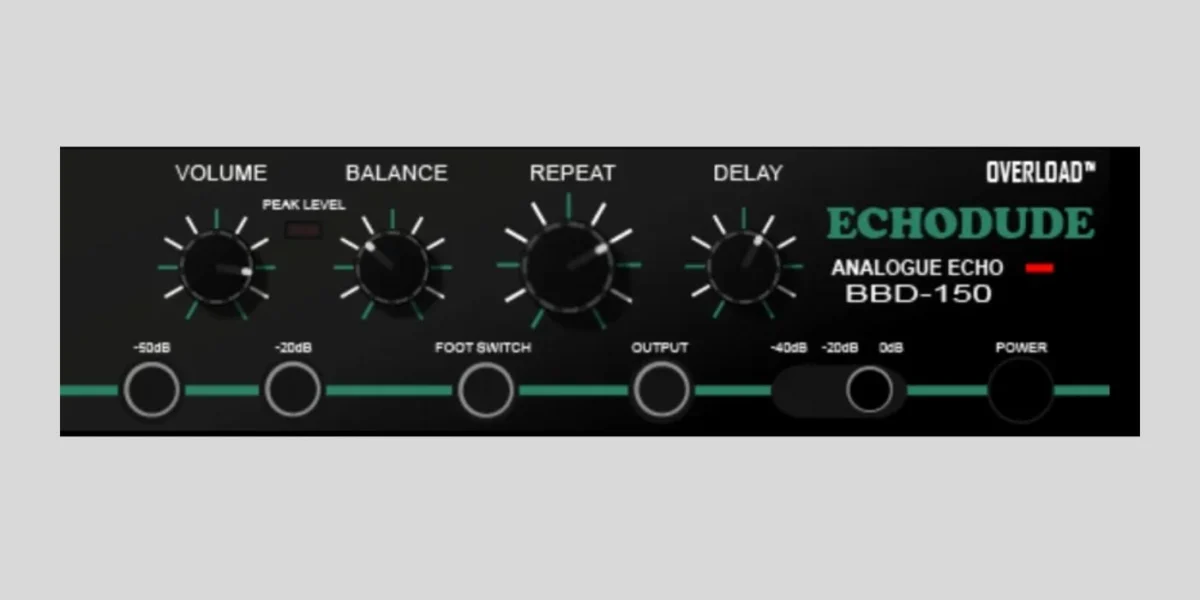
Overload Audio has announced the immediate release of Echodude BBD-150, a free vintage delay plugin meticulously crafted to bring the iconic sounds of 1980s analog bucket brigade delay units to contemporary music production environments. Available for both macOS and Windows operating systems in AU and VST3 formats, this new plugin offers a faithful software emulation inspired primarily by the classic Melos DE-1 and Echoman EM-150 hardware units, providing producers with a versatile tool for achieving characteristic dub-style echoes and a spectrum of analog delay textures.
The Resurgence of Analog Delay: A Historical Context
The development of the Echodude BBD-150 by Overload Audio taps into a significant vein of audio history: the era of the Bucket Brigade Device (BBD). Invented in the late 1960s by F.L.J. Sangster and K. Teer at Philips Research Labs, BBD technology revolutionized analog signal processing. Unlike tape delays, which relied on mechanical movement and magnetic tape, BBDs employed a series of capacitors and transistors to pass an analog signal, sample by sample, down a "bucket brigade" line. Each capacitor acts as a "bucket" holding a charge, which is then passed to the next "bucket" upon a clock pulse. The speed of this clock determined the delay time, with longer chains of buckets allowing for longer delays.
The inherent characteristics of BBDs—a gradual degradation of signal quality with each transfer, the introduction of subtle harmonic distortion, and the distinctive "clock noise" associated with the internal timing mechanism—contributed to a unique sonic signature. This signature was widely embraced in the late 1970s and 1980s, becoming a cornerstone of guitar pedals, studio effects units, and synthesizers. Artists and producers gravitated towards BBD delays for their warm, organic repeats, which contrasted sharply with the pristine, albeit sometimes sterile, sound of nascent digital delays. The natural decay and modulation capabilities of BBD units lent themselves particularly well to genres such as reggae, dub, post-punk, and early electronic music, where atmospheric textures and rhythmic echoes were paramount. Iconic BBD-based units from this period include the Electro-Harmonix Memory Man, Boss DM series, and various offerings from Ibanez and MXR, solidifying the BBD’s place in the pantheon of classic audio effects.
The Melos DE-1 and Echoman EM-150: Dual Identities of an Analog Icon
At the heart of Echodude BBD-150’s inspiration lies a fascinating case study in the music equipment industry of the 1980s: the Melos DE-1 and its rebadged counterpart, the Echoman EM-150. These desktop analog BBD units emerged during a period of intense innovation and market competition. Melos, a Japanese manufacturer, produced the DE-1 as a relatively affordable and compact delay solution. Its straightforward controls and distinctive analog character quickly found favor among musicians seeking to add depth and ambience to their sound without investing in more expensive or complex rack-mounted units.
The phenomenon of "rebadging," where a product manufactured by one company is sold under another brand name, was common in the electronics industry for various reasons, including cost-effectiveness, market penetration, and geographical distribution agreements. The Echoman EM-150 was, in essence, the same hardware as the Melos DE-1, simply branded differently for specific markets or distributors. This practice allowed manufacturers to maximize their production runs and reach broader audiences, while providing consumers with access to popular designs under different labels.
Despite their relatively humble origins and lack of the "boutique" status associated with some higher-end units, the Melos DE-1 and Echoman EM-150 earned a reputation for their ability to deliver the quintessential "dub-style" echo. This sound, characterized by rich, decaying repeats that often self-oscillate into psychedelic textures, was popularized by pioneering artists such as Lee "Scratch" Perry, King Tubby, and others who pushed the boundaries of studio effects. The appeal of these specific units has endured, with a dedicated community of enthusiasts still seeking out second-hand hardware today. A quick market survey reveals that these vintage units typically fetch prices ranging from approximately £75 to £140 on the used market, underscoring their continued desirability and affordability as an entry point into analog delay hardware.
Overload Audio’s Approach to Digital Emulation
Overload Audio, a developer increasingly recognized for its commitment to high-fidelity audio emulation, has undertaken the meticulous task of translating the complex analog behavior of these 1980s units into the digital domain. The Echodude BBD-150 is a testament to this philosophy, prioritizing a "faithful recreation of the signal behaviour" that defines classic BBD delays. This is not merely a cosmetic endeavor; the developer has delved deep into the nuances of analog circuitry to model the critical elements that give BBD units their sonic personality.
The challenges in accurately emulating analog hardware are considerable. Unlike digital systems that operate with discrete values, analog circuits exhibit continuous, non-linear behaviors influenced by component tolerances, power supply fluctuations, and temperature. For BBDs, this includes the subtle saturation introduced by the input stage, the complex interaction of feedback loops that can range from gentle repeats to chaotic self-oscillation, and the characteristic modulation effects generated by varying the BBD clock speed. Overload Audio’s stated focus on these areas suggests a sophisticated modeling approach that goes beyond simple digital delay algorithms, aiming to capture the "soul" of the original hardware.
Echodude BBD-150: Features and Sonic Capabilities
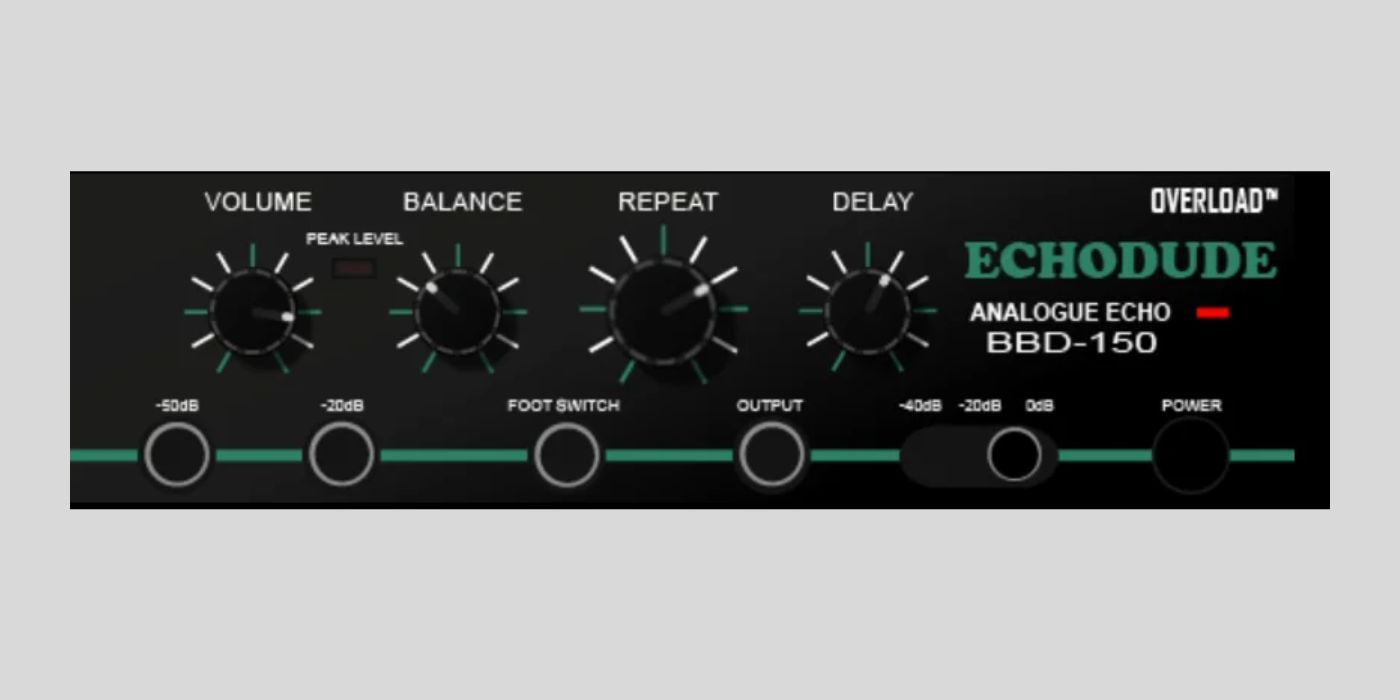
The Echodude BBD-150 plugin presents users with a visually authentic interface that mirrors the physical layout of its hardware inspirations, facilitating an intuitive user experience. Beneath this familiar exterior lies a powerful engine designed to deliver a wide palette of vintage delay sounds:
- Input Drive: A crucial component in analog character, the input drive stage in Echodude BBD-150 models the way the original hardware’s preamplifier subtly saturates and colors the incoming signal. This can range from clean, transparent repeats to a warm, harmonically rich overdrive as the input level increases, adding grit and presence to the delayed signal before it even enters the BBD chain.
- Feedback Response: The feedback control is central to creating dynamic delay effects. In the Echodude BBD-150, this parameter dictates how much of the delayed signal is fed back into the input, allowing for a spectrum of effects from subtle, decaying echoes to sustained, ethereal textures. Pushing the feedback to its limits can induce self-oscillation, a hallmark of analog delays, transforming the plugin into a sound-generating instrument capable of creating evolving drones, rhythmic pulses, and controlled chaos, much like its hardware forebears.
- Modulation Behaviour: The distinctive "swooshing" or "almost detuned" effects often associated with BBD chips arise from their inherent modulation capabilities. By subtly varying the clock speed of the BBD line, the delay time is modulated, leading to a gentle pitch shifting or chorusing effect on the repeats. Echodude BBD-150 faithfully models this characteristic, allowing users to inject movement and an organic wobble into their delays, enriching the texture and adding a vintage flavor that digital delays often struggle to replicate.
- Clock Artefact Modelling: Perhaps one of the most significant details in achieving true authenticity, the inclusion of clock artefact modeling is a testament to Overload Audio’s commitment to detail. BBD chips, by their very nature, generate a small amount of high-frequency noise from their internal clock circuit. While sometimes seen as an imperfection, this "clock noise" is an integral part of the BBD sound, contributing to its lo-fi charm and vintage character. By accurately modeling these artefacts, the Echodude BBD-150 ensures that the subtle sonic imperfections that defined the original hardware are present, enhancing the realism and depth of the emulation.
- Character and Versatility: The plugin offers a broad spectrum of sonic character. For subtle applications, it delivers the typical warm or dark delay expected from a BBD device, adding depth and space without overwhelming the source material. However, its capabilities extend to more aggressive territory, allowing users to harness the modulation and feedback to create dramatic swooshing effects, detuned echoes, and ultimately, self-oscillation for truly wild and experimental sound design. This versatility ensures the plugin is suitable for a wide range of genres, from traditional dub and reggae to ambient, electronic, and experimental music.
Accessibility and Broader Implications
The release of Echodude BBD-150 as a free plugin holds significant implications for the music production community. In an era where access to high-quality tools is increasingly democratized, free plugins like this play a vital role in empowering aspiring and established producers alike. The relatively low cost and historical accessibility of units like the Melos DE-1/Echoman EM-150 meant they were often at the foundation of "grass-roots music" – music made by independent artists, bedroom producers, and those who later achieved fame and fortune. By making a faithful emulation of such a unit freely available, Overload Audio extends this legacy, allowing a new generation of creators to explore and incorporate these iconic sounds into their work without the financial barrier or maintenance challenges associated with vintage hardware.
This move also highlights a broader trend in the audio software industry: the preservation of sonic history through emulation. As original hardware ages and becomes rarer, software recreations ensure that their unique timbres and operational quirks remain accessible and inspire future innovations. Furthermore, the Echodude BBD-150 serves as a compelling alternative for those seeking vintage analog character but prefer the convenience and reliability of a digital workflow. While other modern delay plugins like Sonicora Audio’s LiquidTrail (which was free for a limited time as of March 17, 2026) offer contemporary features and pristine digital clarity, Echodude BBD-150 stands out for its dedicated focus on capturing a specific, beloved slice of analog history.
The decision by Overload Audio to offer such a meticulously crafted plugin for free reflects a growing appreciation for community contribution and the belief that foundational tools should be universally available. This strategy not only builds goodwill within the producer community but also establishes Overload Audio as a developer committed to quality and historical accuracy. The Echodude BBD-150 is more than just a delay plugin; it is a gateway to a distinctive analog past, offering both authentic sonic character and a powerful creative tool for the digital present. Its availability for macOS and Windows in AU and VST3 formats ensures broad compatibility with most major Digital Audio Workstations (DAWs), making it an invaluable addition to any producer’s arsenal.
Conclusion
The Echodude BBD-150 by Overload Audio represents a significant contribution to the free plugin landscape, delivering a highly authentic and versatile vintage bucket brigade delay. By meticulously emulating the characteristics of the Melos DE-1 and Echoman EM-150, Overload Audio has successfully captured the warm, modulated, and often chaotic spirit of 1980s analog delay. Its faithful recreation of input drive, feedback response, modulation behavior, and critical clock artefacts ensures that producers can access the classic dub-style echoes and expansive textures that defined an era. This free offering not only democratizes access to a historically significant sound but also reinforces the enduring appeal of analog imperfections in an increasingly digital world, solidifying Echodude BBD-150 as an essential tool for creators across all genres.
