

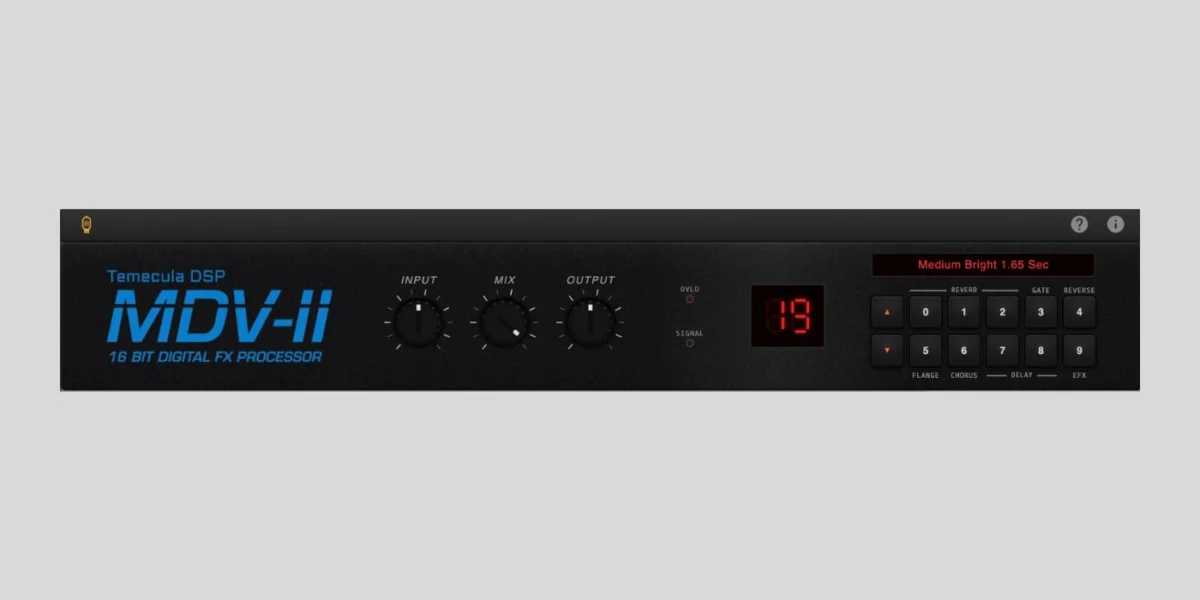
Temecula DSP has announced the release of MDV-II, a meticulously crafted software emulation of the revered Alesis Midiverb II digital effects processor. Available as a free download for macOS and Windows, the MDV-II plugin brings the distinctive sonic character of this 1980s cult-classic studio workhorse to modern digital audio workstations, offering producers and musicians access to its unique reverbs, delays, and modulation effects without cost or cumbersome hardware. This release marks a significant moment for enthusiasts of vintage digital processing, making a historically influential sound accessible to a new generation of creators.
The Alesis Midiverb II: A Digital Effects Pioneer
The Alesis Midiverb II, originally introduced in the late 1980s, carved out a unique niche in the competitive landscape of professional audio equipment. At a time when digital signal processing (DSP) was rapidly advancing but often prohibitively expensive, Alesis emerged as a disruptor, offering innovative, budget-friendly gear that democratized access to studio-quality effects. While Alesis may not always be the first brand that comes to mind when discussing highly sought-after vintage studio equipment, a select few of their products, particularly the Midiverb II, transcended their affordable price point to become indispensable tools for a wide array of producers and artists.
Technically, the Midiverb II was a 16-bit digital FX processor, featuring 99 preset programs. Unlike many of its contemporaries that aimed for pristine, transparent simulations of acoustic spaces, the Midiverb II possessed a distinctly digital character. This sonic signature, often described as dense, ethereal, and somewhat grainy, was a direct result of its specific algorithms and hardware architecture. The unit offered a comprehensive palette of effects, including various reverbs (halls, rooms, plates, non-linear), delays (stereo, mono, reverse), and modulation effects (chorus, flange). Its straightforward interface, featuring a small digital display and program buttons, made it easy for users to navigate its extensive preset library, even if it lacked deep programmability. This "set-and-forget" simplicity, combined with its unique sound, contributed significantly to its appeal.
Cult Status and Genre-Defining Impact
The Midiverb II’s journey from a budget-friendly studio staple to a cult classic is intrinsically linked to its adoption by pioneering artists who leveraged its inherent sonic quirks to define new genres and expand existing ones. Its "love-it-or-hate-it" character proved to be a powerful creative catalyst for those who embraced its unique digital imprint rather than seeking to smooth it out.
Perhaps its most enduring legacy is within the shoegaze genre, which emerged concurrently with the Midiverb II’s rise in popularity. Bands like My Bloody Valentine, widely considered architects of the shoegaze sound, were early and prominent adopters. Kevin Shields, the band’s enigmatic frontman and sonic visionary, famously integrated the Midiverb II into his elaborate guitar rigs. The unit’s ability to create vast, swirling soundscapes, dense textures, and especially its distinctive reverse reverb, perfectly complemented the genre’s emphasis on layered, effects-laden guitars and ethereal vocals. The reverse reverb, in particular, became a signature element of My Bloody Valentine’s sound, contributing to the disorienting yet beautiful sonic washes heard on albums such as Isn’t Anything and the seminal Loveless. This effect, which involves playing a reverb tail backwards, creates a sense of foreboding swell and otherworldly atmosphere, proving highly influential.
Beyond shoegaze, the Midiverb II found favor with artists in other experimental and alternative music scenes. Primal Scream, the Scottish psychedelic rock band, incorporated the Midiverb II into some of their more adventurous and psychedelic compositions, utilizing its dense chorus and distinct reverbs to imbue tracks with a hazy, dreamlike quality. Its digital character also resonated with early electronic music producers and ambient artists who sought to create expansive, synthetic sound environments that diverged from the more naturalistic reverbs offered by higher-end units from Lexicon or Eventide. The Midiverb II offered a particular kind of artificiality that was both evocative and inspiring, becoming a staple for those seeking to push sonic boundaries in the late 1980s and early 1990s.
Temecula DSP’s MDV-II: A Meticulous Software Emulation
Temecula DSP’s MDV-II plugin aims to faithfully recreate the sound and operational experience of the original Alesis Midiverb II. The developers have meticulously modeled the hardware unit’s internal processing and user interface, ensuring that the software version not only sounds authentic but also feels familiar to those acquainted with the physical device.
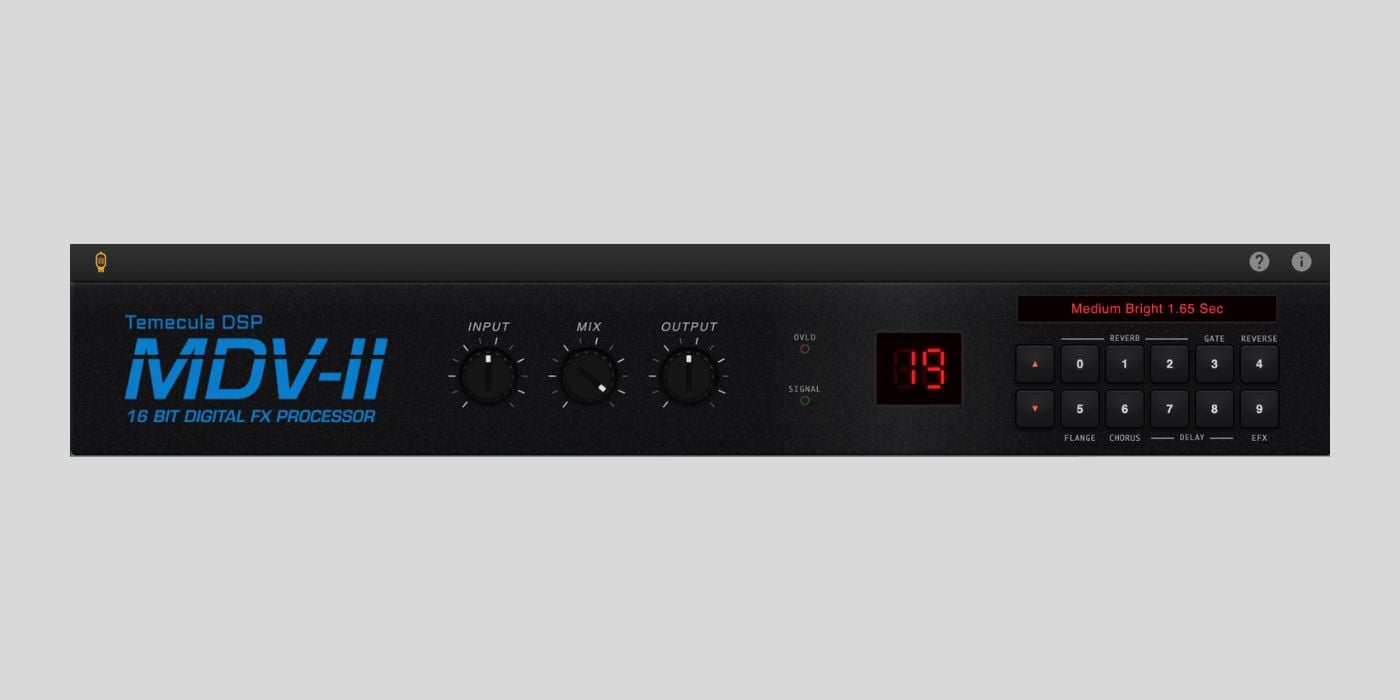
The plugin’s graphical interface accurately mirrors the hardware unit’s aesthetic, featuring the iconic Input, Mix, and Output controls. These controls allow users to dial in the input gain, blend the wet and dry signals, and adjust the overall output level, just as on the original. Central to the interface is a small digital display, which replicates the hardware’s program readout, alongside the program selection buttons. This visual fidelity contributes significantly to the authenticity of the user experience, making the transition from hardware to software seamless for veterans and intuitive for newcomers.
Crucially, MDV-II replicates the specific algorithms and characteristics of the Midiverb II’s most sought-after effects. Among these, the excellent reverse reverb stands out. Its accurate recreation allows producers to instantly access the signature swelling, atmospheric effect that defined so much of the shoegaze aesthetic. Beyond this, the dense chorus effect, another hero of many classic recordings, is also meticulously modeled. This chorus, known for its rich, thick texture and subtle detuning, can add significant width and depth to guitars, synths, and even vocals, creating a beautiful and immersive sound. The plugin’s ability to precisely replicate these and other iconic presets ensures that its sonic output is virtually indistinguishable from the original hardware, offering a genuine vintage sound in a modern context.
The Broader Trend of Vintage Digital Emulations
The release of MDV-II is indicative of a broader and accelerating trend within the audio software industry: the increasing focus on emulating classic digital hardware. For many years, the spotlight in software emulation was predominantly on analog gear—vintage compressors, EQs, synthesizers, and tape machines. However, as digital processing has matured and modeling techniques have become more sophisticated, the unique sonic characteristics of early digital effects units are now receiving the attention they deserve.
Units like the Alesis Midiverb II, Lexicon 224/480L, Eventide H3000, AMS RMX16, and various early EMT reverbs, which were once cutting-edge digital processors, are now considered vintage classics. Their distinct digital artifacts, often seen as limitations at the time of their release, are now celebrated as desirable sonic attributes. The precise bit-depth, sample rates, and algorithmic approaches of these early digital units created sounds that are impossible to replicate with modern, high-fidelity processors, which often aim for transparency.
The appeal of software emulations like MDV-II is multifaceted. Firstly, they offer unparalleled accessibility. Original hardware units can be expensive, difficult to find, and prone to maintenance issues due as they age. Software plugins eliminate these barriers, making these iconic sounds available to anyone with a computer and a digital audio workstation. Secondly, emulations seamlessly integrate into modern production workflows. Producers can instantiate multiple instances of the plugin, automate parameters, and save presets within their projects, something that is far more challenging with physical hardware. Thirdly, they contribute to the preservation of sonic heritage. By accurately modeling these vintage units, developers ensure that their unique sounds remain available and usable for future generations of musicians and engineers.
The recent release of Overload Audio’s Echodude BBD-150, an emulation of the Echoman EM-150 analog delay, further underscores this trend towards recreating historically significant effects, both analog and digital. The fact that MDV-II is offered for free is particularly noteworthy, democratizing access to a sound that was once confined to those with the means to acquire the original hardware. This approach not only benefits individual producers but also enriches the entire music production community by lowering the barrier to entry for achieving specific, sought-after sounds.
Implications for Modern Music Production and Sound Design
The availability of Temecula DSP’s free MDV-II plugin carries significant implications for modern music production and sound design. For independent artists and bedroom producers, it represents an invaluable resource. Access to historically significant effects, particularly those that defined entire genres, can inspire new creative directions and allow for authentic genre recreation without substantial financial investment. This levels the playing field, empowering a broader range of creators to experiment with sounds that were once the domain of established studios.
For sound designers, MDV-II provides a potent tool for crafting unique sonic textures. The Midiverb II’s distinct character, especially its reverse reverb and dense chorus, can be used to add depth, atmosphere, and a touch of vintage grit to everything from film scores to video game audio and experimental electronic music. Its ability to create dense, ethereal soundscapes makes it particularly useful for ambient textures, otherworldly effects, and retro-futuristic sound palettes.
The ongoing dialogue between proponents of vintage hardware and software emulations continues to evolve with releases like MDV-II. While some purists may argue that no software can perfectly capture the nuances of analog circuitry or the tactile experience of physical hardware, the fidelity and convenience offered by modern emulations are increasingly compelling. For digital classics like the Midiverb II, where the "character" is inherently digital, software modeling can often achieve a near-perfect replication, making the case for hardware ownership less critical for many users.
Temecula DSP has made MDV-II available in popular plugin formats, including AU, VST3, and AAX, ensuring compatibility across a wide range of digital audio workstations on both macOS and Windows platforms. The developers have further streamlined access by offering direct downloads from the product page, requiring no email registration or sign-up, reflecting a commitment to broad accessibility. This ease of acquisition, combined with its high fidelity, positions MDV-II as a valuable addition to any producer’s plugin arsenal, offering a piece of audio history ready for contemporary application.
In conclusion, the release of Temecula DSP’s MDV-II is more than just another plugin; it is a significant contribution to the preservation and accessibility of audio heritage. By meticulously recreating the Alesis Midiverb II, a device that defied its budget origins to become a cult classic and a genre-defining tool, MDV-II empowers a new generation of producers to explore its unique sonic landscape. Its free availability and broad compatibility ensure that the distinct digital character of the Midiverb II will continue to inspire and shape music for years to come, affirming the enduring relevance of vintage digital effects in the modern era of music production.
Last Updated on March 18, 2026 by Tomislav Zlatic.
