

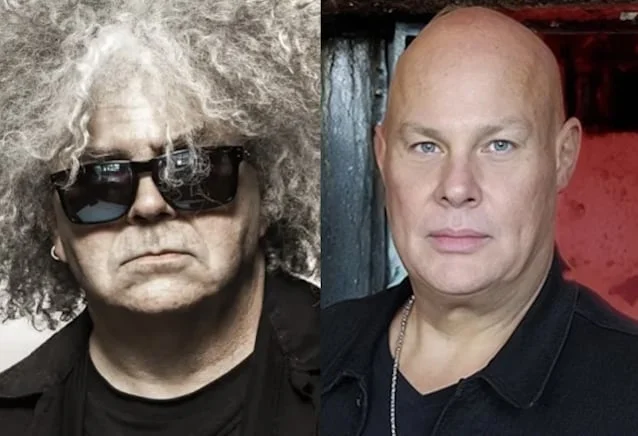
In a recent interview on the podcast "A Fresh Face In Hell," hosted by Jonathan Evison, Melvins frontman Buzz Osborne offered a candid reflection on the band’s formative years and their early influences, touching upon a long-standing, and seemingly one-sided, artistic friction with Metal Church founder Kurdt Vanderhoof. Osborne, a pivotal figure in shaping the Melvins’ signature sludge-metal sound—a potent fusion of Black Sabbath’s monolithic riffs with the raw ferocity of Black Flag and Flipper—detailed his initial motivations for incorporating heavier elements into the band’s punk-rooted aesthetic.
"I wanted to do something that had more heavy metal in it," Osborne stated, as transcribed by Blabbermouth.net. "I’ve always felt like if you look at a hardcore heavy metal band, they’re pissed off. Same as punk rock bands. To me, I didn’t see a whole lot of difference in the attitude as far as how angry they were and things of that nature. And I always liked that stuff. I didn’t stop listening to Judas Priest… Some of my favorite memories are dropping acid and going to see Judas Priest with [founding Melvins drummer] Mike Dillard at some big concert. I mean, I was not opposed to Black Flag and Van Halen concerts in the same week. It was fine with me. And I still don’t see how it’s not cut from the same thing. To me, it’s heavy-duty rock music."
This perspective highlights a core tenet of the Melvins’ enduring appeal: their ability to transcend genre boundaries and embrace a wide spectrum of heavy music. Osborne’s embrace of both the raw energy of punk and the sonic heft of heavy metal positioned the band as pioneers, influencing countless artists across diverse subgenres. Their early work, often characterized by a deliberate slowness and crushing distortion, laid the groundwork for the sludge and stoner rock movements that would gain prominence in the subsequent decades.
Unpacking the Disconnect with Kurdt Vanderhoof
The conversation then shifted to the complex relationship between Osborne and Vanderhoof. Evison raised the point of Vanderhoof’s early influence on Osborne, a notion Osborne readily acknowledged, albeit with a nuanced perspective on their personal dynamic.
"Well, I always liked Kurdt," Osborne said. "I never felt that he had much interest or much respect for what we were doing at all. I felt like he thought we were kind of an annoyance. I wanted to be friends with him. That wasn’t gonna happen. I mean, I knew he knew a lot about music. He had a lot of records that he turned me on to, like The Vibrators. I thought that was really good. And a bunch of stuff like that. He’d lived in San Francisco prior to that, and he moved back. And he really hates us now; he really hates our guts. And I think it’s because I wrote… We released a record [in 2005] called ‘Mangled Demos From 1983’—that’s the original Melvins lineup with Dillard—way after the fact. The record never came out [when it was originally recorded]. And I wrote liner notes about how I felt that [Kurdt] was kind of a dick. And somebody pointed that out to him. Also, at that time I was not very aware of things like this, which was he was gay. I didn’t know. It didn’t bother me. I mean, once I found out, it didn’t bother me, but I didn’t know that [at the time]. And I wrote that in there. And I think he kind of took offense to that."
This revelation points to a significant point of contention that seemingly fueled the animosity. The liner notes for "Mangled Demos From 1983," released over two decades after the recordings, became a focal point of the discord. Osborne’s frank assessment of Vanderhoof’s perceived arrogance, coupled with a perceived insensitivity regarding Vanderhoof’s sexuality at the time of writing, appears to have irrevocably damaged their relationship. The act of releasing these archival demos, while a treat for long-time fans, inadvertently reopened old wounds and exposed underlying tensions.
The "Strutting Around" Incident and Punk Rock Ethos
Osborne further elaborated on the specific content of the liner notes, detailing an incident that underscored his perception of Vanderhoof’s attitude.
"I didn’t say one thing about [Kurdt], whether I liked or disliked him at all, but he was constantly looking for a reason to have some kind of beef with us," Osborne recounted. "I don’t know. And I think it always irked him that we had any kind of a music career because he just thought we were talentless boobs. Which is, like, okay, fine, whatever. So you don’t wanna be friends? Fine with me. And so I lost track of him. And then somebody had showed him this [‘Mangled Demos From 1983’ record with my liner notes]… I talked about how we played a show with them in Aberdeen and how they were strutting around like they were playing Madison Square Garden. It was really a rat-infested hellhole, and you don’t need to act like that. I’m punk rock to the bone, as far as attitude goes, and I don’t like that kind of… And I’ve dealt with that kind of stuff a lot since then. We’ve done all kinds of arena tours and stuff like that, opening for other bands, and I, to this day, cannot stand that kind of shit. I don’t do it, and I don’t like it when people do it. It bothers me, and it always has. So, I wrote about how kind of disappointed I was in all that, and he took offense: ‘Fuck those guys.’ Well, whatever."
This anecdote reveals a fundamental difference in their approach to performance and public persona, rooted in Osborne’s staunch adherence to a punk rock ethos. For Osborne, the unpretentious, DIY spirit of punk rock—which he felt the Melvins embodied—was antithetical to the perceived rockstar posturing of other bands, even within the nascent heavy music scene of the Pacific Northwest. The idea of "strutting around" in a less-than-glamorous venue like Aberdeen, which was a hub for the early grunge scene, struck Osborne as a disconnect from the authentic, grounded spirit he valued. This sentiment, he explained, persisted throughout his career, even as the Melvins achieved greater success and played larger venues.
A History of Perceived Disrespect from the Grunge Elite
Osborne’s comments echo a sentiment that has been expressed by various figures within the heavy music community regarding the perception of disrespect from some prominent bands that emerged from the early Seattle "grunge" scene. This perception is not isolated to his interactions with Vanderhoof.
In a 2016 interview on the "Talk Toomey" podcast, Kurdt Vanderhoof himself spoke about Metal Church’s relationship with bands like Nirvana, recounting instances where he felt his band was belittled by the younger, more "punk" oriented musicians.
"I know Krist [Novoselic, Nirvana bassist]; he was kind of a friend of mine," Vanderhoof stated at the time. "They kind of came out to our rehearsals and stuff when we’d have party rehearsals where we started. But, for the most part, we were a big joke to them. They were the cool guys and we were the old metal guys. Even on [Nirvana’s] ‘Bleach’ [album], [Kurt] Cobain spelled his name like mine—Kurdt. I could never quite figure that out, but I kind of put two and two together, and they were poking fun. Like the Melvins think I’m just obnoxious and all this stuff, ’cause they’re too cool. And we’re a bunch of rock stars, and they’re too cool. So, you know, fuck ’em."
Vanderhoof’s recollection suggests a perceived hierarchy within the scene, where Metal Church, as established metal musicians, were seen as outmoded by the emerging grunge aesthetic. The deliberate misspelling of his name on Nirvana’s debut album, "Bleach," a detail he found significant, further reinforced this feeling of being targeted for ridicule. He expressed a sense of betrayal, believing he had fostered positive relationships, only to discover he was the subject of mockery.
"I never had any trouble" with Nirvana, Vanderhoof added, and stated he "always liked" their music. "I thought it was great. And I liked the Melvins, and I thought we were friends, especially Buzz and I. And then I come to find out later that we were a big joke, and I was a big joke to all these guys."
His continued narrative painted a picture of a scene where aligning with punk sensibilities was paramount, and traditional heavy metal bands were deemed "posers" or "rock stars" by those who embraced the more raw, anti-establishment image. This ideological divide, while perhaps not always overtly hostile, created an environment where established metal acts felt marginalized.
Differentiating the Grays Harbor Scene from Seattle’s Grunge Core
Vanderhoof did, however, draw a distinction between the bands emanating from the Grays Harbor area, which included Nirvana and the Melvins, and those from Seattle. He expressed appreciation for bands like Alice in Chains.
"The [Alice in Chains] guys are great," Vanderhoof said. "Yeah, I like all those guys. Those guys have been really cool, and still cool to us and everything too. But the Grays Harbor bands—you know, the Nirvanas and the Melvins and all that kind of stuff—they, again, especially had something against me, apparently. So I thought we were friends, but apparently not. So… fuck those guys."
This distinction is crucial in understanding the localized dynamics of the early Pacific Northwest music scene. While Seattle was the epicenter of the grunge explosion, areas like Grays Harbor, where Nirvana and the Melvins originated, fostered their own distinct musical communities. Vanderhoof’s comments suggest that the perceived animosity was more concentrated among these Grays Harbor-rooted bands, perhaps stemming from a shared, yet competitive, creative environment.
The Unyielding Nature of Artistic Differences
Returning to his own reflections, Osborne offered a broader philosophical observation on the nature of interpersonal and artistic conflicts.
"There’s some people where you just know it’s never gonna be right," he mused. "It’s never gonna end right. No matter what you do, no matter how much you kiss their ass, you’re always gonna end up somehow not working out; it’s not gonna work out. ‘Cause it’s not in them to have it work out."
This statement speaks to a fundamental incompatibility that can exist between individuals, particularly within the often-turbulent world of creative arts. For Osborne, the persistent friction with Vanderhoof, despite his initial attempts at collegiality, represented a situation where an amicable relationship was simply not feasible due to underlying, perhaps unresolvable, differences in perspective or disposition.
Broader Implications for the Music Industry
The exchanges between Osborne and Vanderhoof, while seemingly focused on personal grievances, offer a window into the complex evolution of rock music in the late 20th century. The 1980s and early 1990s saw a significant shift in the musical landscape, with the raw, punk-infused sounds of grunge displacing the more polished, arena-rock aesthetics of earlier heavy metal. Bands like the Melvins, by bridging these sonic worlds, played a crucial role in this transition.
The tension described by both Osborne and Vanderhoof highlights the ideological divides that often accompany significant musical shifts. The purists of either genre—heavy metal or punk—often viewed crossover artists with suspicion. However, it was precisely these artists, who were willing to blur the lines and experiment with diverse influences, that ultimately pushed the boundaries of music forward.
The Melvins, with their unwavering commitment to their unique sound and ethos, became enduring figures in underground music, influencing generations of musicians. Their ability to navigate the changing tides of the music industry, while maintaining their artistic integrity, stands as a testament to Osborne’s vision. The persistent narrative of artistic friction, even decades later, serves as a reminder of the passionate, and sometimes contentious, nature of creative expression and the indelible impact of early scene dynamics on the careers of influential artists. The contrasting perspectives of Osborne and Vanderhoof, though rooted in personal experience, also reflect the broader cultural and artistic shifts that defined an era in rock music.
