


Earlier this week, a significant event reverberated through the open-source audio development community: discoDSP, a well-known name in music software, donated $1,000 to The Usual Suspects (TUS), a collective celebrated for its high-fidelity, free synth emulations. This gesture, however, was swiftly rejected, with The Usual Suspects returning the funds. This exchange marks a pivotal moment in an ongoing saga surrounding discoDSP’s recently released Retromulator plugin, a controversy that has sparked fervent debate across prominent music technology forums such as KVR Audio, GearSpace, Synthtopia, and Bedroom Producers Blog. While the legal framework of open-source licensing appears clear, the unfolding events reveal a complex interplay of community ethics, developer expectations, and the unwritten social contracts that often govern collaborative projects.
The Genesis of the Conflict: Retromulator’s Launch
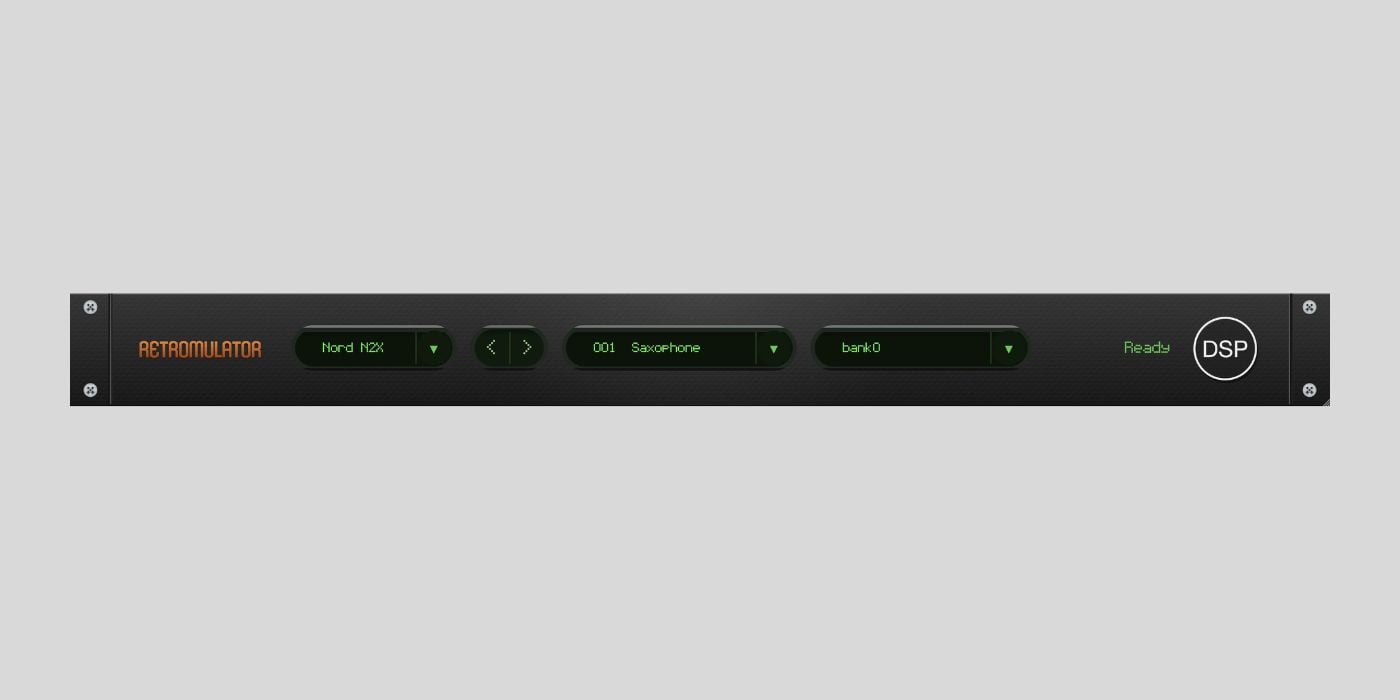
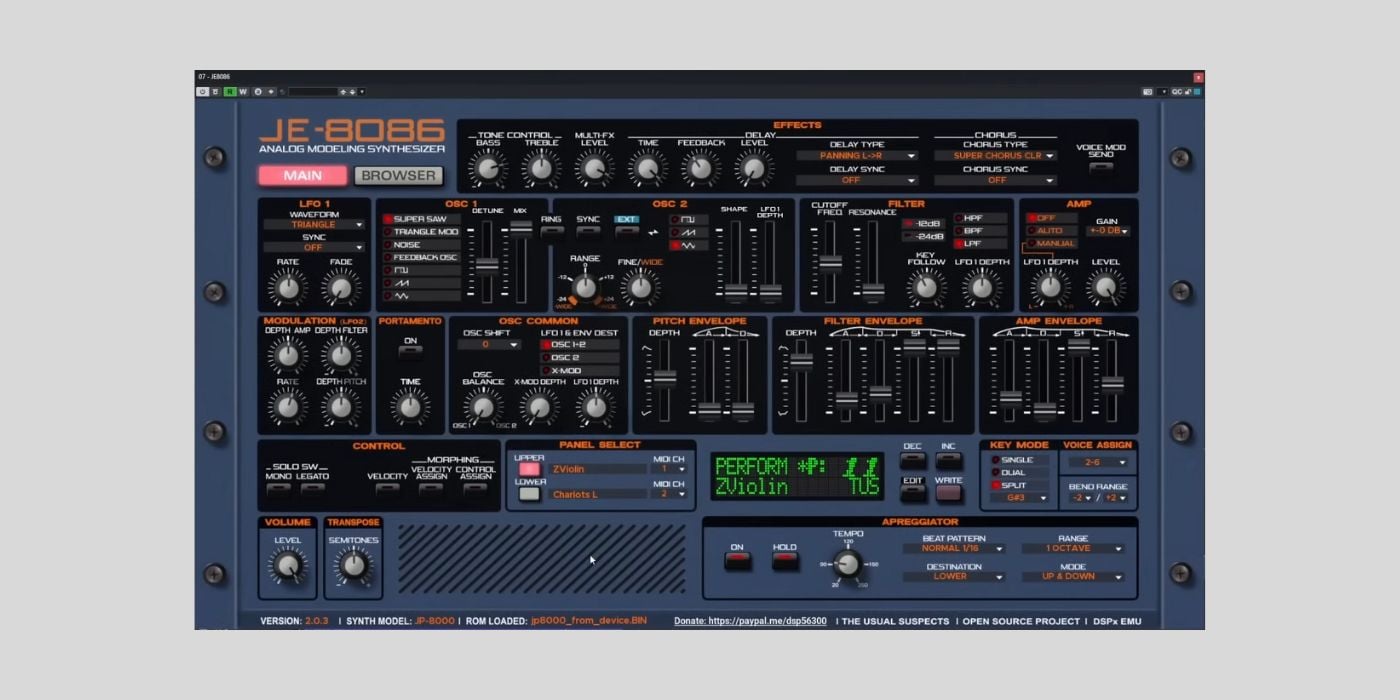
The controversy ignited in early March with the release of discoDSP’s Retromulator, a free plugin designed to consolidate seven classic hardware synthesizer emulations into a single, rack-style interface. The core of Retromulator’s functionality was derived from Gearmulator, an open-source project spearheaded by The Usual Suspects. This collective has garnered widespread acclaim for its meticulous, cycle-accurate recreations of iconic synthesizers, including the Access Virus, Waldorf MicroQ and Microwave XT, Nord Lead 2X, and Roland JP-8000, which have previously been featured on platforms like Bedroom Producers Blog through projects such as OsTIrus, Xenia, and JE-8086.
discoDSP leveraged TUS’s existing code, which is published under the permissive General Public License v3 (GPL v3). In addition to integrating TUS’s emulations, discoDSP incorporated a DX7 core from another independent open-source initiative, developed a unified preset browser, added crucial code signing for enhanced security and ease of installation, and implemented AAX support, catering to users of Avid Pro Tools. The complete package was then made available for free.
Crucially, the product page for Retromulator explicitly credited The Usual Suspects for their foundational work, and the plugin itself maintained its GPL v3 license, aligning with the original open-source terms. However, a prominent "Buy" button, priced at $29, was also featured on the page. While the fine print clarified that this payment was specifically for "priority support" rather than the plugin itself, this detail became the primary flashpoint, igniting the widespread backlash that followed.
The Usual Suspects: A Commitment to Open-Source Principles
To fully grasp the depth of the Retromulator controversy, it is essential to understand the ethos and operational philosophy of The Usual Suspects. TUS is not merely a group of developers; it represents a movement within the audio software community dedicated to the preservation and accessibility of classic synthesizer architectures through open-source emulation. Their projects are labors of love, often requiring thousands of hours of volunteer effort to achieve the high level of accuracy and detail for which they are known.
The choice of GPL v3 for their projects is deliberate. This license is designed to ensure that software remains free and open, allowing users the freedom to run, study, share, and modify the software. It also mandates that any derivative works must also be released under the same license, ensuring the "copyleft" principle of freedom is propagated. For TUS, this licensing choice aligns with their core mission: to make these complex, vintage synth emulations accessible to everyone, fostering a spirit of collaboration and knowledge sharing without commercial barriers. Their work is fundamentally driven by passion and a commitment to community benefit, often relying on voluntary donations to cover operational costs rather than direct sales.
Community Outcry and Discourse: Legal Rights vs. Ethical Norms

The release of Retromulator, particularly the inclusion of the "Buy" button, swiftly triggered a torrent of critical discussion across various online platforms. Forum threads on KVR Audio and GearSpace quickly swelled to hundreds of posts, reflecting the intensity of the community’s reaction. What became clear was that the core of the outrage was not rooted in allegations of legal infringement. Most participants acknowledged that GPL v3 explicitly permits the forking, redistribution, and even commercial sale of open-source code, provided the derivative work also adheres to the GPL.
Instead, the widespread anger stemmed from a perceived violation of the unwritten ethical code prevalent within the open-source community. The prevailing sentiment was that discoDSP had taken years of unpaid, volunteer work, repackaged it with a new interface, and was attempting to monetize it without adding commensurate value. A member of The Usual Suspects, speaking on Discord, articulated this frustration, stating that discoDSP’s actions "go completely against what our open source project stands for." Another TUS member, quoted on MatrixSynth, was more direct, asserting that discoDSP "basically took our source, put his own wrapper on it, and is trying to sell it and use it to promote his own business."
However, the debate was not monolithic. A vocal minority of users on KVR and Synthtopia staunchly defended discoDSP, arguing that TUS, by choosing GPL v3, had explicitly granted permission for such actions. Their argument centered on the principle that "open source means open source," and expressing dismay when someone exercises the very freedoms granted by the chosen license was illogical. This faction emphasized the letter of the law over what they perceived as unstated, subjective community expectations.
discoDSP’s Response and The Usual Suspects’ Firm Rejection
In response to the mounting pressure, discoDSP undertook several corrective measures. They issued clarifications emphasizing that Retromulator remained a free plugin and would continue to be so. The controversial "Buy" button was subsequently redirected to The Usual Suspects’ own donation page, a move seemingly aimed at acknowledging TUS’s foundational contribution and directing potential financial support their way.
Following these adjustments, discoDSP took a further step by donating $1,000 to The Usual Suspects, publicly citing "Retromulator’s recent sales success" as the source of the funds. This direct financial overture, intended perhaps as a reconciliatory gesture or an acknowledgment of the perceived ethical debt, was met with an unequivocal rejection. The Usual Suspects promptly returned the donation, issuing a statement that underscored their commitment to maintaining transparency and remaining free from corporate funding. This refusal solidified their stance, highlighting a fundamental difference in values regarding the commercialization of open-source projects and the desire to protect their independence and community-driven mission.
The "Preset Player" Critique and Value Added Debate
Beyond the ethical and licensing debates, a practical criticism of Retromulator at its initial launch also emerged. Many users, particularly those familiar with TUS’s original plugins, pointed out that Retromulator was largely a "preset browser." While it allowed users to load and play ROM presets, it notably lacked the extensive editing and programming capabilities found in The Usual Suspects’ standalone emulations. TUS’s projects are renowned for replicating the full hardware interface of each synth, complete with all the knobs, menus, and modulation options expected by power users. Retromulator, in its initial iteration, offered none of this depth, leading to the perception that it provided a significantly diminished user experience for anyone wishing to delve beyond simple preset playback.
It is important to acknowledge, however, that discoDSP did add distinct features and functionalities beyond merely repackaging TUS’s code. These additions included the aforementioned DX7 core, an Akai S1000 sampler engine, code signing for smoother installation, and crucial AAX format compatibility for Pro Tools users, which TUS’s original plugins did not offer. Furthermore, version 1.2 of Retromulator expanded its offerings to include ten hardware cores, incorporating emulations of a Wurlitzer 200A and a Yamaha OPL3. While these additions did enhance the plugin’s utility for certain users and workflows, the core argument remained: for deep programming and tweaking of the emulated synths, TUS’s original, full-featured plugins offered a demonstrably superior experience.
A Deeper Ethical Quagmire: The Firmware Copyright Paradox
The Retromulator controversy, while primarily focusing on the relationship between discoDSP and The Usual Suspects, inadvertently brought to light a more profound and often overlooked "gray area" within the very foundation of TUS’s celebrated emulations. This subtle but significant point was articulated by Rob Puricelli in his GearNews Synth Journal column, where he humorously noted the irony of intense scrutiny over open-source etiquette when the very projects in question operated on a similarly ambiguous ethical footing.
The core of TUS’s highly accurate emulations—such as those of the Access Virus TI, Waldorf Microwave XT, and Roland JP-8000—functions by running the original, proprietary firmware from the actual hardware units. This firmware is unequivocally copyrighted by the respective manufacturers: Access, Waldorf, and Roland. While TUS meticulously avoids distributing these copyrighted ROM files and requires users to supply their own, the entire operational premise of their projects relies on the execution of firmware that was never explicitly licensed for third-party emulation or software integration.
This practice, common among many preservation-focused emulation projects across various domains (from video games to vintage hardware), exists in a long-debated but generally accepted ethical gray area within the enthusiast community. The intent is typically preservation and accessibility, not commercial exploitation by the emulator developers. However, the legal reality is that running copyrighted firmware without explicit permission constitutes a potential infringement. This underlying paradox adds a complex layer to the Retromulator discussion, suggesting that even projects operating under a strong ethical banner may themselves navigate technically dubious territory. It does not invalidate the frustrations directed at discoDSP, but it certainly broadens the scope of the ethical considerations at play.
The Shadow of Prior Controversies: The OB-Xd Precedent
For a segment of the audio development community, the Retromulator situation was not an isolated incident but rather echoed a past controversy involving discoDSP and the popular OB-Xd synthesizer emulation. This precedent significantly colored the perception of discoDSP’s actions and fueled skepticism among users.
Previously, discoDSP took over the development of OB-Xd, an acclaimed free and GPL-licensed emulation of the Oberheim OB-X. While discoDSP initially continued its open-source development, they eventually transitioned the project. Version 3 of OB-Xd was released as a proprietary, closed-source, and paid product.
To provide a balanced perspective, it is important to note that discoDSP clarified that prior versions of OB-Xd remain free and open-source, preserving the original spirit for those who preferred it. Furthermore, version 3 was presented as a complete rewrite, implying significant new development that justified its commercialization. However, for many within the open-source community, this transition from a free, open-source project to a paid, closed-source product established a pattern. It led some to interpret Retromulator as a potential precursor to a similar shift, even though Retromulator itself remained free and GPL-licensed. The perception of a pattern of commercializing community-driven projects made it harder for discoDSP to gain the benefit of the doubt, illustrating how trust, once eroded, is incredibly difficult to rebuild, irrespective of the technicalities of individual project licenses.
The Unwritten Rules of Open-Source Audio Development
The Retromulator controversy ultimately transcends a simple legal dispute, serving as a powerful case study in the dynamics of open-source licensing and community norms. It starkly highlights the chasm between what is legally permissible under a license like GPL v3 and what is considered ethically acceptable within a tight-knit development community.
GPL v3 was meticulously crafted to safeguard the "four freedoms" of software users, explicitly including the freedom to fork, redistribute, and even sell derivative works. The Usual Suspects consciously chose this license, granting these freedoms. Yet, when discoDSP exercised these very rights in a manner perceived as exploitative or disrespectful to the original volunteer effort, the community reacted with outrage, treating it as a violation of something far more profound than the written license – an unwritten social contract.
This "something bigger" is the implicit understanding that underpins many volunteer-driven open-source projects. The expectation is that those who build upon free, community-generated work will reciprocate in a meaningful way, ideally by contributing enhancements back to the open-source ecosystem, maintaining the spirit of shared progress, or at the very least, avoiding direct commercialization that appears to profit unfairly from others’ unpaid labor. Charging for "priority support" on a free, open-source plugin derived almost entirely from volunteer work was seen as transgressing this implicit norm.
The symbolism of the $1,000 donation and its subsequent return perfectly encapsulates this conflict. discoDSP’s donation represented an attempt to resolve what felt like an ethical obligation with a financial gesture. However, The Usual Suspects’ refusal to accept the funds was a principled stand, a clear signal that they prioritize the integrity of their open-source mission and wished to avoid blurring the lines between volunteerism and commercial interest. For TUS, accepting the money might have implied tacit approval or a compromise of their core values.
Implications for the Open-Source Audio Ecosystem
The Retromulator controversy holds significant implications for the broader open-source audio development ecosystem. It forces developers, users, and commercial entities alike to critically examine the interplay between legal frameworks and community expectations. While licenses like GPL v3 provide a clear legal blueprint, they cannot fully encapsulate the nuanced ethical considerations and collaborative spirit that often fuel open-source innovation, particularly in niche fields like music production software.
This incident may lead to more rigorous discussions within open-source projects about the explicit definition of "value added" when commercial entities utilize free code. It might also prompt developers to consider alternative licensing models or more explicit "contributor agreements" if they wish to impose ethical constraints beyond the legal minimum. Conversely, commercial entities might need to develop more sophisticated strategies for engaging with open-source communities, focusing on genuine collaboration, transparent communication, and demonstrable value contribution rather than perceived appropriation.
Ultimately, the question of "where that line sits" between acceptable use and ethical breach remains subjective and largely dependent on individual interpretation within the community. For anyone involved in building, using, or supporting open-source audio tools, this episode serves as a vital reminder: a license defines what is legal, but it does not necessarily dictate what a community will accept or deem ethical. In the relatively small and interconnected world of music production software, this distinction between factual compliance and social expectation carries considerable weight and will undoubtedly continue to shape future collaborations and innovations.
Last Updated on March 21, 2026 by Tomislav Zlatic.
