

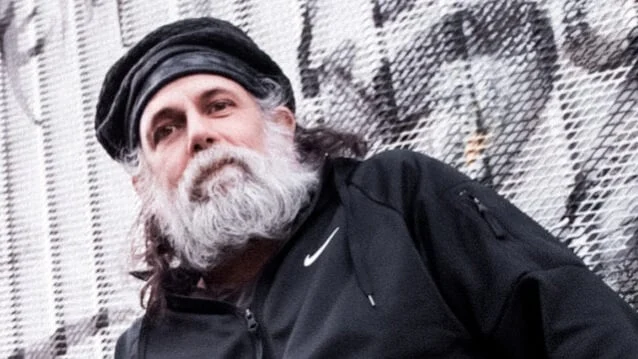
In a candid interview with Scott Penfold of Loaded Radio, Chris Barnes, the iconic vocalist of Six Feet Under and former frontman for death metal pioneers Cannibal Corpse, addressed the hypothetical scenario of a Rock and Roll Hall of Fame induction for his former band. Barnes expressed a willingness to perform with Cannibal Corpse again under such esteemed circumstances, but his optimism was tempered by a deep-seated skepticism regarding the current band members’ receptiveness. He articulated a belief that the current iteration of Cannibal Corpse would likely exclude him and former guitarist Jack Owen from any performance, a sentiment rooted in perceived animosity and a desire to marginalize his significant contributions to the band’s early legacy.
"Oh, yeah. I’ve always been ready to do that," Barnes stated, directly responding to the hypothetical induction. "They wouldn’t do that, though, because that’s just how they are. I mean, they wouldn’t ask me and Jack [Owen] to go up on stage with them at all. They wouldn’t. It wouldn’t happen. They would exclude us from it. And they might invite us up on stage with them, but they would never want me and Jack to play a song with them or anything like that."
This reluctance, according to Barnes, stems from a perceived feeling of threat from his vocal presence and songwriting contributions. He elaborated on a history of being marginalized and overlooked by his former bandmates, suggesting that his creative input cast a "shadow" over their attempts to steer the band’s direction. This perceived dynamic, he explained, was the ultimate catalyst for his departure from Cannibal Corpse in 1995, a move he now views as a positive turning point that directly led to the formation of Six Feet Under.
"I think it’s a part of they don’t like me and they also feel… Not to be boastful or conceited at all – I’m just being truthful – they feel threatened by my presence as far as a vocalist and my contribution to the band," Barnes explained. "They’ve always tried to marginalize that. They’ve always tried to ignore it, and they’ve always just not been very kind to me as far as that has gone, because my contribution to the band has always been a shadow to what they’ve tried to keep going and take on themselves. And that’s what they wanted to do. That’s why I was fired from the band, which I’m fine with. I’ve always been ready to do that. I’ve never had a problem with that. I’ve never been bitter about that at all. I’ve just stated my story and the facts that I know, and I’ve always said it, that the greatest blessing that’s come my way has been Six Feet Under and my putting this band together because it was my way out of that band, ’cause I wasn’t happy being in that band at a pretty early point. Six Feet Under was the best thing that ever happened to me. Getting kicked out of Cannibal Corpse was really – it was awesome when that happened. And Alex [Webster, Cannibal Corpse bassist] will even tell you, when he called me up to tell me that I was out of the band, I kind of laughed a little bit. I was, like, ‘That’s awesome. Thank you,’ basically."
The Genesis of Discontent: Creative Differences and Personal Friction
Barnes clarified that his unhappiness within Cannibal Corpse was not primarily an issue of creative dissatisfaction, but rather a fundamental disconnect with certain band members. While acknowledging a potential creative difference during the recording of their 1994 album "The Bleeding" – specifically his decision to tour with Six Feet Under instead of completing the album as dictated by the band – he emphasized that the core issue was personal.
"No. That was nothing to do with it at all," Barnes stated when asked if creativity was the primary reason for his unhappiness. "I mean, maybe in their minds, as far as the last recording session went, because I went on tour with Six Feet Under instead of finishing that album the way they were commanding me to finish it, and they knew I was not going to; I was sticking to my guns as far as those songs that I had written. And I guess I didn’t see that the way they wanted me to see it, so that might’ve been a creative difference. But for me, the most part was I just didn’t wanna be around those guys. I had never had a problem with Jack. It was Alex, Paul [Mazurkiewicz, Cannibal Corpse drummer] and Rob [Barrett, Cannibal Corpse guitarist] that I just didn’t wanna be in the same room with. So that’s really why I started Six Feet Under. A lot of people were, like – the party line was it was a side project. It wasn’t a side project for me – never once. It was really my escape pod. I went along with the party line, but it was never that for me. It was my way out."
This revelation sheds light on the internal dynamics that may have contributed to Barnes’s eventual exit, suggesting a more profound interpersonal rift than previously understood by the public.
A History of Divergence: Cannibal Corpse and Six Feet Under
The formation of Six Feet Under in 1995, immediately following Barnes’s departure from Cannibal Corpse, was not a casual undertaking but a deliberate strategic move for personal and professional liberation. This distinction is crucial, as many fans and media outlets at the time perceived Six Feet Under as merely a side project, a perception Barnes vehemently refutes.
"It was never a side project for me," Barnes reiterated. "It was my escape pod. I went along with the party line, but it was never that for me. It was my way out."
This foundational aspect of Six Feet Under’s inception underscores Barnes’s commitment to forging his own path in the death metal landscape. The current lineup of Six Feet Under, notably, features Jack Owen, another former member of Cannibal Corpse, further solidifying the band’s connection to their shared past while simultaneously highlighting their independent trajectory.
The Hall of Fame Hypothetical: A Glimpse into Unresolved Tensions
The discussion about a potential Rock and Roll Hall of Fame induction for Cannibal Corpse, while speculative, opens a window into the enduring complexities of the band’s history. The Rock and Roll Hall of Fame, historically, has been slow to embrace extreme metal genres, making any discussion of a death metal band’s induction a significant hypothetical. However, the growing recognition of diverse musical contributions in recent years, with nods to heavier acts in broader rock categories, makes such a scenario increasingly plausible.
In this context, Barnes’s willingness to participate contrasts sharply with his prediction of exclusion. This disparity suggests a lingering tension, potentially stemming from the circumstances of his departure and the subsequent evolution of Cannibal Corpse. The band’s enduring success and critical acclaim, particularly since Barnes’s exit, have undoubtedly solidified their place in death metal history, but the narrative of their origins remains intertwined with his foundational contributions.
Examining the Current Cannibal Corpse Dynamic
The current members of Cannibal Corpse, particularly bassist Alex Webster, have previously addressed the possibility of touring collaborations. In a September 2023 interview with Loaded Radio, Webster was asked about fans inquiring about a joint tour between Cannibal Corpse and Six Feet Under.
"People have asked [about the two bands touring together], but I think Six Feet just doesn’t really tour that much," Webster stated. "And we probably wouldn’t do it. It’s, yeah, like you said, sort of everything’s cool, but it’s sort of like, you do your thing, we’ll do our thing. And it’s fine."
This response, while diplomatic, echoes Barnes’s sentiment of separate paths. The current band operates with a clear demarcation, suggesting a preference for maintaining their established identity without revisiting past personnel dynamics in a performance capacity.
The Corpsegrinder Conundrum: A Vocalist’s Perspective
The interview also delved into the ongoing dynamic between Barnes and his successor in Cannibal Corpse, George "Corpsegrinder" Fisher. In a February 2025 appearance on "The Garza Podcast," hosted by Suicide Silence guitarist Chris Garza, Barnes addressed rumors of him blocking Fisher on social media.
"I haven’t had him blocked. In fact, on Instagram, I follow him," Barnes clarified. He recounted an instance where he confronted Fisher after seeing a YouTube video of Fisher making light of him during a live performance. Barnes initiated contact, expressing his bewilderment and offering an open line of communication. "Look, man, I never have said anything nasty about you at all. I don’t know why you’re doing this on stage about me," Barnes reportedly conveyed. He even offered his phone number for a direct conversation. "If you wanna talk on the phone, I’ll give you my phone number. We can talk it over." Despite the message being marked as "seen," Fisher never responded.
Critiques of Vocal Performance and Song Ownership
Furthering the discussion on "The Garza Podcast," Barnes did not hold back his critique of Fisher’s performance of the material he originally wrote and recorded. "I don’t think he sings my songs very well. I don’t. I think he walks through ’em," Barnes stated candidly. He admitted to poking back at Fisher in a "good humor" during a recent Six Feet Under tour, partly in response to Fisher’s perceived "insulting" remarks in the press regarding Cannibal Corpse’s early material.
A particularly sensitive point for Barnes is Fisher’s assertion that the songs he wrote are now "more his." Barnes vehemently rejects this notion, asserting his ownership of the lyrical content and creative genesis.
"And that really upsets me. Because they’ll never be his. He’s a karaoke singer when it comes to my songs. He is. Those aren’t his songs," Barnes declared. "He says they’re his songs because he’s sung them more times than I have. He didn’t write ’em. He doesn’t get publishing checks from ’em. Those are my songs. Those lyrics are from my brain. And for him to insult me that way, I take that really serious. And I think that that’s so ignorant and just so – just wrong. I think it’s wrong that he even signs the CDs or the album covers that he didn’t perform on." He drew a parallel, stating he wouldn’t sign "Gallery of Suicide" because he wasn’t on it.
Barnes even proposed a lighthearted, albeit pointed, challenge: "If he wants to settle it, like get in a race car on a track, see who can drive better. [Laughs] But I know he doesn’t know how to drive, so I’d probably win that race too."
Attempts at Reconciliation and Enduring Ambivalence
Despite the vocal criticisms, Barnes maintained that he has no personal animosity towards Fisher and previously attempted reconciliation. He recalled a meeting facilitated by Metal Blade Records founder Brian Slagel at an Iron Maiden concert, where he and Fisher engaged in conversation about video games.
"Listen, man, I tried to. I tried to. I’ve got no problem with him," Barnes stated. "Like I said, when I met him, I thought everything was cool, because we got into a room. We were at an Iron Maiden concert in one of the boxes. [Brian] Slagel kind of got us all together in the same room, and I was talking to him. I was having a good time talking about video games. I’m a ‘Call of Duty’ guy; he’s a ‘Warcraft’ guy – two different types of games."
He expressed respect for Fisher’s tenure as vocalist but reiterated his desire for reciprocal respect from the "other camp." Barnes also revealed an attempt to involve Alex Webster in a Six Feet Under performance in Portland, where he and Owen invited Webster to play bass on Cannibal Corpse songs "Stripped, Raped And Strangled" and "Hammer Smashed Face." Webster declined, a decision Barnes anticipated but still found poignant given the songs’ significance.
"I don’t know what grudge they’re holding against me, but they just don’t like me," Barnes concluded. "So, it’s okay. Like I said, I’m happier, and I’ve been happier in Six Feet Under than with those guys. I mean, those songs that I wrote with them, they are really important to me. That’s why we still do a couple of ’em."
A Look Back at "The Bleeding" and Songwriting Legacy
Barnes fronted Cannibal Corpse from their inception in 1988 until his departure in 1995, a period marked by the release of seminal albums that defined the death metal sound. His contributions during this era are undeniable, with songs like "Stripped, Raped And Strangled" and "Hammer Smashed Face" becoming anthems within the genre.
Reflecting on "The Bleeding" (1994) in a Cameo video message, Barnes discussed the band’s musical progression. "In Cannibal Corpse, with ‘The Bleeding,’ those guys as musicians were really wanting to progress the band musically in a way. I could kind of say why – I think they were wanting to, in a way, prove themselves as well-skilled musicians," he recalled. He acknowledged the challenging nature of the material and his enjoyment of the process, even expressing regret over the departure of guitarist Bob Rusay and the perceived pressure on him and Jack Owen.
"I didn’t want Bob to leave the band, and I didn’t want him to be forced out of the band, and neither did Jack," Barnes stated. "So it kind of was a strange thing with that whole situation, but it did bring about a good album with ‘The Bleeding.’ And ‘Stripped, Raped And Strangled’ is probably my favorite song that I’ve written. And ‘Hammer Smashed Face’ is probably the most successful song that I’ve written. But something about ‘Stripped, Raped And Strangled,’ to me, it showed something with the band that never appeared again with any of their albums after that, even ‘Created To Kill’ [the original title for ‘Vile’]."
He revealed a particularly telling anecdote: "I was told by one of the members I will never write another song like that, which I thought was a big mistake. So it’s a special song to me in that way, and I love that song. I’ll play that song forever." This statement highlights a profound creative directive that may have further alienated Barnes from the band’s evolving vision.
The persistent themes of artistic ownership, personal friction, and the enduring legacy of his songwriting continue to define Chris Barnes’s narrative within the death metal community. While a potential reunion for a Hall of Fame induction remains a distant, albeit acknowledged, possibility, the deep-seated tensions within the Cannibal Corpse camp suggest that such an event would be more symbolic than a genuine reconciliation. His focus remains on Six Feet Under, a band he unequivocally describes as his "escape pod" and a testament to his enduring desire for creative autonomy and personal fulfillment.
