

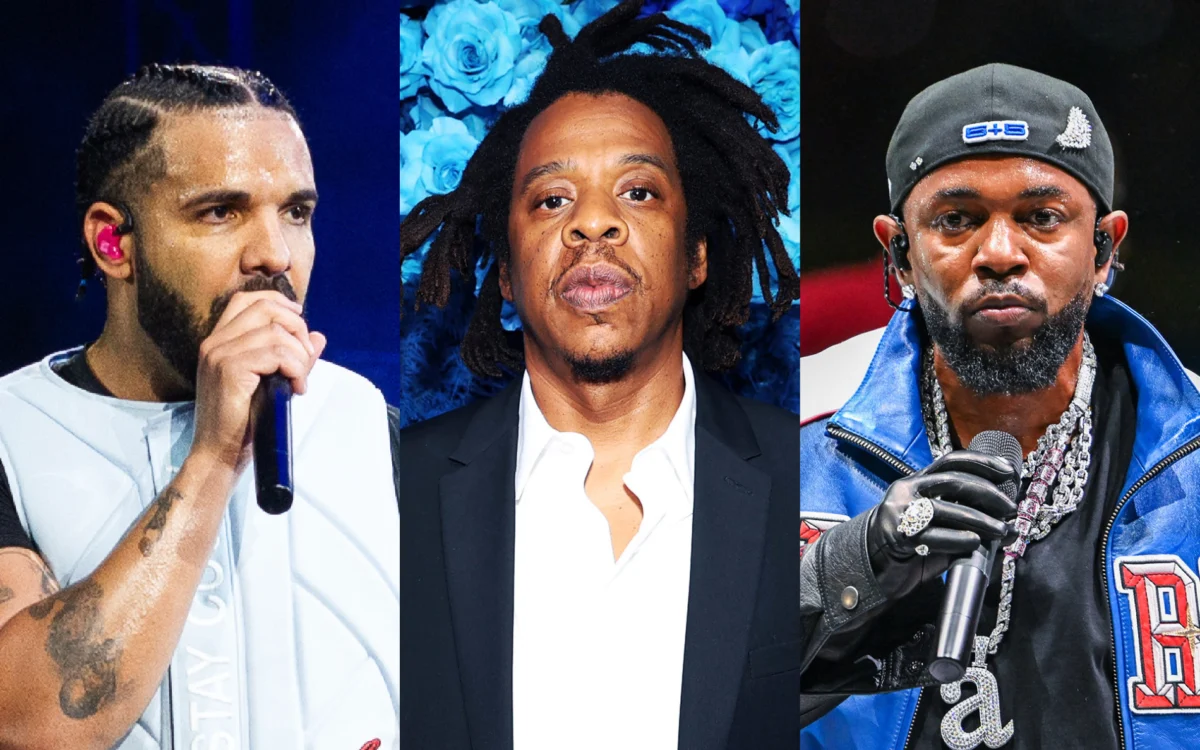
In a rare and candid interview with GQ, hip-hop mogul Shawn "JAY-Z" Carter has broken his silence on the seismic rap battle that has dominated the music landscape throughout 2024, involving titans Drake and Kendrick Lamar. While many fans and artists have reveled in the lyrical warfare, JAY-Z’s perspective offers a surprisingly nuanced and, for some, unexpected stance: he believes the feud has "gone too far," expressing concern over the escalating negativity and division it has fostered within the culture.
JAY-Z, who himself was a central figure in one of hip-hop’s most legendary feuds with Nas in the early 2000s, acknowledged the inherent excitement and musical output that often accompanies such lyrical confrontations. However, he articulated a profound discomfort with the current climate surrounding the Drake-Kendrick beef. "We love the excitement and I love the sparring and the music you get, but in this day and age, there’s so much negative stuff that comes with it that you almost wish it didn’t happen," JAY-Z stated in the interview, conducted ahead of his highly anticipated Reasonable Doubt and The Blueprint anniversary shows at New York’s Yankee Stadium in July.
The veteran artist elaborated on his concerns, pointing to the polarization that has taken root among fans. "Now, people that like Kendrick hate Drake, no matter what he makes or says. And it goes far, too. It’s like attacks on his character [and family]. I don’t know if I love that. I don’t know if it’s helpful to our growth," he explained, highlighting the personal and potentially damaging nature of the disses.
JAY-Z suggested that the intensity of the current rivalry may have inadvertently regressed hip-hop’s progress. He posed a thought-provoking question about the continued relevance of traditional rap battles in the modern era. "The Roc Nation mogul went on to claim that Kendrick and Drake’s beef inadvertently set hip-hop ‘a couple steps back’ and wonders whether the age-old tradition of battling ‘even needs to be a part of the culture anymore.’"
Despite his personal history with intense rap rivalries, JAY-Z admitted a personal struggle with his current viewpoint. "I hate that I have this point of view because I know what it sounds like, I know what it feels like. I hate it!" he confessed, emphasizing that his feelings stem from a genuine place, even if it contradicts his own past experiences. "It’s just how I feel."
A Vision for Constructive Competition
Looking beyond his reservations, the 56-year-old business magnate proposed an alternative model for maintaining hip-hop’s competitive spirit without resorting to destructive personal attacks. "I think we can achieve the same thing, as far as sparring with music, with collaborations more so than breaking the whole thing apart," he suggested, advocating for a more collaborative and unifying approach to artistic expression. This vision implies a shift from direct confrontation to a focus on showcasing individual strengths through shared projects, thereby elevating the culture as a whole.
Addressing Super Bowl Halftime Show Controversy
The interview also provided JAY-Z with an opportunity to address the recent backlash surrounding Kendrick Lamar’s 2025 Super Bowl halftime show performance. Rumors had circulated that his company, Roc Nation, which oversees the annual spectacle, had taken sides in the Drake-Kendrick feud by selecting Lamar for the coveted performance slot. JAY-Z vehemently refuted these claims, asserting that his decision was based purely on merit and Lamar’s exceptional year.
"I chose the guy that was having a monster year. I think it was the right choice. What do I care about them two guys battling? What’s that got to do with me? Have at it," he stated unequivocally. He further dismissed notions of a conspiracy to undermine Drake. "It’s like, what the fuck? I’m fucking JAY-Z! [laughs.] All due respect to him. I’m fucking Hov. Respectfully. It doesn’t make any sense."
Broader Reflections on Artistry and Legacy
Beyond the immediate rap battle discourse, JAY-Z delved into a wide range of topics, offering insights into his creative process, his relationships within the industry, and his reflections on his own iconic career.
On Potential Clipse Collaboration and Personal Truths
When asked about his near-collaboration on Clipse’s Let God Sort Em Out, JAY-Z revealed a deep-seated need for personal catharsis before engaging in new artistic ventures. He alluded to a past sexual assault lawsuit, stating, "I think the first thing that I say [about the sexual assault lawsuit], it has to be said from me." While he expressed a desire to remain open to creative opportunities, he emphasized the importance of addressing personal matters first. "I don’t want to be so rigid with it, though. I’m going to keep that open. I’m going to take that back. I don’t want to be so rigid. But at that moment, I was like, ‘Yeah, I want to do something.’ But in order for me to move forward, I got to get this shit out. I got to get it out." This suggests a profound connection between his personal well-being and his artistic output.
On His Relationship with J. Cole
JAY-Z expressed immense pride in J. Cole’s trajectory, dispelling any notion of negative feelings. "I don’t have any negative feelings for him. I’m actually super proud of him and what he’s done…" He recounted how DJ Clue initially introduced him to Cole’s early work, highlighting his consistent engagement with emerging talent and his deep appreciation for hip-hop culture. "I’m a fan of hip-hop and this culture. I’m listening to it all. I play it all. I’m playing songs that most people haven’t heard of."
On the Pursuit of New Music
Despite his prolific output over the years, JAY-Z indicated a thoughtful and deliberate approach to creating new music. He admitted to having "a lot of scratch ideas and they’re all bad," but emphasized the paramount importance of authenticity and personal fulfillment. "I don’t know what I need to create currently that’s going to fulfil me and make me happy, because that’s most important." He stressed that any new material must be a "true representation of how I feel" and cautioned against artists creating solely to please an audience, as "people can feel that because it’s not authentic." His goal remains to create "something timeless that I really love and that’s really honest and true to who I am."
On Kendrick Lamar’s Artistic Bravery at the Super Bowl
Reflecting further on Kendrick Lamar’s Super Bowl performance, JAY-Z acknowledged the artistic risks involved. "He could have made it a little easier on himself. The artistic choice to play the new album was brave in front of that big of an audience. Because even if 10 million people know some of these songs, there’s 120 million people that’re like, ‘What is he doing?’" He commended Lamar’s commitment to his vision, stating, "As an artist, to stand up there and do it and complete your vision — I had to tip my hat. I had high respect for him already, but, like, even more my respect was like, ‘He’s really about what he says he’s about.’"
Revisiting His Historic Beef with Nas
JAY-Z offered a candid reflection on his past rivalry with Nas, expressing regret for its intensity. He clarified that the feud’s origins were not solely tied to a single event but a culmination of factors. "It didn’t happen at the Summer Jam — that happened with ‘Lex with TV sets, the minimum’. It was a whole bunch of stuff leading up to that point." His current sentiment is one of respect and fondness: "I actually regret that because I really like Nas. He’s a really nice guy."
The Emotional Weight of 4:44 and Past Bravado
JAY-Z discussed the profound personal impact of his 2017 album, 4:44. He described it as an album he had "always afraid to make," one that was "pure and vulnerable, the real interior thoughts." He connected the album’s themes to childhood trauma and loss, acknowledging how these experiences are often suppressed and resurface in various ways. "At some point you got to figure out how you’re going to navigate the world." He contrasted this vulnerability with the "bravado" of his earlier work, which, while "very useful" and possessing "an allure," was ultimately "not sustainable." He recognized the necessity of his evolving artistic persona to avoid isolation and maintain genuine connections.
The Enduring Legacy of Reasonable Doubt
Looking back at the 30th anniversary of his debut album, Reasonable Doubt, JAY-Z challenged the conventional metrics of success based solely on initial sales figures. "When we first dropped Reasonable Doubt, we sold 43,000 records. The energy was like, ‘You’re new. You haven’t proven yourself.’" He emphasized that for him and his team, the act of releasing the album was the primary victory, achieved through a grassroots, "street-team approach." He asserted that its true impact was felt "on the streets," where it became a ubiquitous presence, a testament to its cultural resonance far beyond initial chart performance. "If you wasn’t there, now you’re looking at the analytics. Someone that speaks like that, you know they wasn’t there because if you were there, you’re like, ‘This not even a conversation.’ Anywhere you went, any car, Reasonable Doubt was going to play."
Nurturing Talent at Roc Nation: The J. Cole Approach
JAY-Z addressed the narrative that Roc Nation did not fully support J. Cole in his early career. He countered this by explaining his philosophy of artist development. "The narrative is that we [Roc Nation] didn’t love Cole. No, we believed in him enough to let him find his journey. It took him a minute, but he found his way." He underscored his commitment to providing artists with the "tools" to succeed on their own terms, rather than imposing pre-packaged hits. He drew a distinction between his relationship with his protégé Memphis Bleek, where direct guidance was more prevalent, and J. Cole, whom he allowed to "find his own direction." He highlighted the potential of collaborations with producers like Stargate and Wiz Khalifa, noting that Cole’s decision to forge his own path was respected.
Navigating Wealth and the American Dream
JAY-Z also tackled the criticism he has faced for becoming a billionaire, challenging the notion that success equates to "selling out." He cited the pervasive "American dream" narrative he grew up with, which emphasized self-reliance. However, he observed a shift in perception once individuals achieved significant wealth. "Then it was like, ‘You’re selling out because you’re making money.’ People had this allure for the ‘struggling artist’ — that’s a mind game, what we would call, back in the day, ‘tricknology.’ I’m not going for that." JAY-Z firmly stated his belief in creating art first and ensuring fair compensation, denying any involvement in unethical practices. "I make art first and then I make sure that I’m compensated for my art. I didn’t get here by taking advantage of people or taking advantage of the loopholes in the system, or some wrinkle in a capitalist structure." He described himself as a realist who understands the world "for what it is," advocating for strategic engagement with existing structures to effect progress for disenfranchised communities. "In order for us to progress forward, we have to deal with the world the way it is."
Unexpected Wisdom from Jon Bon Jovi
In a surprising anecdote, JAY-Z recalled a piece of advice from rock icon Jon Bon Jovi during his tenure as president of Def Jam Records in 2004. Bon Jovi, observing JAY-Z’s transition into a corporate role, wisely reminded him, "You’re an artist. Don’t forget you’re an artist." This simple yet profound counsel served as a crucial reminder of his core identity amidst the demands of the music industry’s business side.
