

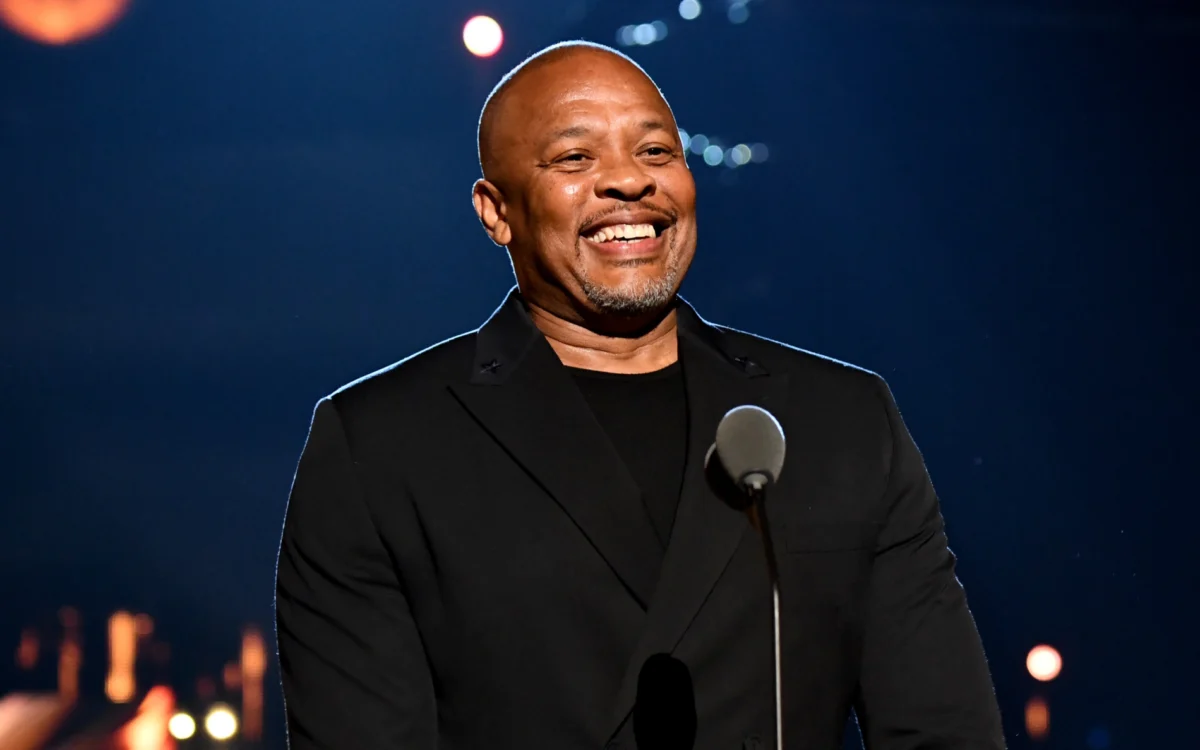
After years of anticipation and a highly publicized, albeit premature, declaration, legendary hip-hop producer and entrepreneur Dr. Dre has officially achieved billionaire status, cementing his place on Forbes’ prestigious 2026 Billionaires List. This monumental achievement marks a significant milestone not only for the artist himself but also for the music industry, highlighting the immense financial power that can be harnessed from creative and entrepreneurial endeavors. Dre is now positioned as the 3,332nd wealthiest individual globally, a ranking that places him in esteemed company, sharing his financial stratum with figures like Rihanna, Jared Kushner, and DoorDash co-founder Stanley Tang.
The wealth that propelled Dr. Dre into this exclusive club is primarily attributed to his foundational roles in two highly successful ventures: Aftermath Entertainment, the record label he established in 1996, and Beats Electronics, the audio technology company he co-founded in 2006. Forbes estimates his net worth to have crossed the $1 billion threshold, a testament to the enduring legacy of his musical empire and his astute business acumen in the technology sector. At 61 years old, Dre stands as one of only two rappers currently recognized as billionaires, a distinction he shares with fellow mogul JAY-Z, whose estimated net worth of $2.8 billion places him considerably higher on the Forbes list at number 1,504.
The journey to this financial apex has been a protracted one, marked by both immense success and a notable misstep in 2014. At that time, following the groundbreaking $3 billion sale of Beats Electronics to Apple, Dr. Dre, in a viral social media video alongside actor Tyrese, jubilantly declared himself "the first billionaire in hip-hop." This pronouncement, however, proved to be premature. Reports emerging shortly thereafter indicated that while the Apple acquisition significantly boosted his net worth to an estimated $800 million, it fell short of the coveted billion-dollar mark by a considerable margin. Further complicating the narrative, the book "After Steve: How Apple Became a Trillion-Dollar Company and Lost Its Soul" suggested that this public leak of the deal’s details, intended to celebrate the impending acquisition, may have actually cost Dre and his Beats co-founder Jimmy Iovine approximately $200 million. Apple CEO Tim Cook reportedly leveraged the premature announcement as a negotiating tactic to reduce the acquisition price.
This past decade has seen several prominent figures from the music industry achieve billionaire status, with Kanye West and Sean "Diddy" Combs also reaching this financial milestone at various points. However, subsequent controversies and business challenges have reportedly impacted their net worths, demonstrating the volatility that can accompany such immense wealth.
Dr. Dre’s inclusion on the Forbes list as a billionaire musician places him in an even more select group. He is one of only six musicians globally to have reached this 10-figure net worth. This elite fraternity includes JAY-Z, Rihanna, Beyoncé, Taylor Swift, and Bruce Springsteen, underscoring the exceptional financial success that can be achieved through artistic talent and strategic business ventures in the contemporary entertainment landscape.
The broader context of Forbes’ 2026 Billionaires List reveals a global landscape of unprecedented wealth accumulation. The list features nearly 3,500 individuals, with Elon Musk at the pinnacle. His ownership stakes in industry-disrupting companies like Tesla, SpaceX, and xAI have propelled his net worth to an astonishing $839 billion, dwarfing all other individuals on the list. This underscores a broader trend of technological innovation and entrepreneurial vision driving massive wealth creation in the 21st century.
The Genesis of a Mogul: From Compton to the Boardroom
Andre Romelle Young, known to the world as Dr. Dre, began his illustrious career in the late 1980s as a pioneering DJ and producer. His early work with the World Class Wreckin’ Cru and later, as a founding member of the iconic rap group N.W.A., laid the groundwork for his immense influence on hip-hop. His production style, characterized by its innovative use of sampling, intricate layering, and a signature "G-funk" sound, revolutionized the genre and set new standards for musical artistry.
Following his departure from N.W.A., Dre launched Aftermath Entertainment in 1996. This label became a launchpad for some of the most influential artists in hip-hop history, including Eminem, 50 Cent, and Kendrick Lamar. His meticulous approach to production and artist development, often described as perfectionistic, ensured that Aftermath consistently delivered critically acclaimed and commercially successful projects. The label’s success was not merely about releasing hit records; it was about cultivating a brand synonymous with quality, innovation, and a distinctive West Coast aesthetic.
The Beats Revolution: Disrupting the Audio Landscape
While his music career was already legendary, Dr. Dre’s most significant financial windfall came from his foray into the consumer electronics market. In 2006, he, alongside Jimmy Iovine and Dr. Dre, founded Beats Electronics. Recognizing a gap in the market for premium audio experiences, they set out to create headphones that offered a superior sound quality and a stylish design, appealing to a generation of music lovers who valued both auditory fidelity and aesthetic appeal.
Beats headphones quickly became a cultural phenomenon. Their distinctive red branding and association with hip-hop artists and athletes made them a must-have accessory. The company’s innovative marketing strategies, which focused on partnerships and endorsements within the entertainment and sports worlds, resonated deeply with their target demographic. This strategy, coupled with the product’s perceived superior sound, propelled Beats to become a dominant force in the headphone market.
The company’s trajectory was meteoric. By 2014, Beats Electronics was a global brand with a substantial market share. The subsequent acquisition by Apple for $3 billion was a landmark deal, signaling the tech giant’s strategic move to bolster its audio offerings and tap into the lucrative headphone market. This transaction was the primary catalyst that brought Dr. Dre tantalizingly close to billionaire status, and ultimately, according to Forbes’ latest assessment, pushed him over the edge.
A Decade of Waiting: The Path to True Billionaire Status
The period between the 2014 Beats sale and his official recognition on the 2026 Forbes list represents a decade of sustained wealth growth and prudent financial management. While the initial $800 million valuation following the Apple deal was substantial, it highlighted the complexities of calculating net worth, which is influenced by various assets, investments, and liabilities. The discrepancy between his initial public claim and the Forbes estimation also underscored the importance of official, audited financial reporting for definitive declarations of wealth.
Dr. Dre’s continued involvement in the music industry through Aftermath Entertainment, coupled with potential new ventures and investments, has evidently contributed to the steady accumulation of wealth. The longevity of his influence in music, both as a producer and a label head, has provided a consistent revenue stream. Furthermore, the residual value from the Beats acquisition, potentially through stock options or other financial instruments, may have also played a role in his ascent to billionaire status.
Broader Implications and Industry Impact
Dr. Dre’s achievement has far-reaching implications for the music and entrepreneurship sectors. It serves as a powerful testament to the financial potential that exists at the intersection of creative artistry and business innovation. For aspiring artists and entrepreneurs, Dre’s journey offers a compelling narrative of how dedication, talent, and strategic vision can lead to extraordinary financial success.
His status as one of the few musicians to achieve this level of wealth also prompts a broader discussion about the economic landscape of the music industry. While streaming revenues and digital distribution have democratized access to music creation and consumption, the path to significant financial success often requires more than just artistic talent. It demands shrewd business acumen, a deep understanding of market trends, and the ability to build and manage successful enterprises.
Furthermore, the inclusion of Dr. Dre and other artists like JAY-Z and Rihanna on billionaire lists challenges traditional perceptions of wealth creation, demonstrating that significant fortunes can be built beyond conventional industries like finance or technology. It highlights the growing economic power of the entertainment and cultural sectors and their capacity to generate substantial wealth for individuals who can effectively leverage their influence and creativity.
The presence of Dr. Dre on the 2026 Forbes Billionaires List is more than just a personal triumph; it is a landmark moment that reaffirms his status as a true titan of both the music industry and the business world. His journey, marked by innovation, resilience, and a decade-long pursuit of a financial milestone, finally culminates in his well-deserved place among the world’s wealthiest individuals.
