

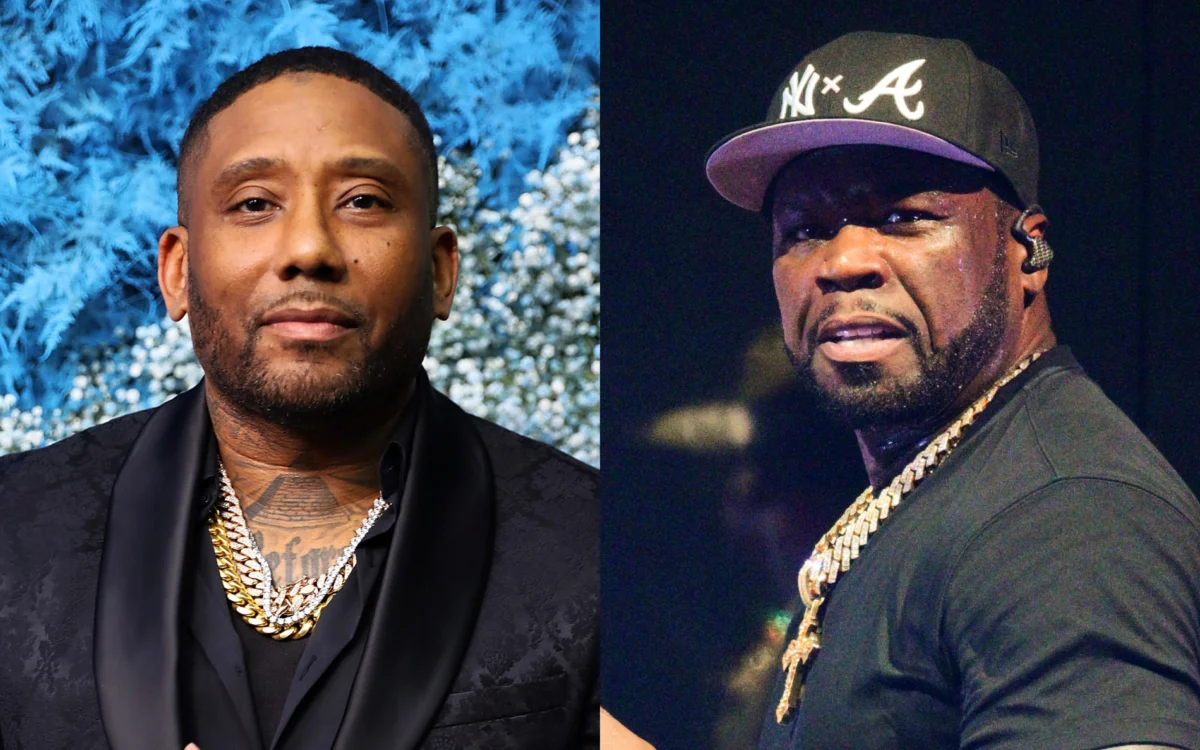
The rap world is once again abuzz with a new lyrical confrontation, this time between Brooklyn rapper Maino and the formidable 50 Cent. Maino has officially entered the fray, releasing a diss track titled "Bleed Like Us" on Wednesday, March 11, directly targeting 50 Cent. This move escalates an ongoing tension that has simmered between the two artists, adding another layer to the already complex rap beefs 50 Cent has been involved in recently, notably with T.I.
"Bleed Like Us" is a direct response to 50 Cent’s recent track, "No More Tricks, No More Tries," which he released in collaboration with Max B. While "No More Tricks, No More Tries" was initially perceived by many fans as a jab at T.I., further fueling the public discourse surrounding the widely publicized feud between 50 Cent and the Atlanta rap legend, the accompanying visual content from 50 Cent clarified his intended target.
A Lyrical Salvo with Deep Roots
Maino’s diss track is heavily inspired by The Notorious B.I.G.’s seminal 1997 track, "Niggas Bleed." This homage is not merely stylistic; it serves as a thematic foundation for Maino’s accusations against 50 Cent. The Brooklyn rapper unleashes a barrage of lyrical attacks, directly addressing past domestic violence allegations leveled against 50 Cent. Furthermore, Maino questions the authenticity of 50 Cent’s claims of surviving nine gunshot wounds, dismissing them as mere "capping," a slang term for boasting or lying. A particularly pointed accusation leveled by Maino is that 50 Cent allegedly cooperates with authorities to undermine his rivals, a serious charge within the hip-hop community where loyalty and street code are paramount.
The lyrical content of "Bleed Like Us" is as follows:
"Be careful when you come at me, n*gga, you couldn’t humble me / Why the ones you beef with end up in fed custody? / 50 ways to catch a killer, is that your energy? / Only Black men, no white men, is your enemy?"
Maino, known for his own hard-hitting tracks like "Hi Hater," demonstrates a sharp lyrical prowess by skillfully reinterpreting some of 50 Cent’s most iconic songs to serve as the basis for his disses. This technique not only showcases Maino’s lyrical dexterity but also directly challenges 50 Cent’s legacy and public persona.
He continues his assault:
"Only white kids in the ‘burbs thought you was gangsta / We fucked with you ’cause of your story, thought you was like us / Just to find out this whole time you was the wanksta."
The track concludes with an ominous warning, seemingly directed at 50 Cent’s continued pursuit of dominance and potential self-destructive tendencies: "Getting rich wasn’t enough, still want to die?" This line suggests a deeper commentary on the relentless nature of fame and the perceived hunger for conflict within the music industry.
The Genesis of the Beef: A Multifaceted Conflict
The animosity between 50 Cent and Maino, along with Jim Jones and Fabolous, appears to stem from a critical discussion on their collaborative podcast, "Let’s Rap About It," which also features Dave East. Late last year, the trio voiced their disapproval of 50 Cent’s documentary about Sean "Diddy" Combs. Jim Jones, in particular, expressed his dissatisfaction, stating, "You don’t want nobody doing a documentary trying to make your whole character look weak. That’s petty behavior… It’s really not a documentary; it’s more like a mockumentary."
This criticism did not go unnoticed by 50 Cent, who responded with a series of Instagram posts. He not only fired back at Jones but also extended his animosity to the entire "Let’s Rap About It" crew. 50 Cent then escalated the conflict by publicly accusing Maino, Jones, and Fabolous of being delinquent in their rent payments for the studio space where they record their podcast. He claimed they owed a substantial $250,000 for the venue, derisively stating, "These bums are trying to win best dressed award and can’t pay their bills."
Adding another layer to this developing narrative, 50 Cent later claimed to have purchased the building where the podcast is recorded. This move, if substantiated, would place him in a landlord position over his rivals, a tactical maneuver that has further intensified the public spectacle. This was followed by the release of security footage purportedly showing Jim Jones attempting to gain entry to the building by force, kicking down doors, which 50 Cent then used as leverage to threaten the termination of Jones’s tenancy agreement.
The "No More Tricks, No More Tries" Visual and Its Implications
The music video for 50 Cent’s "No More Tricks, No More Tries" was a significant turning point in clarifying the targets of his lyrical assault. While many initially interpreted the track as a diss aimed at T.I., the video explicitly featured imagery of Maino, Jim Jones, and Fabolous. The AI-generated visuals included shots of the trio, with 50 Cent’s aggressive interjections like "Fuck you!" The video also controversially depicted a recreation of the prison attack that resulted in Maino’s facial scar, a deeply personal and traumatic event for the rapper. This visual choice was widely seen as a particularly harsh and disrespectful tactic.
In an Instagram post accompanying the video, 50 Cent addressed the public’s initial assumptions, stating, "Y’all thought I was talking about the Cosby’s. I’ll deal with Bill later. I am the algorithm!" This statement not only dismissed the T.I. connection but also highlighted 50 Cent’s self-perception as a master manipulator of public discourse and media narratives.
Historical Context of Hip-Hop Beefs
The current exchange between Maino and 50 Cent is part of a long and storied tradition of diss tracks and lyrical confrontations within hip-hop culture. These feuds, while often fueled by genuine animosity, have also served as powerful promotional tools, generating significant buzz and driving engagement for the artists involved. Historically, diss records have been a way for artists to establish dominance, settle scores, and gain notoriety. From the legendary East Coast-West Coast rivalry of the 1990s to more recent exchanges, these lyrical battles are an integral part of hip-hop’s DNA.
The use of past traumas, such as Maino’s facial scar, as fodder for diss tracks represents a particularly aggressive and often criticized aspect of these feuds. While some argue it is simply part of the game, others find it to be a violation of ethical boundaries within the genre. The inclusion of such personal attacks can significantly impact the public perception of the artists involved and the culture as a whole.
Broader Implications and Future Outlook
The escalation of this beef into a full-fledged diss track by Maino suggests a continued and potentially prolonged conflict. The involvement of other prominent figures like Jim Jones and Fabolous indicates a broader territorial dispute, potentially impacting the dynamics of their respective crews and their standing within the New York hip-hop scene.
50 Cent’s strategic use of social media, visual content, and alleged real estate maneuvers demonstrates his ongoing mastery of modern rap warfare. His ability to generate controversy and maintain a constant presence in the public eye remains unparalleled. Maino’s response, however, signifies a willingness to engage directly on wax, leveraging a classic hip-hop diss format to challenge 50 Cent’s narrative.
The implications of this ongoing feud extend beyond the immediate artists. It highlights the enduring power of lyrical confrontation in hip-hop and the complex interplay between personal history, public image, and artistic expression. As the situation unfolds, the hip-hop community will undoubtedly be watching to see how these narratives develop and what further lyrical ammunition is deployed. The outcome of this particular exchange could have a lasting impact on the careers and reputations of all parties involved, further cementing the volatile and dynamic nature of the hip-hop landscape. The industry continues to grapple with the ethical considerations of these public spats, while fans remain captivated by the drama and the lyrical artistry that often accompanies it.
