

The German communications industry is currently navigating a period of profound structural realignment, characterized by a challenging fiscal year in 2025 and a cautious yet determined outlook for 2026. According to the latest GWA Spring Monitor, released by the German Association of Leading Communications Agencies (GWA), the sector experienced a significant contraction in gross income during 2025, with revenues falling by an average of 2.7 percent. This decline represents a notable acceleration of the downward trend observed in 2024, where revenues dipped by a more modest 0.9 percent. Despite these immediate financial setbacks, the industry is signaling a strategic shift toward aggressive new business acquisition and technological transformation as it seeks to restore profitability and relevance in an increasingly volatile global market.
The GWA Spring Monitor 2026 serves as a critical barometer for the health of Germany’s creative and strategic consulting sector. The findings underscore a bifurcated landscape where the gap between "winners" and "losers" is widening. While the average profit margin for agencies stood at 7.5 percent in 2025, there is a prevailing sense of optimism regarding a recovery; agencies are projecting a rebound in returns to an average of 10.8 percent by 2026. However, this recovery is predicated on the ability of agencies to adapt to a "new normal" where traditional growth drivers have been replaced by a relentless pressure to innovate and a need for rigorous efficiency.
A Fractured Financial Landscape: Revenue and Profitability Trends
The 2.7 percent average revenue decline in 2025 masks a high degree of volatility within the GWA membership. The data reveals a starkly divided industry: 43.7 percent of surveyed agencies managed to report revenue growth despite the economic climate, while a majority of 50.7 percent reported significant losses. This disparity suggests that agency performance is no longer tied solely to general market movements but is increasingly dependent on specific client portfolios, service specializations, and the speed of internal transformation.
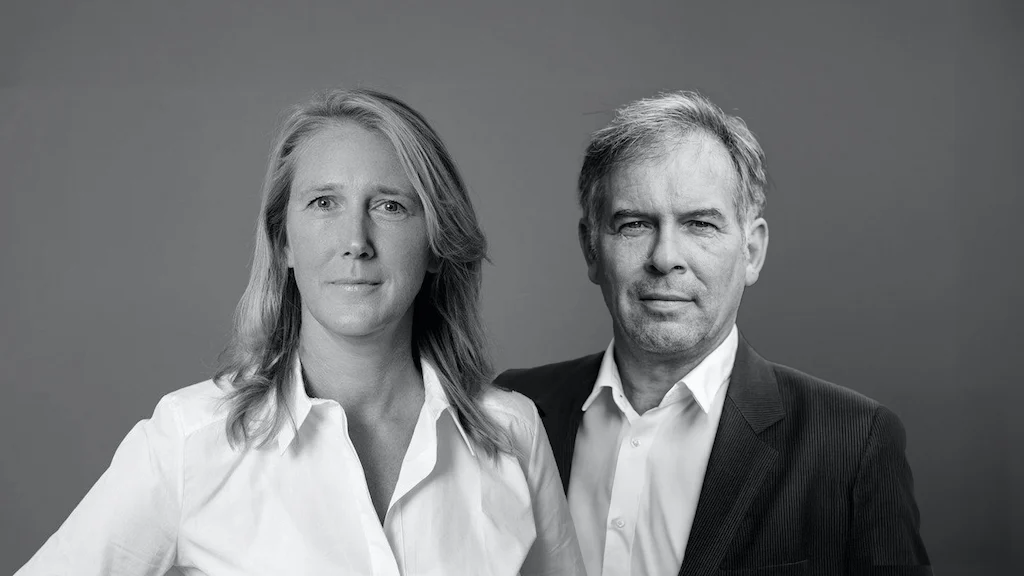
Larissa Pohl, President of the GWA, noted that the current economic, social, and technological shifts are impacting agencies in vastly different ways. She emphasized that a healthy agency development is no longer a "self-runner" or a guaranteed outcome of historical prestige. Instead, success in 2025 and 2026 is being defined by an agency’s ability to provide bespoke answers to the challenges of Artificial Intelligence (AI) and shifting client demands.
The projected rise in profit margins to 10.8 percent in 2026 suggests that agencies are aggressively cutting costs and optimizing internal processes. This "leaner" approach is a direct response to the 2025 slump. By streamlining operations and integrating automated tools, agencies hope to decouple revenue growth from headcount growth, thereby protecting their bottom lines even if top-line revenue remains under pressure from a stagnant German economy.
The Stagnation Trap: Macroeconomic Obstacles and the AI Threat
For the second consecutive year, the primary obstacle to growth cited by German agencies is the weakening national economy. An overwhelming 98 percent of respondents identified the general economic climate as the most significant "growth brake" for their business development, up from 91 percent in the previous year. This near-unanimous concern reflects broader anxieties within the German "Mittelstand" and large corporations, many of whom have tightened marketing budgets in response to high energy costs, geopolitical instability, and sluggish domestic consumption.
While the macroeconomy remains the external threat, a more structural challenge is emerging from within the technological sphere. Nearly half of the agencies (49 percent) now view the replacement of traditional agency services by AI as a major challenge. In previous cycles, AI was often discussed in terms of potential and optimization; in 2026, it is being viewed through the lens of substitution. Clients are increasingly utilizing in-house AI tools for basic content creation, social media management, and data analysis—tasks that were once the bread and butter of mid-sized agencies.
Interestingly, the once-dominant concern regarding the shortage of skilled workers has plummeted in the rankings of growth inhibitors. Previously ranked as the second most pressing issue at 50 percent, it has now fallen to seventh place, cited by only 30 percent of agencies. This shift does not necessarily indicate that the talent gap has been closed, but rather that the cooling economy and the resulting hiring freezes or layoffs have temporarily eased the pressure on the labor market.
Strategic Realignment: The Surge in New Business Investment
In response to the erosion of existing client budgets, the German agency landscape is pivoting toward a "growth through acquisition" strategy. The GWA Spring Monitor highlights that 80 percent of agencies now view the acquisition of new customers as the single most important factor for their economic development in 2026. This focus on "New Business" has led to a significant professionalization of agency marketing and sales departments.
Data from the GWA Forum for Agency Marketing supports this trend, showing that agencies are not only increasing their internal focus on self-promotion but are also allocating more capital and personnel to these efforts. Investment in New Business activities has surged: 57 percent of agencies reported increasing their spending in this area, a sharp rise from 39 percent in the previous year.
This shift marks a departure from the traditional "referral-based" growth model that dominated the German advertising scene for decades. In 2026, agencies are behaving more like tech startups or high-end management consultancies, utilizing data-driven lead generation, sophisticated content marketing, and dedicated sales teams to fill their pipelines. This move is necessitated by a decrease in planning security; the monitor found that only 50.6 percent of expected 2026 revenues were contractually secured at the start of the year, down from 52.8 percent in 2024.
Human Capital and the Workforce: Stability Amidst Uncertainty
The employment outlook within GWA agencies for 2026 remains highly inconsistent, reflecting the uneven financial performance across the sector. Approximately 45 percent of agencies intend to maintain their current staffing levels, acting as a stabilizing force in the creative economy. However, the remainder of the industry is split: 28 percent plan to expand their teams to support new business and digital transformation efforts, while 27 percent are preparing for moderate to significant staff reductions.
This parity between hiring and firing suggests a structural churn within the industry. Agencies are likely shedding roles associated with traditional, manual production—tasks increasingly handled by AI—while simultaneously seeking specialists in data science, AI prompt engineering, and strategic consulting. The decline of the skilled labor shortage as a top-tier concern further suggests that the power dynamic in the hiring market has shifted slightly back toward employers, as agencies become more selective in their recruitment during lean times.
Transformation Pressure and Resilience
Despite the somber revenue figures for 2025, the GWA reports a high level of psychological and structural resilience among its members. A staggering 84 percent of agencies acknowledge a "strong or very strong" pressure to transform their business models. Far from being a source of despair, this recognition is viewed by industry leadership as a necessary catalyst for long-term survival.
Larissa Pohl described the widespread acknowledgement of transformation pressure as "good news," arguing that the era of "business as usual" is definitively over. The monitor found that 79 percent of agencies feel they are economically "well or very well" positioned to handle this transition. This confidence suggests that while the transition is painful, the leading agencies have spent the last several years shoring up their balance sheets and investing in the infrastructure necessary to pivot their service offerings.
The resilience of GWA agencies is often underestimated by the public, according to Pohl. By proactively addressing the challenges of AI and the changing demands of the "CMO of the future," these firms are attempting to move up the value chain, transitioning from execution partners to indispensable strategic advisors.
The Client-Agency Relationship: A "Rougher" Climate
One of the more concerning findings of the 2026 Spring Monitor is the reported deterioration in the relationship between agencies and their clients. One-third of agencies reported that the atmosphere has become "rougher or worse." The primary drivers for this friction are increased price pressure, a lack of transparency in procurement processes, and a decline in the quality of creative briefings.
As corporations face their own economic pressures, they are demanding more for less, often leading to a transactional rather than a partnership-based relationship. Poorly defined briefings, in particular, lead to inefficiencies and wasted resources—a luxury that neither side can afford in the current climate. However, the report is not entirely pessimistic regarding client relations; 62.5 percent of agencies described the mood as stable or even improving.
Pohl emphasized that in times of high success pressure, a collaborative partnership is more critical than ever. The agencies that are thriving appear to be those that can demonstrate clear ROI to their clients and those that have successfully navigated the shift from being a "vendor" to a "partner" in the client’s own digital and sustainable transformation.
Chronology of the Industry Shift: 2024–2026
To understand the 2025 revenue drop, one must look at the timeline of the preceding years. In 2024, the industry began to feel the first real tremors of the post-pandemic correction and the initial impact of the energy crisis. The 0.9 percent dip in 2024 was initially viewed as a temporary cooling. However, as 2025 progressed, the combination of sustained high interest rates in the Eurozone and the rapid maturation of Generative AI tools created a "perfect storm."
Throughout 2025, many large German advertisers—particularly in the automotive and chemical sectors—announced sweeping cost-cutting measures. This led to a wave of project cancellations and the "insourcing" of creative services. By the time the GWA conducted its Spring 2026 survey, the industry had clearly internalized these shocks, leading to the massive 98 percent consensus on the economy as a growth inhibitor.
Looking forward, the second half of 2026 is viewed as the potential turning point. If the projected return to a 10.8 percent margin holds true, 2026 will be remembered as the year the German agency landscape successfully "right-sized" itself, trading high-volume, low-margin production work for high-value, tech-integrated consulting.
Implications for the Future of Communications
The findings of the GWA Spring Monitor 2026 suggest that the German communications industry is at a crossroads. The 2.7 percent revenue decline is a painful reminder of the sector’s vulnerability to macroeconomic cycles, but the aggressive pivot to new business and transformation indicates a refusal to manage decline.
The long-term implications are clear: the "agency of the future" will likely be smaller in terms of traditional headcount but more profitable per employee. The integration of AI will move from the periphery to the core of agency operations, not just as a tool for creation but as a fundamental component of the business model. Furthermore, the professionalization of agency marketing suggests that the era of the "quietly brilliant" agency is over; in a crowded and shrinking market, visibility and clear value propositions are the only currency that matters.
As the industry moves through 2026, the focus will remain on whether the 60 percent of agencies expecting revenue growth can actually deliver. If the German economy stabilizes and the investments in transformation begin to yield results, the 2025 slump may eventually be seen not as the beginning of the end, but as the difficult birth of a more resilient, tech-forward creative sector.
