

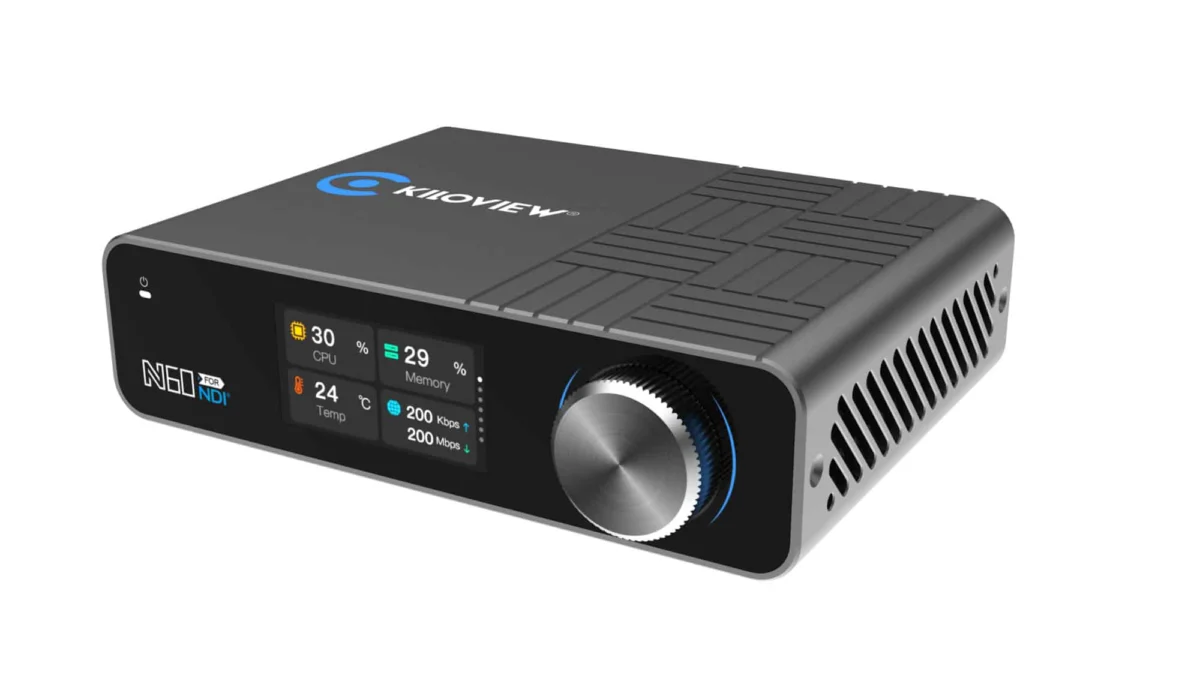
The Kiloview N60 represents a significant milestone in the rapid maturation of Network Device Interface (NDI) technology, serving as a high-performance bidirectional converter designed to bridge the gap between traditional HDMI sources and IP-based production environments. As the broadcast and professional AV industries increasingly pivot toward AV-over-IP architectures, the demand for hardware that can handle 4K Ultra High Definition (UHD) signals with high color fidelity has reached a critical peak. The N60 arrives as a second-generation 4K solution from Kiloview, a Chinese manufacturer that has established itself as an agile first-mover in the NDI ecosystem. By integrating support for both Full NDI and the high-efficiency NDI|HX protocols, the N60 aims to provide a versatile toolset for live event producers, corporate media departments, and broadcast engineers who require uncompromising image quality and low-latency transmission.
The Technological Trajectory of Kiloview and the NDI Ecosystem
To understand the position of the N60 in today’s market, one must look at the chronology of Kiloview’s product development. The company entered the scene with entry-level HD models, specifically the N3, which focused on 3G-SDI conversion, and the N4, tailored for 1080p60 HDMI workflows. As the industry moved toward 4K, Kiloview responded with the N30 and N40 models, which introduced 12G-SDI and 4K HDMI capabilities, respectively. The N60 is the direct successor in this lineage, incorporating feedback from professional users who demanded better color depth and more robust physical interfaces.
The broader context of this release is the evolution of NDI itself, a protocol developed by NewTek (now part of Vizrt). Since its inception, NDI has undergone several iterations, moving from the original high-bandwidth version to NDI|HX (High Efficiency), and more recently, NDI 5 and NDI|HX3. The N60 is designed to operate within this modern framework, offering compatibility with NDI|HX2 and promising future-proofing through the eventual implementation of NDI|HX3. This flexibility is essential for environments where network bandwidth may be a limiting factor, allowing users to choose between the visually lossless but bandwidth-heavy Full NDI and the more compressed, network-friendly HX variants.
Hardware Design and Ergonomic Innovations
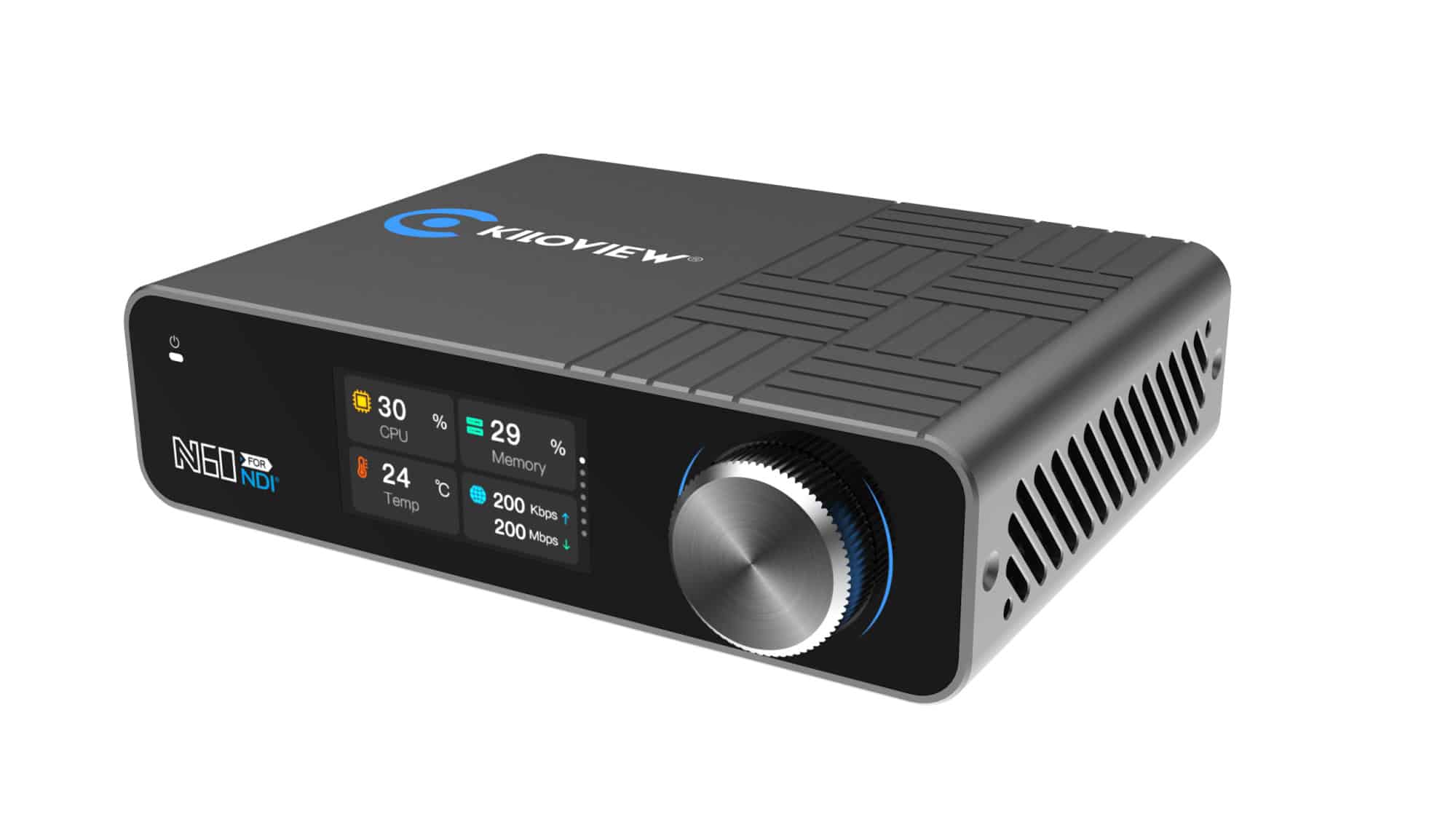
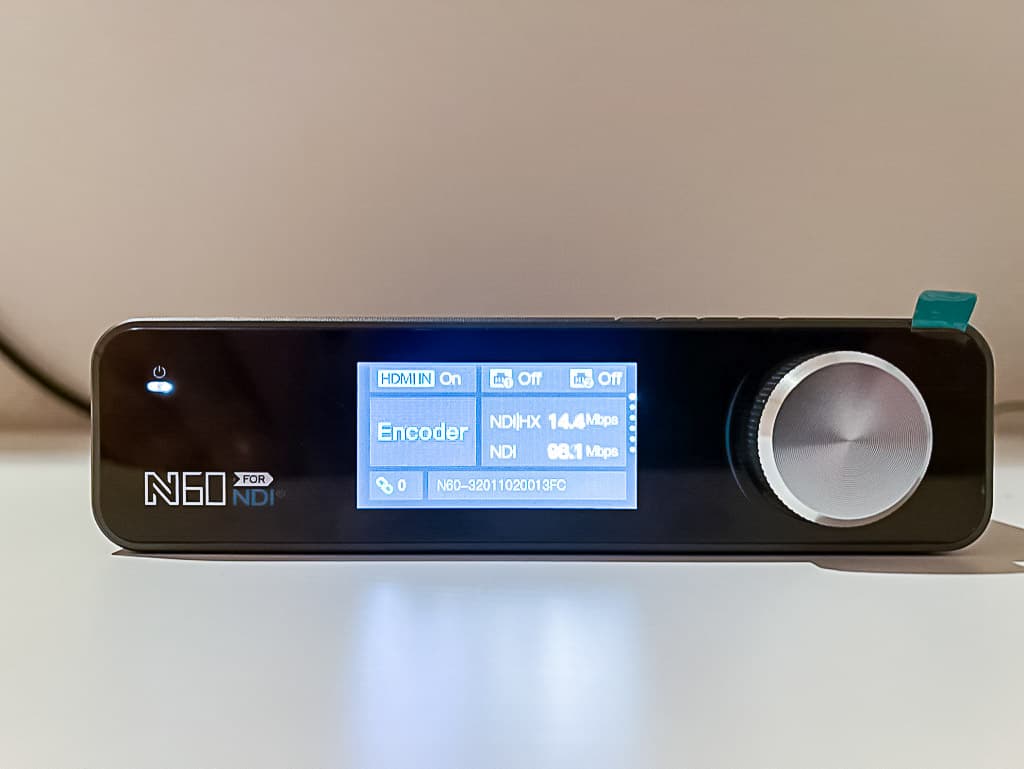
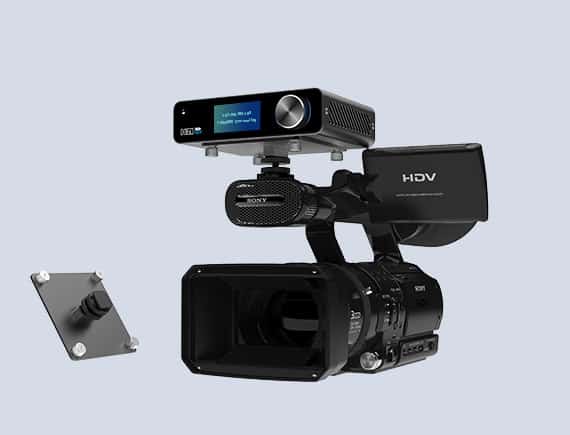
One of the most striking departures from previous Kiloview designs is the inclusion of a 1.96-inch LCD screen on the front of the N60, accompanied by a "Magic Rotor"—a physical multi-function dial. In an industry where many NDI converters are "headless" units managed exclusively through web browsers, the N60 provides immediate tactile feedback. This allows technicians to monitor bitrates, IP addresses, and signal status directly on the device. For camera-mounted applications, the screen doubles as a large Tally indicator, changing color to signal "Preview" or "Program" status to the talent and camera operator.
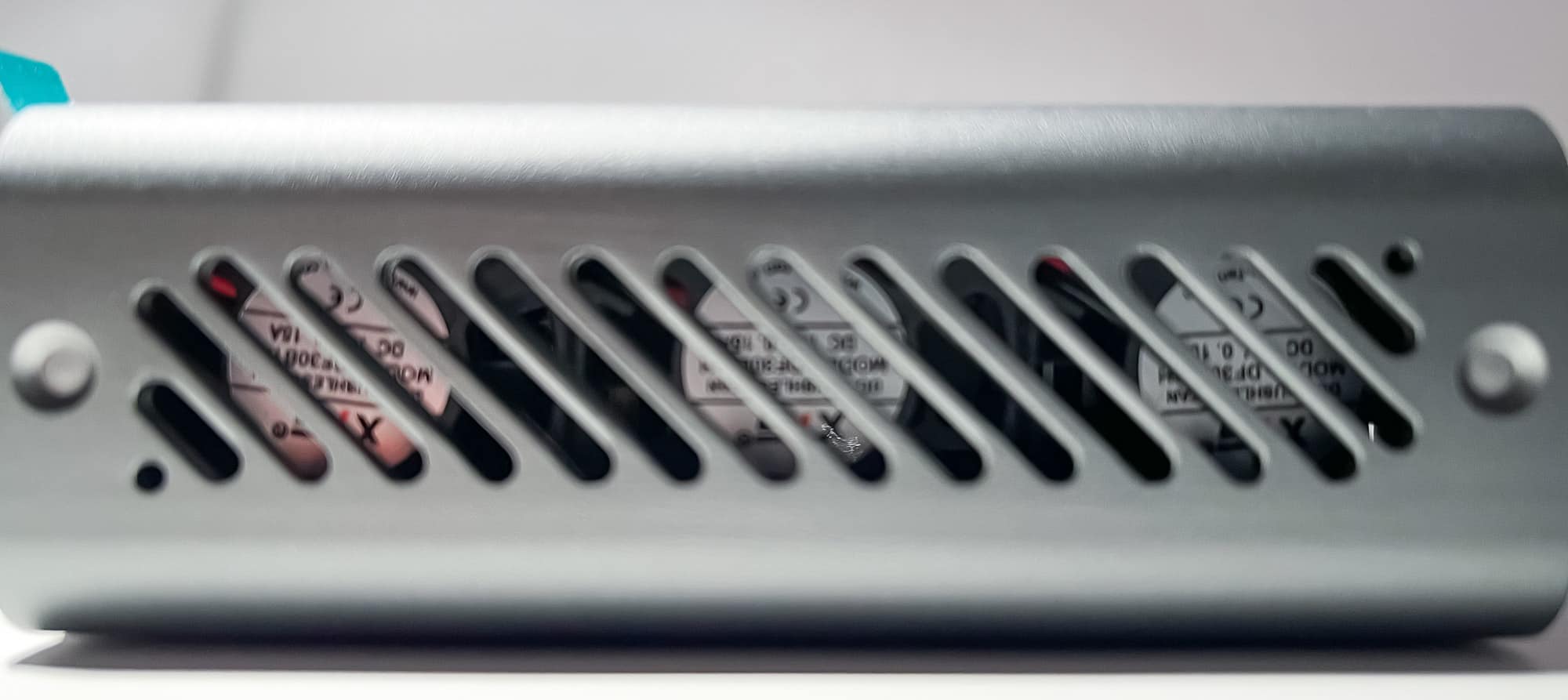
However, the physical design also reflects the high processing power required for 4K 10-bit conversion. The N60 is larger and heavier than its predecessors and features a sophisticated thermal management system consisting of three internal fans. While these fans ensure the device remains stable during intensive 4K 60fps encoding, they do introduce an acoustic footprint. In quiet studio environments, the fans can become audible when the unit is under heavy load, though they typically remain dormant or operate at low speeds when handling standard HD signals.
Color Fidelity and Image Processing Capabilities
The primary technical advancement of the N60 lies in its internal image processing engine. While earlier generations of affordable NDI converters were often limited to 4:2:0 8-bit color sampling, the N60 supports 4:2:2 10-bit color depth. This shift is vital for professional broadcast standards, as 10-bit color provides 1,024 levels of luminance per channel compared to the 256 levels found in 8-bit systems. This results in significantly smoother color gradients and eliminates the "banding" artifacts often seen in skies or shadowed backgrounds.
Furthermore, the support for 4:2:2 chroma subsampling ensures that twice as much color information is preserved compared to 4:2:0. This is a prerequisite for high-quality chroma keying (green screen work) and professional color grading in post-production. By handling 4K signals at up to 60 frames per second through its HDMI 2.0 interface, the N60 ensures that motion remains fluid, a necessity for sports broadcasting and high-action live events.
Advanced Connectivity and Network Redundancy
The N60 is equipped with dual Network Interface Controllers (NICs), a feature rarely found in compact converters. This allows the device to output NDI streams to two different networks simultaneously, providing a layer of redundancy or allowing for segregated control and media planes. One of these ports supports Power over Ethernet (PoE), enabling the device to be powered through a single CAT6 cable connected to a compatible network switch. The power consumption remains relatively efficient at approximately 16 watts, despite the increased processing overhead.
A critical safety consideration noted by technical experts involves the use of PoE. With voltages reaching up to 57V, a damaged network cable or a short circuit can easily destroy the sensitive NIC of the converter. Industry best practices suggest that all cables used with the N60 undergo a physical inspection or a continuity test before being deployed in a PoE environment to prevent hardware failure.
Versatility in Encoder and Decoder Modes
The N60 is a bidirectional device, meaning it can be toggled between Encoder and Decoder modes, though it cannot perform both functions simultaneously. In Encoder mode, the HDMI output acts as a loop-through, allowing a local monitor to view the source signal without latency. In initial firmware versions, some users reported that audio extraction from the HDMI loop-through was inconsistent, highlighting the ongoing nature of firmware refinement in such complex IP devices.
In Decoder mode, the N60 can take any NDI source from the network and convert it back to an HDMI signal for display on a monitor or projector. The device supports a "Quick Switch" feature, allowing users to pre-program up to nine NDI sources and toggle between them using a standard USB numeric keypad. This effectively turns the N60 into a simple NDI receiver/router. However, a notable limitation in the current workflow is that the N60 does not "announce" itself on the network when in Decoder mode. Unlike other NDI receivers that appear in discovery tools like NDI Studio Monitor, the N60 requires the operator to manually enter its IP address into a web browser for configuration, a step that adds friction to the setup process.
Unique Features: USB Intercom and Video Grabber
Beyond standard NDI conversion, Kiloview has integrated several specialized features that expand the N60’s utility. The unit includes a USB port that supports headsets, allowing it to function as an intercom endpoint. When paired with the Kiloview Intercom System (KIS), the N60 facilitates communication between the gallery and the camera operator without the need for a separate dedicated beltpack system.
Additionally, the N60 features a USB-B and USB-C interface that allows it to function as a "USB Grabber." This enables the device to take a USB video signal—such as from a webcam or a specialized medical camera—and convert it into an NDI stream. Conversely, it can also act as a UVC (USB Video Class) source for a computer, allowing an NDI stream to be recognized as a standard webcam in software like Zoom, Microsoft Teams, or OBS Studio.
Market Position and Industry Implications
At a manufacturer-suggested retail price of approximately €815, the Kiloview N60 occupies a competitive middle ground. It is more expensive than basic HD converters but significantly more affordable than high-end broadcast infrastructure from legacy manufacturers. Its primary competition comes from the BirdDog 4K family and Magewell’s Pro Convert series.
The N60’s feature set suggests a shift in the AV industry toward "Swiss Army Knife" devices. By combining 4K conversion, local recording to TF cards (in .mov format), intercom support, and USB grabbing into a single unit, Kiloview is targeting the "one-man-band" producer and small-to-medium production houses. The ability to record a high-quality backup of the camera signal locally while simultaneously streaming it over the network provides a safety net that is highly valued in live environments.
Analysis of Operational Challenges
While the N60 is a powerhouse, it is not without its operational hurdles. The reliance on active cooling means that placement is critical; it cannot be tucked away in unventilated enclosures or placed too close to sensitive microphones. Furthermore, the complexity of the device means that firmware updates are a frequent necessity to resolve bugs, such as the aforementioned HDMI audio issues or network discovery behaviors in Decoder mode.
The "Magic Rotor" and front-facing screen, while innovative, also present a logistical irony. If the N60 is mounted on top of a camera to serve as a Tally light for the talent, the screen and dial are facing away from the operator. This requires the operator to move to the front of the camera to make adjustments, or more likely, rely on the web-based remote interface.
Conclusion: The Future of IP Video Conversion
The Kiloview N60 is a testament to the rapid democratization of high-end video technology. Features that were once the exclusive domain of six-figure broadcast trucks—such as 10-bit 4:2:2 color and network-redundant 4K workflows—are now available in a portable device under €1,000. As NDI continues to gain traction in everything from esports to corporate boardrooms, the N60 provides a robust, albeit occasionally noisy, bridge to the future.
For professionals looking to transition to 4K NDI, the N60 offers a compelling package of performance and versatility. Its ability to handle multiple protocols and provide local tactile control makes it a standout option, provided the user is prepared for the minor inconveniences of active cooling and the necessity of staying current with firmware developments. As Kiloview continues to iterate on its software, the N60 is poised to remain a staple in the kits of modern digital cinematographers and live stream engineers for years to come.
