

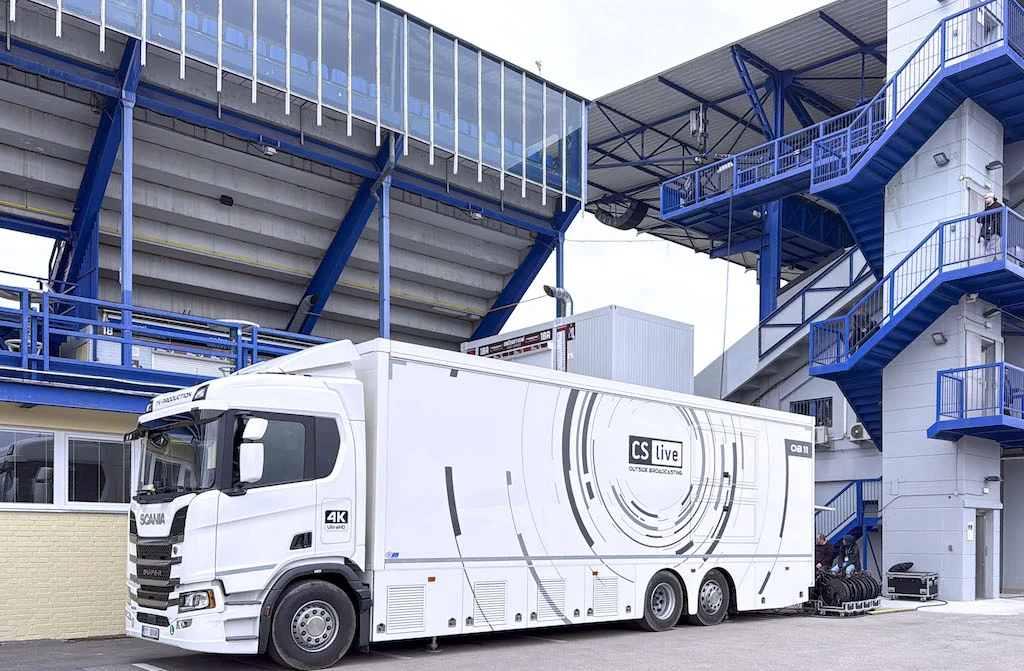
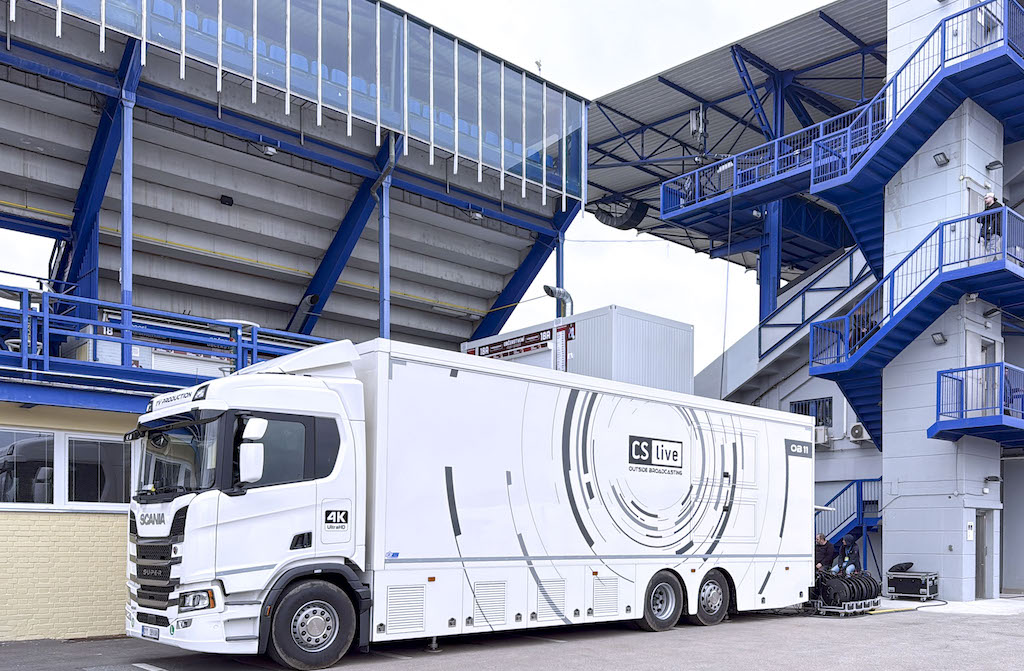
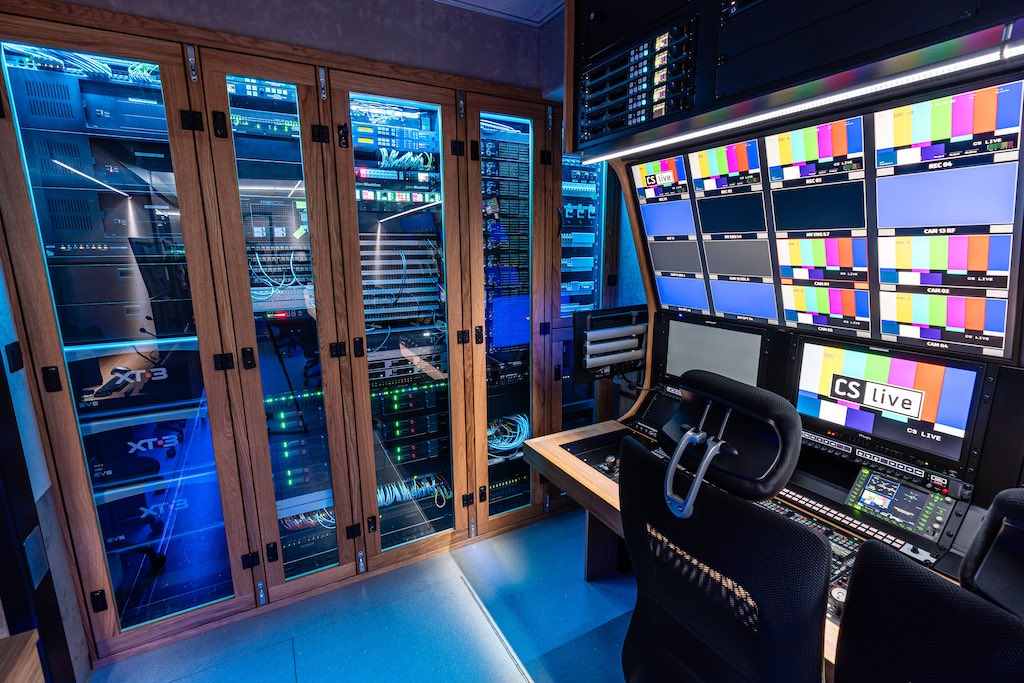
The landscape of live sports broadcasting in Central Europe has reached a significant technological milestone with the debut of a new outside broadcast (OB) van commissioned by the Czech production powerhouse CS live. In a strategic collaboration with Riedel Communications and the esteemed system integrator Smart Informatics, CS live has launched a vehicle that represents the pinnacle of modern broadcast engineering. This new mobile production unit is designed to meet the rigorous demands of high-stakes sports coverage, integrating a sophisticated suite of Riedel technologies including the MediorNet media distribution network, the "hi human interface" control system, and a comprehensive communication ecosystem featuring Artist-1024 and Bolero wireless intercoms.
A Strategic Leap in Czech Broadcast Capabilities
The unveiling of this OB truck marks a transformative moment for CS live, a company that has established itself as a premier provider of production services for the Czech Republic’s most prominent sporting events. The vehicle was engineered specifically to handle the complexities of national football and ice hockey leagues, international football competitions, and the high-energy, fast-paced environments of large-scale Mixed Martial Arts (MMA) events.
As the demand for Ultra-High-Definition (UHD) content and high-frame-rate replays grows, production companies are forced to rethink traditional signal routing architectures. CS live’s decision to adopt a distributed media backbone rather than a traditional centralized router reflects a broader industry shift toward flexibility and scalability. By partnering with Riedel Communications, CS live has ensured that its new flagship unit is not only capable of meeting today’s broadcasting standards but is also prepared for the inevitable transition to fully IP-based workflows.
The Architectural Backbone: MediorNet and MicroN UHD
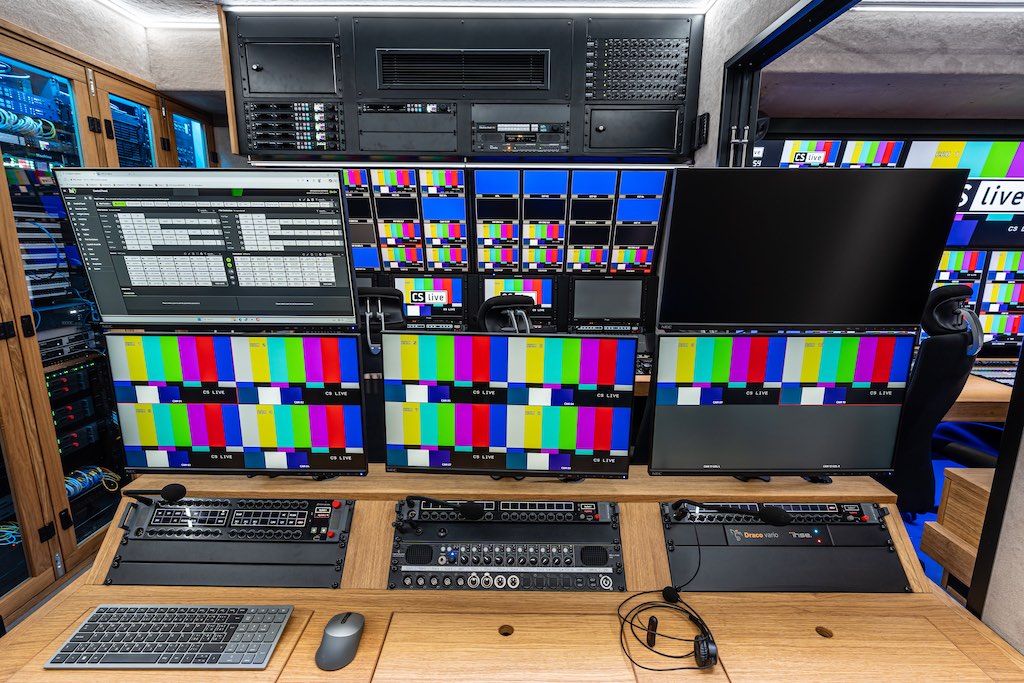
At the heart of the OB truck’s signal processing and routing lies Riedel’s MediorNet infrastructure. The system utilizes twelve MediorNet MicroN UHD nodes, which serve as the distributed routing core. In this specific configuration, seven nodes are dedicated to high-bandwidth signal routing, while five nodes are utilized as specialized multiviewers. This decentralized approach allows for significantly reduced cabling and increased reliability, as processing power is distributed across the network rather than being concentrated in a single point of failure.
To extend the truck’s reach into stadiums and remote studios, CS live employs two additional MicroN Standard nodes as external stageboxes. These units allow for the seamless transmission of SDI, MADI, and Ethernet signals over a single fiber optic link. This capability is particularly vital for modern stadium productions where the distance between the OB van and the cameras or audio sources can be substantial. By utilizing fiber-based transport, CS live eliminates the signal degradation and weight issues associated with traditional copper cabling.
Furthermore, the MicroN UHD nodes provide the necessary processing power for 4K/UHD productions, offering built-in features such as frame synchronization, embedding/de-embedding, and up/down/cross-conversion. This integrated functionality reduces the need for external "glue" equipment, thereby saving space and power—two of the most precious commodities in an OB environment.
The Debut of hi human interface in the Czech Republic
A headline feature of this project is the first-ever implementation of Riedel’s "hi human interface" control system in the Czech Republic. Developed to simplify the management of complex broadcast environments, the hi system provides a unified control layer that sits above the hardware. In the CS live OB truck, this platform serves as the central nervous system, orchestrating equipment from a multitude of different manufacturers.

The hi human interface manages everything from audio consoles and vision mixers to replay systems, monitoring solutions, and even facility functions like On-Air lighting and General Purpose Interface (GPI) triggers. The physical interface for operators includes five hiPush18 panels, one hiPush32 shading panel, one hiPush36 panel, and three hiContact panels. This variety of hardware interfaces ensures that every operator—whether a vision engineer, a producer, or a slow-motion editor—has a control surface tailored to their specific needs.
Pavel Braun, CEO of CS live, emphasized the operational advantages of this system, noting that the ability to manage the entire production chain through a single, intuitive interface—including mobile control via tablets—provides the speed and agility required for live sports. This "human-centric" approach to control allows the production team to focus on the creative aspects of the broadcast rather than the underlying technical complexities.
Mission-Critical Communication: Artist and Bolero
In the high-pressure world of live sports, clear and reliable communication is the difference between a successful broadcast and a technical failure. To ensure seamless coordination between the gallery, the field of play, and remote locations, CS live integrated Riedel’s Artist-1024 intercom platform. This next-generation system provides a high-density port configuration in a compact footprint, supporting the truck’s extensive panel requirements.
The internal communication setup includes 17 RSP-1216HL SmartPanels, three RSP-1232HL SmartPanels, and two DSP-2312 Desktop SmartPanels. These panels do more than just facilitate voice communication; as part of the Riedel SmartPanel ecosystem, they act as intelligent human-machine interfaces that can be configured to trigger various production workflows.
For wireless communication, the truck is equipped with the industry-standard Bolero system. Four Bolero antennas are strategically placed to provide 100% coverage in and around the production site, supporting twelve wireless beltpacks. Bolero’s Advanced DECT Receiver (ADR) technology is particularly crucial for the events CS live covers, as it ensures robust performance even in RF-congested environments like sold-out football stadiums or arena-based MMA fights.
Collaborative Engineering and System Integration
The successful deployment of this complex infrastructure was made possible through the collaboration between Riedel and Smart Informatics, a leading system integrator based in the region. Tomas Vesely, Managing Director of Smart Informatics, noted that their long-standing partnership with Riedel was the cornerstone of the project’s success. The integration process required meticulous planning to ensure that the "hi" control system could communicate effectively with third-party hardware, creating a truly vendor-agnostic environment.
This project highlights the importance of local expertise in the global broadcast market. By combining Riedel’s world-class hardware with Smart Informatics’ deep understanding of the local production landscape and CS live’s operational requirements, the team was able to deliver a bespoke solution that sets a new standard for the region.
Analyzing the Transition: From Baseband to IP
One of the most significant strategic advantages of the new OB truck is its "bridge" architecture. While much of the current broadcast world is moving toward IP (specifically the SMPTE ST 2110 standard), many regional productions still rely heavily on traditional baseband (SDI) infrastructure. The MediorNet system installed by CS live is uniquely positioned to handle this transition.
Currently, the truck operates primarily in a baseband environment, leveraging the stability and familiarity of SDI. However, the MediorNet MicroN UHD nodes are inherently designed to support IP workflows. This means that as CS live decides to migrate more of its production chain to IP, the hardware already in place can be reconfigured or expanded to support those standards without requiring a "forklift upgrade" of the entire vehicle.
Ismet Bozkurt, Regional Sales Manager at Riedel Communications, highlighted this benefit, stating that MediorNet provides a clear path toward IP-based production while maintaining support for existing baseband workflows. This hybrid capability protects CS live’s investment and ensures that the truck will remain technologically relevant for a decade or more.
Broader Impact and Industry Implications
The launch of the CS live OB truck is indicative of a wider trend in the European broadcast market: the democratization of high-end production technology. Features that were once the exclusive domain of major international broadcasters—such as distributed routing, high-density wireless intercoms, and unified software-defined control—are now becoming accessible to regional production houses.
For the Czech sports market, this means a significant upgrade in the quality of domestic broadcasts. Viewers of the national football and hockey leagues can expect more camera angles, more sophisticated graphics, and more reliable coverage. For the production crew, the ergonomic and intuitive design of the Riedel ecosystem reduces fatigue and minimizes the risk of human error during live broadcasts.
Moreover, the success of the hi human interface in this deployment is likely to pave the way for further adoptions across Eastern and Central Europe. As production environments become increasingly "multi-vendor," the need for a centralized, hardware-independent control layer becomes a necessity rather than a luxury.
In conclusion, the collaboration between CS live, Riedel Communications, and Smart Informatics has resulted in a production tool of exceptional power and flexibility. By integrating MediorNet, Artist, Bolero, and the hi human interface, CS live has not only enhanced its current production capabilities but has also secured its position at the forefront of the industry’s digital evolution. This OB truck stands as a testament to the power of integrated technology and strategic partnership in the modern media era.
