

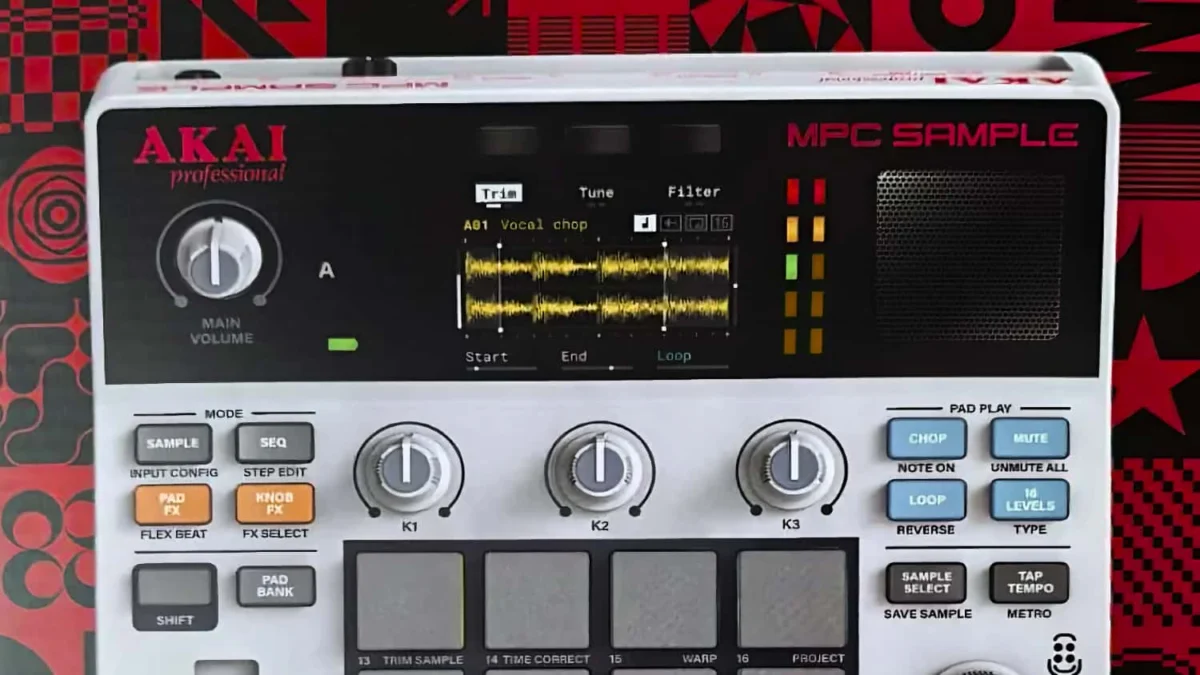
The music technology industry is bracing for a significant addition to the legendary Music Production Center lineup as Akai Professional prepares for the official unveiling of the MPC Sample. While the company has yet to issue a formal press release detailing every technical specification, a series of high-profile leaks and strategic social media teasers have confirmed that the new device is scheduled for a market debut on March 24, 2026. This upcoming release marks a strategic pivot for Akai Pro, as it seeks to capture the burgeoning market for ultra-portable, battery-powered sampling workstations—a segment currently seeing intense competition from manufacturers like Teenage Engineering and Roland.
The timeline of the MPC Sample’s reveal has been unconventional, characterized by a mix of accidental retail disclosures and controlled corporate previews. The most prominent leak occurred via the social media platform Reddit, where a user identified as "fuxicles" shared images of a shipping box received from the major retailer Guitar Center. In an apparent logistical oversight, the retailer repurposed a factory shipping carton intended for the unannounced MPC Sample to fulfill a different order. The cardboard packaging clearly displayed the "MPC Sample" branding alongside a strict logistical directive: “Display on/after March 24, 2026 – Not before.” This inadvertent disclosure provided the industry with a definitive launch date and confirmed the product’s nomenclature weeks ahead of the manufacturer’s intended schedule.
Following the circulation of these retail images, Akai Professional transitioned from silence to active engagement, releasing a brief video teaser on its official Instagram account. The teaser, while cryptic, showcased the silhouette and tactile interface of a compact device that maintains the iconic 4×4 pad matrix that has defined the MPC series since its inception in the late 1980s. The combination of the retail leak and the official teaser has galvanized the music production community, shifting the conversation from speculation to an analysis of how this new hardware will disrupt the current portable sampler market.
Technical Specifications and Design Philosophy
The MPC Sample is engineered to bridge the gap between the high-end standalone capabilities of the MPC Live II and the entry-level accessibility of mobile production apps. Central to its design is portability. Industry insiders and leaked documentation suggest the device will be powered by an internal lithium-ion battery, a departure from the AA-battery requirements of some competitors, offering several hours of continuous operation for mobile creators. This focus on "on-the-go" production is further emphasized by the inclusion of a built-in microphone for immediate field sampling and an integrated speaker system for monitoring without the necessity of external headphones or cables.

In terms of connectivity, the MPC Sample adopts modern standards, featuring a USB-C port for both power delivery and MIDI/audio interfacing. This allows the device to function as a standalone unit or as a sophisticated controller within a Digital Audio Workstation (DAW) environment. Despite its reduced footprint, the hardware is expected to retain the "classic MPC workflow," which includes high-quality sampling, sequencing, and a suite of internal effects. The device likely utilizes a streamlined version of the MPC Software, optimized for a smaller interface while maintaining compatibility with existing MPC project files and expansion packs.
The physical interface appears to prioritize tactile feedback, utilizing velocity-sensitive pads that have been the hallmark of Akai hardware for nearly four decades. By integrating these professional-grade components into a chassis designed for portability, Akai is targeting a demographic of producers who require professional results without being tethered to a traditional studio desk.
Comparative Market Analysis: Akai vs. Teenage Engineering
The emergence of the MPC Sample is widely viewed as a direct response to the success of the Teenage Engineering EP-133 KO II. Released to significant acclaim, the EP-133 captured the "budget boutique" market by offering a powerful, aesthetically unique sampler at a $299 price point. However, the EP-133 faced criticism regarding its build quality and limited sequence memory. Akai’s entry into this specific sub-sector of the market appears designed to address those shortcomings by leveraging the robust build quality and deep feature sets associated with the MPC brand.
With an expected retail price of approximately $399 USD, the MPC Sample sits slightly above the EP-133 KO II but significantly below the MPC One+ ($699). This pricing strategy places Akai in a competitive "sweet spot," offering a more professional alternative to entry-level samplers while maintaining a price tag that is accessible to hobbyists and students. Unlike the EP-133, which utilizes a unique, somewhat idiosyncratic workflow, the MPC Sample relies on a production logic that is already familiar to millions of users worldwide, potentially making it a more attractive option for those looking to integrate a portable unit into an existing Akai-based ecosystem.
Furthermore, the MPC Sample must contend with the Roland SP-404MKII, which has long been the industry standard for portable sampling. While the SP-404MKII excels in long-form sampling and live effects manipulation, the MPC series has historically been preferred for its precision sequencing and "swing" quantization. The MPC Sample is expected to lean heavily into these sequencing strengths to differentiate itself from Roland’s offering.

The Historical Context of the MPC Legacy
To understand the significance of the MPC Sample, one must consider the nearly 40-year evolution of the Music Production Center. The lineage began in 1988 with the MPC60, a collaboration between Akai and designer Roger Linn. The MPC60 revolutionized music production by combining a MIDI sequencer with a digital sampler, effectively allowing a single artist to compose entire tracks without a full studio band. This technology became the backbone of hip-hop, R&B, and electronic music production throughout the 1990s and 2000s.
Over the decades, the MPC has undergone various transformations. The MPC2000 and 2000XL became staples of the "Golden Era" of hip-hop, while the MPC1000 and 2500 introduced modern storage solutions like CompactFlash cards. In the 2010s, Akai shifted toward controller-based systems like the MPC Renaissance before returning to standalone dominance with the MPC X and MPC Live. The MPC Sample represents the latest stage in this evolution: the "miniaturization" phase. As processing power becomes more efficient and affordable, Akai is now able to fit the core functionality of a 1990s-era studio flagship into a device that can fit in a backpack.
Industry Implications and Economic Outlook
The launch of the MPC Sample comes at a time of shifting consumer behavior in the music technology sector. There is a growing "DAW-less" movement—a community of musicians who seek to move away from computer screens and return to tactile, hardware-based composition. The MPC Sample is tailor-made for this movement. By providing a self-contained environment that does not require a laptop, Akai is tapping into a market that values focus and physical interaction.
From an economic perspective, the $399 price point suggests that Akai is pursuing a high-volume sales strategy. By lowering the barrier to entry for the MPC ecosystem, the company can expand its user base, subsequently driving sales of digital content through the Akai MPC Expansion store. This "hardware-as-a-gateway" model has proven successful for other tech giants and is likely a key component of Akai’s long-term revenue strategy.
Retailers have already expressed high levels of interest. Sources within the distribution chain indicate that pre-order volumes are expected to be high, particularly following the viral nature of the Guitar Center leak. The leak, while unintentional, has served as a powerful grassroots marketing tool, generating organic discussion across forums and social media platforms that a standard press release might not have achieved.

Official Responses and Community Reception
While Akai Pro has not issued a formal statement regarding the Guitar Center shipping error, the company’s decision to follow the leak with an Instagram teaser is seen by industry analysts as a "soft confirmation" of the leaked details. This approach allows the company to maintain its scheduled marketing rollout while acknowledging the reality of the public’s awareness.
Community reception has been largely positive, though tempered by questions regarding specific features. Producers on platforms such as Gearspace and Reddit have expressed hope that the MPC Sample will include the "Auto-Sampler" feature found in larger MPC models, which allows users to easily create digital instruments from external hardware. There is also significant interest in the quality of the internal microphone and whether the device will support multitrack recording.
As the March 24 launch date approaches, the industry anticipates a full reveal that will include tutorial videos, artist endorsements, and detailed technical manuals. Whether the MPC Sample will earn the title of a "competitor killer" remains to be seen, but its arrival confirms that the battle for the portable production market is entering its most competitive phase yet. For Akai Pro, the MPC Sample is more than just a new product; it is a bid to ensure that the MPC workflow remains the standard for the next generation of music creators, regardless of where they choose to create.
