

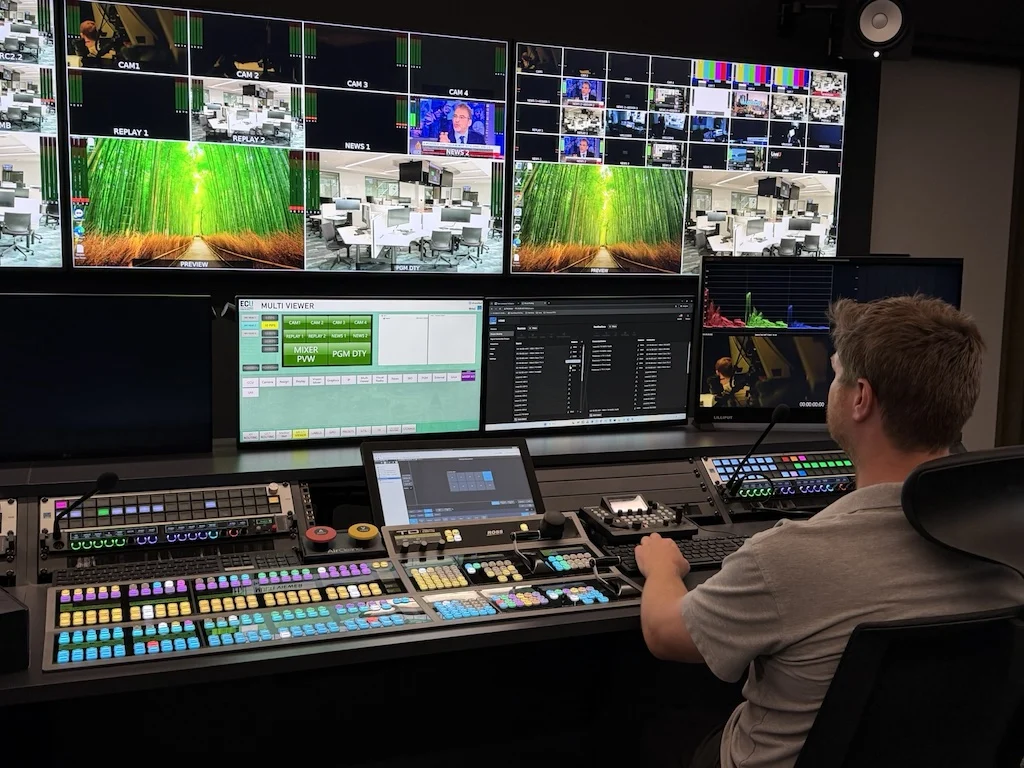
Edith Cowan University (ECU) in Perth, Western Australia, has officially unveiled its new state-of-the-art broadcast facilities at its City Campus, marking a significant milestone in the institution’s commitment to providing industry-aligned education. Renowned for its focus on practical, hands-on learning and its deep-rooted connections to the journalism and media sectors, ECU has integrated a sophisticated IP-based production environment designed to replicate real-world broadcast standards. The new installation, centered on Lawo’s sophisticated IP infrastructure management and audio solutions, is intended to bridge the gap between academic theory and professional practice, fostering a generation of media professionals equipped with contemporary technical skills, critical thinking abilities, and collaborative experience.
The transformation of ECU’s broadcast capabilities was realized through a multi-party collaboration involving Lawo’s Australian partner, Professional Audio & Television (PAT), and the global system integrator Diversified. Technical consultancy was provided by Techniq Media, ensuring that the final configuration met both the pedagogical requirements of the university and the rigorous demands of modern television and radio production. The resulting ecosystem utilizes the Lawo HOME management platform for IP infrastructures and the VSM (Virtual Studio Manager) for overarching broadcast control and workflow orchestration. Together with the Lawo mc²36 audio production console, these systems create a unified, future-proof environment that positions ECU at the forefront of international media education.
Technical Foundation and the Shift to IP-Based Workflows
At the heart of the new facility is a transition from traditional SDI-based workflows to a fully networked IP infrastructure. This shift mirrors the broader evolution within the global broadcast industry, where SMPTE ST 2110 standards have become the benchmark for high-performance media transport. By adopting these standards, ECU ensures that its students are not merely learning how to operate equipment, but are becoming fluent in the language of modern data-driven broadcasting.
The Lawo HOME platform serves as the foundational management layer for the entire Audio-over-IP (AoIP) infrastructure. HOME provides centralized discovery, management, and security for all connected devices. In a university setting, where equipment may be handled by hundreds of different students with varying levels of expertise, the ability to automate device discovery and secure resource allocation is critical. The platform supports multiple protocols, including ST 2110, AES67, and Ravenna, allowing for seamless interoperability between components from different manufacturers. This transparency allows students to engage with advanced IP workflows without being overwhelmed by the underlying network complexity, while faculty members benefit from a stable and predictable environment for curriculum delivery.
Complementing the infrastructure management is the Virtual Studio Manager (VSM). As the primary control layer, VSM acts as the "brain" of the studio, integrating technology from various vendors into a single, cohesive interface. While the video routing is handled by a Ross Video Ultrix FR5, and IP video transport and timing are managed via Riedel Horizon and Riedel Micron hardware, VSM provides the logic that ties these disparate elements together. It manages tally signals, routing logic, and device status transitions, presenting them to the user in a simplified, intuitive manner. This integration ensures that audio, video, and peripheral systems act as a single, synchronized entity.
The mc²36 Console: Professional Audio at the Core
For audio production, ECU selected the Lawo mc²36 all-in-one console. Powered by A__UHD Core technology, the console offers a staggering 384 DSP channels and 864 I/O channels, providing more than enough headroom for even the most complex student productions. The mc²36 is designed specifically for the IP era, with native support for ST 2110 and built-in "IP-Easy" functionality that simplifies the connection of IP sources.
The physical interface of the mc²36 is designed to mirror the high-end environments found in major international newsrooms and sports production hubs. Featuring full-HD touchscreens, touch-sensitive rotary encoders, and color TFT fader displays, the console provides immediate visual feedback. For students, this visual-centric design is essential for learning the nuances of loudness metering, signal flow, and multi-track mixing. By training on the mc²36, ECU students gain experience on a platform that is a staple in professional environments, significantly enhancing their employability upon graduation.
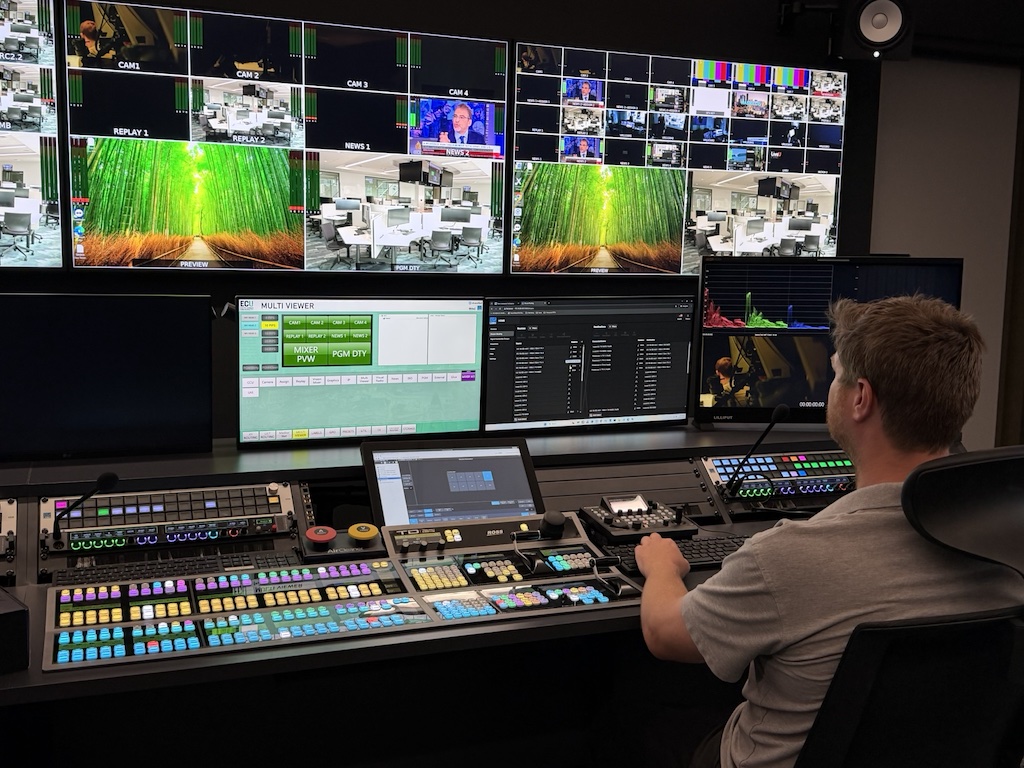
Andrea Burns, the Academic Lead for Film and Media at Edith Cowan University, highlighted the transformative nature of the new setup. "The studio gallery now resembles a NASA control room, offering capabilities that would be the envy of our colleagues in professional news or production companies," Burns noted. Her comparison underscores the leap in sophistication from the university’s previous facilities, moving from basic educational tools to a professional-grade command center.
Chronology of the Campus Integration Project
The development of the new City Campus broadcast facilities was a multi-year undertaking, timed to coincide with ECU’s broader campus expansion and modernization strategy. The project followed a structured timeline to ensure that the transition to IP did not disrupt ongoing academic cycles.

- Consultation and Design Phase: Techniq Media was engaged to assess the specific needs of the ECU journalism and broadcasting departments. The goal was to design a system that could handle traditional news formats while remaining flexible enough for experimental media and podcasting.
- Procurement and Component Selection: Working with PAT, the university identified Lawo as the primary vendor for infrastructure and audio. This decision was based on Lawo’s track record in mission-critical broadcast environments and the scalability of the HOME and VSM platforms.
- Integration and Implementation: Diversified took the lead on the physical and logical integration of the hardware. This involved the complex task of networking the Ross Video, Riedel, and Lawo components into a single ST 2110 fabric.
- Commissioning and "Push-Button" Configuration: During the final commissioning phase, the team focused on the "Lawo Unified Experience" (LUX). This involved mapping the VSM system to physical hardware panels and desktop interfaces to create specific "Presets" or "Modes."
- Faculty Training and Launch: Before the students were granted access, faculty members underwent intensive training to master the new IP-based logic. The system was officially brought online for the 2026 academic year.
Pedagogical Impact: The "Push-Button Studio Readiness" Concept
One of the most innovative aspects of the ECU installation is the implementation of "Push-Button Studio Readiness." Recognizing that a university studio must serve multiple purposes throughout a single day—ranging from a freshman’s first introduction to a camera to a senior student’s final news bulletin—the system was designed for rapid reconfiguration.
Through VSM, the control room can be reset to a desired state with a single touch. Dedicated 50-key hardware panels are mapped to specific operational modes:
- Teaching Mode: Strips back the complexity of the interface, focusing on core faders and basic routing to help beginners understand the fundamentals of signal flow.
- Production Mode: Unlocks the full power of the mc²36 and Ultrix router, allowing for multi-camera, high-complexity broadcasts with full tally and talkback integration.
- Reset Mode: Instantly returns all settings to a baseline configuration, clearing any changes made by the previous group and ensuring the next class starts with a clean slate.
This role-based approach reduces the time spent on technical troubleshooting and allows students and lecturers to focus on the creative and journalistic aspects of their work. It minimizes "operator error" in a high-traffic environment while still allowing advanced users to dive deep into the system’s technical backend.
Broader Implications for the Australian Media Landscape
The investment in the City Campus facilities is a clear indicator of ECU’s ambition to remain the premier destination for media studies in Western Australia. As the Australian media landscape undergoes rapid consolidation and digital transformation, the demand for "multi-platform" journalists who understand the technical rigors of IP production has never been higher.
Industry analysts suggest that the move to IP in educational institutions is no longer optional but a necessity. Traditional SDI (Serial Digital Interface) skills, while still relevant in some legacy environments, are being phased out in favor of IT-centric broadcast engineering. By training students on Lawo’s VSM and HOME platforms, ECU is effectively producing graduates who are "IP-ready," capable of stepping into roles at major networks like the ABC, SBS, or Seven West Media with minimal additional training.
Furthermore, the collaboration between ECU, PAT, Diversified, and Techniq Media serves as a blueprint for how universities can partner with industry leaders to future-proof their curriculum. The project demonstrates that successful technology integration in education requires more than just buying the latest gear; it requires a strategic vision that prioritizes usability and pedagogical goals.
Conclusion: Training the Next Generation
The successful deployment of the Lawo-based infrastructure at Edith Cowan University represents a synthesis of technical precision and educational vision. By providing students with access to the same tools used at the highest levels of professional broadcasting, ECU is ensuring that its graduates are prepared for the challenges of a rapidly changing industry.
Andrea Burns summarized the sentiment of the university community, stating, "The fact that the team kept both technical precision and the potential of our students in mind made this collective project truly successful. Everyone involved is as excited as we are about the possibilities this system opens up for our students."
As the first cohorts begin their training in the new City Campus studios, the impact of this technological leap will likely be felt across the Australian media industry for years to come. With Lawo technology as the heartbeat of their production environment, ECU students are no longer just practicing for the future—they are already working in it.
