

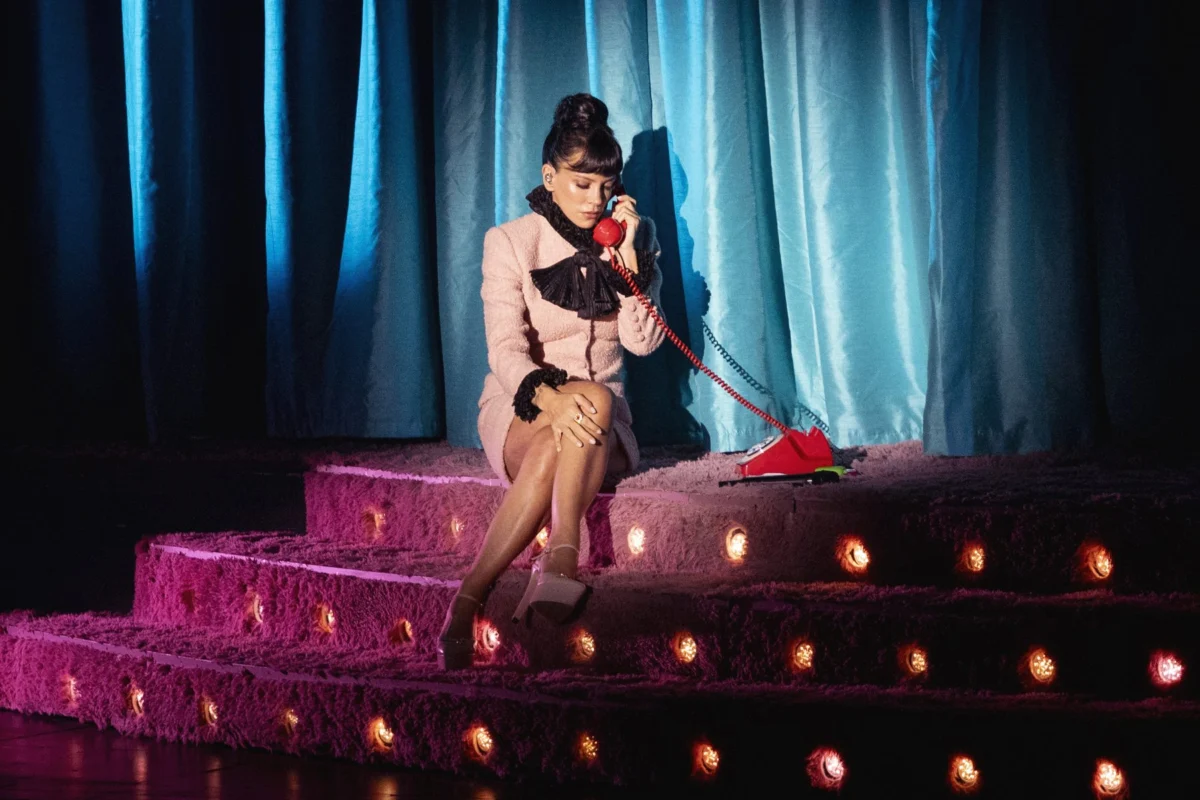
Just five years ago, the notion that Lily Allen could sell out a venue of Radio City’s stature to perform an entirely new album – and nothing else – would have been met with skepticism by even her most ardent supporters. Her career, while initially meteoric, had navigated a winding path marked by public hiatuses, personal milestones, and, at times, a perceived retreat from the musical spotlight. Yet, on this crisp April evening, Allen not only filled the 6,015-seat art deco auditorium but held it captivated, delivering a potent, succinct, and deeply personal performance of what many critics now consider her mid-career masterpiece.
A Career Defined by Boldness and Vulnerability
Lily Allen burst onto the global music scene in 2006 with her debut album, Alright, Still, instantly carving out a niche with her distinctive blend of sugary pop melodies, sharp lyrical wit, and unfiltered social commentary. Hits like "Smile," "LDN," and "The Fear" from her subsequent album, It’s Not Me, It’s You (2009), established her as a voice for a generation, unafraid to tackle everything from relationship woes to political hypocrisy with a disarming charm and an undeniable edge. Her early success was undeniable, securing her a BRIT Award, multiple Ivor Novello Awards, and significant chart presence across the UK, Europe, and North America. She was, in many ways, an early archetype of the internet-era pop star, connecting directly with fans through early social media platforms and fostering a sense of authenticity that endeared her to millions.
However, the relentless pace of fame, coupled with intense media scrutiny, took its toll. Following the success of It’s Not Me, It’s You, Allen took a significant hiatus from music to focus on her family, a decision that reflected a broader desire for normalcy away from the glare of the public eye. Her return with Sheezus in 2014, while demonstrating her continued ability to craft catchy tunes, was met with a more mixed reception. By the release of her 2018 album, No Shame, Allen found herself at a crossroads. Despite critical praise for its raw honesty, No Shame marked her lowest-charting LP on the Billboard 200, signaling a dip in her commercial traction in the crucial North American market. In the ensuing years, Stateside headlines often focused more on her personal life – notably her 2020 marriage to Stranger Things actor David Harbour – rather than her musical endeavors. Her public profile became increasingly intertwined with her celebrity relationship, culminating in their highly publicized separation last year, an event that, unbeknownst to many, would serve as the catalyst for her most profound artistic statement to date.
The Unforeseen Genesis of West End Girl
The "career comeback of the last half-year," as many industry observers have dubbed it, was something that few, including Allen herself, saw coming. It was born from the deeply personal and often painful experiences surrounding the disillusionment and ultimate dissolution of her marriage. Released in 2025, West End Girl is a searingly honest and unflinching exploration of betrayal, heartbreak, and the messy aftermath of a relationship’s collapse. The album quickly garnered widespread critical acclaim, lauded for its raw vulnerability, incisive lyrics, and mature musicality. Publications universally hailed it as a return to Allen’s sharpest lyrical form, comparing its emotional depth to classic breakup albums, yet delivered with her signature blend of wit and poignancy. It demonstrated an evolution in her songwriting, moving beyond the observational pop of her early work to a more introspective and emotionally complex narrative.
Unlike No Shame, West End Girl resonated powerfully with both longtime fans and new listeners, achieving unexpected commercial success and reigniting significant interest in Allen’s music. Its success was a testament to the enduring power of authentic storytelling and the universal relatability of its themes. The album proved that Allen’s voice, far from fading, had matured into an instrument capable of conveying profound emotional truths with a newfound gravitas. This resurgence set the stage for the audacious decision to tour the album in a manner that defied conventional expectations.
The Radio City Revelation: A One-Woman Masterclass
The choice of Radio City Music Hall, a venue synonymous with grand spectacle and historical performances, for such an intimate and stripped-back show, was itself a powerful statement. On April 14, 2026, the stage was minimalist: Allen, a microphone, and an atmosphere thick with anticipation. The show was conceived as a one-woman performance, devoid of a traditional backing band, backup dancers, or even backup singers. The album’s sole guest, Specialist Moss, made an appearance via video screen, a deliberate choice that maintained the intimate, personal narrative Allen sought to convey. This format compelled the audience to focus entirely on Allen’s voice, her lyrics, and the raw emotion she poured into each track.
From the opening notes, Allen commanded the cavernous space with a quiet intensity. Her stage presence, honed over two decades, was captivating not through elaborate choreography or visual effects, but through sheer magnetism and the vulnerability she projected. Each song from West End Girl was delivered with a clarity and emotional depth that transcended the studio recordings, transforming the album’s narrative of heartbreak into a live, communal experience. The audience, a diverse mix but predominantly millennials who had grown up with her music, hung on every word, reflecting the relatability of the album’s themes. There were no singalongs to retro hits, no moments for bathroom breaks during unfamiliar tracks; instead, there was an unbroken connection between artist and audience, forged in shared understanding and admiration for Allen’s unflinching honesty.
Perhaps the most talked-about aspect of the performance was Allen’s deliberate decision to play West End Girl start to finish, with no deviations and, notably, no encore. This was a radical departure from the typical concert format, where artists are almost expected to indulge in a medley of their greatest hits. By foregoing "Smile," "F** You," and other ’00s/’10s anthems, Allen underscored the artistic integrity of West End Girl*, positioning it not as a footnote in her career, but as its current focal point. It was a bold move that paid off, signaling to critics and fans alike that this comeback was driven by artistic purpose, not merely nostalgia. The beaming faces of the crowd exiting Radio City confirmed the success of this audacious gamble; they had received exactly what they wanted: a potent, succinct performance of an artist at the zenith of her songwriting powers.
Industry Context and Broader Implications
Allen’s Radio City triumph arrives at a fascinating juncture in the music industry. In an era dominated by streaming algorithms and short attention spans, the challenge for established artists to engage audiences with new material is immense. Fans often purchase concert tickets primarily for the nostalgic experience of hearing beloved hits, relegating new songs to mere intermissions. Data from industry analysts consistently shows that a significant portion of concert-goers are less receptive to unreleased or recently released tracks during live shows, often citing a preference for familiar melodies. For an artist to sell out a major venue with a setlist exclusively comprising new music is an anomaly, a testament to the exceptional quality and resonant power of West End Girl.
This phenomenon highlights a potential shift in audience appetite, or perhaps, the enduring allure of raw authenticity. Allen’s willingness to strip away the usual concert accoutrements and present her art in its most unvarnished form resonated deeply. It suggested that a segment of the audience is hungry for genuine artistic expression, even if it means foregoing the familiar comfort of past successes. Music industry analysts like Dr. Evelyn Reed, a professor of popular culture studies, commented on the significance: "Lily Allen’s West End Girl concert at Radio City is more than just a successful show; it’s a blueprint for artistic reinvention. In a landscape saturated with manufactured nostalgia, Allen proved that profound vulnerability and artistic courage can still captivate an audience and redefine an artist’s trajectory. It’s a powerful message for artists navigating long careers."
The success of West End Girl and its accompanying live presentation have significant implications for Allen’s upcoming North American arena tour. Kicking off on September 3, 2026, at Madison Square Garden in New York City, this tour is expected to be a more conventional affair, incorporating her classic hits alongside material from the new album. The Radio City performance effectively served as a highly successful artistic "pre-launch" for this larger tour, generating immense buzz and re-establishing her as a formidable live act. Fans who experienced the intimacy of West End Girl now have a deeper appreciation for the artist, and those who missed it are undoubtedly more eager to experience her full catalog.
A Redefined Legacy
Lily Allen’s journey from pop provocateur to critically acclaimed songwriter of profound depth has been both challenging and inspiring. Her ability to channel personal turmoil into universally resonant art, and then to present that art with such unyielding conviction, has redefined her legacy. No longer solely defined by her early chart-toppers or her personal life, Allen has cemented her position as a serious, evolving artist. West End Girl is not just an album; it is a declaration of artistic maturity, a testament to resilience, and a beacon for others who seek to find beauty and power in vulnerability.
The ovation Allen received at Radio City Music Hall was more than just applause for a successful concert; it was a collective acknowledgment of her courage, her honesty, and her triumphant return to the forefront of contemporary music. It was, indeed, good to have her back, bolder and more biting, yet also more vulnerable and profound, than ever before. Her story stands as a powerful reminder that true artistic relevance often emerges not from adherence to formula, but from the audacious pursuit of personal truth.
