

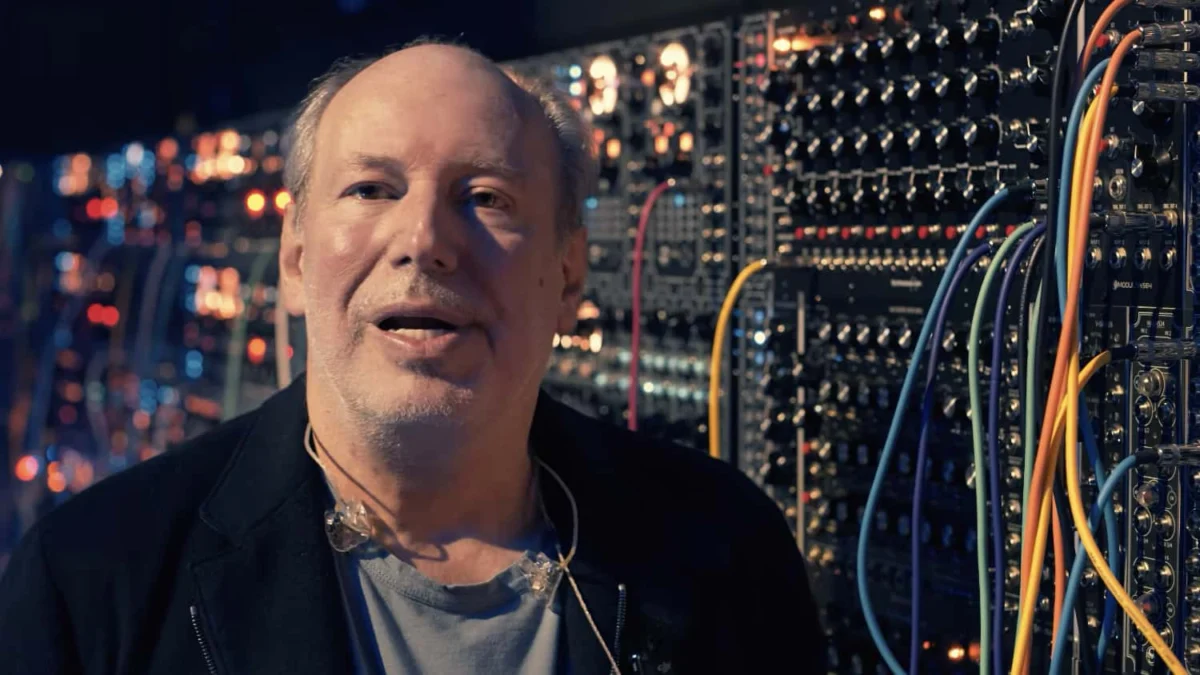
Synapse Audio Software has officially announced the release of version 2.1 for The Legend HZ, a high-end software synthesizer developed in close technical partnership with Academy Award-winning composer Hans Zimmer and renowned sound designer Kevin Schroeder. This update represents a significant milestone in the lifecycle of the instrument, which was designed to bridge the gap between vintage analog hardware and modern digital workflow requirements. The Legend HZ is an expanded iteration of Synapse Audio’s original "The Legend" synthesizer, a plugin widely regarded for its highly accurate emulation of the Moog Minimoog Model D. However, the HZ variant introduces a vastly more complex architecture, including six oscillators, a specialized filter bank, and an advanced modulation matrix, all of which have been further refined in the latest 2.1 update to ensure stability, performance efficiency, and expanded creative utility for professional film scorers and electronic musicians alike.
The development of The Legend HZ was born from Hans Zimmer’s personal requirement for a software-based solution that could replicate the specific, modified hardware setups found in his studio, Remote Control Productions. While the original Minimoog featured three oscillators, Zimmer’s favored hardware units often involved custom modifications and the stacking of multiple units to achieve the "wall of sound" textures characteristic of his cinematic scores. By collaborating with Synapse Audio and Kevin Schroeder, Zimmer sought to codify these hardware quirks into a digital format that offers polyphonic capabilities, precise tuning, and deep modulation options that were previously unavailable in a single hardware or software unit. The version 2.1 update continues this trajectory of refinement, addressing user feedback and optimizing the internal Digital Signal Processing (DSP) to handle the immense computational load required by the synth’s high-fidelity analog modeling.
The Evolution of The Legend HZ: A Chronology of Development
The journey toward version 2.1 began several years ago with the release of the original Synapse Audio Legend. At that time, the goal was singular: to create the most authentic-sounding Minimoog emulation on the market. Synapse Audio utilized sophisticated circuit modeling techniques, focusing specifically on the non-linearities of the voltage-controlled filter (VCF) and the unique behavior of the oscillators when driven hard. The success of this initial product caught the attention of Kevin Schroeder, who frequently collaborates with Hans Zimmer on sound design for major motion pictures.
In 2023, the project shifted toward the "HZ" edition. Zimmer and Schroeder provided Synapse Audio with access to their private collection of vintage hardware to ensure the software could replicate specific harmonic saturations and filter slopes. The HZ version was released earlier in 2024, introducing a six-oscillator architecture—effectively doubling the power of the original—and integrating a 914 Fixed Filter Bank, a rare and highly sought-after component based on the classic Moog modular systems. The transition from version 2.0 to 2.1 marks the first major maintenance and enhancement cycle, focusing on the "under-the-hood" performance metrics that professional composers require when running hundreds of instances of a plugin within a Digital Audio Workstation (DAW) like Cubase or Logic Pro.
Technical Specifications and Architecture Enhancements
The core of The Legend HZ version 2.1 remains its unparalleled oscillator section. Unlike standard digital oscillators that can sound "thin" or "sterile," the HZ’s oscillators employ a zero-latency feedback loop design. This allows the software to mimic the continuous, organic fluctuations of analog electricity. With six oscillators available, users can create massive unison stacks or complex FM-like textures that retain a grounded, vintage character. Version 2.1 optimizes the phase-alignment of these oscillators, ensuring that even with all six voices active, the low-end frequency response remains tight and punchy—a critical factor for cinematic bass and sub-bass design.
One of the most significant features highlighted in this update is the 914 Fixed Filter Bank. In the original hardware world, a fixed filter bank does not "sweep" like a traditional resonant filter; instead, it provides a series of band-pass filters at specific frequencies, allowing a composer to "carve" the harmonic profile of a sound. The Legend HZ’s digital recreation of the 914 bank is central to the "Zimmer sound," providing the mid-range growl and high-end shimmer found in scores such as Dune and The Dark Knight. The 2.1 update improves the interpolation between these filter bands, resulting in smoother transitions when automating filter parameters during a performance.
Furthermore, the modulation matrix has seen iterative improvements. The Legend HZ allows for 12 modulation slots, where virtually any source (LFOs, envelopes, velocity) can be routed to any destination. This level of flexibility turns what was once a simple subtractive synth into a modular-style powerhouse. Version 2.1 introduces more granular control over these routings, allowing for finer increments in modulation depth, which is essential for creating the subtle, evolving textures that Schroeder is known for.
Strategic Collaboration: The Roles of Zimmer and Schroeder
The involvement of Hans Zimmer in the development of version 2.1 is not merely a branding exercise. Zimmer is known for his "gear-agnostic" approach, utilizing whatever tool best serves the narrative of a film. However, his preference for the "Moog sound" is well-documented. By lending his ears and his technical team to Synapse Audio, Zimmer ensured that The Legend HZ could handle the extreme dynamic ranges required for modern IMAX theater systems. His feedback led to the inclusion of the "MSEG" (Multi-Stage Envelope Generator), which allows for complex, rhythmic movement that traditional ADSR envelopes cannot achieve.
Kevin Schroeder’s role focused heavily on the preset library and the user interface’s ergonomic flow. For the 2.1 update, the preset management system has been streamlined, allowing users to categorize and recall the hundreds of cinematic patches created by Schroeder. These patches are designed to be "performance-ready," meaning they respond dynamically to aftertouch and MPE (MIDI Polyphonic Expression) controllers. The update ensures that these complex MIDI mappings remain consistent across different DAW environments, reducing the technical friction for composers working under tight deadlines.
Market Impact and Professional Implications
The release of The Legend HZ version 2.1 arrives at a time when the virtual instrument market is increasingly saturated. However, Synapse Audio has carved out a niche by focusing on high-fidelity modeling rather than mass-market appeal. At a price point of 179.00 €, The Legend HZ is positioned as a premium tool for professional users. The 2.1 update reinforces this positioning by providing a level of stability and sonic depth that competes directly with high-end hardware.
Industry analysts note that the collaboration between software developers and "A-list" composers like Zimmer represents a growing trend in the music technology sector. As hardware becomes more expensive and difficult to maintain, professional studios are looking for "digital twins" of their analog gear. The Legend HZ is perhaps the most prominent example of this trend, offering a solution that is portable yet sonically indistinguishable from the hardware it emulates. For the broader industry, the success of this plugin suggests that there is a significant market for specialized, high-detail emulations that go beyond basic subtractive synthesis.
Future Outlook and Availability
As Synapse Audio continues to support The Legend HZ, version 2.1 is expected to be followed by further updates that may explore even deeper integration with modern hardware controllers. The current version is compatible with VST, AU, and AAX formats, supporting both Windows and macOS (including native support for Apple Silicon). This cross-platform compatibility is vital for the modern film scoring world, where projects are often moved between different studios and operating systems.
Existing users of The Legend HZ can access the version 2.1 update through their Synapse Audio account at no additional cost. For new users, the software remains available for purchase at the standard retail price. As the industry moves toward more immersive audio formats like Dolby Atmos, the polyphonic and spatial capabilities of The Legend HZ version 2.1 position it as a foundational tool for the next generation of cinematic sound design.
In conclusion, The Legend HZ version 2.1 is more than a simple patch update; it is a refinement of a complex musical instrument that stands as a testament to the power of collaborative engineering. By combining Synapse Audio’s DSP expertise with the aesthetic vision of Hans Zimmer and Kevin Schroeder, the software provides a unique palette for creative expression, ensuring that the legacy of analog synthesis continues to thrive in the digital age.
