

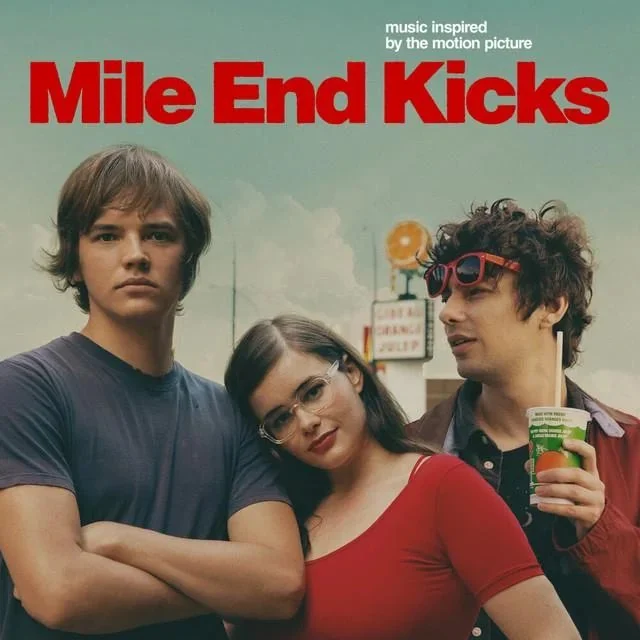
The highly anticipated Canadian indie rock rom-com, Mile End Kicks, featuring Euphoria star Barbie Ferreira, is set to make its theatrical debut this Friday, promising a narrative deeply embedded in Montreal’s vibrant indie music scene. Ahead of its release, the film has generated significant buzz, not only for its compelling storyline and rising star power but also for its distinctive musical accompaniment. Following the trailer’s impactful use of MGMT’s "Time To Pretend," the film’s soundtrack has now unveiled a surprising and culturally significant addition: a cover of Alanis Morissette’s seminal Jagged Little Pill hit, "Ironic," performed by fellow Canadian music luminary, Avril Lavigne. This strategic musical choice not only underscores the film’s deep Canadian roots but also creates a fascinating dialogue between different eras and styles of Canadian music, amplifying the film’s cultural resonance.
"Mile End Kicks": A Portrait of Montreal’s Indie Scene
Mile End Kicks is positioned as a quintessential indie rock rom-com, a genre that blends the emotional depth of romantic comedy with the distinctive aesthetic and sonic landscape of independent music. The film’s title itself, "Mile End Kicks," is a direct homage to Montreal’s Mile End borough, a neighbourhood renowned for its artistic community, independent boutiques, cafes, and a thriving music scene that has fostered numerous bands and artists over the decades. This setting provides a rich, authentic backdrop for a story exploring love, creativity, and the challenges of artistic pursuit within a specific cultural milieu.
The film’s narrative is expected to delve into the lives of young musicians and artists navigating relationships and aspirations against this vibrant urban canvas. Rom-coms often rely on relatable characters and a strong sense of place, and Mile End Kicks appears poised to leverage Montreal’s unique charm and indie credibility to craft an engaging story. The choice of Montreal, a city often celebrated for its bilingualism and European flair, further enriches the film’s cultural fabric, offering a distinct alternative to more commonly portrayed North American urban settings. The inclusion of "indie rock" in its description suggests a soundtrack that is not merely incidental but integral to the storytelling, potentially reflecting the characters’ experiences, emotions, and the very atmosphere of the Mile End scene itself.
Barbie Ferreira’s Ascendance in Contemporary Cinema
Central to the film’s appeal is the casting of Barbie Ferreira, an actress who has rapidly risen to prominence through her captivating performance as Kat Hernandez in HBO’s critically acclaimed series Euphoria. Ferreira’s portrayal of Kat, a character exploring body image, sexuality, and self-discovery, resonated deeply with audiences and critics alike, earning her widespread recognition and establishing her as a significant voice for a new generation. Her work on Euphoria demonstrated a raw talent for conveying complex emotional landscapes, making her an ideal choice for a character in a rom-com that likely explores themes of vulnerability and connection.
Prior to Euphoria, Ferreira had already made waves as a model and an advocate for body positivity, challenging conventional beauty standards within the fashion industry. Her transition into acting has been marked by a discerning selection of roles that align with her authentic persona and artistic inclinations. Starring in Mile End Kicks represents a significant step in her film career, allowing her to further showcase her versatility beyond the high-stakes drama of Euphoria. Her involvement undoubtedly brings a contemporary edge and a built-in audience to the film, particularly among younger demographics who identify with her progressive stance and on-screen presence. For an indie production, having an actor of Ferreira’s growing stature can be a crucial factor in attracting broader attention and distribution.
The Soundtrack’s Strategic Sonic Palette: Setting the Tone
The strategic selection of music for Mile End Kicks is evident from its initial promotional materials. The film’s trailer, a crucial element in establishing tone and generating anticipation, was notably set to MGMT’s "Time To Pretend." Released in 2007, "Time To Pretend" became an anthem for a generation, encapsulating the dreams, anxieties, and youthful escapism prevalent in the indie pop landscape of the late 2000s. Its synth-driven melody, ethereal vocals, and melancholic yet hopeful lyrics about aspiring rock stars and the disillusionment of fame perfectly align with the potential themes of a film centered on an indie music scene.
The choice of "Time To Pretend" for the trailer immediately signals the film’s aesthetic and its target audience. It evokes a sense of nostalgia for a particular era of indie music while simultaneously grounding the film in a timeless narrative of artistic ambition. This track serves as a sonic cornerstone, hinting at the film’s exploration of dreams, reality, and the often-romanticized struggles of emerging artists. The song’s enduring popularity and its association with a distinct cultural moment provide a compelling entry point for viewers, promising a soundtrack that is both evocative and carefully curated to enhance the storytelling.
Avril Lavigne Reimagines an Iconic Anthem
The latest revelation from the Mile End Kicks soundtrack has created a stir across music and film circles: Avril Lavigne’s cover of Alanis Morissette’s "Ironic." The announcement was made via the film’s official Instagram account, proclaiming, "From one Canadian icon to another…. may we introduce: Avril Lavigne’s cover of ‘Ironic’ by Alanis Morissette!" This declaration highlights the deliberate intention behind the choice, framing it as a tribute and a powerful connection between two of Canada’s most globally recognized female artists.
Avril Lavigne, often dubbed the "Pop-Punk Princess," burst onto the music scene in the early 2000s with her debut album Let Go, which sold over 16 million copies worldwide. Her distinctive blend of pop melodies, punk-rock sensibilities, and rebellious image resonated with millions, making her a global superstar. Her career has seen her evolve through various musical phases, consistently maintaining a dedicated fanbase and a strong presence in popular culture. Her recent resurgence, marked by new music and collaborations, demonstrates her enduring relevance and artistic vitality.
The decision to have Lavigne cover "Ironic" is a bold one, given the song’s iconic status and its deep entrenchment in the collective consciousness of the 1990s. Lavigne’s signature vocal style, characterized by its raw energy and emotional delivery, offers a distinct interpretation of Morissette’s classic. Fans will undoubtedly be keen to hear how Lavigne infuses her pop-punk edge into the track, potentially offering a fresh perspective on its well-known lyrical themes of life’s unexpected twists and turns. This cover not only serves the film’s narrative but also becomes a significant musical event in its own right, sparking discussions about interpretation, homage, and the cross-generational appeal of Canadian music.
Alanis Morissette’s Enduring Legacy and "Ironic"’s Cultural Footprint
To fully appreciate the significance of Avril Lavigne’s cover, it is essential to revisit the enduring legacy of Alanis Morissette and the profound cultural footprint of "Ironic." Alanis Morissette’s 1995 album, Jagged Little Pill, was a phenomenon that redefined female-fronted rock and became one of the best-selling albums of all time, with over 33 million copies sold worldwide. The album, characterized by its raw emotional honesty, confessional lyrics, and a powerful blend of alternative rock and pop, captured the zeitgeist of the mid-1990s.
"Ironic," one of the album’s most recognizable singles, became a global hit, despite ongoing debates about whether the scenarios described in its lyrics truly fit the definition of "irony." This very debate contributed to its cultural impact, sparking conversations and solidifying its place as a cornerstone of 90s music. The song’s narrative of life’s unexpected and often frustrating contradictions resonated with a broad audience, making it a timeless anthem about human experience. Morissette’s distinctive vocal delivery, marked by its intensity and vulnerability, made the track instantly recognizable and deeply impactful. Her recent performance of "Ironic" on Everybody’s Live With John Mulaney last year further highlighted the song’s enduring appeal and Morissette’s continued relevance.
Morissette, like Lavigne, is a celebrated Canadian artist, a fact emphasized by the film’s Instagram post. Her influence extends far beyond music, impacting cultural conversations about female empowerment, emotional expression, and artistic integrity. The decision to feature "Ironic" in Mile End Kicks, particularly through a new interpretation, speaks to the song’s universal themes and its ability to connect with new generations while honoring its foundational role in music history.
A Confluence of Canadian Musical Royalty
The collaboration between Avril Lavigne and Alanis Morissette, albeit through a cover, is a powerful testament to Canada’s rich musical heritage and the interconnectedness of its artistic community. Both artists hail from Ontario, a province that has produced a disproportionate number of globally recognized musicians. The film’s social media post deliberately frames this as a transfer of iconic status, "From one Canadian icon to another," highlighting a shared national pride in their achievements.
Avril Lavigne’s status as a Canadian icon was further solidified in 2022 when she was appointed to the Order of Canada, one of the country’s highest civilian honours. This recognition acknowledges her significant contributions to music and her role as a cultural ambassador for Canada on the international stage. While Alanis Morissette has received numerous accolades, including multiple Grammy Awards and inductions into halls of fame, her appointment to the Order of Canada has not yet occurred, making Lavigne’s recent honour a point of distinction mentioned in the original news snippet.
This is not the first time the two artists have crossed paths. In 2005, a memorable moment in Canadian music history occurred when Avril Lavigne joined Alanis Morissette on stage for a live duet of "Ironic" at the House Of Blues in Los Angeles. This performance, captured by fans and circulated widely, showcased a mutual respect and admiration between the two artists, foreshadowing the present soundtrack collaboration. This historical connection adds another layer of depth to Lavigne’s cover, transforming it from a mere interpretation into a continuation of a shared musical lineage and a respectful nod to a fellow artist’s monumental work. Such intergenerational tributes are vital in sustaining cultural narratives and celebrating artistic legacies.
The Art of the Cover: Reinvention and Homage
The inclusion of a high-profile cover song in a film soundtrack is a nuanced artistic decision that carries significant weight. A cover can serve multiple purposes: it can pay homage to an original artist, introduce a classic song to a new audience, or reinterpret a familiar track in a way that aligns with the film’s specific thematic or emotional requirements. In the case of Lavigne covering "Ironic" for Mile End Kicks, it achieves several of these objectives simultaneously.
Firstly, it acts as a direct homage to Alanis Morissette, acknowledging her seminal contribution to music and the enduring power of "Ironic." Secondly, Lavigne’s interpretation has the potential to introduce the song to a younger demographic who might be more familiar with her work or with Barbie Ferreira’s Euphoria fame than with 90s alternative rock. This cross-generational bridge is crucial for cultural continuity and for keeping classic songs alive in the contemporary consciousness. Thirdly, Lavigne’s distinct vocal style and musical background mean her rendition of "Ironic" will inevitably offer a fresh perspective. Her pop-punk sensibilities could infuse the track with a different kind of energy, perhaps a more defiant or angsty tone, which could resonate with the film’s indie rock themes and the experiences of its young protagonists.
Successful cover versions often manage to respect the original while bringing something new to the table. The challenge lies in striking this balance, avoiding mere replication while also ensuring the new interpretation feels authentic. Lavigne’s long-standing career and her proven ability to connect with audiences suggest she is well-equipped to deliver a cover that is both respectful and uniquely her own. The decision by the film’s music supervisors to commission this specific cover speaks volumes about their vision for the soundtrack and their understanding of its potential cultural impact.
Broader Implications for Film and Music
The strategic pairing of Mile End Kicks with its carefully curated soundtrack, particularly the "Ironic" cover, carries broader implications for both the film and music industries. For the film, a distinctive soundtrack featuring established and emerging artists can significantly enhance its marketability. High-profile song placements and covers can generate pre-release buzz, attract media attention, and draw in diverse audiences who might be fans of the featured musicians. This is especially vital for independent films, which often rely on unique selling points to stand out in a crowded cinematic landscape. The cover also reinforces the film’s "indie rock" identity, making it appealing to fans of the genre.
For the music industry, film soundtracks remain a powerful platform for song promotion and artistic reinvention. Lavigne’s cover not only gives "Ironic" renewed visibility but also highlights her versatility as an artist. Such projects can lead to increased streaming numbers for both the cover and the original track, sparking renewed interest in both artists’ back catalogues. It also underscores the enduring value of classic songs and their capacity for reinterpretation across generations. The collaboration between different Canadian icons also reinforces a narrative of national artistic strength and mutual respect, which can inspire future collaborations and cultural exchanges.
As Mile End Kicks prepares for its release, the anticipation surrounding its narrative, Barbie Ferreira’s performance, and its evocative soundtrack continues to build. The decision to feature Avril Lavigne’s cover of Alanis Morissette’s "Ironic" is a bold stroke, weaving together threads of Canadian musical history with a contemporary indie narrative. This artistic choice promises a film that is not only entertaining but also rich in cultural dialogue, celebrating the enduring power of music and storytelling. The film is poised to offer audiences a fresh perspective on the rom-com genre, anchored by a soundtrack that resonates deeply with its themes and setting.
