

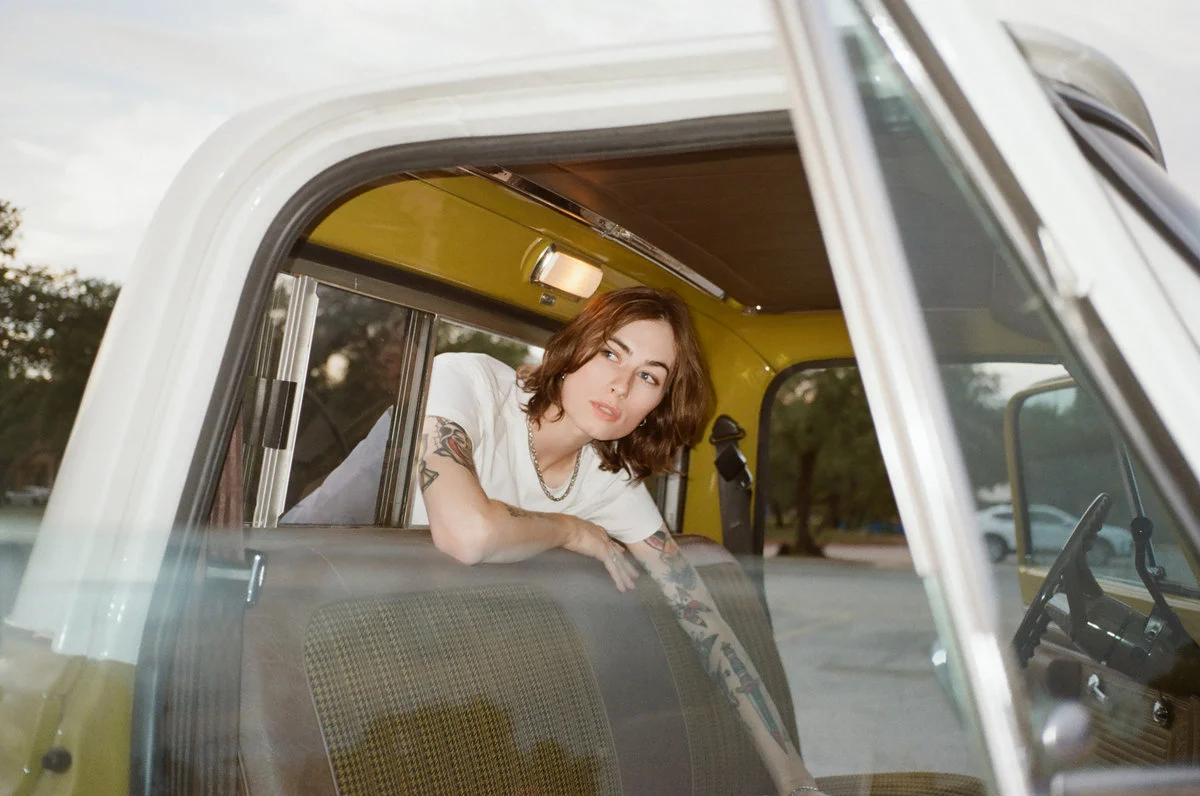
In a notable convergence of independent music eras, acclaimed experimental artist Claire Rousay has released a striking cover of "Hey Eleanor," a track originally penned by Owen Ashworth under his revered former moniker, Casiotone For The Painfully Alone. The original, a poignant and characteristically lo-fi piece, first appeared on Ashworth’s 2003 album, Twinkle Echo. Rousay’s rendition, unveiled recently, has garnered immediate attention not only for its drastic sonic transformation but also for the remarkably spontaneous circumstances surrounding its creation, reportedly thrown together in just 15 minutes while on hold with a pharmacy. This unexpected release serves as a fascinating dialogue between two distinct voices in the indie music landscape, offering a fresh perspective on a beloved classic and highlighting the evolving nature of artistic tribute and digital distribution.
The announcement of Rousay’s cover quickly circulated through music communities, particularly among fans of both artists. Her interpretation reimagines Ashworth’s tender original, imbuing it with a distinctly "more rocking and more electronic" character, as noted by early listeners. This sonic shift is a testament to Rousay’s innovative approach, which often blurs the lines between ambient textures, field recordings, and contemporary electronic composition. The track is currently available for free download on Bandcamp, underscoring the platform’s vital role in fostering direct artist-to-fan connections and facilitating spontaneous artistic output.
The Original: A Look at Casiotone For The Painfully Alone and "Hey Eleanor"
To fully appreciate the significance of Rousay’s cover, it is essential to contextualize the original work and its creator. Owen Ashworth, now recording as Advanced Base, carved a unique niche in the early 2000s indie scene with Casiotone For The Painfully Alone (CFTPA). The moniker itself, a nod to the Casio keyboards frequently used in his early recordings, perfectly encapsulated the project’s intimate, often melancholic, and deeply personal aesthetic. CFTPA became synonymous with lo-fi synth-pop, characterized by hushed vocals, sparse instrumentation, and lyrics that explored themes of loneliness, introspection, and the quiet anxieties of everyday life.
Owen Ashworth’s Enduring Legacy
Ashworth’s songwriting under the CFTPA banner resonated profoundly with a generation of listeners who found solace in his understated honesty. His music stood apart from the more bombastic indie rock of the era, offering a gentler, more introspective alternative. Albums like Pocket Symphonies for Lonesome Subway Riders (2006) and Etiquette (2009) solidified his reputation as a master of quiet introspection, influencing countless bedroom pop artists and indie songwriters who followed. In 2010, Ashworth announced the retirement of the Casiotone For The Painfully Alone moniker, transitioning to Advanced Base, a project that continued his signature lyrical depth while often incorporating slightly richer, albeit still understated, sonic palettes. This evolution demonstrated Ashworth’s ongoing commitment to artistic growth while maintaining the core emotional sincerity that defined his earlier work.
The Genesis of Twinkle Echo
Twinkle Echo, released in 2003, represents a pivotal moment in the Casiotone For The Painfully Alone discography. The album showcased Ashworth’s burgeoning talent for crafting evocative narratives within minimalist musical frameworks. "Hey Eleanor," a standout track from this period, exemplifies the project’s early charm. It is a short, sweet composition, typically clocking in at under two minutes, yet it manages to convey a powerful sense of longing and delicate emotion through its simple melody and unadorned vocal delivery. Its brevity and directness made it an immediate favorite among fans, serving as a quintessential example of Ashworth’s ability to distill complex feelings into succinct, impactful musical statements. The song’s enduring appeal lies in its timeless quality, a quiet anthem for introverts and dreamers, echoing the personal experiences of many listeners.
Claire Rousay: A Pioneer in Experimental Soundscapes
Stepping into this established legacy is Claire Rousay, an artist who has rapidly ascended to prominence within the contemporary experimental music landscape. Rousay’s work is celebrated for its innovative blending of ambient textures, field recordings, spoken word, and electronic improvisation. Her compositions often explore themes of intimacy, emotional vulnerability, and the subtle nuances of human connection, frequently incorporating everyday sounds and personal narratives to create deeply immersive and reflective sonic environments.
Rousay’s Distinctive Artistic Trajectory
Rousay’s discography is a testament to her restless creativity and fearless exploration of sound. Albums such as A softer focus (2021) and Everything Perfect Is Already Here (2022) have garnered widespread critical acclaim, cementing her reputation as a leading voice in modern experimental music. Her approach is characterized by a meticulous attention to detail, transforming seemingly mundane sounds—like the rustling of fabric, the clinking of ice, or snippets of overheard conversations—into integral components of her intricate soundscapes. She frequently collaborates with other innovative artists, expanding her artistic reach and demonstrating a versatile command of various sonic palettes. Rousay’s rise signifies a broader shift in contemporary music, where genre boundaries are increasingly fluid, and the personal, the ambient, and the electronic coalesce into new, compelling forms. Her work challenges listeners to engage with sound on a deeper, more introspective level, making her an ideal artist to reinterpret a piece as emotionally resonant as "Hey Eleanor."
The Reinterpretation: "Hey Eleanor" by Claire Rousay
Rousay’s decision to cover "Hey Eleanor" is intriguing, given the stylistic differences between her own work and Ashworth’s. The original is a stripped-down, keyboard-driven piece, while Rousay’s artistic vernacular often leans into abstract, layered sound design. Yet, the emotional core of Ashworth’s songwriting provides fertile ground for Rousay’s reinterpretation, allowing her to explore its sentiments through her unique sonic lens.
Spontaneity Meets Sonic Innovation
The anecdote of Rousay creating the cover in just 15 minutes while on hold with a pharmacy adds a layer of fascinating context to the release. This seemingly casual origin story speaks volumes about the modern creative process, where readily available digital tools and a spontaneous burst of inspiration can lead to a fully formed artistic statement. It highlights the accessibility of music production in the 21st century, enabling artists to capture fleeting ideas and translate them into shareable content with unprecedented speed. This informal, almost diaristic approach to creation aligns with Rousay’s broader artistic practice, which often blurs the lines between polished composition and raw, unedited expression. The unvarnished nature of its creation lends an additional layer of authenticity to the track, connecting the listener directly to the artist’s immediate experience.
A Comparative Sonic Analysis
Rousay’s rendition is described as "more rocking and more electronic" than Ashworth’s original, a transformation that warrants closer examination. The original "Hey Eleanor" is characterized by its gentle Casio synth melody, a simple, often repetitive drum machine beat, and Ashworth’s signature hushed, almost whispered vocals. It evokes a sense of fragile intimacy, a confessional delivered in a quiet room.
Rousay’s version, conversely, likely introduces a more pronounced rhythmic drive, perhaps incorporating more robust electronic percussion or synthesized drum patterns that lend it a greater sense of forward momentum—the "rocking" element. The "more electronic" aspect could manifest through a richer tapestry of synthesizers, employing textures, pads, and arpeggios that go beyond the minimalist palette of the original. Rousay might layer various electronic sounds, manipulate the original melody through digital processing, or even introduce her characteristic ambient washes and field recordings to create a broader, more expansive soundscape. If vocals are present, they might be processed, layered, or even delivered in a different style, perhaps leaning into her spoken-word tendencies. The transformation is not merely an update but a fundamental re-imagining, retaining the emotional essence of the source material while completely altering its sonic DNA. This process demonstrates Rousay’s skill in deconstructing and reconstructing a piece, revealing new dimensions within its familiar framework.
Broader Context and Industry Implications
The release of Claire Rousay’s "Hey Eleanor" cover is more than just a single track; it is a microcosm of several significant trends shaping the contemporary music industry and artistic landscape. It touches upon intergenerational artistic dialogue, the democratizing power of digital platforms, and the evolving definition of musical output.
Bridging Generations and Genres
This cover serves as a compelling bridge between two distinct generations of independent music. Casiotone For The Painfully Alone represents a seminal period in early 2000s indie, characterized by the rise of lo-fi aesthetics and deeply personal songwriting. Claire Rousay, on the other hand, embodies the cutting edge of contemporary experimental and electronic music, pushing boundaries with her innovative sound design and genre-fluid approach. Rousay’s choice to cover an Ashworth track not only pays homage to a foundational artist but also introduces his work to a new audience that might primarily engage with experimental electronic music. Conversely, it showcases Rousay’s versatility and her ability to engage with traditional song structures, potentially drawing listeners from Ashworth’s fanbase into her more abstract world. This cross-pollination enriches both artists’ legacies and demonstrates the enduring influence of well-crafted songwriting, regardless of its original sonic packaging. It underscores the idea that truly impactful music transcends genre and temporal boundaries.
The Digital Age of Creative Output
The spontaneous nature of the cover’s creation—15 minutes on a pharmacy hold—highlights the profound impact of digital tools and accessible technology on artistic production. Modern digital audio workstations (DAWs) and software instruments allow artists to quickly conceptualize and execute musical ideas with minimal friction. This ease of creation encourages spontaneity and experimentation, fostering an environment where a casual moment of inspiration can swiftly materialize into a shareable piece of art. This trend stands in contrast to the often lengthy and studio-intensive processes of previous eras, suggesting a move towards a more fluid and immediate creative cycle. For artists like Rousay, who frequently experiment and release work directly to fans, this immediacy is a core part of their artistic identity.
The Bandcamp Ecosystem
The decision to release the track for free download on Bandcamp further emphasizes the platform’s critical role in the independent music ecosystem. Bandcamp has long been a haven for artists, particularly those in experimental and niche genres, offering a direct revenue stream and unparalleled creative control. For spontaneous releases like Rousay’s "Hey Eleanor" cover, Bandcamp provides an ideal distribution channel, allowing artists to share new work instantly with their global fanbase without the constraints or delays of traditional labels or streaming aggregators. The option of a free download further strengthens the artist-fan relationship, serving as a gesture of generosity and accessibility that builds community and fosters goodwill. It also reinforces the notion that art can exist outside of purely commercial imperatives, driven by passion and immediate inspiration.
Reactions and Future Resonance
While direct statements from Owen Ashworth are not yet available regarding Rousay’s cover, it is reasonable to infer a sense of appreciation for the reinterpretation of his work by a respected contemporary artist. Such covers serve as a testament to the enduring quality and influence of the original material. For Ashworth, it underscores the continued relevance of his early songwriting, demonstrating how his intimate narratives can resonate across different musical styles and generations.
From Claire Rousay’s perspective, as implied by her Bandcamp note, the cover is likely a spontaneous tribute, born out of a genuine affection for the original song. Her willingness to share such a quickly assembled piece speaks to her authentic connection with music and her transparent approach to her creative process. It positions her not just as an innovator but also as a music enthusiast who actively engages with the broader musical canon.
The immediate reaction from music critics and fans has been largely enthusiastic, celebrating the unexpected collaboration and the fresh perspective Rousay brings to the track. Discussions have centered on the stylistic differences, the unexpected "rocking" elements, and how Rousay’s unique sound world transforms the original’s delicate charm. This cover is poised to generate further conversation about the interplay between homage and reinterpretation, the power of spontaneity in art, and the rich tapestry of connections that bind diverse corners of the independent music world. As listeners continue to discover and dissect Rousay’s "Hey Eleanor," it will undoubtedly stand as a fascinating case study in artistic dialogue and the ever-evolving nature of musical expression.
