

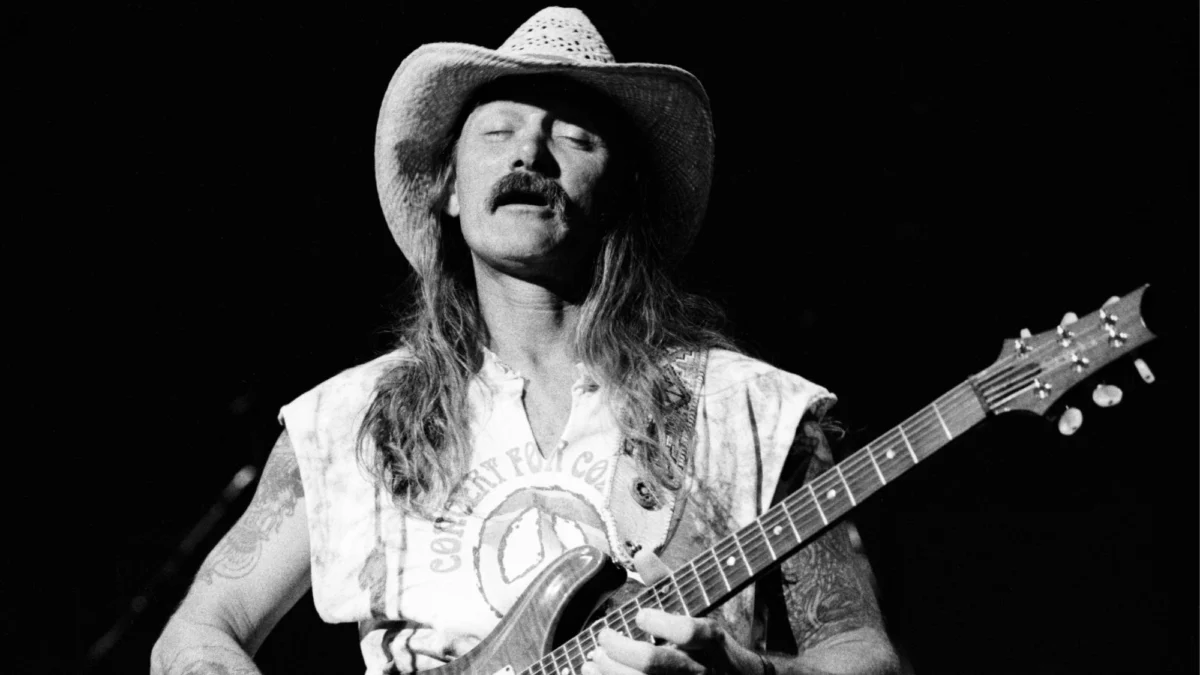
April 18 marks the second anniversary of the passing of Forrest Richard “Dickey” Betts, the virtuoso guitarist, singer, and songwriter whose work with the Allman Brothers Band redefined the boundaries of American rock music. Betts, a foundational architect of the Southern rock genre, died at the age of 80 on April 18, 2024, at his home in Osprey, Florida. His family confirmed at the time that the cause of death was a combination of cancer and chronic obstructive pulmonary disease (COPD). As the music world reflects on his departure, his influence remains a cornerstone of guitar pedagogy and the evolution of improvisational rock.
Betts was more than a co-founder of one of the most influential bands in history; he was the melodic foil to Duane Allman’s fiery slide guitar. Together, they established a dual-lead guitar harmony that moved away from the traditional rhythm-and-lead roles, opting instead for intricate, jazz-inflected counterpoint and synchronized melodies. Following the tragic death of Duane Allman in 1971, Betts assumed the mantle of the band’s primary instrumentalist and songwriter, guiding the group through its most commercially successful era.
Early Life and the Roots of a Southern Icon
Born on December 12, 1943, in West Palm Beach, Florida, Dickey Betts was raised in a household steeped in traditional American music. His family’s musical interests spanned bluegrass, country, and Western swing, genres that would later define his unique approach to the electric guitar. Unlike many of his contemporaries who drew strictly from the blues, Betts integrated the bright, melodic sensibilities of fiddle tunes and the swinging rhythms of Bob Wills and His Texas Playboys into a rock context.
By the age of five, Betts began playing the ukulele, eventually progressing to the mandolin, banjo, and guitar. This multi-instrumental background provided him with a sophisticated understanding of fretboard geometry and melodic phrasing. By his mid-teens, he was performing in various rock and roll outfits across Florida. His reputation as a formidable player grew on the nightclub circuit in Daytona Beach and Sarasota, where he eventually crossed paths with Duane and Gregg Allman.
In 1969, the Allman Brothers Band was formed in Jacksonville, Florida. The original lineup—comprising Duane and Gregg Allman, Betts, bassist Berry Oakley, and drummers Butch Trucks and Jai Johanny “Jaimoe” Johanson—was an anomaly for its time. It featured two drummers and two lead guitarists, a configuration that allowed for a massive, orchestral wall of sound that could shift seamlessly from blues-rock to avant-garde jazz fusion.
The Dual-Guitar Revolution: Betts and Allman
The partnership between Dickey Betts and Duane Allman is frequently cited by musicologists and critics as the pinnacle of rock guitar collaboration. While Duane was known for his visceral, blues-soaked slide playing, Betts brought a lyrical, major-key sweetness to the band’s compositions. Their ability to play harmonized lines in thirds and sixths became the "Allman Brothers sound," a technique later adopted by bands ranging from Thin Lizzy to the Eagles and Iron Maiden.
The 1971 live album At Fillmore East stands as the definitive document of this partnership. On tracks like “In Memory of Elizabeth Reed,” an instrumental penned by Betts, the two guitarists engaged in extended, telepathic improvisations. Betts later reflected on this period, noting that their chemistry was rooted in mutual respect rather than competition. He described their interaction as an "old soul understanding," where the goal was to serve the composition rather than outshine one another.
This era of creative peak was tragically interrupted on October 29, 1971, when Duane Allman died in a motorcycle accident at the age of 24. The loss of their leader and visionary threatened to dismantle the band, but Betts emerged as the stabilizing force, taking over the majority of the guitar duties and pushing the band toward a more melodic, country-influenced sound.
"Ramblin’ Man" and the Commercial Zenith
The 1973 album Brothers and Sisters marked a turning point for the Allman Brothers Band and Dickey Betts’ career. With the addition of pianist Chuck Leavell and the unfortunate passing of bassist Berry Oakley during the recording sessions, the band’s sound shifted. Betts wrote and sang the lead vocals on “Ramblin’ Man,” a song that reached number two on the Billboard Hot 100. It remains the band’s only Top 10 hit and solidified Betts’ status as a household name.
Beyond the success of “Ramblin’ Man,” Betts composed “Jessica,” an upbeat instrumental inspired by his daughter. The track, characterized by its infectious melody and intricate guitar harmonies, became a staple of classic rock radio and earned the band a Grammy Award for Best Rock Instrumental Performance in 1996.
During this period, Betts’ influence on the "Southern Rock" movement was undeniable. While the band resisted the label, preferring to be seen as a progressive blues and jazz outfit, Betts’ visual image—complete with a handlebar mustache, cowboy hat, and a rugged, outdoorsman persona—became the archetype for the genre.
A Chronology of Key Milestones
The career of Dickey Betts was marked by high-water marks of artistic achievement and periods of internal strife. A timeline of his professional journey highlights his enduring impact:
- 1969: The Allman Brothers Band is formed in Jacksonville, Florida.
- 1971: The release of At Fillmore East brings the band international acclaim; Duane Allman dies in October.
- 1972: Bassist Berry Oakley dies in a motorcycle accident near the site of Duane’s crash.
- 1973: Brothers and Sisters is released, featuring "Ramblin’ Man" and "Jessica."
- 1974: Betts releases his first solo album, Highway Call, showcasing his country and bluegrass roots.
- 1976: The Allman Brothers Band disbands for the first of several times due to internal tensions and substance abuse issues.
- 1989: The band reunites for their 20th anniversary, ushering in a creative renaissance with the addition of guitarist Warren Haynes.
- 1995: The Allman Brothers Band is inducted into the Rock and Roll Hall of Fame.
- 2000: Betts officially exits the Allman Brothers Band following a highly publicized legal and personal dispute with other founding members.
- 2001–2024: Betts continues to perform with his own group, Dickey Betts & Great Southern, and occasionally joins his son, Duane Betts, on stage.
Technical Analysis of the Betts Style
Guitar historians often point to Betts’ use of the hexatonic and pentatonic scales as his signature. Unlike the minor pentatonic "box" shapes common in blues-rock, Betts frequently utilized the major pentatonic scale, giving his solos a triumphant, soaring quality. His phrasing was heavily influenced by jazz saxophonists like Charlie Parker and country fiddle players, leading to long, fluid lines that avoided the "clichés" of 1970s rock.
His choice of equipment also played a role in his legendary tone. For much of his career, Betts was associated with "Goldtop" Gibson Les Pauls, most notably a 1957 model. Played through Marshall amplifiers, his sound was characterized by a "creamy" sustain and a sharp, articulate attack that allowed his melodic lines to cut through the band’s dense two-drummer percussion section.
Statements and Reactions from the Music Community
Following his passing in 2024, the music industry united to pay tribute to a man who was often described as both a "gentleman" and a "outlaw." Doug Gray, lead singer of the Marshall Tucker Band, remarked that the "monuments" Betts created for Southern rock would never be replicated. Gray emphasized that Betts was a man who "stood strong by himself" even before the band achieved global fame.
In a statement released by the Allman Brothers Band following his death, the group noted: "He was passionate in his life—be it music, songwriting, fishing, hunting, boating or golf. He was a giant in our world, and his absence will be felt across the musical spectrum."
Gregg Allman, before his own death in 2017, had acknowledged the complex relationship he shared with Betts, noting that despite their professional estrangement in later years, the musical bond they forged in the 1970s was unbreakable.
Broader Impact and Implications
The death of Dickey Betts marked the end of an era for American improvisational music. With his passing, Jai Johanny “Jaimoe” Johanson remains the last surviving original member of the Allman Brothers Band. The loss of Betts has prompted a re-evaluation of the "Jam Band" scene, a movement the Allman Brothers Band inadvertently fathered. Groups like Phish, Widespread Panic, and the Tedeschi Trucks Band (led by Derek Trucks, nephew of original drummer Butch Trucks) continue to carry the torch of the improvisational excellence Betts helped pioneer.
Furthermore, Betts’ departure from the band in 2000 remains a cautionary tale regarding the pressures of long-term creative partnerships. The legal battles that ensued highlighted the difficulties of managing the legacy of a legendary brand while navigating the personal evolutions of its members. However, in the two years since his death, the focus has shifted entirely back to his artistic contributions.
Today, Dickey Betts is remembered not for the controversies of the past, but for the "Ramblin’ Man" spirit he embodied. He transformed the electric guitar into a melodic instrument capable of expressing the vast landscapes of the American South. From the jazz-tinged instrumentals that expanded the minds of listeners at the Fillmore East to the radio-friendly hits that defined a decade, Betts’ work remains a vital part of the American songbook. As fans and musicians mark this second anniversary, the "string magic" he created continues to resonate, ensuring that the legacy of the Allman Brothers Band remains as enduring as the melodies he left behind.
