

The architectural framework of the global music industry has undergone a radical transformation over the past two decades, shifting from a gatekeeper-dominated model to an algorithm-driven ecosystem. In the 20th century, the trajectory to superstardom was almost exclusively linear: artists performed in local circuits, were scouted by Artists and Repertoire (A&R) executives, and signed to major labels that controlled distribution and media access. Today, the traditional "discovery" narrative has been largely supplanted by two primary catalysts for success: digital virality and established industry lineage. This paradigm shift has democratized the ability to reach a global audience while simultaneously placing a premium on "tech-savviness" and social media engagement as prerequisites for commercial viability.
The Death of the Traditional A&R Model
Throughout the 1970s, 80s, and 90s, the music industry functioned through a system of curated discovery. Professional scouts frequented bars, clubs, and underground venues to find talent that possessed a specific "it" factor. Once a demo tape was accepted, the label would invest heavily in "development," a process that could take years before an artist saw their first radio play.
In contrast, the contemporary landscape is defined by data-driven acquisition. Major labels such as Universal Music Group, Sony Music, and Warner Music Group now utilize sophisticated software to track rising metrics on platforms like TikTok, Instagram, and Spotify. Instead of signing a "diamond in the rough," labels often wait for an artist to prove their marketability through a viral moment before offering a contract. This shift has led to a new era where the audience, rather than the executive, serves as the primary filter for talent.
Olivia Rodrigo: The Synergy of Legacy Media and Social Velocity
Olivia Rodrigo represents a sophisticated hybrid of the old and new industry models. While she possesses the "Disney pedigree" that launched the careers of stars like Justin Timberlake and Miley Cyrus, her ascent to the top of the global charts was fueled by a masterclass in social media narrative-building.
Rodrigo’s career began in the traditional sense; she was a child actress with roles in "Bizaardvark" and "High School Musical: The Musical: The Series." However, her transition from actress to pop icon was not a foregone conclusion. When she signed with Geffen Records, the strategy shifted toward authentic, digital-first engagement. In early 2021, Rodrigo began teasing her debut single, "Drivers License," on Instagram and TikTok. By sharing snippets of the songwriting process, she fostered a sense of intimacy and "parasocial" connection with her audience.
The results were unprecedented. Upon its release on January 8, 2021, "Drivers License" broke the Spotify record for the most daily streams for a non-holiday song—twice. Within its first week, the track earned over 107 million streams globally. A representative for Spotify, speaking to Billboard, noted that while social media platforms provided the initial spark, the "word of mouth" nature of the digital era acted as a force multiplier. The song was not just a hit; it was a cultural event discussed across every major social platform simultaneously.
Lil Nas X: Disruption Through Algorithmic Literacy
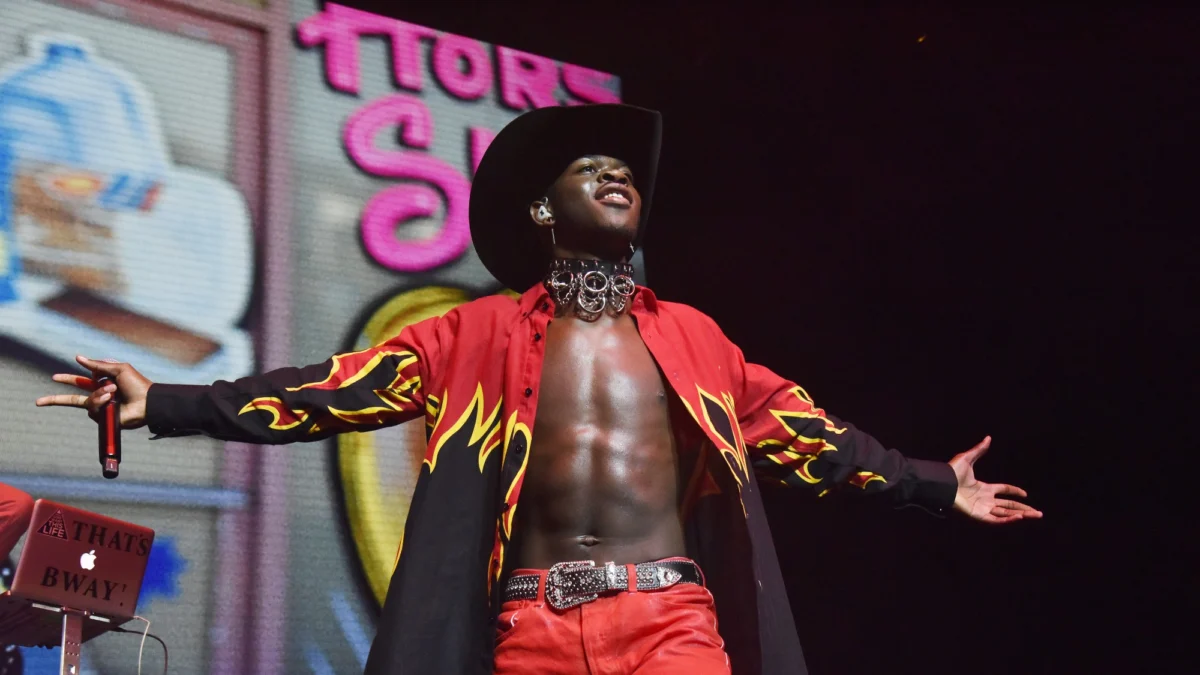
If Olivia Rodrigo represents the evolution of the studio system, Lil Nas X represents its total disruption. Born Montero Lamar Hill, the artist had no industry connections, no professional management, and was reportedly couch-surfing when he began promoting "Old Town Road" in late 2018.
Lil Nas X’s success was not an accident of the algorithm but a result of his deep understanding of internet culture. Having spent years as a prominent "Twitter personality," he understood the mechanics of memes and engagement. He strategically positioned "Old Town Road" as a "country-trap" hybrid, knowing the genre-bending nature of the song would spark debate and, consequently, visibility.
The song’s trajectory provides a blueprint for the modern viral hit:
- The Seed: Lil Nas X purchased the beat for $30 and uploaded the song to SoundCloud and TikTok.
- The Meme: The "Yeehaw Challenge" on TikTok saw millions of users transforming into cowboys when the beat dropped, propelling the song into the cultural zeitgeist.
- The Controversy: Billboard’s decision to remove the song from the Hot Country Songs chart on the grounds that it was not "country enough" sparked a national conversation about race and genre, further boosting its streaming numbers.
- The Validation: In mid-2019, Billy Ray Cyrus joined a remix of the track, cementing its crossover appeal.
By the time "Old Town Road" finished its historic 19-week run at number one on the Billboard Hot 100, Lil Nas X had proven that a solo creator with a smartphone could outperform the marketing budgets of the world’s largest record labels.
Benson Boone: The Pivot from Television to TikTok
Benson Boone’s rise illustrates a significant shift in the perceived value of traditional talent competitions. In 2021, Boone appeared on "American Idol," where he quickly became a favorite of the judges, including Katy Perry, who predicted he could win the entire competition. However, in a move that shocked the industry, Boone withdrew from the show.
Boone’s decision was rooted in a desire for creative control and an understanding that "American Idol," while prestigious, offered a rigid path to fame. He instead turned his focus to TikTok, where he began posting raw, emotional performances and showcasing his vocal range. His ability to blend high-level musicality with the casual, "lo-fi" aesthetic of social media allowed him to amass millions of followers independently.
This digital footprint made him an attractive prospect for Imagine Dragons’ frontman Dan Reynolds, who signed Boone to his Night Street Records in partnership with Warner Records. Boone’s recent success, including the global hit "Beautiful Things" and a high-profile performance with Queen’s Brian May at Coachella, underscores the reality that a viral following is now a more potent currency than a reality TV title.
Chronology of the Digital Shift
To understand the current state of the industry, one must look at the timeline of digital disruption:
- 1999–2003: The Napster era and the rise of the iTunes Store begin to decentralize music distribution.
- 2005–2008: MySpace becomes the first social media platform to launch major careers (e.g., Arctic Monkeys, Lily Allen).
- 2010–2015: SoundCloud and YouTube emerge as "independent" hubs, leading to the "SoundCloud Rap" era and the rise of stars like Justin Bieber via video uploads.
- 2018–Present: TikTok becomes the dominant force in music discovery. Short-form video content dictates chart success, with songs often being engineered specifically to have "viral-ready" hooks.
Supporting Data and Industry Implications
The impact of this shift is reflected in recent industry reports. According to the IFPI Global Music Report 2023, streaming now accounts for 67.3% of total global recorded music revenue. Furthermore, a study by Luminate (formerly Nielsen Music) found that over 75% of music listeners in the U.S. discover new music through short-form video platforms.
This "TikTok-ification" of music has several major implications for the future of the industry:
1. The "Hook" Economy: Songs are becoming shorter, and the "chorus" or "hook" is often placed earlier in the track to capture attention within the first five seconds of a social media scroll.
2. Data as A&R: Labels are increasingly risk-averse, preferring to sign artists who already have a "built-in" audience of 100,000+ followers. This has made it harder for talented artists who lack digital marketing skills to break through.
3. The Content Burden: Modern musicians are no longer just singers or songwriters; they are expected to be full-time content creators. The pressure to maintain a 24/7 digital presence has led to increased reports of burnout among emerging artists.
4. The Longevity Gap: While virality can launch a career overnight, it does not guarantee longevity. The industry is currently struggling with "one-hit wonders" who achieve a viral moment but fail to build a sustainable fan base or a cohesive body of work.
Official Responses and Future Outlook
Industry executives remain divided on the benefits of this new era. While some praise the democratization of the industry, others worry about the quality of the art. In a 2023 earnings call, several major label CEOs noted that the sheer volume of content—roughly 120,000 new tracks uploaded to streaming services every day—makes it increasingly difficult for "prestige" artists to cut through the noise.
However, the success of artists like Olivia Rodrigo, Lil Nas X, and Benson Boone suggests that the most successful stars of the future will be those who can bridge the gap between digital savvy and genuine musical talent. As the music business continues to navigate the complexities of the AI and post-TikTok era, one fact remains clear: the days of being "discovered" in a smoky jazz club are over. The new stage is the screen, and the new audience is the algorithm.
