

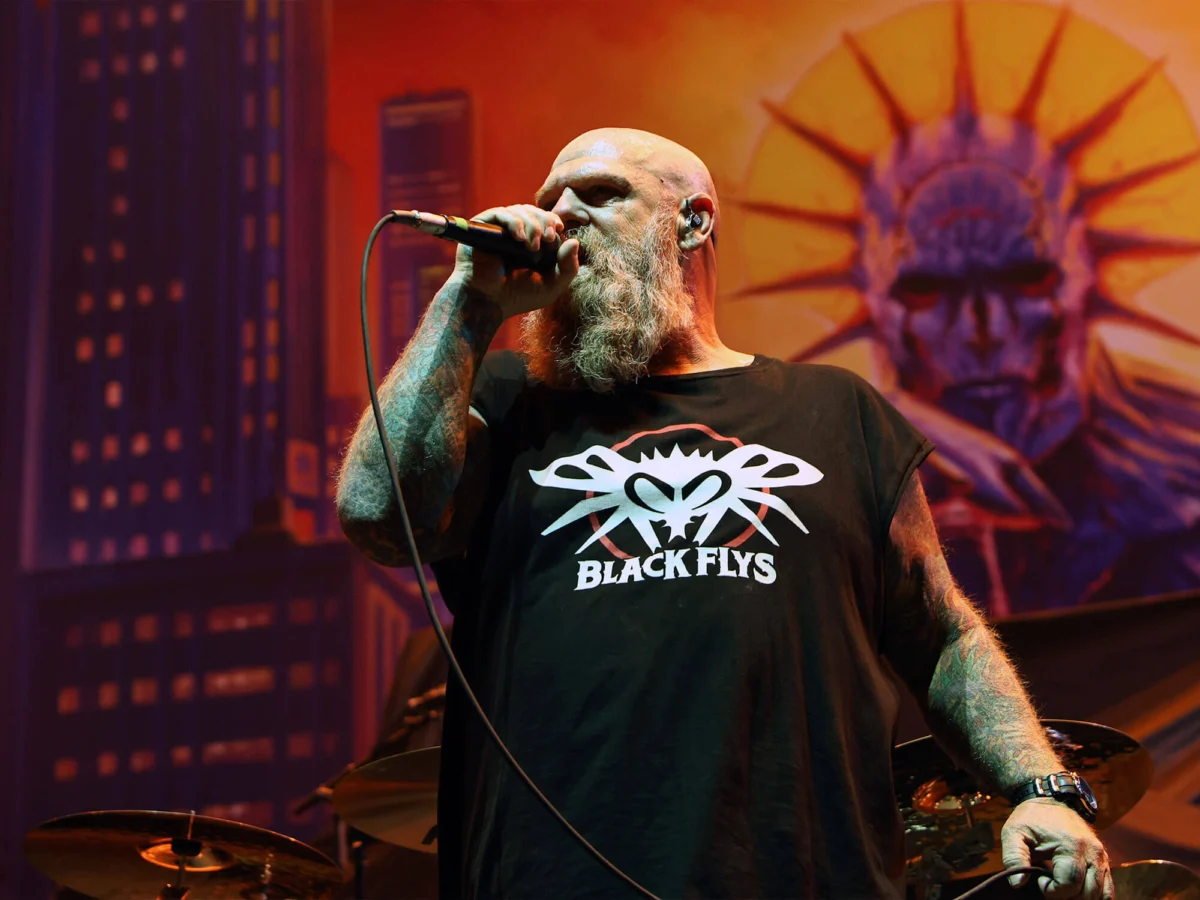
The narrative of a musician’s career often presents a dichotomy: sustained success for a select few versus the challenging reality of transitioning away from the spotlight for many others. Rob Dukes, known for his powerful vocal contributions to the Bay Area thrash metal titans Exodus, offers a compelling illustration of this latter path, a journey that led him from international stages to the methodical precision of vintage car restoration, only to culminate in an unexpected return to his former band. His story is one of resilience, reinvention, and ultimately, the enduring pull of one’s artistic calling.
The Initial Ascent: Dukes’ First Chapter with Exodus (2005-2014)
Rob Dukes first joined Exodus in 2005, stepping into the shoes of iconic vocalist Steve "Zetro" Souza, who had departed the band for the second time. This period marked a significant chapter in Exodus’s storied history. The band, a seminal force in the development of thrash metal since the early 1980s, had already cemented its legacy with groundbreaking albums like Bonded by Blood (1985) and Fabulous Disaster (1989). Dukes’ arrival coincided with a renewed creative surge for Exodus, beginning with the critically acclaimed album Shovel Headed Kill Machine, released in 2005.
Dukes brought a distinct vocal intensity to the band, characterized by a more guttural, aggressive delivery that contrasted with Souza’s higher-pitched, more melodic snarl. This stylistic shift was embraced by a segment of the fanbase, while others remained loyal to the band’s earlier sound. Over his nine-year tenure, Dukes fronted Exodus through three additional studio albums: The Atrocity Exhibition… Exhibit A (2007), Exhibit B: The Human Condition (2010), and Blood In, Blood Out, though the latter was released shortly after his departure in 2014. These albums were generally well-received, maintaining Exodus’s reputation for uncompromising thrash and brutal lyrical themes. Dukes toured extensively with the band, performing on major festival stages worldwide and contributing to their formidable live reputation. His presence helped to solidify Exodus’s standing as one of the most consistent and potent forces in the thrash metal landscape, even as the genre experienced various fluctuations in mainstream popularity. The band’s rigorous touring schedule and commitment to their aggressive sound during this era underscored Dukes’ integral role in their continued relevance.
The Shock of Dismissal: A Livelihood Lost and a New Path Forged
The abrupt conclusion of Dukes’ first run with Exodus in 2014 came as a profound shock, not only to the music community but, more acutely, to Dukes himself. As he recently recounted in an interview with Metal Hammer, the dismissal was entirely unforeseen. "When I got fired from Exodus in 2014, I didn’t see it coming. I felt betrayed, angry and resentful. I was fucking scared – my livelihood was gone. Fear caused me to lash out. I hadn’t done anything in 10 years other than sing, so what the fuck was I gonna do? I was in no man’s land."
This candid reflection highlights a stark reality for many professional musicians. While the public often perceives a glamorous, financially stable career, the truth for the vast majority, even those in established bands, can be precarious. Income from touring and album sales can be inconsistent, and few accumulate the kind of wealth that provides long-term financial security without active engagement in the industry. For Dukes, a decade spent dedicated solely to his craft meant a significant skills gap when suddenly faced with unemployment outside the music sphere. The emotional fallout – betrayal, anger, resentment, and profound fear – is a common thread among individuals whose professional identities and financial stability are abruptly severed. The immediate challenge was not just emotional recovery, but the practical necessity of securing a new means of income. This moment forced a fundamental re-evaluation of his life and career trajectory.
From Stage to Garage: Embracing the Craft of Restoration
In the wake of his firing, Dukes found himself at a crossroads, needing to re-establish a career path outside of music. His previous experience provided a crucial anchor: "The only thing I knew I could make a living from was working on cars." This practical skill, likely honed before his full-time immersion in music, offered a tangible route forward. The transition was aided by a connection within the punk and metal community; Roger Miret of the legendary hardcore band Agnostic Front provided a lead. "I found a place in Arizona through Roger [Miret] from Agnostic Front. I got hired and the next you know I’m a full-time mechanic restoring old ‘50s and ‘60s Volkswagens – I became the restoration guy."
This pivot was not merely a stopgap but a profound reinvention. Dukes immersed himself in the meticulous craft of vintage car restoration, a field demanding precision, patience, and a deep understanding of mechanical and structural engineering. He embraced a self-taught approach, leveraging available resources. "I learned things by reading books and watching YouTube. I’m a fucking master welder now! I love fabricating stuff, I just love making stuff out of metal." This dedication transformed him into a highly skilled artisan, proficient in complex techniques like welding and metal fabrication. The satisfaction derived from physically creating and restoring, from bringing dilapidated vehicles back to their former glory, offered a different kind of fulfillment than performing on stage. It was a testament to his adaptability and willingness to learn, illustrating how transferable skills and a tenacious spirit can forge new opportunities even in the face of significant professional setbacks. This period allowed him to develop new expertise and gain a renewed sense of purpose outside the volatile music industry.
The Call of the Stage: Rob Dukes’ Return to Exodus (2025)

Despite finding a new passion and achieving mastery in a different field, the world of music ultimately couldn’t fully release its hold on Rob Dukes. The announcement in January 2025 that Dukes would be rejoining Exodus, replacing Steve "Zetro" Souza once again, sent ripples of excitement through the thrash metal community. This marked a rare and intriguing full-circle moment in the band’s history, showcasing a unique dynamic within their lineup.
The band’s official statement regarding Dukes’ return conveyed palpable enthusiasm: "We are beyond stoked to have Rob back ripping up the stage with us and he’s looking forward to crushing everything like only he can." This statement not only confirmed his return but also emphasized the band’s confidence in his abilities and their anticipation of his renewed contributions. The move highlights the complex, often cyclical nature of band lineups, particularly for long-standing groups like Exodus. Their history is punctuated by vocalist changes, with both Dukes and Souza having multiple stints with the band. This pattern suggests a deep-seated connection and respect among the members, capable of transcending past disagreements or career divergences. Dukes’ return is not just a personnel change; it’s a reaffirmation of his place within the Exodus family and an acknowledgment of the unique energy he brings to their live performances and recorded output. It also speaks to the challenges of maintaining a stable lineup over decades, and the occasional necessity of revisiting past configurations to find the right chemistry.
Exodus’s Enduring Legacy and Quest for Recognition
Exodus has long been a cornerstone of the thrash metal genre, often cited as one of the "Big Five" alongside Metallica, Megadeth, Slayer, and Anthrax, though they are frequently omitted from the more commonly recognized "Big Four." This historical context provides essential background for understanding guitarist Gary Holt’s recent, often outspoken, comments regarding the band’s position within the pantheon of thrash. Holt, a founding member and the primary songwriter for Exodus, has been a consistent voice for the band’s legacy and its perceived lack of mainstream recognition compared to their peers.
In March, Holt provocatively stated, "Metallica were the best of all of us. I mean, I don’t think so anymore – I think Exodus crushes them, but that’s my own humble opinion." This bold assertion, while clearly a subjective opinion, underscores a deep-seated pride and perhaps a degree of frustration within the Exodus camp. He further elaborated on this sentiment last month, declaring that he and his bandmates "carry the world’s biggest chip on our shoulders" due to Exodus not receiving the same recognition as thrash metal counterparts like Metallica and Megadeth.
These statements are not mere bravado; they reflect a genuine belief in the quality and impact of Exodus’s music. From their foundational role in the Bay Area thrash scene with Bonded by Blood, an album that profoundly influenced countless bands, to their consistent output of high-quality material across decades, Exodus has maintained an unwavering commitment to their aggressive sound. Their discography, spanning over 40 years, showcases a band that has rarely strayed from its thrash metal roots, delivering brutal riffs and uncompromising lyrical themes with relentless energy. Holt’s comments serve as a rallying cry, not just for the band, but for their dedicated fanbase, reinforcing the idea that Exodus remains a vital and formidable force in heavy metal, deserving of broader critical and popular acclaim. The band’s longevity, coupled with their consistent creative output, further solidifies their argument for a more prominent place in metal history.
Implications and Future Outlook
Rob Dukes’ unique trajectory—from a prominent metal vocalist, through a period of vocational reinvention, and finally back to the stage—carries significant implications for both his personal narrative and the broader landscape of the music industry. His story is a powerful testament to personal resilience and the human capacity for adaptability. It challenges the conventional perception of career paths in creative fields, demonstrating that professional setbacks do not necessarily signify an end but can, in fact, lead to unexpected growth and the acquisition of new, valuable skills. For aspiring musicians, Dukes’ journey offers a pragmatic lesson: developing diverse skills and maintaining a flexible mindset can provide a crucial safety net in an often unpredictable industry.
For Exodus, Dukes’ return marks a significant moment. The band’s history of rotating vocalists, particularly between Dukes and Souza, has cultivated a unique fan dynamic. Each vocalist brought a distinct flavor to the band’s sound, and Dukes’ re-entry is likely to be met with excitement from those who appreciated his aggressive vocal style during his initial tenure. His return could signal a renewed creative direction, potentially influencing the sound of future material and injecting a fresh dynamic into their live performances. The consistency of Exodus’s core members, particularly Holt and Tom Hunting, provides a stable foundation against which these vocal changes play out, allowing the band to maintain its identity while exploring different sonic nuances.
The broader impact on the thrash metal scene is also noteworthy. The continued activity of legendary bands like Exodus, often involving shifts in lineup or unexpected returns, underscores the genre’s enduring vitality and the deep loyalty of its fanbase. It highlights how these veteran acts continue to shape and influence heavy music, even decades after their inception. As Exodus prepares for upcoming tours with Dukes back at the helm, the anticipation among fans for live performances and potentially new music will be high. This latest chapter in Rob Dukes’ career, characterized by its unexpected turns and triumphant return, solidifies his place as a compelling figure within the metal world, embodying both the challenges and the profound rewards of a life dedicated to heavy music.
Fans eager to witness Rob Dukes’ renewed energy on stage with Exodus can find a full list of upcoming tour dates via the band’s official website.
