

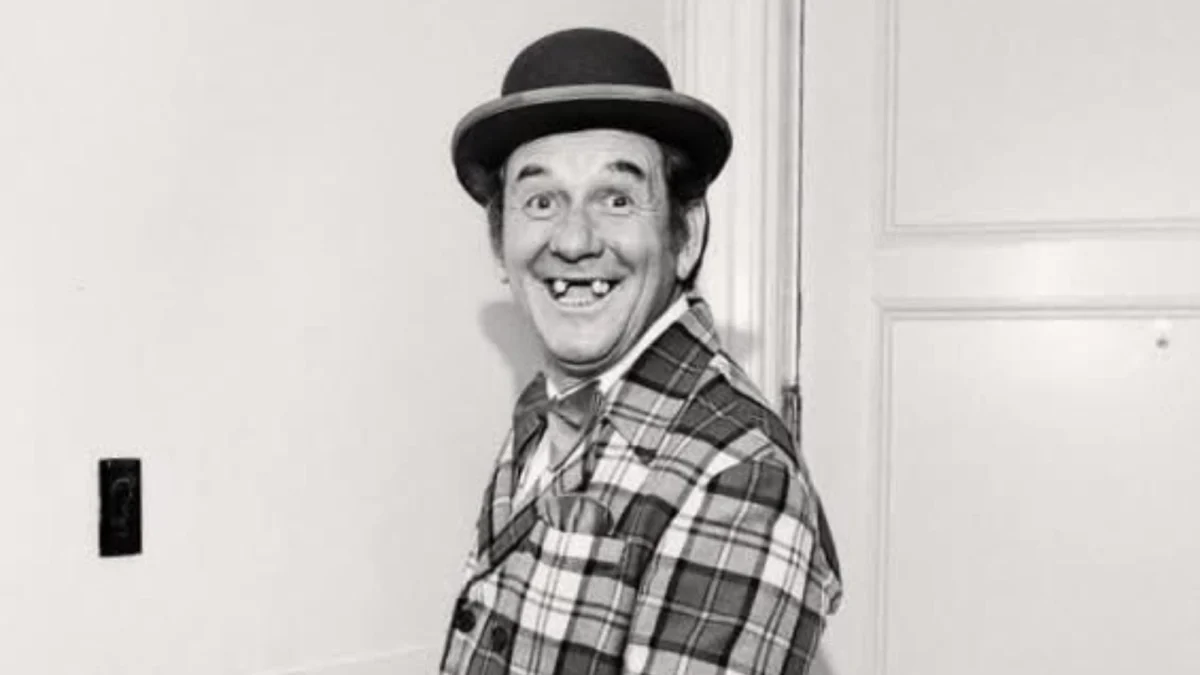
The landscape of American television and country music history is often defined by its charismatic vocalists and flamboyant showmen, yet few figures left as indelible a mark on the genre’s golden era as Gilbert Ray “Speck” Rhodes. Born on July 16, 1915, in the small town of West Plains, Missouri, Rhodes would eventually become a cornerstone of syndicated television, serving as the comedic heartbeat of The Porter Wagoner Show for two decades. As the industry reflects on what would have been his 111th birthday, the legacy of Speck Rhodes offers a window into a bygone era of entertainment where music, comedy, and homespun charm were inextricably linked.
Rhodes was far more than a supporting act; he was a master of timing and a preservationist of a specific style of American humor. His career, which spanned over six decades, saw him transition from the traveling vaudeville circuits of the Great Depression to the bright lights of the Grand Ole Opry and the living rooms of millions of Americans. To understand the impact of Speck Rhodes is to understand the evolution of country music from a regional curiosity to a national powerhouse.
The Formative Years and the Log Cabin Mountaineers
The origins of Speck Rhodes’ career are rooted in the rural traditions of the Missouri Ozarks. One of six children, Gilbert Ray Rhodes was raised in an environment where music was not merely entertainment but a fundamental part of social fabric. Along with three of his siblings—Slim, Dusty, and Bea—Speck began performing at a young age. The family’s repertoire was a blend of traditional folk, gospel, and the emerging sounds of early country music.
By the time the siblings reached their teenage years, they had transitioned from local performers to professional entertainers, adopting the moniker The Log Cabin Mountaineers. This period was crucial for Speck’s development. While he was a proficient musician, capable of handling the banjo and the bass fiddle with professional ease, he discovered an innate ability to connect with audiences through humor. During their travels on the RKO vaudeville circuit, which took them across the country and as far as California, Speck began to experiment with the "country bumpkin" archetype.
This persona—characterized by a gap-toothed grin, oversized suits, and a bowler hat—was a staple of the medicine shows and vaudeville acts of the early 20th century. However, Rhodes brought a level of authenticity and warmth to the character that prevented it from becoming a mere caricature. He understood that the humor worked best when it felt like it was coming from a place of shared experience rather than mockery.
The Nashville Transition and the Sun Records Connection
As the 1940s and 1950s progressed, the Rhodes siblings began to pursue individual paths, reflecting the changing landscape of the music industry. His brother Slim Rhodes moved toward the burgeoning rockabilly scene in Memphis, eventually signing with Sam Phillips’ legendary Sun Records. Slim’s work at Sun Records placed him in the company of icons like Elvis Presley, Jerry Lee Lewis, and Johnny Cash, highlighting the family’s deep-seated musical talent.
While Slim was exploring the frontiers of rock and roll, Speck Rhodes looked toward Nashville, the emerging capital of country music. His path converged with that of another West Plains native: Porter Wagoner. Wagoner, who was rapidly becoming one of the most recognizable faces in the genre, was in the process of launching a syndicated television program. The shared roots between the two men provided an immediate foundation for a professional partnership that would define both of their careers.
The Porter Wagoner Show: A Television Institution
Launched in 1961, The Porter Wagoner Show became one of the most successful and longest-running syndicated programs in television history. For 21 years, it served as a primary platform for established stars and rising talents, most notably Dolly Parton, who joined the cast in 1967. Within this high-energy environment, Speck Rhodes served as the essential counterpoint to the polished musical performances.
Rhodes’ role on the show was multifaceted. He was the primary comedian, often performing skits that involved fictionalized telephone conversations with his girlfriend, "Sadie," or engaging in witty banter with Wagoner. His comedic segments provided a "breather" for the audience between musical numbers, ensuring the show maintained a balanced variety-show format. Data from the era suggests that the show reached over 100 markets and boasted a weekly viewership in the millions, making Speck Rhodes one of the most recognizable comedians in the United States.
Beyond comedy, Rhodes contributed musically as a member of Wagoner’s backing band, The Wagonmasters. His ability to switch seamlessly from a slapstick routine to a technical performance on the upright bass demonstrated a versatility that was highly valued in the industry. This dual role helped maintain the show’s "homespun" atmosphere, which resonated deeply with rural and working-class audiences.
Chronology of a Career: Key Milestones
To appreciate the longevity of Speck Rhodes’ career, one must look at the timeline of his professional evolution:
- 1915: Born on July 16 in West Plains, Missouri.
- 1930s: Forms The Log Cabin Mountaineers with his siblings, touring the RKO vaudeville circuit.
- 1940s-1950s: The Rhodes family performs on various radio stations across the South and Midwest, including long-running stints in Memphis.
- 1961: Joins The Porter Wagoner Show at its inception, beginning a 20-year television tenure.
- 1960s-1970s: Becomes a regular fixture at the Grand Ole Opry, performing both as a comedian and a musician.
- 1981: The Porter Wagoner Show concludes its original run; Rhodes continues to perform as a solo act and in guest appearances.
- 1996: Officially retires from the entertainment industry after 66 years of professional performance.
- 2000: Passes away at his home in Nashville on March 19 at the age of 84.
Cultural Impact and the "Country Bumpkin" Archetype
The character Speck Rhodes portrayed—the lovable, slow-witted but often surprisingly sharp ruralite—is a significant part of American cultural history. This archetype, often referred to as the "hick" or "rube," has roots in 19th-century theater. While modern sensibilities sometimes view such characters with skepticism, Rhodes’ portrayal was rooted in the "rube-hero" tradition, where the character’s simplicity is a mask for common sense and moral integrity.
In the context of the 1960s and 70s, a period of rapid urbanization and social change, Rhodes offered a sense of continuity. For many viewers, he represented a link to a simpler, more communal past. His comedy was notably "clean," relying on wordplay, physical humor, and situational irony rather than cynicism. This approach allowed him to appeal to multi-generational audiences, a key factor in the sustained ratings of The Porter Wagoner Show.
Industry analysts often point to Rhodes as a precursor to the "Blue Collar Comedy" movement of later decades. While the delivery changed, the core appeal—finding humor in the everyday struggles and quirks of ordinary people—remained the same.
Tributes and Industry Recognition
Following his passing in 2000, the country music community was vocal in its praise for Rhodes. Porter Wagoner frequently cited Rhodes as a vital component of his success, noting that Speck’s ability to "work a crowd" was unparalleled. Dolly Parton has also spoken fondly of her years working alongside him, acknowledging the professional discipline and comedic timing she learned from observing his performances.
In a 2024 retrospective, the West Plains Daily Quill noted, “Whether he was cracking a joke, playing the bass fiddle, or just flashing his gap-toothed grin, Speck Rhodes embodied the spirit of country music—down-to-earth, genuine, and full of life.” This sentiment reflects the enduring affection for a man who never sought the brightest spotlight for himself but ensured that everyone around him shone brighter.
Rhodes’ hometown of West Plains has also taken steps to honor his memory, recognizing him alongside Wagoner as a native son who brought national attention to the Ozark region. His influence is also felt at the Grand Ole Opry, where the tradition of the "country comedian" (exemplified by figures like Minnie Pearl and Rod Brasfield) was kept alive by Rhodes well into the late 20th century.
Analysis of Implications: The End of an Era
The career of Speck Rhodes also highlights the shift in television programming. The era of the syndicated country variety show, which flourished from the 1950s through the early 1980s, has largely disappeared, replaced by cable networks and digital streaming platforms with more niche-focused content. Rhodes was one of the last great practitioners of a style of variety entertainment that required a performer to be a "jack of all trades."
His retirement in 1996 marked the end of a specific lineage of performance. Today, comedy and music are often segregated into different genres and platforms. The "integrated" entertainment model that Rhodes perfected—where a joke was as valuable as a hit song—is now a rarity.
As we commemorate Speck Rhodes on his 111th birthday, we recognize more than just a comedian or a musician. We recognize a cultural ambassador who bridged the gap between the vaudeville stage and the digital age. His 20-year partnership with Porter Wagoner remains a gold standard for professional collaboration in the entertainment industry, and his "country bumpkin" persona remains a testament to the power of character-driven humor. Speck Rhodes may have played a simple man on television, but his contribution to the fabric of American entertainment was profoundly complex and enduringly significant.
