

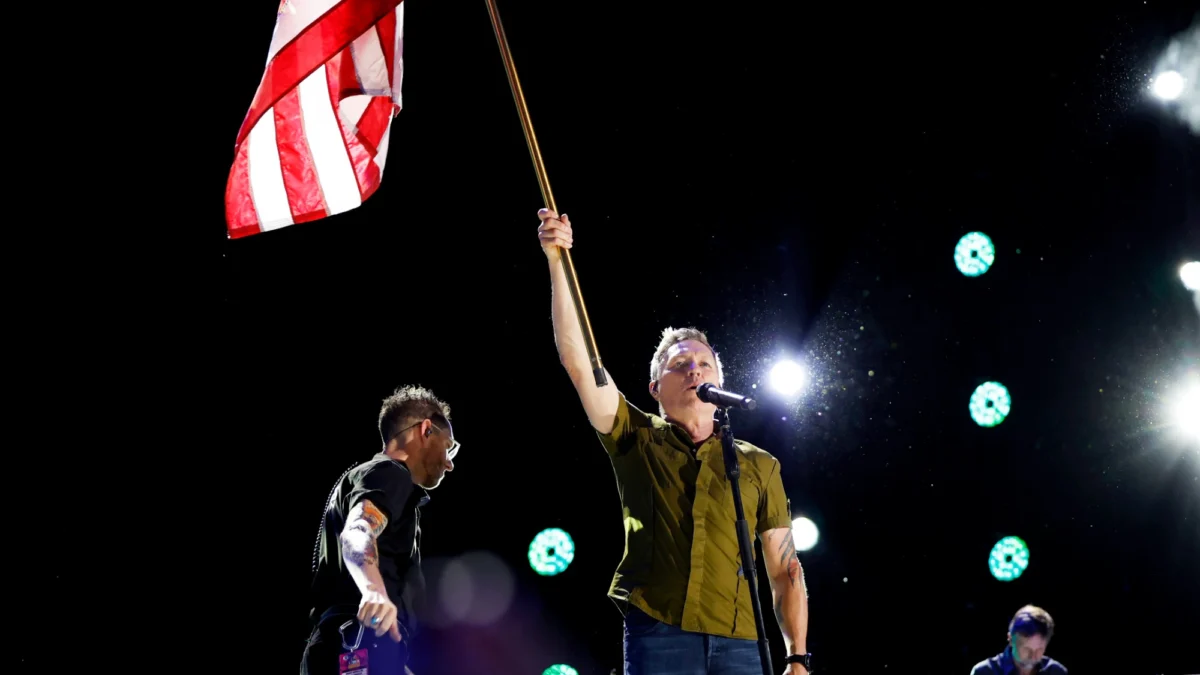
The trajectory of American country music is often defined by stories of humble beginnings and hard-won success, but few narratives possess the grit and patriotic commitment of Craig Morgan Greer. Born on July 17, 1964, in Kingston Springs, Tennessee, the artist known professionally as Craig Morgan has spent the last six decades navigating two vastly different yet intrinsically linked worlds: the high-stakes arena of Nashville’s music industry and the disciplined ranks of the United States Armed Forces. As Morgan celebrates another milestone year, his career stands as a testament to the "citizen-soldier" ideal, a journey that has transitioned from the elite paratrooper units of the Cold War era to the top of the Billboard charts, and ultimately back into the uniform of the U.S. Army Reserves.
The Foundation of Service and Song
Long before he was a household name in country music, Morgan was a dedicated soldier. His military career began in the mid-1980s, a period characterized by rigorous training and international deployments. Morgan did not merely serve; he excelled in some of the Army’s most demanding environments. He served as a Ranger with the 101st Airborne Division, known as the "Screaming Eagles," and the 82nd Airborne Division, the "All-American" division. His service record further includes time with the 3rd Ranger Battalion, a unit synonymous with elite light infantry operations and rapid deployment.
It was during these formative years in the military that Morgan’s musical identity began to take shape. While many artists find their voice in bars or church choirs, Morgan found his in the barracks and mess halls. According to historical military biographies, his first significant foray into songwriting occurred ahead of a formal banquet honoring the Army’s first Airborne division. Morgan was tasked with composing a song to commemorate the unit’s history. The resulting piece was so well-received by his superiors that it was integrated into the official program, marking the first time Morgan realized his music could resonate on a professional level.
This dual path continued during his stationing in South Korea. While fulfilling his duties as an active-duty soldier, Morgan participated in several talent contests, frequently winning top honors for both his vocal performance and his original compositions. A pivotal moment occurred when he secured an opening spot for the renowned country group Sawyer Brown during one of their USO-style performances in Korea. These experiences provided the necessary confidence for Morgan to pursue a career in Nashville once his initial active-duty commitment concluded.
The Nashville Transition: From Deputy to Demo Singer
Morgan’s transition from active duty to the music industry was neither immediate nor easy. After serving nine and a half years on active duty followed by six and a half years in the Army Reserves, he left the military in 1997. Returning to civilian life in Tennessee, Morgan faced the pragmatic challenge of supporting his family. He took on a variety of blue-collar and public service roles, working in retail, construction, and as a security guard. He also served his community as a sheriff’s deputy, a role that would later inform the authenticity of his songwriting.
His entry into the Nashville music scene began behind the scenes. Morgan found work as a demo singer, a role where vocalists are hired by songwriters to record high-quality versions of new songs to "pitch" to major artists and labels. His robust, traditional country voice quickly caught the attention of industry executives. This technical apprenticeship in the recording studio eventually led to his first recording contract with Atlantic Records.
In May 2000, Morgan released his self-titled debut album. While the album did not achieve immediate commercial dominance, it established him as a "neotraditionalist" voice in an era where country music was beginning to lean toward pop-crossover sounds. The lead single, “Something to Write Home About,” reached No. 38 on the Billboard Hot Country Songs chart, providing a foothold in a competitive market.
Chart-Topping Success and the Broken Bow Era
The true turning point in Morgan’s musical career came after Atlantic Records’ Nashville division closed its doors. Morgan signed with the independent label Broken Bow Records, a move that would prove to be one of the most successful partnerships in independent country music history. His sophomore effort, I Love It (2003), signaled his arrival as a major hitmaker. The album reached No. 16 on the Top Country Albums chart and featured the poignant single “Almost Home.” The track, which tells the story of a homeless man dreaming of his past, peaked at No. 6 and earned Morgan a BMI Song of the Year award.
The mid-2000s marked Morgan’s commercial zenith. In 2004, he released “That’s What I Love About Sunday,” which became a cultural phenomenon. The song spent four weeks at No. 1 on the Billboard Country Airplay chart and was eventually named the most-played country song of 2005. Following this success, Morgan released a string of Top 10 hits, including the summer anthem “Redneck Yacht Club,” “Little Bit of Life,” “Love Remembers,” and “Bonfire.”
Throughout this period, Morgan’s military background remained a central pillar of his public persona. He became a frequent performer on USO tours, traveling to combat zones in Iraq and Afghanistan to perform for troops. His music often reflected the values of the military community—resilience, faith, and a deep appreciation for the American way of life.
A Legacy of Valor: The 2011 Rescue Incident
Morgan’s commitment to service has frequently manifested in his civilian life, often in life-threatening situations. In February 2011, while driving home from a local gas station in Tennessee, Morgan witnessed a house fire. Without hesitation, the singer utilized his military and first-responder training to intervene. He entered the burning structure and successfully rescued two children before emergency services arrived on the scene.
Characteristically humble, Morgan downplayed the heroic act in subsequent interviews, stating, “I did what anyone else in the same position would have done. I just happened to be the one that was there.” However, the incident reinforced his reputation as a man of action whose bravery was not confined to his lyrics or his past service.
The Unprecedented Re-Enlistment
In a move that surprised both the music industry and the military community, Craig Morgan decided to return to uniform after more than 20 years of civilian life. On July 29, 2023, in front of a capacity crowd at the Grand Ole Opry, Morgan took the oath of enlistment to join the U.S. Army Reserves. At age 59, an age when most service members are eyeing retirement, Morgan was sworn in as a Warrant Officer.
The decision was driven by a sense of "unfinished business." Morgan had originally left the service with 17.5 years of total credit—just shy of the 20 years required for a traditional military retirement. "I didn’t get that letter that said I served my country [to completion]," Morgan explained regarding his motivation. Furthermore, the Army’s revival of the "Be All You Can Be" recruitment campaign—the same slogan used when he first joined in the 1980s—inspired him to use his platform to address the military’s current recruitment challenges.
Since his re-enlistment, Morgan has been promoted to Chief Warrant Officer 2. He currently serves as the associate bandmaster for the 313th Army Band, based at Redstone Arsenal in Alabama. In this role, he combines his musical expertise with his leadership experience, serving as a high-profile ambassador for the Army Reserves.
Analysis of Implications and Future Outlook
Craig Morgan’s dual career carries significant implications for both the entertainment industry and the Department of Defense. For the U.S. Army, Morgan represents a powerful recruiting tool at a time when the military faces its most difficult recruiting environment since the inception of the all-volunteer force. By maintaining a visible presence at the Grand Ole Opry and on national tours while wearing the uniform, Morgan bridges the gap between civilian society and the military.
From a musical perspective, Morgan’s continued relevance challenges the industry’s focus on youth. While country music tastes have shifted toward "Bro-Country" and "Country-Pop" over the last decade, Morgan’s enduring popularity suggests a persistent appetite for authentic, story-driven traditionalism. His ability to draw large crowds and maintain a presence on the charts, even as an independent artist or through niche labels, speaks to a loyal fanbase that values the man as much as the music.
As he moves forward, Morgan has expressed no intention of slowing down in either capacity. When asked about his future in the Reserves, he stated his goal is to stay "until they make me leave," emphasizing that as long as he has a positive impact on the Army mission, he will remain in service.
Craig Morgan’s 60th year marks more than just a birthday; it marks the continuation of a unique American odyssey. From the jump towers of Fort Bragg to the spotlights of Nashville, his life serves as a bridge between the duty of a soldier and the heart of a storyteller. In an era often criticized for its lack of authenticity, Morgan remains a rare figure whose actions consistently align with the patriotic themes of his music, ensuring his legacy as both a country music mainstay and a dedicated servant of the United States.
