

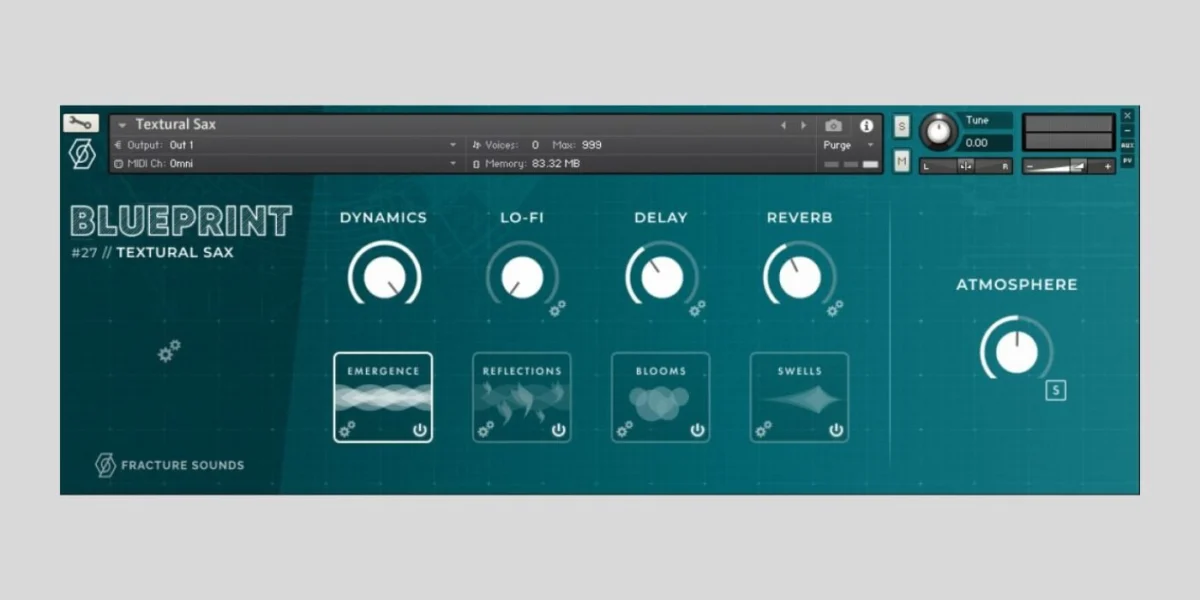
The release of "Blueprint: Textural Sax" on July 22, 2026, marks a significant expansion of Fracture Sounds’ acclaimed Blueprint collection, offering music producers a distinctive and versatile virtual instrument. This latest installment, derived from the premium "Trails II" library, distinguishes itself by not merely replicating the traditional sound of a tenor saxophone but by transforming its fundamental character into a polyphonic, textural sound design tool, available free of charge through the Native Instruments Kontakt Player.
The Genesis of a Textural Instrument: Fracture Sounds’ Approach to Innovation
Fracture Sounds has established itself as a prominent developer of sample libraries, particularly renowned for its atmospheric and cinematic instruments. Their commitment to innovation is evident in their approach to sound design, which often transcends conventional sampling to explore the expressive potential of instruments through experimental processing and unique recording techniques. The Blueprint collection serves as a testament to this philosophy, offering a curated series of high-quality, often unconventional, virtual instruments freely to the global music production community. These releases not only democratize access to sophisticated sound design tools but also showcase the cutting-edge technology and creative vision inherent in Fracture Sounds’ premium offerings.
"Textural Sax" builds upon this legacy, emerging from the comprehensive "Trails II" library. This strategic release model allows Fracture Sounds to share a taste of their advanced instrument design, fostering community engagement while subtly highlighting the depth and quality of their commercial products. The decision to focus on the "textural" aspect, rather than pristine acoustic emulation, reflects a broader trend in modern music production towards hybrid sounds that blend organic warmth with synthetic adaptability, catering to the evolving demands of film scoring, game audio, ambient music, and contemporary electronic productions.
Redefining the Saxophone: Beyond Traditional Emulation
At its core, "Textural Sax" represents a deliberate departure from the traditional virtual instrument paradigm that prioritizes hyper-realistic replication of acoustic instruments. Instead, Fracture Sounds has engineered this library to take the inherent character of the tenor saxophone – its breath, warmth, and harmonic richness – and fuse it with experimental sound design techniques and resonant processing. The objective is to encourage composers and producers to envision the saxophone not just as a melodic or solo instrument, but as a foundational element for atmospheric pads, evolving textures, and evocative soundscapes. This design philosophy aligns with the increasing demand for instruments that offer unique sonic identities, pushing the boundaries of conventional orchestration.
The most striking technical innovation in "Textural Sax" is its polyphonic capability. Unlike most traditional saxophone libraries, which are typically monophonic to accurately simulate the single-note playing of a real instrument, "Textural Sax" allows for the simultaneous playing of multiple notes. This polyphonic characteristic is critical to its unique sonic output. The resulting sound defies easy categorization; it does not simply sound like an ensemble of saxophones playing together, nor does it resemble a generic cinematic synth pad. Instead, it occupies a distinctive space, retaining the initial warm, breathy texture of individual saxophone notes while seamlessly blending them into an expansive, atmospheric pad. This hybrid quality provides a sonic richness that can underpin complex arrangements or stand alone as an emotive textural layer.
A Deeper Dive into Articulations and Sonic Sculpting
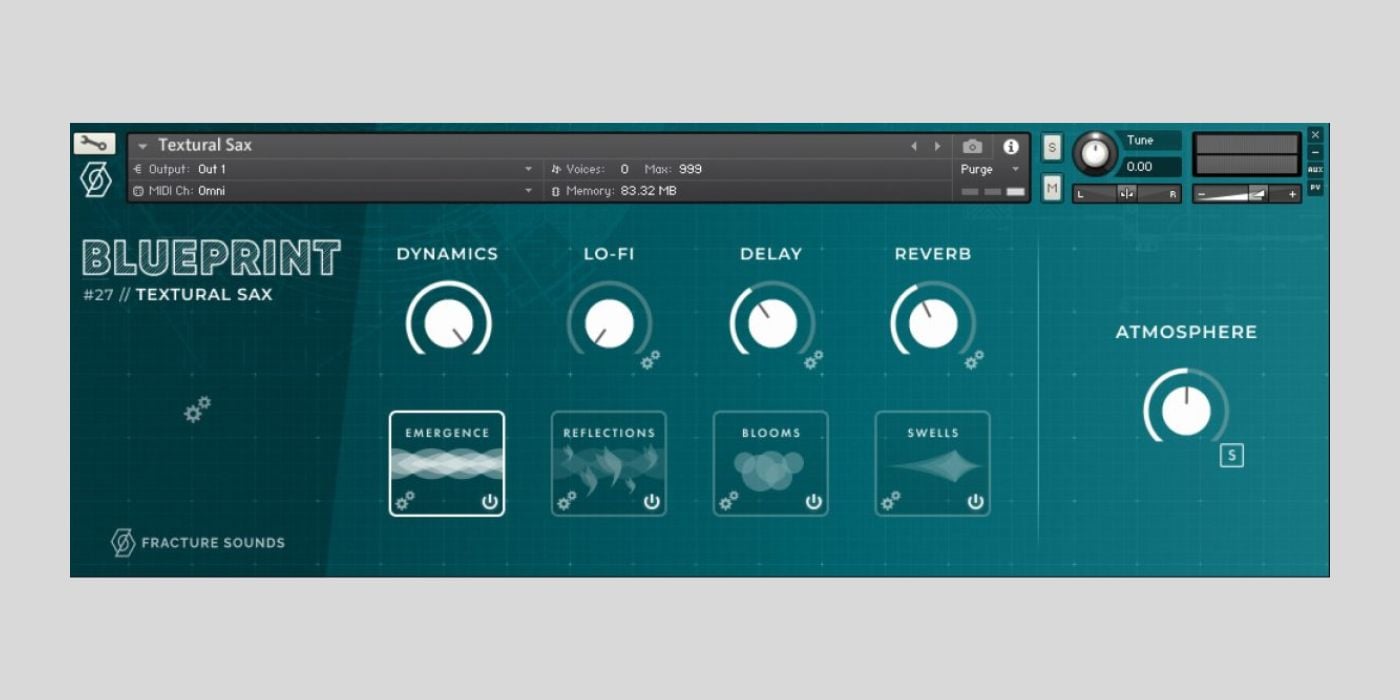
"Textural Sax" includes four distinct articulations—Emergence, Reflections, Blooms, and Swells—each meticulously crafted to offer specific emotional and sonic characteristics, allowing for a wide range of expressive possibilities within a production.
-
Emergence: This articulation is designed to capture a significant portion of the traditional tenor saxophone’s character, imbued with a gentle, wavering texture. Its inherent warmth and subtle movement make it exceptionally well-suited for creating cinematic beds across various moods, from contemplative to melancholic, providing a rich, evolving backdrop that feels both organic and atmospheric. It provides a sense of a sound slowly revealing itself, ideal for intros or transition points.
-
Reflections: Characterized by a more rhythmic quality, "Reflections" introduces a modern sensibility to the saxophone’s sound. It evokes a sense of introspection and movement, making it highly emotive and suitable for passages requiring a dynamic yet ethereal presence. This articulation can provide a subtle pulse or a more pronounced rhythmic underscore, adding a contemporary edge to compositions.
-
Blooms: This articulation is highly contextual, demonstrating remarkable versatility across different musical settings. While adaptable, it particularly excels in conveying a somber quality, making it effective for pieces that require depth, gravity, or a touch of melancholic beauty. "Blooms" allows notes to swell and evolve slowly, creating a profound emotional resonance that can be both poignant and expansive.
-
Swells: "Swells" stands out as being less ambiguous than its counterparts, offering a more defined sonic trajectory. It is particularly useful for establishing and defining harmonic choices within more freeform or ambient soundscapes. The controlled, rising and falling dynamics of this articulation can guide the listener through complex harmonic progressions, providing clarity and structure even amidst otherwise fluid sonic environments.
These articulations are not merely static samples but are designed to be dynamic, responding to velocity and modulation to offer genuine expressive control. This level of detail ensures that "Textural Sax" can serve as a flexible tool for composers looking to inject unique tonal colors and emotional depth into their work.
The Atmosphere Layer: Adding a Layer of Unique Depth
A standout feature that further enhances the textural capabilities of the instrument is the dedicated Atmosphere layer. This unique sonic element is derived from a highly experimental recording technique: attaching contact microphones to a thunder sheet. The thunder sheet, typically used in orchestral settings to create dramatic, rumbling effects, here yields an entirely different, ethereal character when amplified through contact microphones.
When blended with any of the four primary articulations, the Atmosphere layer imbues the saxophone sound with an additional dimension of space and mystery, creating deeper, more complex textures. However, the Atmosphere layer can also be isolated and played independently. In solo mode, it often exhibits an almost choral quality, producing shimmering, resonant tones that can evoke a sense of spiritual or otherworldly presence. This versatility makes it an invaluable asset for pure sound design, capable of generating standalone ambient drones or serving as an intriguing accompaniment to external sounds, extending the instrument’s utility beyond its saxophone origins.
Meticulous Microphone Techniques and Integrated Effects
The rich sonic palette of "Textural Sax" is also a direct result of Fracture Sounds’ meticulous approach to microphone placement and mixing. The library incorporates a blend of three distinct microphone perspectives:
- Close: This perspective captures the intimate details and immediate presence of the saxophone, highlighting the breath, key clicks, and subtle nuances that define the instrument’s raw character. It provides clarity and front-and-center focus.
- Room: The room microphones capture the natural acoustics of the recording space, imparting a sense of depth, spaciousness, and realistic ambience. This perspective is crucial for grounding the sound within a believable acoustic environment.
- Resonant Contact: This experimental technique, involving contact microphones placed directly on the instrument or resonant surfaces, is key to the "textural" aspect. It captures vibrations and sympathetic resonances that are often unheard in traditional recordings, contributing unique, sometimes unexpected, sonic colors and textures that blend seamlessly into the instrument’s overall character.
These microphone mixes can be blended by the user, offering granular control over the spatial and textural qualities of the sound. This flexibility allows producers to tailor the instrument to sit perfectly within any mix, from dry and intimate to vast and atmospheric.

Further enhancing its sound-shaping capabilities, "Textural Sax" features four built-in effects, specifically chosen to complement its textural and atmospheric nature:
- Dynamics: This parameter is crucial for expressive control, allowing users to sculpt the attack and release characteristics, bringing life and movement to the sustained textures.
- Lo-Fi: The Lo-Fi effect is particularly effective for introducing subtle tape saturation vibes, adding warmth and vintage character. It can also be pushed to achieve more transformative impacts, degrading the signal in creative ways to produce gritty or distorted textures, reminiscent of old recordings or experimental electronic music.
- Delay and Reverb: These two classic spatial effects are indispensable for pushing the instrument further into atmospheric sound design. The integrated Delay can create rhythmic echoes or expansive trails, while the Reverb allows for the generation of vast, immersive soundscapes, transforming the saxophone’s sound into ethereal pads or deep, resonant drones.
These curated effects ensure that producers have powerful tools at their fingertips to further mold and refine the "Textural Sax" sound without needing to rely solely on external plugins. It’s worth noting that the mention of "tape vibes" aligns with a broader industry trend, as evidenced by promotions such as Baby Audio’s Super VHS sale, which was available for a limited time, ending on July 26, 2026, offering similar sonic characteristics.
Accessibility and Broader Implications for Music Production
A cornerstone of the Blueprint collection, and a significant aspect of "Textural Sax," is its compatibility with the free Kontakt Player. This crucial detail makes the instrument accessible to a vast global community of music producers, regardless of whether they own the full Native Instruments Kontakt sampler. By removing the barrier of entry associated with premium software, Fracture Sounds not only broadens its user base but also empowers aspiring artists, students, and those with limited budgets to access professional-grade sound design tools. This aligns with the increasing democratization of music production, where high-quality resources are becoming more readily available, fostering creativity and innovation across all levels of experience.
The release of "Textural Sax" carries several broader implications for the music production industry. Firstly, it underscores the growing importance of hybrid instruments that blend acoustic authenticity with synthetic manipulation. This trend is driven by composers and sound designers continually seeking fresh sounds that transcend traditional categories. Secondly, for Fracture Sounds, the Blueprint collection serves as an intelligent marketing strategy. By offering exceptional freebies that showcase the advanced technology and creative philosophy embedded in their premium libraries like "Trails II," they cultivate a loyal community and demonstrate the value proposition of their commercial products. This model effectively generates goodwill and serves as an extended demo for their entire catalog.
Lastly, the emphasis on "textural" and "atmospheric" qualities reflects the evolving demands of modern media scoring. Film, television, and video game productions increasingly rely on complex, evolving soundscapes to evoke emotion and enhance narrative. Instruments like "Textural Sax" provide composers with readily available tools to craft these intricate sonic environments, offering a shortcut to unique textures that would otherwise require extensive layering and processing.
The Enduring Legacy of the Blueprint Collection
"Textural Sax" is another demonstrably solid release from Fracture Sounds, reinforcing the company’s reputation for delivering innovative and high-quality virtual instruments. As with all previous Blueprint releases, its compatibility with the free Kontakt Player ensures widespread accessibility, making it an invaluable asset for producers worldwide.
For those new to Fracture Sounds’ highly regarded Blueprint collection, this release serves as an excellent entry point. The entire collection represents a commitment to providing exceptional, free sound design tools that challenge conventional approaches to instrumentation. Exploring the full range of Blueprint offerings is highly recommended for any producer looking to expand their sonic palette with unique, inspiring, and professionally crafted virtual instruments. The ongoing success and consistent quality of the Blueprint series solidify Fracture Sounds’ position as a leader in the field of atmospheric and cinematic sound design.
