

The transition of Lionel Richie from the lead singer of The Commodores to a multi-platinum solo artist remains one of the most significant pivots in the history of American popular music. In 1982, Richie officially departed from the funk and soul collective that had defined his early career to release his eponymous debut solo album, Lionel Richie. This move was not merely a change in branding but a calculated response to a shifting musical landscape and his own evolving identity as a songwriter. Central to this transition was the single "Truly," a ballad that would not only define Richie’s solo sound but also secure his position as a dominant force in the pop and R&B charts of the 1980s. Written solely by Richie, "Truly" served as the primary catalyst for his inaugural solo success, ultimately leading to his first Grammy Award and establishing a blueprint for the adult contemporary balladry that would dominate the decade.
The origins of Richie’s solo career can be traced back to his tenure with The Commodores, a group formed in 1968 at Tuskegee Institute. Throughout the 1970s, the band achieved immense success with a blend of hard-driving funk and smooth soul, exemplified by hits such as "Brick House" and "Machine Gun." However, by the late 1970s, Richie’s penchant for melodic, sentimental ballads began to create a stylistic divergence within the group. Songs like "Three Times a Lady" (1978) and "Still" (1979) became massive hits, but they moved the band away from their funk roots. This creative tension became the "best discovery and worst curse" for Richie, as he balanced the security of the group dynamic with the burgeoning demands of his individual songwriting talent. Richie has noted that while the group offered a "safe place," the sheer volume of his successful ballads began to overshadow the collective’s collaborative identity, creating an inevitable path toward a solo venture.
The definitive turning point occurred in 1980, involving a collaboration outside of the Motown ecosystem. Country-pop star Kenny Rogers approached Richie seeking a ballad, a request that coincided with a period where The Commodores were expressing a desire to move away from slow-tempo tracks. Richie presented Rogers with "Lady," a song that would go on to become a cultural phenomenon, topping the Billboard Hot 100, Adult Contemporary, and Country charts simultaneously. The massive success of "Lady" proved that Richie’s songwriting had a universal appeal that transcended the R&B genre and the group format. Encouraged by Motown executives who recognized the commercial potential of a solo Richie, and bolstered by the success of "Endless Love," his 1981 duet with Diana Ross, Richie finally committed to a solo recording project.
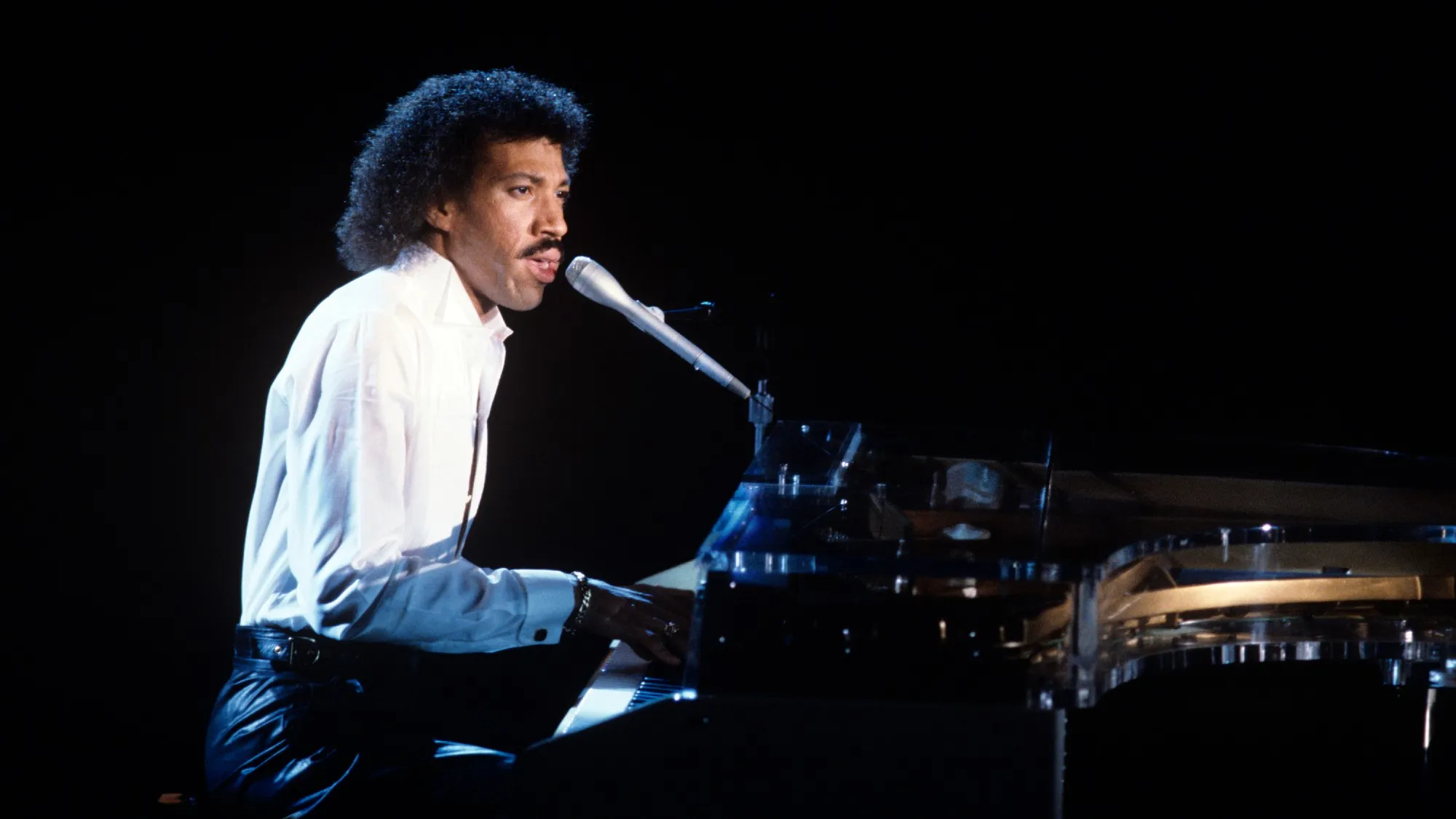
The debut album, Lionel Richie, was released in October 1982. It was a sophisticated departure from the "Commodores sound," emphasizing polished production and cross-genre appeal. The lead single, "Truly," was a masterclass in the pop balladry Richie had been refining for years. Musically, the song is characterized by its sparse, piano-driven arrangement and Richie’s emotive, controlled vocal delivery. The lyrics—"Truly / Truly in love with you girl / I’m truly head over heels with your love"—resonated deeply with a broad demographic, facilitating its rapid ascent on the charts. "Truly" reached the No. 1 spot on the Billboard Hot 100 on November 27, 1982, and maintained a dominant presence on the Adult Contemporary chart for four consecutive weeks.
The commercial data supporting Richie’s solo debut was staggering for the era. The album Lionel Richie eventually reached No. 3 on the Billboard 200 and was certified quadruple-platinum by the Recording Industry Association of America (RIAA). Beyond "Truly," the album produced two other top-five hits: "You Are" and "My Love." This trifecta of hits confirmed that Richie’s departure from The Commodores was not a risk, but a massive expansion of his brand. The industry recognition followed quickly. At the 25th Annual Grammy Awards held in February 1983, Richie was nominated for Best Pop Vocal Performance, Male, for "Truly." Despite a history of nominations during his time with The Commodores that had not resulted in a win, Richie attended the ceremony and secured his first Grammy. This victory was a symbolic validation of his decision to go solo, marking his transition from a group member to a premier individual artist in the eyes of the National Academy of Recording Arts and Sciences.
The timeline of Richie’s ascent during this period highlights the rapid pace of his transformation:
- 1980: Richie writes and produces "Lady" for Kenny Rogers, proving his solo songwriting viability.
- 1981: "Endless Love" with Diana Ross becomes one of the biggest duets in history, spending nine weeks at No. 1.
- Early 1982: Richie officially exits The Commodores.
- October 1982: The album Lionel Richie is released.
- November 1982: "Truly" hits No. 1 on the Billboard Hot 100.
- February 1983: Richie wins his first Grammy Award for Best Pop Vocal Performance.
From a technical and analytical perspective, the success of "Truly" and the subsequent solo career of Lionel Richie signaled a shift in the Motown Records strategy. Under the guidance of Berry Gordy, the label had begun to pivot toward artists who could command the burgeoning MTV era and the global pop market. Richie, with his clean-cut image and melodic sensibility, was the perfect vanguard for this new era. His ability to bridge the gap between R&B and mainstream pop allowed Motown to maintain its relevance in an increasingly fragmented music market. Furthermore, Richie’s solo success provided a template for other group members seeking solo careers, though few would achieve his level of sustained global dominance.
The implications of Richie’s solo launch extended far beyond his personal accolades. It paved the way for his 1983 follow-up album, Can’t Slow Down, which would become one of the best-selling albums of the 1980s and win the Grammy for Album of the Year. The momentum generated by "Truly" also positioned Richie as a central figure in the 1985 "We Are the World" charity project, which he co-wrote with Michael Jackson. His solo career essentially redefined the "superstar" archetype of the 1980s—an artist who could write, perform, and produce hits that felt personal yet possessed a massive, stadium-filling resonance.
Reflecting on the decision to leave the security of The Commodores, Richie has often spoken about the internal conflict between the comfort of a group and the demands of individual expression. The reluctance he felt was grounded in a deep-seated loyalty to his bandmates, many of whom he had known since college. However, the creative necessity of his songwriting—specifically the ballads that the group was beginning to reject—made the separation inevitable. "Truly" stands as the definitive proof of that necessity. It was a song that needed a solo voice to convey its intimacy, and its success provided the ultimate justification for one of the most successful career pivots in music history.
Today, "Truly" remains a staple of adult contemporary radio and a quintessential example of the 1980s ballad. It represents the moment when Lionel Richie ceased to be "the singer from The Commodores" and became a singular icon of American music. The track’s enduring popularity is a testament to Richie’s fundamental understanding of melody and human emotion, qualities that allowed him to navigate the transition from a 1970s funk group to a 1980s pop phenomenon with unprecedented grace and commercial success. The legacy of "Truly" is not just found in its chart positions or its Grammy win, but in its role as the foundation of a solo career that would eventually see Richie inducted into the Rock and Roll Hall of Fame and recognized as a Kennedy Center Honoree. His journey from Tuskegee to the top of the global charts remains a landmark study in the power of creative evolution and the enduring appeal of the well-crafted song.
