

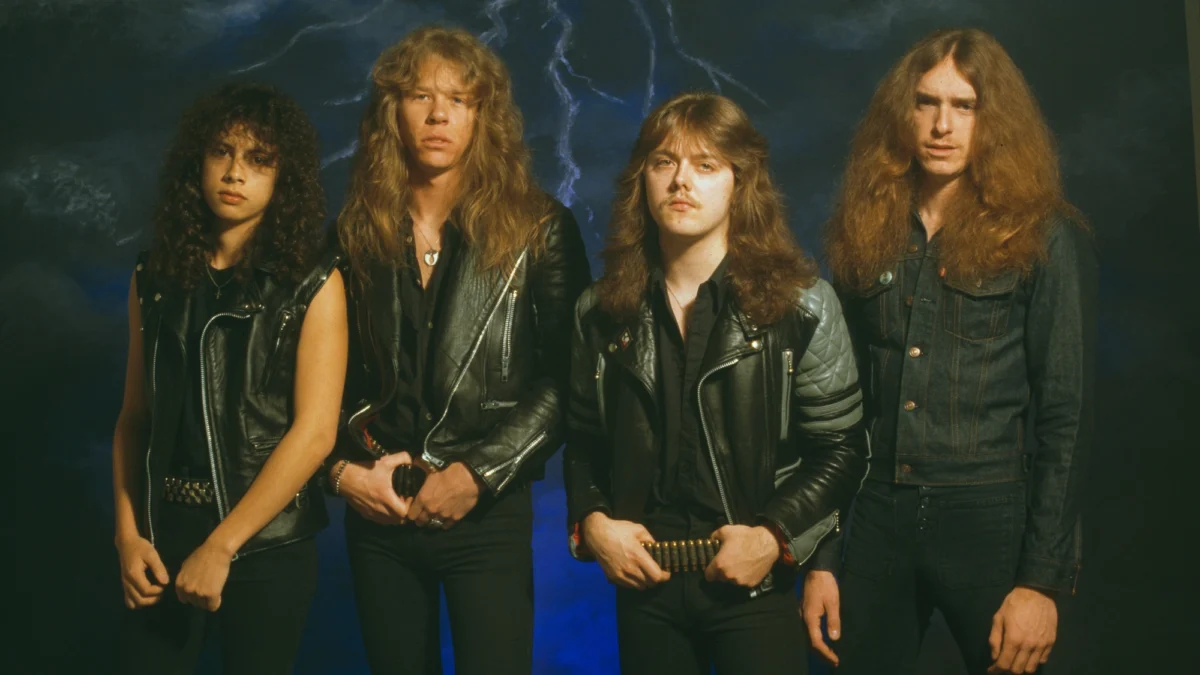
On July 15, 1983, a small independent label called Megaforce Records released an album that would fundamentally alter the trajectory of heavy music and establish a new subgenre known as thrash metal. Kill ‘Em All, the debut studio effort from the San Francisco-based quartet Metallica, introduced a high-velocity, precision-oriented sound that bridged the gap between the melodic complexity of the New Wave of British Heavy Metal (NWOBHM) and the raw, aggressive energy of hardcore punk. Over the four decades since its release, the album has transitioned from a niche underground recording to a cornerstone of the American musical canon, earning a 4x Platinum certification from the Recording Industry Association of America (RIAA) and consistently appearing on critical lists of the greatest metal albums of all time.
The Foundational Blueprint of American Thrash
While historians of the genre often cite the British band Venom’s 1981 release Welcome to Hell as the earliest spark of thrash metal, Kill ‘Em All is widely recognized as the first definitive thrash album produced by an American ensemble. At the time of its release, the heavy metal landscape in the United States was largely dominated by the burgeoning glam metal scene in Los Angeles. Bands like Mötley Crüe and Ratt focused on theatricality, high-production music videos, and themes of hedonism. Metallica, consisting of rhythm guitarist and vocalist James Hetfield, drummer Lars Ulrich, lead guitarist Kirk Hammett, and bassist Cliff Burton, offered a stark aesthetic and sonic contrast.
The album’s ten tracks—ranging from the frantic opener "Hit the Lights" to the anthemic "Seek & Destroy"—prioritized technical proficiency and palm-muted guitar chugging over the blues-based riffs common in 1970s hard rock. This "down-picking" technique, pioneered largely by Hetfield, became a hallmark of the thrash sound, influencing a generation of musicians who sought a more disciplined and aggressive form of expression.
Historical Context: The 1983 Musical Landscape
To understand the impact of Kill ‘Em All, one must examine the socio-economic and musical climate of the early 1980s. The recording industry was increasingly focused on the visual medium following the launch of MTV in 1981. This favored bands with "radio-friendly" hooks and polished appearances. Metallica, conversely, emerged from a grassroots tape-trading culture. Fans shared bootleg recordings of the band’s demos, most notably the 1982 tape No Life ‘Til Leather, creating a nationwide underground network before the band even secured a record deal.
The band’s rejection of the "rock star" image—opting for denim, leather, and plain T-shirts—resonated with a working-class audience that felt alienated by the perceived superficiality of the mainstream metal scene. Lyrically, Kill ‘Em All moved away from the romanticized themes of the era, focusing instead on the intensity of the live performance experience, the darker aspects of human nature, and a sense of communal rebellion.
The Evolution of the Lineup and the Mustaine Departure
The path to the recording of Kill ‘Em All was marked by significant internal friction and a pivotal lineup change that would shape the future of two major bands. Until April 1983, the band’s lead guitarist was Dave Mustaine. Mustaine was a primary contributor to the band’s early sound, co-writing four of the tracks that appeared on the debut: "The Four Horsemen" (originally titled "The Mechanix"), "Jump in the Fire," "Phantom Lord," and "Metal Militia."
However, ongoing issues related to Mustaine’s substance use and volatile behavior led Hetfield and Ulrich to dismiss him just as the band arrived in New York to record the album. Mustaine was famously sent back to California on a cross-country bus, an event that led him to form Megadeth shortly thereafter. To fill the vacancy, Metallica recruited Kirk Hammett, who was then a member of the Bay Area thrash band Exodus. Hammett had only a few weeks to learn the material and integrate his own soloing style into the existing compositions before recording commenced at Music America Studios in Rochester, New York.
Recording and Production: The Megaforce Era
The production of Kill ‘Em All was a low-budget affair funded by Jon "Jonny Z" Zazula, a record store owner who founded Megaforce Records specifically to promote Metallica. Zazula had been impressed by the No Life ‘Til Leather demo and felt that mainstream labels were too conservative to take a risk on such an aggressive sound.
The album was produced by Paul Curcio with a budget of roughly $15,000. The recording process was straightforward, capturing the band’s live energy with minimal studio effects. Interestingly, the album was originally intended to be titled Metal Up Your Ass, featuring artwork of a hand clutching a dagger emerging from a toilet. After distributors refused to carry the product with such a title and cover, the band changed it to Kill ‘Em All—a reference to their frustration with the record distributors—and opted for the now-iconic image of a blood-spattered mallet.
A Track-by-Track Breakdown of a Cultural Shift
The musical content of the album served as a technical manual for the thrash genre.
- "Hit the Lights": The opening track serves as a manifesto, celebrating the heavy metal subculture and the intensity of the live show.
- "The Four Horsemen": A complex, multi-sectioned piece that demonstrated the band’s ability to move beyond simple song structures, incorporating melodic bridges and varied tempos.
- "(Anesthesia) – Pulling Teeth": A bass solo by Cliff Burton that utilized distortion and a wah-wah pedal, showcasing his classical training and elevating the role of the bass guitar in metal.
- "Seek & Destroy": A mid-tempo track that became a staple of the band’s live performances for the next four decades, featuring one of the most recognizable riffs in rock history.
Commercial Performance and Industry Recognition
While Kill ‘Em All did not achieve immediate chart success upon its 1983 release, its influence grew steadily through word-of-mouth and the band’s relentless touring schedule. It first entered the Billboard 200 in 1986, peaking at number 155, following the success of the band’s third album, Master of Puppets.
Data from the RIAA tracks the album’s slow but inevitable ascent to mainstream status:
- Certified Gold: January 1989
- Certified Platinum: September 1991
- Certified 3x Platinum: 1999
- Certified 4x Platinum: 2012
By the late 1980s, the album was recognized not just as a successful debut, but as the spark that ignited a global movement. It provided the blueprint for what would become the "Big Four" of thrash: Metallica, Slayer, Megadeth, and Anthrax. While Slayer’s Show No Mercy and Anthrax’s Fistful of Metal followed shortly after, Metallica’s debut remained the benchmark for production quality and songwriting sophistication within the burgeoning scene.
Timeline of Key Events Leading to Release
- October 1981: Lars Ulrich and James Hetfield form Metallica in Los Angeles.
- March 1982: The band performs its first live show at Radio City in Anaheim, California.
- July 1982: The No Life ‘Til Leather demo is released, circulating widely in the underground tape-trading scene.
- December 1982: Cliff Burton joins the band on the condition that they relocate to San Francisco.
- April 1983: Dave Mustaine is dismissed; Kirk Hammett joins the lineup.
- May 1983: Recording begins at Music America Studios in Rochester, New York.
- July 15, 1983: Kill ‘Em All is officially released via Megaforce Records.
Analysis of Long-Term Cultural Impact
The legacy of Kill ‘Em All extends beyond sales figures. It democratized heavy metal by proving that a band could achieve international success without adhering to the radio-friendly standards of the era. The album’s "working-class" ethos—emphasizing skill, speed, and sincerity over image—became the standard for the thrash metal community.
Furthermore, the album’s success validated the independent label model. Jon Zazula’s success with Megaforce Records paved the way for other independent metal labels like Metal Blade and Combat Records, which would go on to sign some of the most influential acts of the 1980s and 90s.
In a broader cultural sense, Kill ‘Em All represented a shift in the American teenage experience of the 1980s. It provided a soundtrack for a subculture that valued technical excellence and raw honesty. Even as Metallica evolved into a global stadium act with more polished productions like the 1991 "Black Album," the DNA of Kill ‘Em All remained present in their DNA.
Today, the album is studied by musicologists for its unique blend of European melody and American aggression. It remains a foundational text for any musician entering the realm of extreme music. Forty-one years after its release, Kill ‘Em All is no longer just a debut album; it is the historical marker of a revolution in sound that proved heavy metal could be fast, intelligent, and enduringly popular.
