

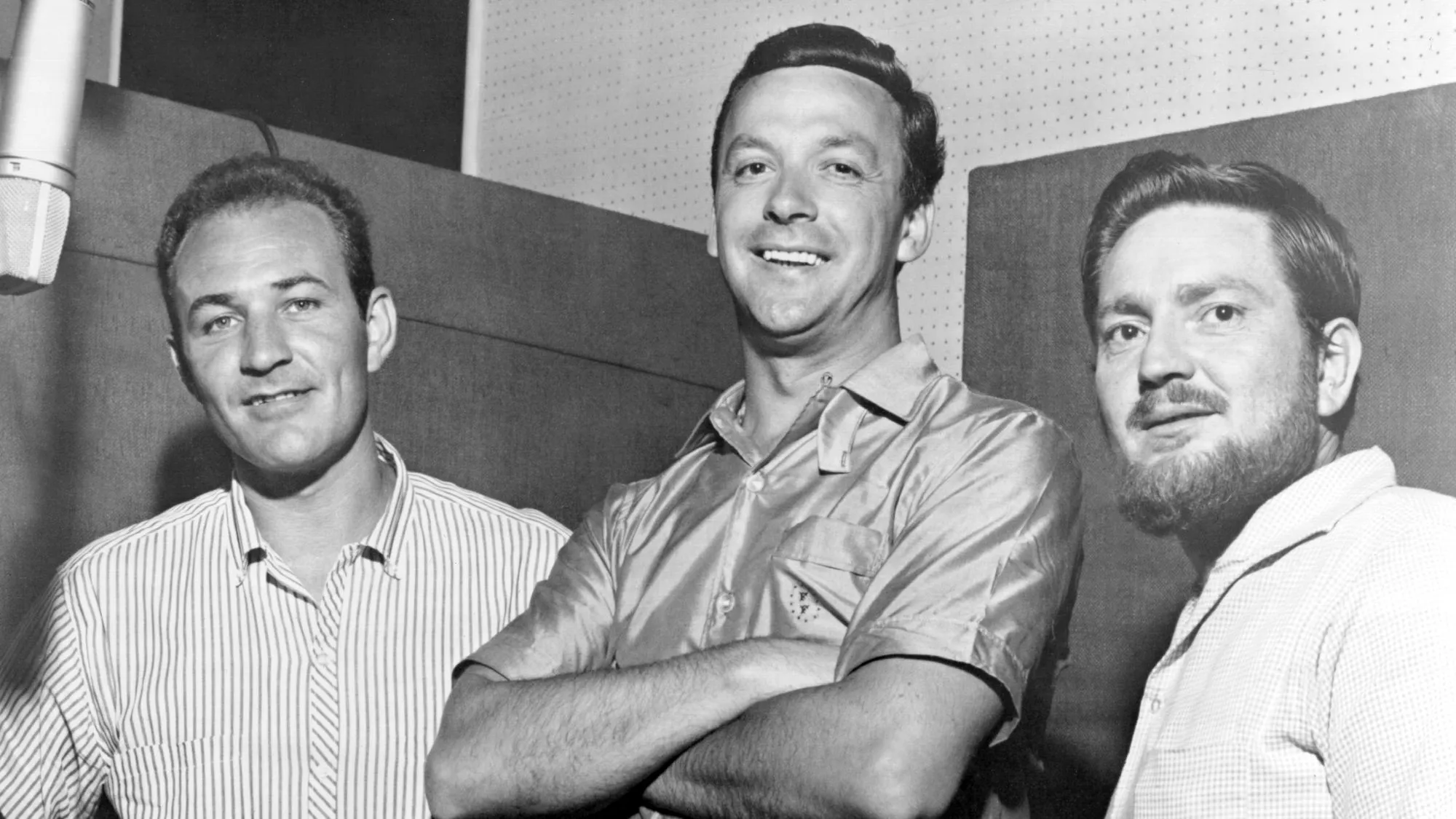
On July 26, 1931, in the rural landscape of Rutherford County, North Carolina, a figure was born who would eventually redefine the sonic architecture of American popular music. Fred Foster, though never a household name in the vein of the superstars he mentored, remains one of the most consequential figures in the history of the recording industry. As the founder of Monument Records and Combine Music, Foster’s career spanned over six decades, during which he served as a producer, songwriter, and talent scout with an uncanny ability to identify greatness in its rawest forms. Today, as the music world reflects on what would have been his 95th birthday, the legacy of his work continues to resonate through the catalogs of Roy Orbison, Dolly Parton, Kris Kristofferson, and many others.
The Formative Years and Early Career Instincts
Fred Foster’s journey from a North Carolina farm to the pinnacle of the music industry was driven by a restless ambition and an intuitive ear for melody. Leaving home at the age of 18, Foster moved to Washington, D.C., where he initially worked in the food service industry. However, his proximity to the burgeoning music scene in the capital soon led him to cross paths with Jimmy Dean. Foster oversaw Dean’s first recording session, which produced the 1953 hit "Bumming Around," reaching the Top 10 on the country charts. This early success served as a proof of concept for Foster’s potential as a producer.
His subsequent tenures at Mercury Records and ABC-Paramount were marked by moments of profound foresight that the industry at large was not yet ready to embrace. While at Mercury, Foster famously attempted to persuade the label’s marketing director to sign a young, unknown singer named Elvis Presley. The label declined, a decision that would go down as one of the most significant missed opportunities in music history. Undeterred, Foster continued to hone his skills at ABC-Paramount, where he successfully identified the potential in George Hamilton IV’s "A Rose and a Baby Ruth." By acquiring the master from the small Colonial label and pushing it to number six on the pop charts, Foster demonstrated his ability to bridge the gap between niche regional sounds and mainstream commercial success.
The Genesis of Monument Records
In March 1958, Foster took the decisive step of founding his own independent label, Monument Records, alongside business manager Jack Kirby and Baltimore disc jockey "Buddy" Deane. Named after the Washington Monument, the label was intended to be a beacon of quality in a rapidly changing industry. The company’s publishing arm, Combine Music, was established simultaneously, ensuring that Foster could nurture songwriters as effectively as he did vocalists.
The label’s first major breakthrough came within its inaugural year with Billy Grammer’s "Gotta Travel On," which became a crossover hit. This success provided the financial and reputational capital necessary for Foster to make his most significant signing: Roy Orbison. Orbison had previously struggled at Sun Records, where Sam Phillips had attempted to mold him into a rockabilly star in the vein of Elvis Presley or Jerry Lee Lewis. Foster, however, recognized that Orbison’s true strength lay in his operatic vocal range and vulnerable delivery.
The Orbison Collaboration: A Paradigm Shift in Production
The partnership between Fred Foster and Roy Orbison from 1959 to 1965 is regarded as one of the most fruitful collaborations in recording history. Foster’s production style moved away from the sparse, rhythmic focus of early rock and roll toward a more sophisticated, "Countrypolitan" sound. He utilized orchestral arrangements, backing vocalists like the Anita Kerr Singers, and complex song structures that eschewed the standard verse-chorus-verse format.
The result was a string of hits that dominated the Billboard charts. "Only the Lonely (Know the Way I Feel)," released in 1960, reached number two on the Hot 100 and established the "Orbison Sound"—a blend of melancholy, drama, and soaring crescendos. Under Foster’s guidance, Orbison produced 18 hit singles and five best-selling albums, including timeless classics such as "Crying," "Running Scared," "Blue Bayou," and "Oh, Pretty Woman." Foster’s role was not merely administrative; he was the primary architect of the atmosphere in which Orbison’s voice could thrive, often spending hours in the studio to perfect a single orchestral swell or drum fill.
Strategic Migration to Nashville
In 1960, Foster made the strategic decision to move Monument Records from the Washington, D.C. area to Nashville, Tennessee. At the time, the recording industry was heavily centralized in New York City and Los Angeles. However, Foster found the New York union environment restrictive and the corporate atmosphere impersonal. In contrast, Nashville offered a collaborative, "family-like" environment that suited his hands-on approach to artist development.
By establishing Monument on Music Row, Foster became a central figure in the evolution of the "Nashville Sound." He was a proponent of high-fidelity recording and invested in state-of-the-art equipment, ensuring that Monument’s releases sounded as polished as anything coming out of the major coastal studios. This move helped elevate Nashville’s status from a regional hub for country music to a global center for multi-genre music production.
Discovering Dolly Parton and the Crossover Vision
One of Foster’s most enduring contributions to the cultural landscape was his discovery and development of Dolly Parton. In 1965, a 19-year-old Parton signed with Monument Records. While other executives saw her as a bubblegum pop singer, Foster recognized her immense potential as a country songwriter and storyteller.
Foster produced Parton’s first two Top 40 country hits, "Dumb Blonde" and "Something Fishy," in 1967. These recordings provided the platform she needed to catch the attention of Porter Wagoner, leading to her legendary tenure on his television show and her subsequent signing with RCA. Decades later, during Foster’s induction into the Country Music Hall of Fame in 2016, Parton reflected on his influence, stating, "You saw things in me that nobody else did." Foster’s ability to see past the surface and invest in the long-term potential of an artist was a hallmark of his career.
The Kristofferson Era and "Me and Bobby McGee"
In the late 1960s, Foster’s eye for talent led him to Kris Kristofferson, a janitor at Columbia Studios who was also a Rhodes Scholar and an aspiring songwriter. Foster signed Kristofferson to Monument and Combine Music, recognizing the literary depth of his lyrics.
Foster’s contribution to the classic "Me and Bobby McGee" is a prime example of his creative involvement. It was Foster who suggested the title and the central theme of the song, inspired by a secretary named Barbara "Bobby" McKee who worked in his building. While Kristofferson wrote the lyrics and melody, Foster received a co-writing credit for the conceptual framework. The song eventually became a cultural phenomenon, particularly after Janis Joplin’s posthumous version topped the Billboard Hot 100 in 1971. This success further cemented Foster’s reputation as a man who could facilitate hits across the pop, country, and rock genres.
Technical Innovations and Industry Analysis
Foster was more than a talent scout; he was a technical innovator. He was one of the first producers in Nashville to embrace the use of strings and horns in country music, a move that was initially controversial among traditionalists but eventually became a standard of the genre. His recordings were noted for their clarity and depth, often achieved through meticulous microphone placement and a deep understanding of the acoustics of the "Nashville Sound."
From a business perspective, Monument Records represented the power of the independent label in the mid-20th century. In an era where major labels like RCA and Columbia dominated the airwaves, Foster’s Monument was able to compete by being more agile and artist-centric. However, the financial volatility of the 1980s eventually took its toll. In 1982, Monument faced significant financial challenges, leading to its bankruptcy and the eventual sale of its catalog to CBS Records (now Sony Music). Despite these business hurdles, the artistic value of the catalog Foster built remained undisputed.
Later Career, Recognition, and Legacy
In his later years, Foster remained active in the industry, proving that his ears had not lost their sharpness. He produced the critically acclaimed 2007 album Last of the Breed, which featured Willie Nelson, Merle Haggard, and Ray Price. The album won a Grammy Award, a testament to Foster’s enduring relevance.
Foster’s contributions were formally recognized with his induction into the Musicians Hall of Fame in 2009 and the Country Music Hall of Fame in 2016. These honors acknowledged not just the hits he produced, but the culture of excellence he fostered within the Nashville recording community.
Fred Foster passed away on February 20, 2019, at the age of 87, following complications from a stroke. His death was met with a wave of tributes from the icons he helped create. His legacy is not merely found in the gold records hanging on the walls of Music Row, but in the very fabric of American music. He was a man who understood that a great song requires more than just a good voice; it requires a vision, a specific atmosphere, and the courage to take a chance on an unconventional talent. As we mark the 95th anniversary of his birth, the "Monumental" impact of Fred Foster remains as clear and resonant as a Roy Orbison high note.
