

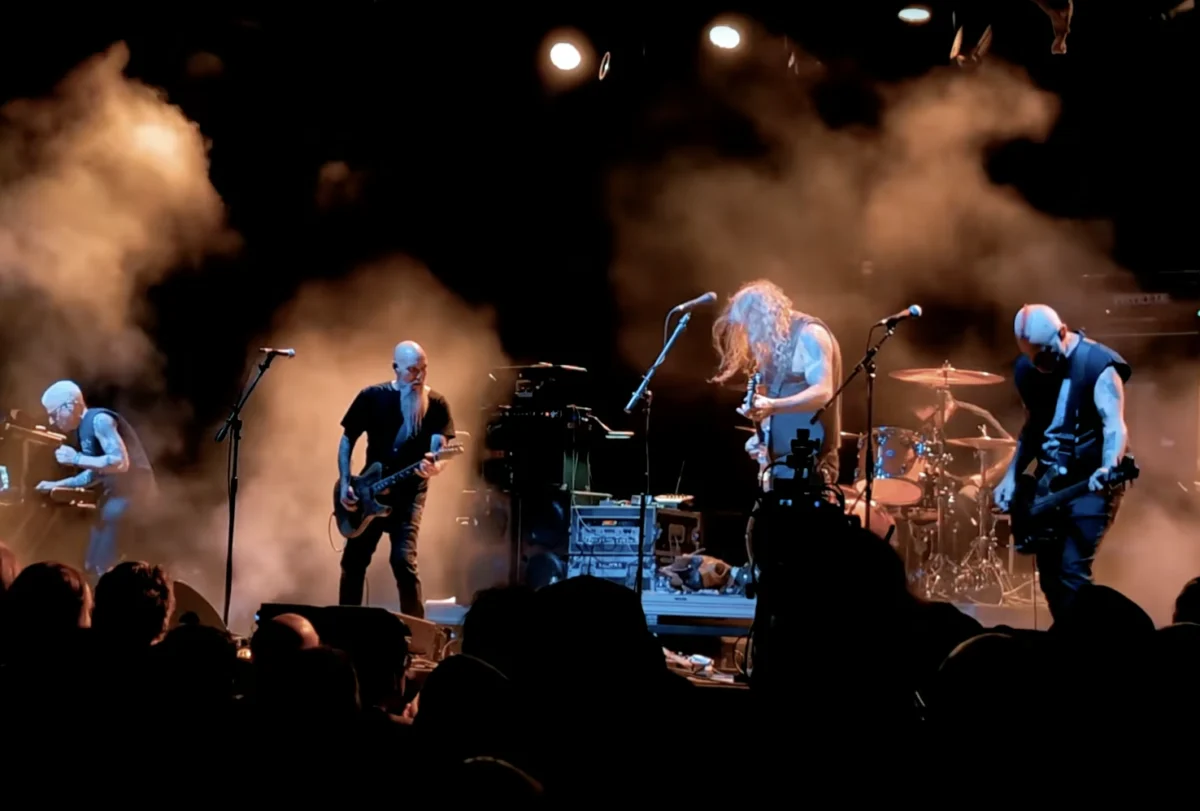
Following a period of profound uncertainty and introspection, post-metal titans Neurosis delivered a powerful and long-anticipated performance last night, headlining the Fire In The Mountains festival on Blackfeet Nation at Red Eagle Campground in East Glacier Park, Montana. This landmark event marked their first live appearance in seven years and served as the official debut of their new frontman, Aaron Turner, known for his work with Isis, Sumac, and Old Man Gloom. The performance celebrated the band’s surprise album release earlier this year, An Undying Love For A Burning World, signaling a resilient rebirth for the influential group after the tumultuous departure of former lead singer Scott Kelly in 2022, who admitted to physically abusing his wife and children. The evening was further underscored by its partnership with the Firekeeper Alliance, a youth suicide prevention charity, adding a layer of profound social relevance to Neurosis’s return.
A Legacy Forged in Sound and Shadow: Neurosis’s Enduring Impact
Neurosis has long been revered as a foundational pillar in the landscape of experimental heavy music, credited with pioneering the post-metal genre and profoundly influencing countless bands across sludge, doom, and avant-garde metal. Formed in Oakland, California, in 1985, the band—originally comprising Scott Kelly, Dave Edwardson, and Jason Roeder, later joined by Steve Von Till and Noah Landis—carved a unique sonic path characterized by crushing riffs, atmospheric textures, tribal rhythms, and deeply cathartic vocal performances. Albums like Through Silver in Blood (1996), Times of Grace (1999), and A Sun That Never Sets (2001) are considered seminal works, demonstrating an unparalleled ability to blend raw aggression with profound emotional depth and intellectual complexity. Their music often explored themes of human struggle, environmental degradation, and spiritual searching, resonating with a global audience drawn to its intensity and introspection. The band’s live performances were legendary for their immersive, almost ritualistic quality, transforming concerts into communal experiences of sonic and emotional exploration. This deep-seated legacy made the events of 2022 all the more jarring for their dedicated fanbase and the broader music community.
The Crisis and Reassessment: Scott Kelly’s Departure
In August 2022, the music world was rocked by the revelation that Scott Kelly, a founding member and a prominent voice of Neurosis, had admitted to a history of physically abusing his wife and children. The admission came through a public statement from Kelly himself, acknowledging "physical, emotional, verbal and financial abuse" and announcing his immediate retirement from music. This confession followed an earlier statement from the remaining members of Neurosis—Steve Von Till, Dave Edwardson, Jason Roeder, and Noah Landis—who had addressed the allegations without naming Kelly directly, stating their deep regret and solidarity with the victims, and indicating a necessary separation from the individual responsible. The news sent shockwaves through the band’s loyal following and the wider music industry, prompting difficult conversations about accountability, victim support, and the ethical responsibility of artists and their audiences. For a band whose music often delved into themes of societal and personal darkness, the private darkness within one of its members presented an existential crisis. The remaining members faced an unenviable decision: to disband, or to attempt to navigate a future without a key creative force and under the shadow of profound controversy. Their decision to continue, albeit after a period of quiet reflection and reorganization, underscored a commitment to the band’s artistic vision and its collective identity, separate from the actions of an individual.
The Dawn of a New Era: Aaron Turner Joins Neurosis
The announcement of Aaron Turner as Neurosis’s new frontman was met with widespread acclaim and a sense of renewed hope for the band’s future. Turner is himself a highly respected and influential figure in the experimental music scene, celebrated for his multifaceted contributions as a vocalist, guitarist, visual artist, and label owner. As a founding member of Isis, he played a pivotal role in shaping the very genre of post-metal that Neurosis helped to define, making him an incredibly fitting successor to the vocal and creative void left by Kelly’s departure. His work with Sumac showcases a more aggressive, improvisational, and technically demanding approach to heavy music, while Old Man Gloom offers a diverse palette of sludge, hardcore, and experimental sounds. Beyond his musical endeavors, Turner’s Hydra Head Records has been instrumental in cultivating and disseminating a vast catalog of challenging and innovative music. His deep understanding of the genre’s nuances, his powerful vocal delivery, and his proven ability to contribute meaningfully to complex sonic tapestries made him a logical and inspired choice. Turner’s integration into Neurosis represented not merely a replacement, but a strategic infusion of new creative energy and a clear statement of the band’s intent to evolve rather than simply replicate its past.
An Undying Love For A Burning World: A Surprise Rebirth
The first tangible fruit of this new lineup was the surprise album, An Undying Love For A Burning World, released quietly earlier this year. The decision to drop the album without extensive pre-release fanfare was a bold move, allowing the music itself to speak volumes and circumventing the typical promotional cycle that might have overshadowed the artistic statement with external narratives. This approach underscored the band’s focus on their creative output as a testament to their continued vitality. The album’s title itself, An Undying Love For A Burning World, suggests a thematic continuity with Neurosis’s long-standing concerns—a powerful embrace of life and resilience amidst overwhelming destruction and chaos. While specific critical reviews of the surprise release are still emerging, the very existence of new material, spearheaded by Turner, was met with enthusiasm from fans eager to witness the band’s evolution. The album’s composition and recording process, though not extensively detailed publicly, likely involved a period of intense collaboration, with the remaining Neurosis members and Turner working to forge a sound that honored the band’s legacy while charting new territory. It stands as a testament to their collective determination to transform adversity into artistic creation, demonstrating that the core creative spirit of Neurosis endures and thrives.
Fire In The Mountains: A Sacred Stage for Reemergence
The Fire In The Mountains festival provided an exceptionally resonant backdrop for Neurosis’s highly anticipated return. Held annually amidst the breathtaking natural beauty of the Rocky Mountains, the festival is renowned for its unique ethos, blending extreme music with an profound appreciation for nature, community, and indigenous culture. Unlike traditional music festivals, Fire In The Mountains emphasizes an immersive experience, inviting attendees to connect with the landscape and each other. Its location on Blackfeet Nation at Red Eagle Campground in East Glacier Park, Montana, carries significant cultural weight, placing the performance within a context of ancestral lands and deep spiritual heritage. This setting perfectly complemented Neurosis’s often primal and spiritually charged music, creating a powerful symbiosis between the band’s sonic exploration and the sacred environment. For a band navigating a period of renewal, performing in such a profound and respectful setting offered a symbolically potent stage for their reemergence. The choice of venue underscored the band’s commitment to thoughtful engagement, moving beyond mere entertainment to a more meaningful cultural experience.
Partnership with Firekeeper Alliance: Music for a Cause
Adding another layer of significance to the event was the festival’s and Neurosis’s partnership with the Firekeeper Alliance, a charity dedicated to youth suicide prevention. This collaboration resonated deeply with Neurosis’s thematic explorations of struggle, resilience, and the human condition. While Neurosis’s music can be dark and intense, it has always offered a cathartic outlet, a space for listeners to confront difficult emotions and find strength within the sound. The alignment with the Firekeeper Alliance transformed the concert from a mere musical event into a platform for social good, highlighting the power of art to address critical societal issues. It can be inferred that both the festival organizers and the Firekeeper Alliance saw Neurosis’s participation as a powerful way to draw attention to their vital mission, leveraging the band’s influence to promote awareness and support for mental health initiatives, particularly among youth in vulnerable communities. This partnership underscored the idea that music, even music as challenging as Neurosis’s, can be a force for healing and connection, offering solace and hope in the face of despair.
The Performance: A Resounding Return
Last night’s performance was not merely a concert; it was a powerful statement of resilience and artistic continuity. Headlining Fire In The Mountains, Neurosis delivered a commanding 10-song set that meticulously balanced their renewed creative output with selections from their storied past. The setlist heavily featured tracks from An Undying Love For A Burning World, showcasing Aaron Turner’s seamless integration and the band’s revitalized sound. This emphasis on new material demonstrated a forward-looking perspective, affirming that Neurosis is not merely trading on past glories but actively forging a new chapter. However, the band also strategically wove in older fan favorites, ensuring a connection to their enduring legacy. "The Tide" from 2001’s A Sun That Never Sets brought forth its characteristic expansive atmosphere, while "Lost" from 1993’s Enemy Of The Sun provided a powerful link to their earlier, more aggressive sound. "Distill (Watching the Swarm)" from 2007’s Given To The Rising showcased their later-era complexity, and "End Of The Harvest" from 1999’s Times Of Grace connected to one of their most celebrated periods.
The atmosphere at Red Eagle Campground was undoubtedly electric with anticipation. For fans who had waited seven years, and for many who wondered if Neurosis would ever perform again after the events of 2022, witnessing this re-formation live was a profoundly emotional experience. Aaron Turner’s vocal delivery, while distinct from Scott Kelly’s, seamlessly blended with the band’s signature sonic tapestry, offering both raw power and nuanced texture. His presence, combined with the unwavering intensity of Steve Von Till, Dave Edwardson, Jason Roeder, and Noah Landis, signaled that the core essence of Neurosis—its visceral power, its atmospheric depth, and its cathartic energy—remains undiminished. Reports from attendees suggest a performance that was both musically tight and emotionally charged, affirming that Neurosis has not only survived its trials but emerged stronger and more focused.
Implications and the Road Ahead
Neurosis’s triumphant return carries significant implications for the band, its fanbase, and the broader music industry. For the band members, it signifies a successful navigation of unprecedented challenges, demonstrating an unwavering commitment to their collective artistic vision. The positive reception to An Undying Love For A Burning World and their powerful live debut suggests that Neurosis has successfully redefined its identity, proving that the creative spirit of the group extends beyond any single member. This could pave the way for further touring and future studio albums, firmly re-establishing their position as innovators in heavy music.
Redefining Resilience in Music
From an industry perspective, Neurosis’s ability to continue and thrive after such a public crisis sets a precedent. It demonstrates that bands can, with careful consideration and ethical commitment, move forward from profound controversy involving a former member, particularly when the band itself takes a clear stance against abusive behavior and actively seeks to separate itself from such actions. This narrative underscores the importance of accountability and the possibility of artistic rebirth when a band prioritizes its integrity and the well-being of its community. For fans, the return presents a complex but ultimately hopeful narrative. Many struggled with how to reconcile their love for the band’s music with the deeply troubling actions of a former member. Neurosis’s re-formation with Aaron Turner provides a path forward, allowing fans to support the band’s continuing artistic output, now devoid of the direct association with the past misconduct, and to embrace a new era defined by resilience, creativity, and perhaps, a renewed sense of purpose. The partnership with Firekeeper Alliance further solidifies this new chapter, intertwining the band’s powerful sound with a message of healing and support, proving that even in the wake of darkness, art can light a path towards renewal and positive impact.
