

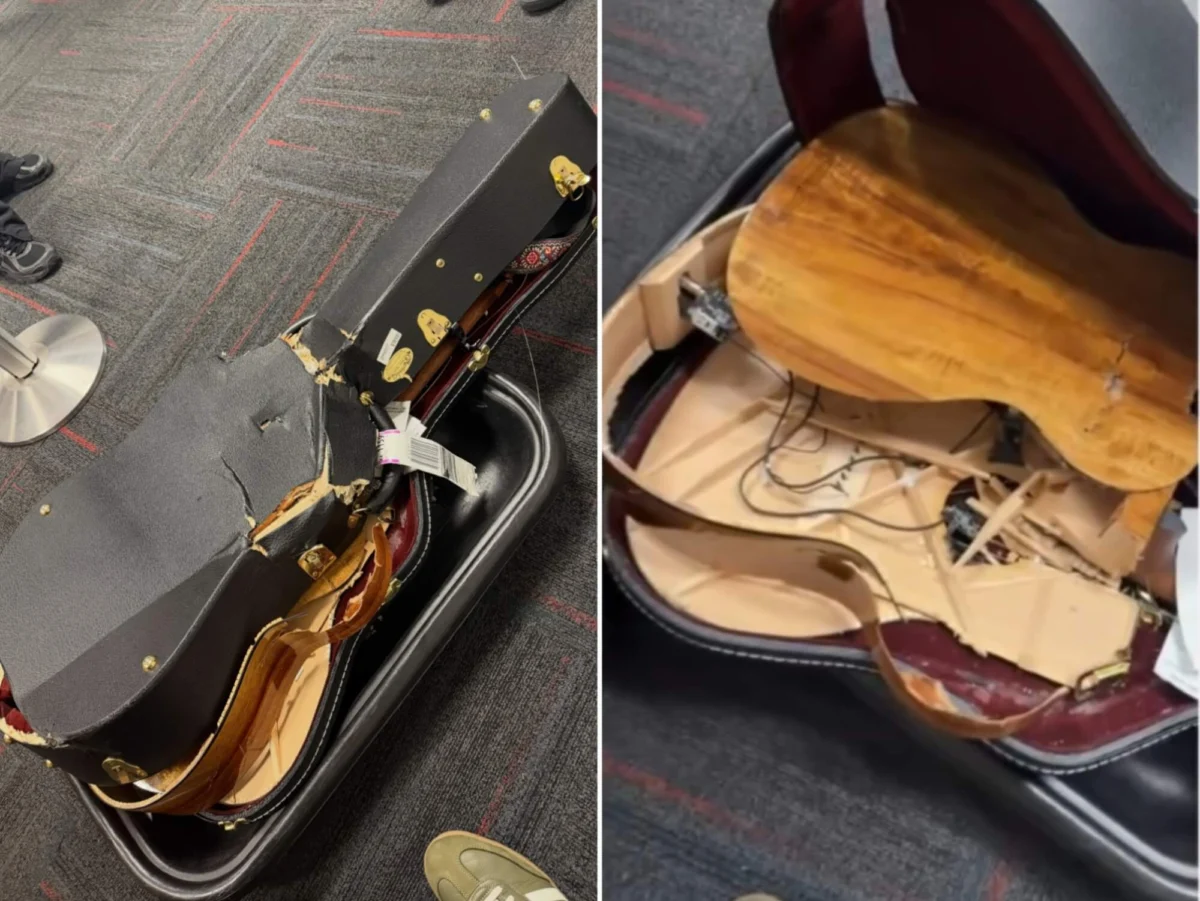
The repeated and often catastrophic damage to musical instruments by airlines remains a critical and deeply frustrating issue for musicians worldwide, with recent incidents involving American Airlines, United Airlines, and Southwest Airlines reigniting calls for more stringent handling protocols and increased carrier accountability. Far from a mere inconvenience, these incidents represent significant financial burdens, emotional distress, and potential career setbacks for artists whose livelihoods depend on their instruments. The anecdotal evidence, frequently amplified through social media, paints a stark picture of a systemic problem that appears to defy resolution despite years of public outcry and even high-profile protest songs.
The Latest Incidents: A String of Devastation
The most recent and perhaps most visually shocking incident involved digital creator Titus Tucker, who took to social media to document the utter destruction of his guitar after a flight with American Airlines. Tucker’s video, which quickly garnered widespread attention, showcased an instrument reduced to an unrecognizable pile of shattered wood and twisted strings, lying beside its similarly mangled brand-new case. The extent of the damage was so severe that it defied common explanation, prompting Tucker to lament the loss of what he described as a new guitar in a new, protective case. His experience is a grim testament to the potential perils musicians face when entrusting their valuable equipment to airline baggage handling systems, suggesting a level of force far beyond reasonable transit conditions. The public reaction to Tucker’s video underscored a collective exasperation, with many viewers expressing disbelief at the sheer scale of the damage and a shared sentiment of empathy for the musician.
This incident closely followed another alarming report from Nashville artist Ella Hennessee, who also shared her dismay online after discovering her cherished childhood guitar had been mishandled by United Airlines. Hennessee’s video, though depicting less outright destruction than Tucker’s, revealed significant cracks along the side of her instrument, a clear indicator of rough treatment. Her sardonic caption, "I didn’t know y’all dropped luggage 25,000 ft apparently," resonated with many who understood the frustration of entrusting a sentimental and valuable item to an airline, only for it to be returned damaged. These recent events serve as stark reminders that the problem is not isolated to a single carrier but appears to be a pervasive challenge across the industry, impacting musicians regardless of their instrument’s value or sentimental significance.
A Recurring Nightmare: The "United Breaks Guitars" Saga
The issue of airline damage to musical instruments is by no means new. One of the most famous and impactful cases, which continues to serve as a benchmark for airline accountability, involved Canadian musician Dave Carroll and United Airlines in 2009. Carroll’s $3,000 Taylor guitar was broken during a flight, and despite his persistent attempts to seek compensation, United Airlines refused to cover the repair costs. Frustrated by the airline’s intransigence and bureaucratic stonewalling, Carroll channeled his anger into a series of protest songs, the first and most famous of which was titled "United Breaks Guitars."
Released on YouTube, the song quickly went viral, becoming an unprecedented public relations nightmare for United Airlines. Carroll’s witty lyrics, coupled with a catchy melody and a compelling narrative of corporate indifference, struck a chord with millions of viewers. The video’s popularity exploded, accumulating millions of views in a short period. The financial repercussions for United were staggering; reports indicated that the airline’s stock price dropped by an estimated $180 million in the days following the video’s release. This incident became a powerful demonstration of consumer voice in the digital age and the profound impact of social media on corporate reputation and financial performance. While United eventually offered to compensate Carroll and even offered to use him in their training programs, the damage to their brand had already been done, serving as a cautionary tale for airlines worldwide about the consequences of neglecting customer grievances, especially those of public figures. The "United Breaks Guitars" saga highlighted not only the tangible cost of instrument damage but also the intangible cost of eroded public trust and negative perception.
Southwest Airlines and Emily Wolfe’s Ordeal
More recently, in the past year, blues-rock artist Emily Wolfe publicly criticized Southwest Airlines after her signature Epiphone White Wolfe guitar suffered a snapped headstock during transit. Wolfe’s experience underscored another layer of complexity in these disputes: the airlines’ common practice of classifying instruments as "fragile items." While seemingly a protective measure, this designation often serves as a loophole for airlines to disclaim responsibility, effectively shifting the burden of risk onto the instrument owner.
Wolfe detailed her frustration after filing a report, only to face an airline policy that essentially absolved them of liability for damage to fragile items. This policy, common among many carriers, places traveling musicians in an incredibly precarious position. As Wolfe articulated passionately in her Instagram post, "If airlines can damage professional-grade instruments, charge us extra to check them, and then refuse to take responsibility, it puts every traveling musician at risk. This is not just about one guitar. It is about protecting the tools of our craft." Her statement resonated deeply within the music community, highlighting the fundamental unfairness of paying extra fees for an instrument to be transported, only for the carrier to evade responsibility when damage occurs due to apparent mishandling. The incident with Emily Wolfe further solidified the perception that current airline policies do not adequately protect the working tools of professional musicians.
Airline Liability and Policies: A Patchwork of Regulations
The core of the problem lies in the often-ambiguous and varied policies airlines adopt regarding the transportation of musical instruments. While some airlines have specific guidelines for instruments, often influenced by Department of Transportation (DOT) regulations in the United States, enforcement and interpretation can vary widely. Generally, instruments can be carried on board if they fit in overhead bins or under the seat, or if a passenger purchases an additional seat for them. However, for larger instruments like guitars, checking them as baggage is frequently the only option, especially on smaller aircraft or during busy travel periods.
When instruments are checked, they enter the standard baggage handling system, which, despite advancements, remains notoriously rough. Protective cases, even high-quality flight cases, are often insufficient to withstand extreme impacts, crushing forces, or drops from significant heights, as evidenced by Titus Tucker’s demolished guitar. The "fragile item" clause, while ostensibly meant to inform handlers to be careful, often operates as a disclaimer. Airlines typically have limited liability for checked baggage, often capping compensation at a few hundred to a few thousand dollars, irrespective of the item’s actual value. For a professional-grade or vintage guitar worth thousands or even tens of thousands of dollars, this limited liability offers scant protection. Furthermore, proving airline negligence versus inherent fragility or inadequate packing often becomes a contentious and lengthy process, leaving musicians in a legal and financial quagmire. The onus is frequently on the musician to demonstrate that the damage was due to mishandling rather than a pre-existing condition or insufficient protection, a difficult task when the instrument is out of their sight for the duration of its journey through the baggage system.
The Broader Impact on Touring Musicians
The implications of instrument damage extend far beyond the immediate cost of repair or replacement. For touring musicians, a broken instrument can derail an entire tour, leading to canceled performances, lost income, and damaged professional reputation. Many artists rely on specific instruments for their unique sound or performance style; replacing such an item, even if financially compensated, is not always possible, particularly for custom-made, vintage, or emotionally significant instruments. The sentimental value attached to a "childhood guitar," as in Ella Hennessee’s case, is immeasurable and irreplaceable.
Moreover, the financial strain on touring musicians is already immense. Costs for transportation, accommodation, venue fees, and equipment maintenance are constantly rising. Adding the potential for significant repair bills or the need to purchase new instruments on top of these expenses places an unbearable burden on many artists, especially independent ones. Devin Townsend, a prominent artist, has even spoken about cutting costs by traveling with just an acoustic guitar, highlighting the precarious financial tightrope many musicians walk. If that sole instrument were to be destroyed, the consequences could be catastrophic for his ability to perform and earn a living. The stress and anxiety associated with flying with instruments can also take a toll, distracting musicians from their primary focus: creating and performing music. This constant worry about their equipment adds an unnecessary layer of mental burden to an already demanding profession.
Advocacy and the Road Ahead
Despite the persistent nature of this problem, there have been ongoing efforts by musicians and industry bodies to advocate for better policies. Organizations like the American Federation of Musicians (AFM) and the National Association of Music Merchants (NAMM) have engaged with airlines and regulatory bodies to push for clearer, more musician-friendly guidelines. The ultimate goal is to establish industry-wide standards that ensure instruments are treated with the care they require, without penalizing musicians through liability disclaimers or exorbitant fees.
One proposed solution is for airlines to adopt more consistent and transparent policies for instruments, potentially including dedicated storage spaces for fragile items, improved training for baggage handlers on the specific requirements of musical instruments, and more robust insurance options or liability coverage. Another crucial aspect is empowering musicians with clear recourse mechanisms when damage occurs, ensuring fair and prompt compensation that reflects the true value of the instrument. The power of social media, as demonstrated by Dave Carroll, Titus Tucker, and Ella Hennessee, continues to be a vital tool for musicians to share their experiences and exert public pressure on airlines. Each viral story serves as a reminder to the airline industry that ignoring these issues comes with significant reputational and financial risks.
Protecting Your Instrument: Advice for Travelers
While the fight for systemic change continues, musicians are often left to implement their own preventative measures. Investing in a high-quality, flight-ready hard case is paramount, though as Tucker’s experience shows, even the best protection can sometimes be overwhelmed. Documenting the instrument’s condition with detailed photos and videos before and after each flight is crucial for any potential claims. Purchasing separate travel insurance that specifically covers musical instruments for their full replacement value is also highly advisable, as standard airline liability limits are almost always insufficient. Additionally, whenever possible, musicians are encouraged to check airline policies in advance, communicate with airline staff about their instrument, and attempt to carry on smaller instruments or purchase an extra seat for particularly valuable pieces, though these options are not always feasible.
Conclusion
The recent wave of incidents involving damaged musical instruments underscores a persistent and deeply troubling issue within the airline industry. From the devastating destruction of Titus Tucker’s guitar to the historical impact of Dave Carroll’s protest song, the message from musicians is clear: their tools of the trade are not disposable luggage. While airlines operate under complex logistical constraints, the repeated failures in handling valuable and often irreplaceable instruments demand a reevaluation of current practices and policies. The vulnerability of touring artists, coupled with the significant financial and emotional toll of instrument damage, necessitates a concerted effort from airlines, regulators, and the music community to forge a path towards greater accountability and more respectful treatment of these essential cultural artifacts. Until then, the shadow of uncertainty will continue to loom large over every musician who checks their instrument onto a flight, hoping against hope that their livelihood will arrive in one piece.
