

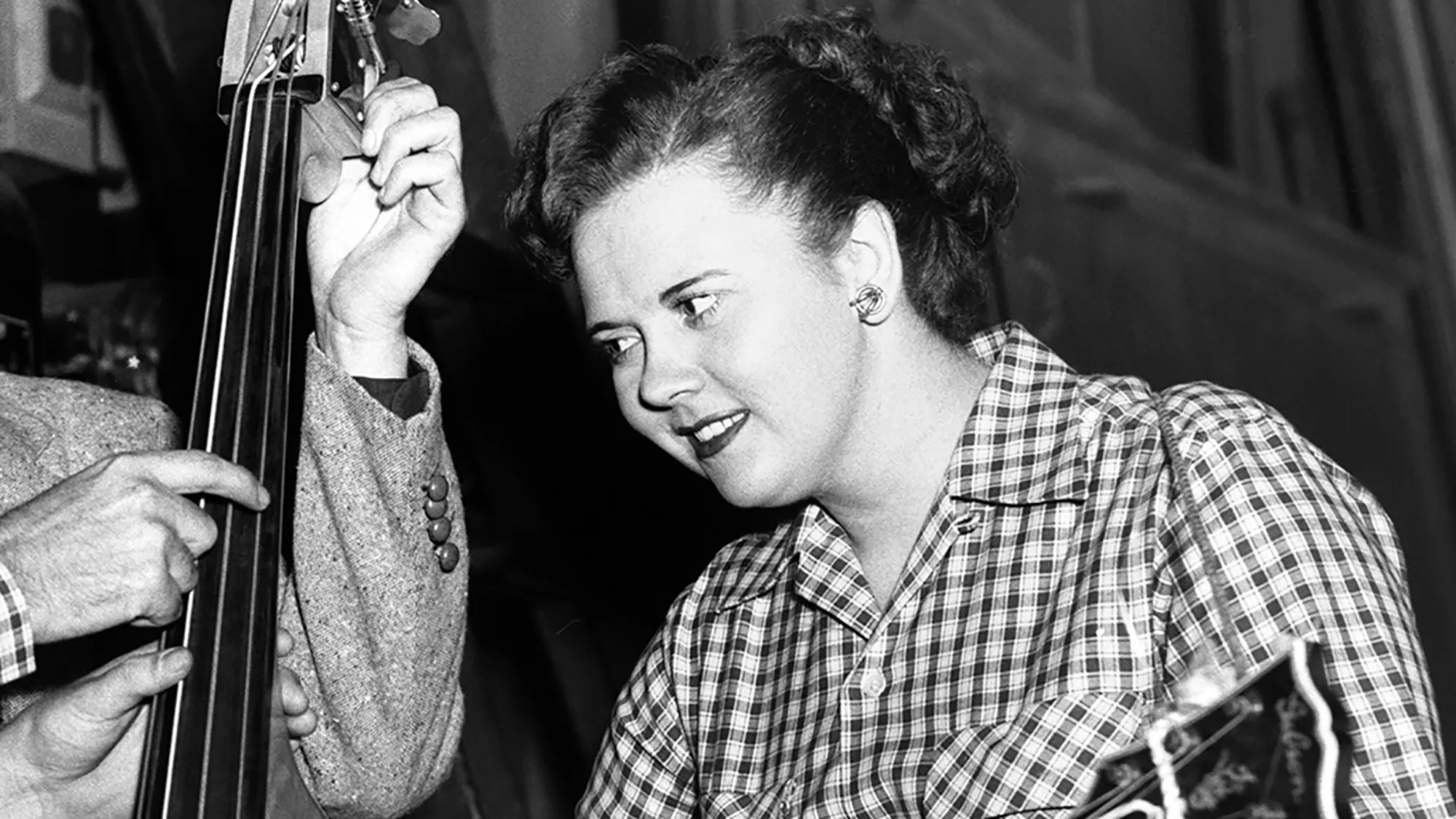
The history of American country music is often told through the lens of its iconic frontmen and vocalists, yet the foundational architecture of the genre was built by a select group of master musicians who operated within the shadows of the recording studio. Among these titans, few figures possess a legacy as transformative or as historically significant as Velma Smith. Born on July 27, 1927, in the small community of Epley Station, Kentucky, Smith emerged from the rural heartland to become a central architect of the "Nashville Sound." Her career was defined by a series of unprecedented milestones, as she effectively dismantled the gender-based restrictions of the mid-20th-century music industry to become the first female solo performer on the Grand Ole Opry and the first woman to join the prestigious "A-Team" of Nashville session players. As the music world reflects on her contributions nearly a century after her birth, her story remains a vital case study in technical excellence and professional perseverance.
Early Life and the Discovery of the Smith Sisters
Velma Smith’s journey began in the fertile musical landscape of Western Kentucky during the interwar period. Growing up in Epley Station, she was immersed in the traditional sounds of string bands and gospel music that permeated the region. Alongside her sister, Mildred, Velma developed a sophisticated understanding of harmony and instrumentation at a young age. By the 1940s, the duo had gained local notoriety as the Smith Sisters, performing regularly on WHOP, a radio station based in Hopkinsville, Kentucky. During this era, regional radio served as the primary scouting ground for national talent, and it was through these airwaves that the sisters caught the attention of a burgeoning bluegrass legend.
Bill Monroe, often cited as the "Father of Bluegrass," heard the Smith Sisters’ broadcast and was immediately struck by their precision and stage presence. Recognizing their potential to appeal to a broader audience, Monroe invited the duo to perform on the Grand Ole Opry in Nashville, Tennessee. This invitation represented a seismic shift in the sisters’ lives, moving them from the local circuit to the pinnacle of country music broadcasting. However, the move to Nashville also marked a crossroads for the pair. While Mildred eventually opted to retire from the rigors of the music business in favor of a more traditional domestic life, Velma remained in "Music City," driven by a professional ambition that would eventually redefine the role of women in the industry.
Breaking the Solo Barrier at the Grand Ole Opry
The Grand Ole Opry, established in 1925, was the ultimate gatekeeper of country music success. For decades, the stage was dominated by male performers, with women largely relegated to backing vocal roles or novelty acts. Velma Smith challenged this status quo when she became the first woman to perform as a solo instrumentalist and vocalist on the program. Her impact was further solidified when she performed solo during the NBC-sponsored portion of the Opry, a high-stakes segment that was broadcast to a national audience.
This breakthrough was not merely a personal victory but a structural shift for the institution. By proving that a female musician could command the stage with the same technical authority as her male counterparts, Smith opened the door for future generations of female instrumentalists. Her versatility was quickly recognized by the industry’s elite. Shortly after her solo debut, she was recruited by Roy Acuff to join his legendary backing band, the Smoky Mountain Boys, as a bass player. Her tenure with Acuff provided her with a masterclass in professional showmanship and high-level ensemble playing, skills she would later apply to the bands of other country legends, including Carl Smith and Ernest Tubb.
The Architect of Rhythm: Joining the Nashville A-Team
As the 1950s progressed, the Nashville music industry underwent a radical transformation. The raw, fiddle-driven sounds of early country were being replaced by a more polished, commercially viable style known as the "Nashville Sound." This era relied heavily on a small, elite circle of session musicians who could provide impeccable, "head-arranged" backing tracks with minimal rehearsal time. This group, colloquially known as the "A-Team," consisted of legendary figures such as Chet Atkins, Floyd Cramer, and Grady Martin.
Velma Smith’s entry into this hyper-masculine environment was a landmark moment in recording history. She became the first woman to join the A-Team, earning her place not through novelty, but through her unparalleled skill as a rhythm guitarist. In an era where lead guitarists often received the glory, Smith understood that the rhythm guitar was the heartbeat of the record. She is widely credited as the first session musician in Nashville to specialize specifically in rhythm guitar, providing the steady, percussive foundation that allowed soloists to flourish. Her ability to maintain a consistent "pocket" while adapting to various tempos and styles made her an indispensable asset to producers like Owen Bradley and Chet Atkins.
A Discography of Legends: The Smith Influence
The sheer breadth of Velma Smith’s recording credits serves as a testament to her influence on the American songbook. Throughout the 1950s, 60s, and 70s, she was a constant presence in the studios of Music Row, contributing to thousands of recording sessions. Her discography reads like a "Who’s Who" of music history. She provided the rhythmic backbone for Willie Nelson during his early Nashville years, contributed to the smooth, crooning hits of Jim Reeves, and supported the honky-tonk stylings of Ray Price and Hank Snow.
Beyond traditional country, Smith’s versatility allowed her to cross into the emerging world of rockabilly and pop-country. She recorded with Roy Orbison, helping to craft the sophisticated arrangements that defined his career, and worked with Waylon Jennings long before the "Outlaw" movement took hold. Her presence on these records was often uncredited on the original sleeves—a common practice for session players at the time—but her distinct "thump" and rhythmic precision are unmistakable to music historians and audiophiles. Data from session logs during the peak of the Nashville Sound era indicates that Smith was among the most active players in the city, often working three sessions a day, six days a week.
Timeline of Key Milestones in the Career of Velma Smith
To understand the scope of Smith’s impact, one must look at the chronology of her professional life against the backdrop of a changing America:
- July 27, 1927: Born in Epley Station, Kentucky.
- Early 1940s: Performs with sister Mildred as the "Smith Sisters" on WHOP Radio.
- Late 1940s: Discovered by Bill Monroe and debuts on the Grand Ole Opry.
- 1950s: Transitions into session work; joins the Smoky Mountain Boys and later the Texas Troubadours.
- Mid-1950s – 1960s: Becomes the first female member of the Nashville A-Team, recording with Willie Nelson, Roy Orbison, and Jim Reeves.
- 1950s: Becomes the first woman to play rhythm guitar as a dedicated session musician in Nashville.
- January 2014: Inducted into the Musicians Hall of Fame in Nashville.
- July 2014: Passes away shortly after her induction, leaving behind a monumental legacy.
Official Recognition and the Musicians Hall of Fame
For much of her life, Velma Smith remained a "musician’s musician," revered by her peers but largely unknown to the general public. This changed in January 2014 when she received the highest honor for a session professional: induction into the Musicians Hall of Fame. The ceremony was a star-studded affair, seeing Smith inducted alongside luminaries such as Peter Frampton, Stevie Ray Vaughan, Barbara Mandrell, and Buddy Guy.
The induction served as an official acknowledgment of her role as a pioneer. During the proceedings, industry veterans noted that Smith had not only played on the soundtracks of American life but had done so while navigating a professional landscape that was often unwelcoming to women. Her induction was seen by many as a long-overdue correction to the historical narrative of Nashville, ensuring that her name would be forever linked with the greats she supported in the studio. Tragically, Smith passed away in late July of that same year, just months after receiving this final accolade.
Analysis of Implications: The Legacy of a Trailblazer
The implications of Velma Smith’s career extend far beyond the notes she played. By establishing herself as a top-tier session musician, she challenged the prevailing gender norms of the mid-20th century. In the 1950s, the recording studio was a workspace defined by male camaraderie and rigid hierarchies. Smith’s presence in the A-Team proved that technical proficiency was the ultimate equalizer.
Her success paved the way for future female session players and instrumentalists. Before Smith, a woman in Nashville was expected to be a singer or a backup vocalist; after Smith, the possibility of being a professional instrumentalist became a reality. Modern musicians often cite the "Nashville Sound" as a period of immense creativity, and Smith’s rhythm work was the literal foundation of that creativity. Without her steady hand, the polished, sophisticated records of the era might have lacked the drive and cohesion that made them global hits.
Furthermore, Smith’s career highlights the importance of the rhythm guitarist in the evolution of country music. While the lead guitar often carries the melody, the rhythm guitar dictates the feel and the "groove" of the track. Smith’s ability to blend seamlessly into an ensemble while providing a rock-solid foundation was a specific art form that she helped perfect.
Conclusion: A Permanent Place in Music City
As we observe the anniversary of her birth, Velma Smith stands as a towering figure of resilience and talent. From the rural outposts of Kentucky to the prestigious stages of the Grand Ole Opry and the high-pressure environments of Studio B, she navigated her career with a quiet but undeniable authority. She was a woman of "firsts"—first solo female on the Opry, first female A-Team member, and first female session rhythm guitarist.
Today, her influence can be heard in every steady acoustic strum on a country record and seen in every female musician who picks up an instrument to make a living in the studio. Velma Smith did more than just play music; she built the framework for an entire industry and ensured that the doors she opened would never again be closed to those who followed. Her life remains a cornerstone of Nashville’s cultural heritage, a reminder that the most enduring music is often built on a foundation of unsung, yet extraordinary, talent.
