

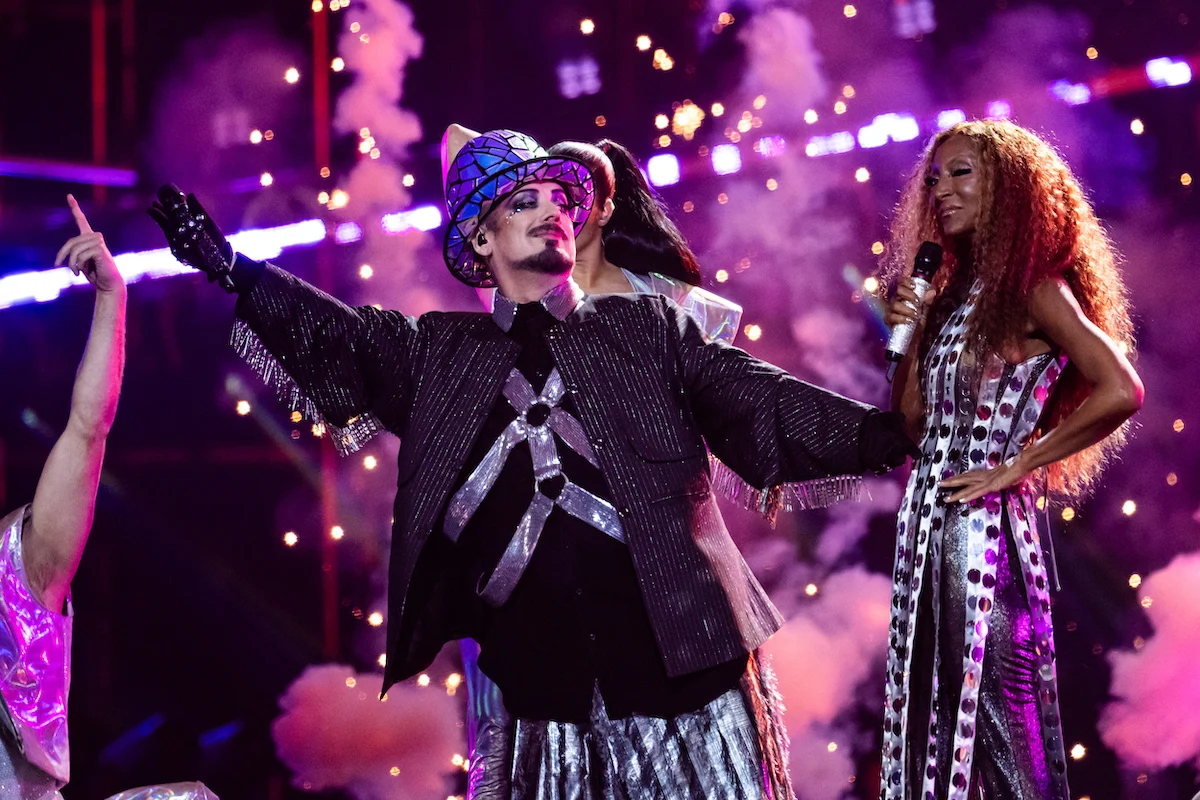
A New Anthem, A Deepening Divide: Boy George’s Controversial Release
The music world finds itself at the epicenter of a fresh controversy following pop icon Boy George’s recent foray into politically charged music, specifically with the release of an AI-assisted song titled "We Will Dance Again." The reggae-infused track, shared primarily across his personal social media channels, is presented as a response to the tragic events of October 7, 2023, when Hamas militants launched an unprecedented attack on Israel, resulting in the deaths of approximately 1,200 people and the abduction of over 240 others, including attendees of the Nova music festival. While sharing its title with Israeli filmmaker Yariv Mozer’s documentary on the same attack, the song’s lyrics extend beyond mere commiseration, taking an unequivocal stance on the ensuing conflict in Gaza and directly challenging prevailing international narratives.
The core of the song’s controversial nature lies in its direct engagement with the terminology surrounding the conflict. Boy George opens "We Will Dance Again" with the lines, "You say genocide, I say war / When you’re attacked, that’s what the army’s for." This lyric immediately confronts and dismisses the widespread allegations of genocide against Palestinians in Gaza, allegations that have been made by numerous international bodies and human rights organizations, including multiple United Nations inquiries and proceedings at the International Court of Justice (ICJ). Furthermore, the song critiques fellow artists who have voiced solidarity with Palestinians, stating, "Musicians holding flags, mouthing like sheep / Propaganda fueled by the internet feels so weak." This direct jab at the growing number of celebrities and public figures advocating for a ceasefire or expressing concern for Palestinian civilians has ignited a fervent debate across social media platforms, highlighting the deep divisions that the conflict has exposed within the global artistic community. Notably, the song has not been made available on major digital streaming platforms (DSPs), limiting its distribution to Boy George’s own social media accounts, a decision that further underscores its direct, unfiltered political intent.
The Genesis of Controversy: The Israel-Hamas Conflict and International Scrutiny
To fully grasp the context and implications of Boy George’s song, it is essential to revisit the events that catalyzed the current conflict and the subsequent international discourse. On October 7, 2023, Hamas, the militant group governing the Gaza Strip, launched a multi-pronged assault on southern Israel. The attack, characterized by its brutality and scope, targeted civilian communities, including kibbutzim and the Nova music festival near Re’im, where hundreds of young revelers were killed and many more abducted. The scale of the violence and the targeting of civilians sent shockwaves globally, prompting widespread condemnation and expressions of solidarity with Israel.
In response to the October 7 attacks, Israel launched a comprehensive military operation in Gaza, initially aimed at dismantling Hamas’s military capabilities and infrastructure, securing the release of hostages, and preventing future attacks. This operation, which has included extensive aerial bombardment and a ground invasion, has led to a catastrophic humanitarian crisis in the densely populated enclave. According to figures from the Palestinian health ministry in Gaza, overseen by Hamas, the death toll has surpassed 37,000, with a significant proportion being women and children. The vast majority of Gaza’s 2.3 million residents have been displaced, and the region faces severe shortages of food, water, medicine, and shelter, prompting international aid agencies to warn of widespread famine and disease.
The intensity and scale of Israel’s military response, coupled with the immense civilian casualties and destruction, have led to increasing international scrutiny and allegations of war crimes and, crucially, genocide. South Africa formally accused Israel of genocide at the International Court of Justice (ICJ) in December 2023, presenting evidence of alleged genocidal intent and acts. While the ICJ has not yet ruled on the merits of the case, it issued provisional measures ordering Israel to take all measures within its power to prevent genocidal acts and ensure humanitarian aid reaches Gaza. Various United Nations experts and human rights organizations have also raised alarms, citing the disproportionate impact on civilians, the destruction of civilian infrastructure, and the rhetoric used by some Israeli officials as grounds for serious concern. This backdrop of intense international debate and legal challenges is precisely what Boy George’s lyric "You say genocide, I say war" directly addresses, positioning his song firmly within a highly contentious global political landscape.
"You Say Genocide, I Say War": Lyricism and Public Discourse
The specific lyrical choices within "We Will Dance Again" are not merely artistic expressions but direct interventions into a highly polarized global discourse. The opening lines, "You say genocide, I say war / When you’re attacked, that’s what the army’s for," serve as a stark refutation of the allegations of genocide against Israel. This framing aligns with the Israeli government’s consistent position that its military actions are acts of self-defense, a legitimate response to the October 7 terror attacks, and are aimed solely at neutralizing Hamas, which it considers a terrorist organization. From this perspective, the conflict is a war against a defined enemy, not a campaign to destroy a people.
However, this perspective stands in sharp contrast to the characterizations offered by numerous international bodies, human rights organizations, and legal experts. The Rome Statute of the International Criminal Court defines genocide as specific acts committed with intent to destroy, in whole or in part, a national, ethnical, racial or religious group. Critics argue that the extensive civilian casualties, displacement, and destruction of infrastructure in Gaza, combined with certain public statements by Israeli officials, could potentially meet the threshold of genocidal intent or acts, warranting the investigations currently underway at the ICJ and elsewhere. Boy George’s dismissal of "genocide" as a mere alternative label for "war" effectively minimizes the legal and moral gravity of these allegations, which are at the heart of the international outcry against Israel’s actions in Gaza.
Furthermore, his subsequent critique of other artists – "Musicians holding flags, mouthing like sheep / Propaganda fueled by the internet feels so weak" – directly targets the wave of pro-Palestinian artistic activism that has emerged since October 7. A multitude of musicians, actors, and public figures globally have used their platforms to advocate for a ceasefire, express solidarity with Palestinians, and condemn what they view as Israel’s excessive use of force. Many have participated in protests, signed open letters, or displayed symbols of Palestinian solidarity, such as the keffiyeh or the Palestinian flag. Boy George’s lyrics dismiss these expressions as mere "propaganda" fueled by internet trends, implying a lack of genuine conviction or independent thought. This stance not only positions him in opposition to a significant segment of the artistic community but also risks alienating fans and peers who hold differing views on the conflict and the role of artists in social justice. The song thus functions not only as a political statement but also as a direct challenge to the burgeoning trend of artists engaging in overt political activism, particularly concerning the Israeli-Palestinian conflict.
AI’s New Frontier: Art, Activism, and Authenticity
Beyond its contentious lyrical content, "We Will Dance Again" marks a significant moment in the evolving relationship between artificial intelligence and artistic creation, especially within the realm of political commentary. Boy George revealed on Threads that he created the song with the help of AI, explicitly stating, "I call it ‘AI for good’. Truthfully, I would struggle to write this with a human!" This admission adds another layer of complexity to the controversy, raising profound questions about the role of AI in shaping public narratives, artistic authenticity, and the ethics of technology in politically sensitive contexts.
Boy George’s broader engagement with AI is not new; he has previously announced plans to use AI to re-record his old hits, an initiative aimed at allowing artists to "reclaim their hits" and potentially regain control over their master recordings. This commercial application of AI, while raising its own set of copyright and originality questions, pales in comparison to the implications of using AI to generate politically charged content. His "AI for good" claim, in this specific instance, is particularly provocative. While proponents of AI often highlight its potential for positive societal impact, using it to craft a song that dismisses genocide allegations and critiques fellow activists introduces a challenging dimension to the "AI for good" narrative. It suggests that "good" can be subjective and highly contested, depending on one’s political stance.
The use of AI in creating such a song also brings to the forefront debates about authenticity and authorial intent. Boy George’s candid admission that he "would struggle to write this with a human" implies that AI facilitated the articulation of sentiments that he might have found difficult to express through traditional collaborative processes or even solitary human composition. This raises questions about whether AI merely amplifies an artist’s pre-existing views or if it enables the generation of content that might otherwise remain unexpressed, potentially blurring the lines of personal conviction. In a media landscape increasingly grappling with deepfakes and AI-generated misinformation, the deliberate use of AI for political messaging in music could set a precedent. It opens the door for broader discussions about how AI might be employed to create persuasive or even propagandistic art, challenging listeners to discern the true source and motivation behind the message. The limited distribution of the song, bypassing traditional DSPs, further positions it as a direct, unmediated communication, leveraging AI for maximum impact without the typical industry gatekeepers.
A Shifting Stance: Boy George’s Evolving Political Landscape
The controversy surrounding "We Will Dance Again" is further amplified by Boy George’s own historical artistic and political positions. Many commentators and fans have drawn a stark contrast between his current stance and the anti-war anthem "The War Song," which Culture Club released in 1984. That iconic track famously declared, "War is stupid and people are stupid," presenting a universalist condemnation of conflict. The Guardian, among other outlets, specifically highlighted this historical divergence, pointing out the apparent contradiction between a song that unequivocally labeled war as "stupid" and a new track that defends military action and dismisses allegations of genocide as mere semantics.
This apparent shift has led to accusations of hypocrisy from some quarters, while others attempt to contextualize it within Boy George’s personal evolution and specific allegiances. In an interview with The Telegraph, Boy George clarified his position, framing his support for Israel as a deeply personal one, rooted in his relationships: "Over the years it’s been a really personal thing. It doesn’t mean that I don’t have compassion for Palestinians, it doesn’t mean that I agree with what’s going on in Israel, but I am always going to defend the people that I love. I have a lot of Jewish friends and there would never be a situation where I’d turn my back on them."
This explanation attempts to reconcile his pro-Israel stance with a broader sense of compassion and his previous anti-war sentiments. By emphasizing personal loyalty and friendship, he frames his position not as an endorsement of specific governmental policies or military actions but as an act of solidarity with individuals within a community under duress. This narrative distinguishes his current position from a blanket endorsement of war, attempting to maintain a nuanced perspective. However, for many critics, the lyrical content of "We Will Dance Again" – particularly the dismissal of genocide allegations and the critique of pro-Palestinian artists – transcends a mere personal statement of friendship, transforming into a direct political intervention that contradicts the universal pacifist message of his earlier work. The debate thus shifts from a simple "pro-war" versus "anti-war" stance to a more complex discussion about the ethics of personal loyalties influencing public political statements, especially when those statements engage with highly sensitive international conflicts and allegations of severe human rights violations. The tension between his past and present statements underscores the profound challenges public figures face when navigating complex geopolitical issues.
Reactions and Repercussions: Navigating the Digital Storm
The release of "We Will Dance Again" and Boy George’s accompanying explanations have triggered a predictably polarized reaction across social media and within public discourse. On platforms like Threads, X (formerly Twitter), and Instagram, responses have ranged from fervent support to outright condemnation. Supporters have lauded his bravery in taking a clear stance, particularly in an environment where many artists fear backlash for expressing pro-Israel sentiments. They view his song as a courageous act of solidarity with a nation that experienced a horrific terrorist attack and is facing ongoing security threats. This demographic often echoes Boy George’s sentiment that Israel is engaged in a legitimate war of self-defense.
Conversely, a significant segment of the public, including many fans and human rights advocates, has reacted with strong disapproval, accusing the artist of insensitivity, hypocrisy, and contributing to the normalization of suffering. Critics point to the immense human toll in Gaza and the international community’s growing concern over Israel’s conduct, arguing that dismissing allegations of genocide is irresponsible and morally reprehensible. Many have expressed disappointment, particularly given his iconic status and past association with messages of peace and tolerance. The perceived contradiction with "The War Song" has fueled accusations of hypocrisy, leading some to question his artistic integrity and commitment to universal humanitarian values.
The decision to release the song solely on social media, rather than through traditional digital streaming platforms, also carries implications. While it bypasses potential gatekeepers or content moderation policies of DSPs, it simultaneously limits its reach and commercial viability, signaling that the song’s primary purpose is not commercial success but direct political communication and provocation. This approach makes the controversy highly concentrated within the digital sphere, where comments, shares, and reposts amplify the debate rapidly. For Boy George, the repercussions could be multifaceted, potentially impacting his public image, future collaborations, and fan base. In an era where artists are increasingly expected to align their public statements with ethical and social responsibility, taking such a decisive and controversial stance on a deeply divisive international conflict could have lasting effects on his legacy and career trajectory, particularly among younger, more politically engaged audiences.
The Broader Canvas: Artists, Advocacy, and the Culture Wars
Boy George’s "We Will Dance Again" saga is not an isolated incident but rather a potent illustration of a broader phenomenon: the increasing pressure on artists and public figures to take explicit stances on complex geopolitical issues, particularly the Israeli-Palestinian conflict. This conflict, perhaps more than any other contemporary issue, has deeply polarized Western societies, creating significant fault lines within cultural, academic, and artistic communities. Artists are no longer afforded the luxury of political neutrality; silence is often interpreted as complicity, and any stance, however nuanced, is likely to draw both fervent praise and fierce condemnation.
The incident highlights the ongoing "culture wars" surrounding the conflict, where cultural products, including music, become battlegrounds for competing narratives. Boy George’s song, with its direct challenge to the "genocide" narrative and its critique of pro-Palestinian artists, exemplifies how art can be weaponized to reinforce specific political positions and delegitimize opposing viewpoints. This dynamic places immense pressure on artists, who must navigate the fine line between artistic freedom and social responsibility, often at the risk of alienating significant portions of their audience or facing professional repercussions.
Furthermore, the use of AI in this context underscores a critical emerging dimension of modern advocacy and propaganda. As AI tools become more sophisticated and accessible, their potential to generate persuasive, emotionally resonant, and rapidly deployable content for political purposes will only grow. This raises profound questions about the future of political messaging, the authenticity of artistic expression, and the potential for AI to both empower and manipulate public opinion. Boy George’s experiment with "AI for good" in a politically contentious sphere serves as a cautionary tale, demonstrating that the definition of "good" itself is highly subjective and fiercely contested.
Ultimately, "We Will Dance Again" transcends being merely a song; it is a cultural artifact that encapsulates the profound moral, political, and technological dilemmas of our time. It forces a reckoning with how artists engage with global crises, the evolving role of AI in creative expression, and the enduring power of music to both unite and divide societies in an increasingly fractured world. The controversy surrounding Boy George’s latest creation underscores the enduring impact of the Israeli-Palestinian conflict on global cultural spheres and the complex ethical landscape that artists must now navigate.
