

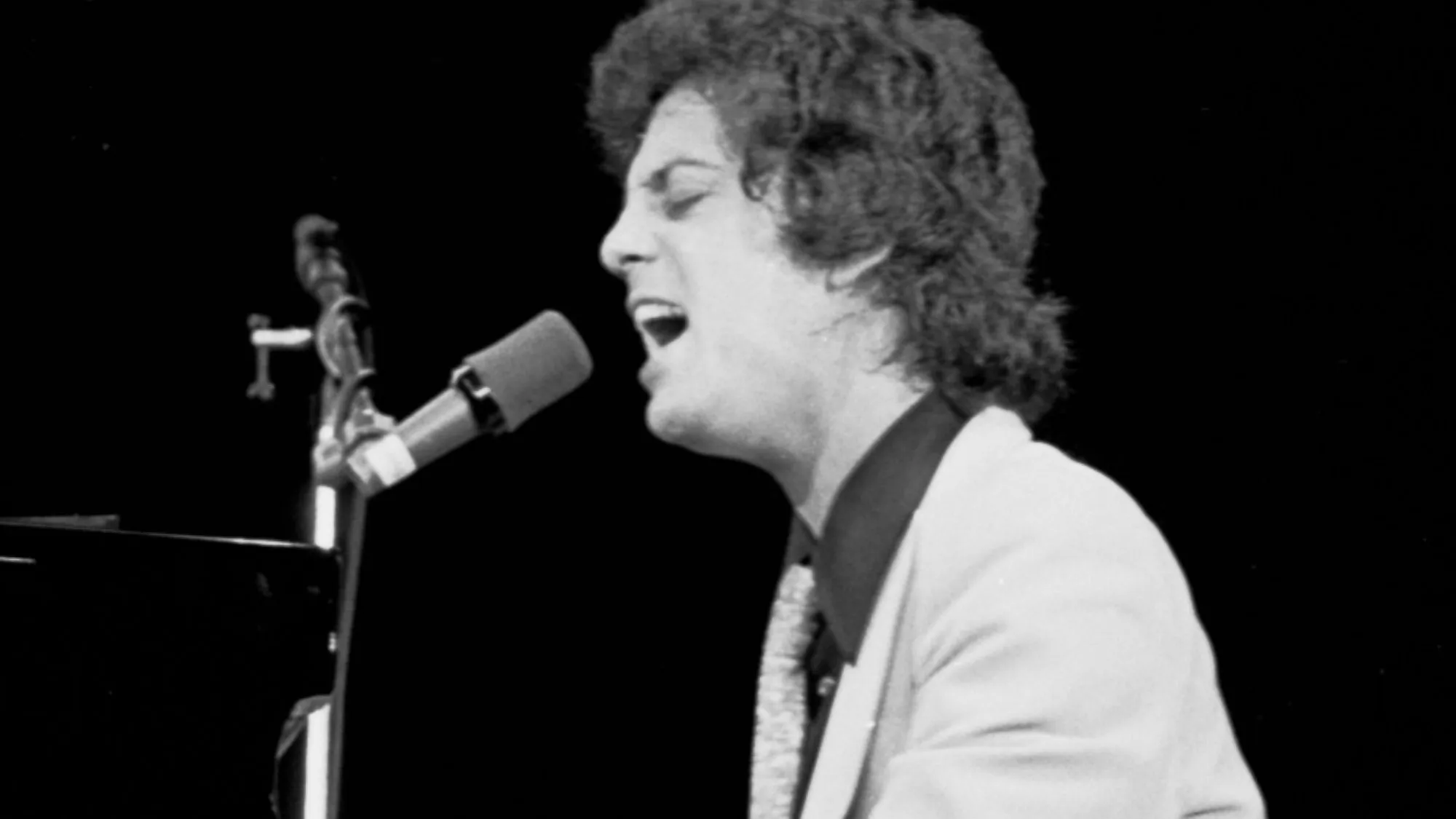
Billy Joel, the Bronx-born singer-songwriter who defined the sound of 1970s piano-pop, faced a daunting creative crossroads as he entered the 1980s. Following a string of massive commercial successes including The Stranger (1977), 52nd Street (1978), and Glass Houses (1980), Joel found himself grappling with a debilitating bout of writer’s block that threatened to stall his momentum. The result of this struggle, however, was not a retreat into familiar territory, but rather the birth of "Pressure," one of the most experimental and sonically aggressive tracks in his entire discography. Born from a chance remark by his secretary and fueled by the technical curiosity of producer Phil Ramone, the song remains a pivotal moment in Joel’s career, marking his transition from a traditional balladeer to a more socially conscious and musically adventurous artist.
The Creative Stagnation of the Early 1980s
By 1981, Billy Joel had achieved a level of fame that few solo artists ever reach. He had transitioned from a struggling "Piano Man" to a global superstar capable of selling out stadiums. However, the expectations that accompanied this success began to take a toll. As he began work on what would eventually become the 1982 album The Nylon Curtain, Joel found that the easy melodies and clever wordplay of his previous years had vanished.
The period was marked by a shift in Joel’s thematic focus. He wanted to move away from the "angry young man" persona and the soft-rock sensibilities of his early work to create something more substantial—an album that reflected the anxieties of the American middle class during the early Reagan era. This ambition, coupled with the inherent pressure to maintain his chart-topping status, led to a period of profound creative paralysis. Joel described the experience as a "dead" phase where ideas simply refused to materialize. He was halfway through the recording process with several tracks completed, but he lacked a centerpiece that captured the frantic energy of the time.
The Secretary’s Observation and the Genesis of a Concept
The breakthrough for "Pressure" did not come from a grand artistic epiphany, but from a mundane interaction in Joel’s domestic life. While struggling in his home studio, Joel was approached by his secretary, who noticed his visible distress. According to Joel’s later recollections, he was lamenting his inability to produce new material, stating that his creative well was dry.
Upon seeing his frustrated state, the secretary remarked, "Wow, you look like you’re under a lot of pressure. I bet you that’d be a good idea for a song." This simple observation acted as a catalyst. Joel immediately recognized that the very thing blocking his creativity—the weight of expectation and the frantic pace of modern life—could be the subject of the music itself. The song was written quickly thereafter, transforming an abstract feeling of anxiety into a driving, synth-heavy anthem.
Technical Innovation and the Recording Process
"Pressure" is notable for its stark departure from the piano-centric arrangements that defined Joel’s earlier hits like "Just the Way You Are" or "New York State of Mind." Instead, the track is built around a relentless, staccato synthesizer riff, likely performed on a Yamaha CS-80 or a Prophet-5, which were staples of the era’s burgeoning electronic sound.
The recording sessions, helmed by legendary producer Phil Ramone, were characterized by a spirit of experimentation. One of the song’s most distinctive features is a high-pitched, mechanical "beep" or "chirp" that punctuates the verses. This sound was not generated by a machine, but by Joel himself. In an effort to find a unique sonic texture, Joel recorded himself singing every note in his vocal range in rapid succession.
In a moment of impulsive experimentation, while the master tape was running, Joel began hitting buttons on the tape machine to punch out various tracks, leaving only a segment of his yelling and vocal exercises. Ramone was initially horrified, fearing that Joel had accidentally erased critical parts of the recording. However, upon playback, they realized that this "happy accident" provided the perfect jarring, breathless element the track needed to convey a sense of mental overload.
Musical Structure and Lyrical Analysis
Musically, "Pressure" is a masterclass in using music theory to mirror thematic content. The song utilizes frequent key changes and shifts in tempo that keep the listener in a state of mild unease. Unlike the predictable "swingy" melodies of Joel’s 1970s output, "Pressure" feels volatile and unpredictable.
The lyrics are overtly autobiographical but resonate with a universal audience. Lines such as "You have to learn to pace yourself / Pressure / You’re just like everybody else / Pressure" serve as a self-admonition. The song references the cultural touchstones of the time, including "Time Magazine" and the feeling of being "all alone with your strategy." It portrays a protagonist who is trying to maintain a facade of competence while being crushed by the demands of his career and personal life.
The song also features a dramatic bridge where the instrumentation drops away, leaving a haunting, cinematic atmosphere before building back up into the frantic synth riff. This structure was designed to simulate the feeling of a panic attack, further cementing the song’s reputation as one of the most psychologically complex tracks of the 1980s.
Chart Performance and Critical Reception
Released as a single in September 1982, "Pressure" was a significant hit, reaching number 20 on the Billboard Hot 100. While it did not reach the top ten like "Tell Her About It" or "Uptown Girl" would a year later, its impact on Joel’s critical standing was profound. Critics who had previously dismissed Joel as a "lightweight" pop singer were forced to reckon with the technical sophistication and dark subject matter of The Nylon Curtain.
The Nylon Curtain itself reached number 7 on the Billboard 200 and was nominated for a Grammy Award for Album of the Year. "Pressure" was a staple of the early MTV era; its music video, directed by Russell Mulcahy, utilized surrealist imagery and cinematic lighting to further emphasize the song’s themes of alienation and mental strain. The video’s depiction of Joel in various high-stress environments—including a classroom and a sterile office—became iconic and helped define the visual language of the 1980s music video.
The Context of The Nylon Curtain
To understand "Pressure," one must view it within the broader context of The Nylon Curtain. Joel has frequently cited this album as his favorite and most ambitious work. It was a conscious attempt to create a "masterpiece" in the vein of The Beatles’ Sgt. Pepper’s Lonely Hearts Club Band.
The album dealt with the decline of the American Dream, the struggles of the working class in the Rust Belt ("Allentown"), and the lingering trauma of the Vietnam War ("Goodnight Saigon"). "Pressure" served as the internal counterpart to these external social issues. While "Allentown" looked at the economic pressures of a changing nation, "Pressure" looked at the psychological toll those changes took on the individual.
Broader Impact and Legacy
The success of "Pressure" gave Billy Joel the confidence to continue experimenting with his sound throughout the 1980s. It proved that his audience was willing to follow him into darker, more complex territory. The song’s influence can be seen in the way it bridged the gap between traditional rock and the New Wave movement that was dominating the airwaves at the time.
In the decades since its release, "Pressure" has remained a fixture of Joel’s live performances. It is often cited by musicians and producers as a prime example of how to successfully integrate synthesizers into a rock framework without losing the artist’s core identity. The "accidental" recording techniques used by Joel and Ramone also highlighted the importance of studio spontaneity, a lesson that has been passed down to generations of engineers.
The song also remains culturally relevant as a commentary on the "burnout" culture that has only intensified in the digital age. The frantic, "breathless" nature of the track accurately captures a feeling that remains pervasive in modern society, ensuring that what began as a solution to writer’s block continues to resonate with listeners forty years later.
Conclusion
The story of "Pressure" is a testament to the fact that great art often emerges from periods of intense difficulty. By leaning into his writer’s block rather than fighting it, Billy Joel was able to create a track that was both deeply personal and widely relatable. The combination of a secretary’s candid observation, a producer’s willingness to experiment, and an artist’s courage to break his own mold resulted in a song that stands as a highlight of 1980s pop-rock. "Pressure" serves as a reminder that even for a "Piano Man," the most interesting music often happens when the piano is left behind in favor of the unknown.
