

The musical landscape of 1977 is often defined by two seismic shifts in the industry: the commercial explosion of disco and the rebellious emergence of punk rock. While the Bee Gees dominated the airwaves with the Saturday Night Fever soundtrack and the Sex Pistols challenged the British establishment, a middle ground of highly melodic, expertly produced pop music flourished on the Billboard charts. This era represented a pinnacle of radio-friendly craftsmanship, where artists utilized burgeoning studio technologies to create "earworms"—songs designed with infectious hooks and sophisticated arrangements that lingered in the public consciousness. Despite their initial chart success, several of these tracks have receded into the background of classic rock and pop rotations, overshadowed by the era’s more iconic anthems. An analysis of the technical production, chart performance, and cultural impact of 1977’s pop offerings reveals a year of profound creative depth that extends far beyond the most frequently played hits.
The Sonic Architecture of 1977: A Year in Transition
In 1977, the recording industry was undergoing a significant technological transformation. The shift from 16-track to 24-track recording allowed for more complex layering, a feature that became a hallmark of the year’s most successful pop songs. This was also a period where the "West Coast Sound" and "Sophisti-pop" began to merge, characterized by clean production, prominent synthesizers, and intricate vocal harmonies.
The year was anchored by massive commercial juggernauts. Fleetwood Mac’s Rumours, released in February 1977, set a new standard for pop-rock perfection, while the Eagles’ Hotel California dominated the early half of the year. However, beneath these titan-level releases, a series of singles emerged that defined the "catchy" nature of the late 70s. These songs relied on the transition from AM radio’s mono-focused hits to FM radio’s stereo-rich experiences. The following tracks represent the pinnacle of this era’s songwriting, blending emotional vulnerability with technical precision.
Electric Light Orchestra and the Masterpiece of Telephone Line
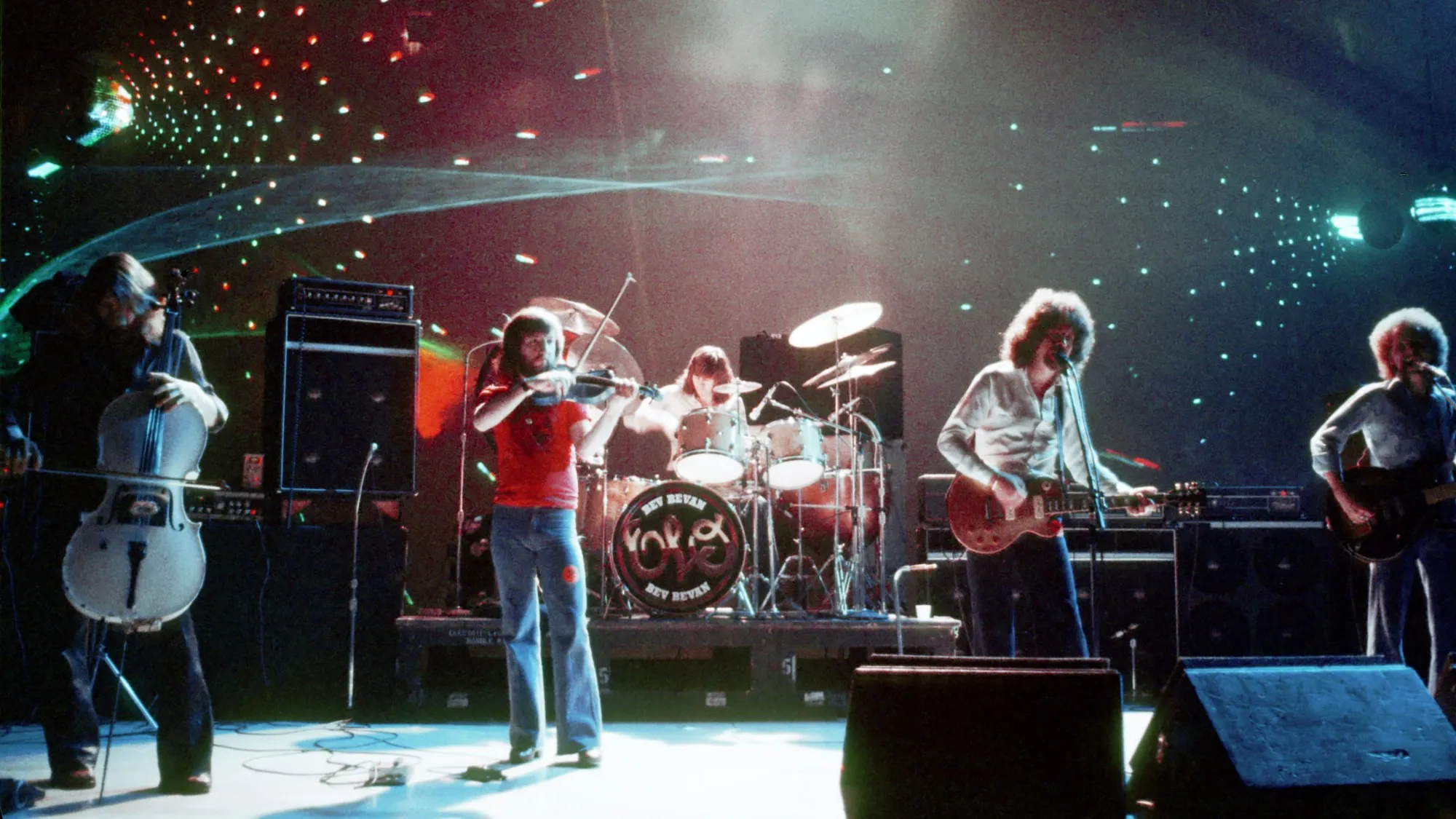
Electric Light Orchestra (ELO), led by the visionary Jeff Lynne, reached a creative and commercial zenith in 1977. While the band is frequently celebrated for "Mr. Blue Sky" or "Evil Woman," the single "Telephone Line" from the album A New World Record remains one of the most sophisticated pop compositions of the decade. Released in May 1977, the song reached No. 7 on the Billboard Hot 100 and No. 8 in the United Kingdom, solidifying ELO’s status as a global powerhouse.
The production of "Telephone Line" is a case study in Lynne’s meticulous attention to detail. To achieve the specific "telephonic" sound in the song’s intro, Lynne did not simply use a filter; he reportedly called a phone number in the United States from the studio in England to record the actual ringing tone of an American telephone. This sound was then recreated on a Moog synthesizer to ensure it was in the correct musical key.
Musically, the song bridges the gap between 1950s doo-wop and futuristic synth-pop. The arrangement features a heavy use of the choir-like "operatic" backing vocals that became an ELO signature, supported by a full string section. Industry analysts of the time noted that the song’s success was due to its "universal relatability," capturing the loneliness of the pre-digital age where a telephone call was the primary lifeline between separated lovers. Despite its platinum status and critical acclaim, "Telephone Line" is often categorized today as a "deep cut" for casual listeners, even though it remains one of the most melodically complex hits of 1977.
Paul Davis and the Record-Breaking Run of I Go Crazy
While ELO brought symphonic grandeur to the charts, Paul Davis provided a masterclass in the emerging soft rock genre with "I Go Crazy." Featured on his album Singer of Songs: Teller of Tales, the track is a quintessential example of the "mellow" pop that defined the late 70s. However, its chart trajectory was anything but ordinary.
"I Go Crazy" is historically significant for its endurance. After its release in mid-1977, the song took nearly half a year to reach its peak of No. 7 on the Billboard Hot 100 in early 1978. It spent a then-record-breaking 40 weeks on the charts, a feat that was rarely seen in an era where singles typically cycled in and out within three months. This longevity was a testament to the song’s resonance with the "Adult Contemporary" demographic, which was becoming an increasingly powerful force in the music industry.
The song’s lyrical content—a poignant narrative of seeing a former lover and realizing the embers of affection still burn—struck a chord during a time when the "divorce culture" of the 1970s was a prominent social theme. Davis, a Mississippi native, infused the track with a soulful delivery that sat comfortably between pop and country-crossover. Though Paul Davis is less of a household name today than contemporaries like James Taylor or Elton John, "I Go Crazy" remains a staple for cover artists, having been reinterpreted by Barry Manilow, Lou Rawls, and Steve Azar. Its absence from modern "best of" lists is a curious omission given its historical chart dominance.
Andrew Gold and the Power Pop Vulnerability of Lonely Boy
Perhaps no song from 1977 captures the specific "power pop" energy of the era better than Andrew Gold’s "Lonely Boy." Released as a single from the album What’s Wrong With This Picture?, the song peaked at No. 7 on the Billboard Hot 100 in June 1977. Gold was already a respected figure in the industry, having served as a multi-instrumentalist and arranger for Linda Ronstadt, but "Lonely Boy" established him as a formidable solo artist.
The track is notable for the jarring contrast between its upbeat, driving piano melody and its deeply somber lyrical narrative. The song tells the story of a child born in 1951 who feels neglected and displaced by the birth of a younger sister in 1953. This exploration of sibling rivalry and childhood emotional trauma was unusually raw for a Top 40 pop hit.
The technical execution of "Lonely Boy" features a standout guitar solo that is frequently cited by musicians for its melodic structure and tone. Furthermore, the song holds a unique place in media history: its music video was the final clip aired on MTV’s inaugural broadcast day on August 1, 1981. Despite this "first day" legacy and its influence on the power pop genre, the song has largely vanished from the cultural zeitgeist, often overshadowed by Gold’s other major hit, "Thank You for Being a Friend" (which gained immortality as the theme to The Golden Girls).
Chronology of the 1977 Pop Chart Evolution
To understand why these songs were so successful—and why they eventually faded—it is necessary to look at the chronological progression of the year:
- Q1 1977: The year begins with the dominance of soft rock. Artists like Mary MacGregor ("Torn Between Two Lovers") and Barbra Streisand ("Evergreen") lead the charts. This environment allowed "Lonely Boy" and "Telephone Line" to find a foothold.
- Q2 1977: The "summer of pop" begins. Andrew Gold’s "Lonely Boy" peaks just as Fleetwood Mac’s "Dreams" hits No. 1. The airwaves are saturated with high-fidelity, melodic rock.
- Q3 1977: The death of Elvis Presley in August creates a brief retrospective shift in the industry, but pop continues to evolve. Paul Davis’s "I Go Crazy" begins its slow, methodical climb up the charts.
- Q4 1977: The release of the Saturday Night Fever film in December fundamentally alters the trajectory of pop music. Disco begins to occupy the majority of Top 10 slots, pushing the "melodic pop" of earlier in the year into the "Gold" and "Oldies" categories prematurely.
Data and Industry Implications
The success of these three tracks highlights several key industry trends of the late 1970s. According to RIAA data from the period, 1977 saw a significant rise in "long-tail" hits. Before the 1970s, a song’s life cycle was brief. However, the expansion of FM radio and the rise of the "album-oriented rock" (AOR) format meant that singles like "I Go Crazy" could stay in rotation for nearly a year.
Furthermore, the "crossover" appeal was at an all-time high. Billboard data from 1977 shows a high degree of overlap between the Hot 100, the Adult Contemporary chart, and even the Country charts. Paul Davis and Andrew Gold both benefited from this "triple-threat" airplay, which maximized their reach across different age and geographic demographics.
Legacy and Modern Re-evaluation
The "earworms" of 1977 represent a bridge between the analog craftsmanship of the early 70s and the digital precision of the 80s. While "Telephone Line," "I Go Crazy," and "Lonely Boy" may not receive the same level of contemporary "nostalgia-bait" coverage as ABBA or the Bee Gees, their influence is undeniable. Modern indie-pop and "yacht rock" revivalists often cite the production techniques of Jeff Lynne and the narrative songwriting of Andrew Gold as foundational influences.
The decline of these songs in modern rotations can be attributed to the "narrow-casting" of classic hits radio, which tends to focus on a limited "A-list" of tracks (e.g., "Stayin’ Alive," "Go Your Own Way"). However, for the serious student of pop history, 1977 remains a treasure trove of melodic innovation. These songs were more than just catchy tunes; they were the result of a brief moment in time where high-budget studio experimentation met a universal desire for relatable, emotionally resonant storytelling. As the industry continues to look back at the 1970s for inspiration, these forgotten bangers stand ready for a well-deserved retrospective appreciation.
