

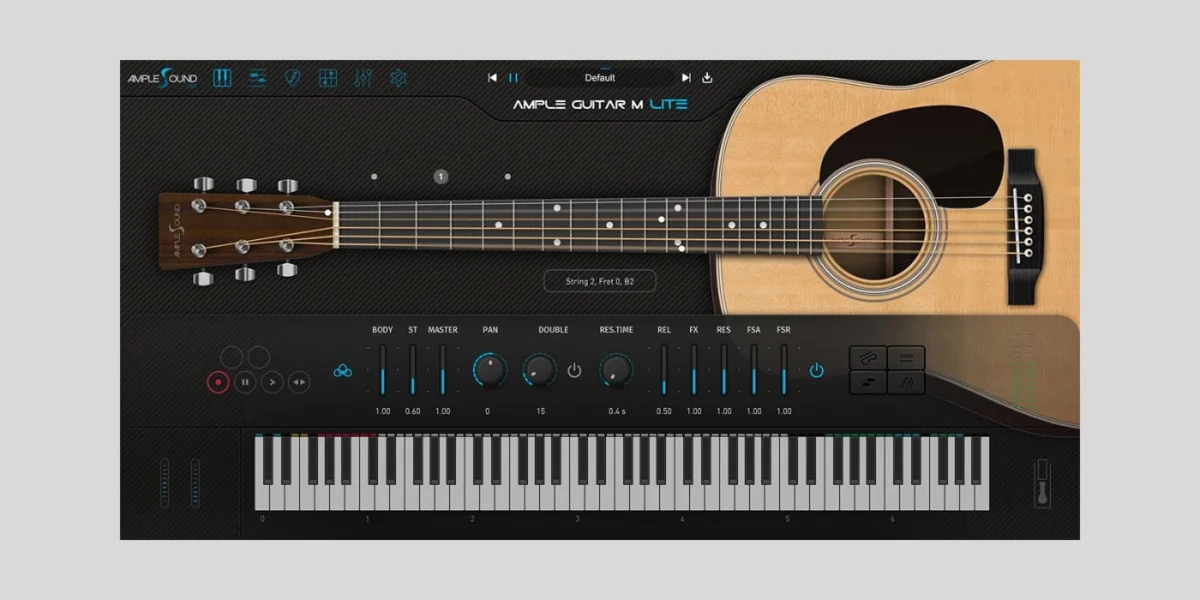
Ample Sound, a prominent developer in the realm of virtual instruments, has officially released Ample Guitar M Lite 4 (AGML4), a significant update to its widely acclaimed free acoustic guitar virtual instrument. This latest iteration, available for both macOS and Windows operating systems, introduces the instrument to the sophisticated Ample Guitar 4 architecture, bringing with it a redesigned interface, advanced workflow tools, and refined sound quality, thereby solidifying its position as a premier choice for music producers seeking high-fidelity acoustic guitar sounds without financial outlay.
The release of Ample Guitar M Lite 4 on July 31, 2026, marks a pivotal moment for digital musicians and sound engineers. For over a decade, Ample Sound’s free Martin D-41 emulation has stood out in a market where quality free acoustic guitar plugins are notably scarce. The previous version, Ample Guitar M Lite II, garnered significant attention upon its release in 2015, establishing a benchmark for what a free virtual instrument could offer in terms of sound realism and playability. This new version not only continues that legacy but significantly elevates it, leveraging years of development and user feedback to deliver a more robust and intuitive experience.
Evolution of a Legacy: The Ample Guitar M Lite Series
Ample Sound has built a strong reputation for crafting virtual instruments that meticulously capture the nuances of real-world instruments. Their philosophy often involves deep sampling techniques and advanced modeling to replicate the organic characteristics of guitars, basses, and other stringed instruments. The "Lite" series has always been a strategic offering, providing a taste of their premium products while delivering immense value as standalone free instruments. The Ample Guitar M Lite series, specifically, focuses on emulating the iconic Martin D-41 acoustic guitar, a instrument revered for its rich tone, clear projection, and balanced sound profile, making it a favorite among singer-songwriters, folk artists, and rock musicians alike.
The journey of the Ample Guitar M Lite series reflects the evolving landscape of digital music production. When Ample Guitar M Lite II was first introduced, it quickly became a go-to resource for bedroom producers, students, and professionals needing a reliable acoustic guitar sound for demos, compositions, or even final mixes where budget constraints were a factor. Its strength lay not just in its sound, but in its surprising feature set for a free product, including various articulations and basic control over performance. The upgrade to version 4 signifies Ample Sound’s commitment to keeping their free offerings competitive and aligned with the latest advancements in virtual instrument technology, ensuring that even their entry-level products remain at the forefront of quality.
Key Enhancements in Ample Guitar M Lite 4
The most significant upgrade in AGML4 is its integration into the new Ample Guitar 4 architecture. This foundational shift brings a host of improvements, primarily focusing on enhanced realism, workflow efficiency, and user interface design. The redesigned 5K interface is a standout feature, offering a visually stunning and highly responsive environment that scales effectively across modern high-resolution displays. This aesthetic and functional overhaul ensures that users experience a seamless and engaging interaction with the instrument.
Central to the AGML4 experience are several powerful workflow tools, all upgraded to their fourth iteration: Riffer 4, Tab Reader 4, and the Strummer. These components, typically found in premium paid instruments, demonstrate Ample Sound’s generosity in their free offering.
-
Riffer 4: This intelligent riff generator and editor has received substantial enhancements. It now seamlessly combines Piano Roll and Guitar Tab views, providing musicians with a familiar yet powerful platform for creating and editing guitar parts. A crucial new feature is the direct display of string information within the editor, simplifying the process of visualizing and manipulating notes across the fretboard. Riffer 4 also supports comprehensive MIDI import and export, allowing for easy integration with existing projects or transfer to other DAWs and software. Furthermore, it empowers users to meticulously edit fingerings, articulations, legato behavior, Continuous Controller (CC) data, and velocity without the traditional reliance on complex keyswitches. This streamlined approach significantly accelerates the composition and arrangement process, making intricate guitar performances more accessible to users of all skill levels.
-
Tab Reader 4: Catering specifically to guitarists and those familiar with tablature, Tab Reader 4 boasts expanded compatibility, now supporting Guitar Pro files from version 3 through version 8. This broad support allows users to import existing tablature arrangements and instantly hear them performed by AGML4, serving as an invaluable tool for learning, practicing, or re-interpreting existing guitar pieces.
-
The Strummer: The Strummer module in AGML4 is designed to create realistic strumming patterns with ease. It features "Select" and "Detect" chord modes, offering flexibility in how chords are recognized and played. Users can define custom chord shapes, expanding the instrument’s harmonic vocabulary. The Strum SEQ (Strum Sequence) feature allows for detailed rhythm programming, enabling the creation of complex and dynamic strumming patterns. Moreover, its MIDI drag-and-drop functionality provides a quick way to export strumming patterns into a DAW, ready for further manipulation or use with other instruments.
Beyond these core tools, AGML4 includes a comprehensive built-in effects section. This suite provides an 8-band EQ for precise tonal shaping, a compressor for dynamic control, a delay effect for spatial enhancement, and a convolution reverb to add realistic room ambiance. The inclusion of these high-quality effects directly within the plugin reduces the need for external processing, offering a more self-contained and efficient workflow.
Deep Dive into the Sound Engine: Martin D-41 Emulation
At its heart, Ample Guitar M Lite 4 is dedicated to bringing the iconic sound of a Martin D-41 acoustic guitar into the digital domain. The Martin D-41 is renowned for its rich, full-bodied tone, shimmering highs, and robust low-end, making it a highly desirable instrument for a wide range of musical genres. Ample Sound’s meticulous sampling process aims to capture these characteristics faithfully.
The free version of AGML4 comes with an 877 MB 16-bit Fingerstyle library. While this is a "lite" version, it still offers a significant amount of detail and playability. The Fingerstyle library focuses on the distinct sound of notes played individually with the fingers, crucial for melodic lines, arpeggios, and intricate fingerpicking patterns. It includes five essential articulations:
- Sustain: The natural decay of a plucked note.
- Hammer-on and Pull-off: Seamless transitions between notes on the same string without re-plucking.
- Legato Slide: Smooth glides from one note to another.
- Palm Mute: A muted, percussive sound achieved by resting the palm on the bridge.
- Pop: A sharp, percussive articulation, often used for rhythmic emphasis.
One key distinction between the free and full versions lies in their sampling methodology. AGML4, in its free iteration, is sampled by pitch. This means that a single sample might be shared across different string positions if they produce the same pitch. While incredibly efficient for a free instrument in terms of disk space and processing power, this approach differs from the full version, which samples every string and fret position individually. The latter method, while resource-intensive, provides an unparalleled level of realism by capturing the subtle timbral variations that occur when the same note is played on different strings or fret positions on a physical guitar. Despite this difference, the quality of the "pitch-sampled" approach in AGML4 remains remarkably high, a testament to Ample Sound’s advanced engine and meticulous sound design.
Understanding the "Lite" Distinction: Free vs. Full Version
To fully appreciate the generosity of Ample Guitar M Lite 4, it’s essential to compare it with its commercial counterpart, the full Ample Guitar M. The differences highlight how Ample Sound has carefully curated the free version to be highly functional and inspiring, while reserving premium features for the paid product.
The full Ample Guitar M is a substantial 7.8 GB, 24-bit library, providing a significantly higher level of detail and dynamic range. In contrast, AGML4 is an 877 MB, 16-bit library. The bit depth difference (16-bit vs. 24-bit) translates to a broader dynamic range and potentially finer audio resolution in the full version.
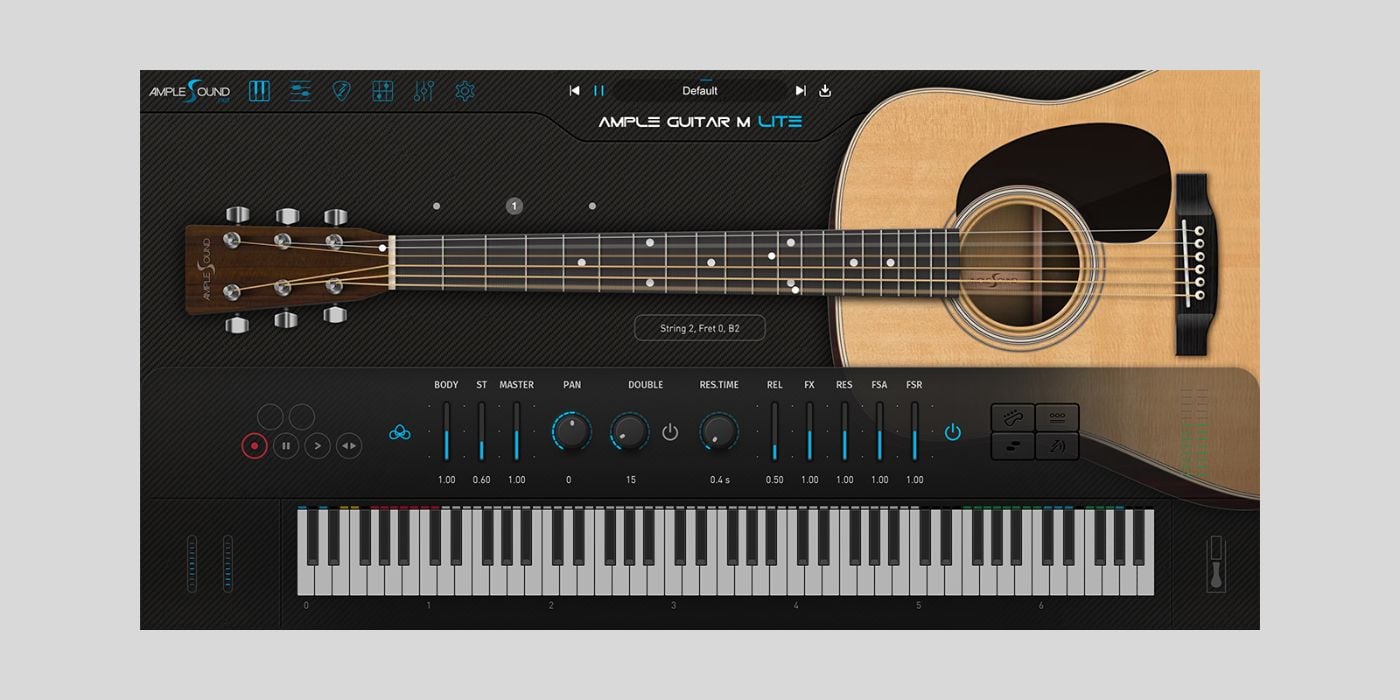
Furthermore, the full version includes three distinct playing libraries: Fingerstyle, Strum, and Pick, offering a comprehensive suite for any guitar performance style. AGML4, on the other hand, is limited to the Fingerstyle library. This focuses its utility but still covers a vast array of musical contexts.
As mentioned, the sampling methodology is a key differentiator. The full Ample Guitar M samples every string and fret position individually, providing an exhaustive capture of the instrument’s timbre across its entire range. This granular approach results in exceptional realism and allows for highly nuanced performances. AGML4’s pitch-based sampling is efficient but inherently offers less variety in timbral textures for identical notes played at different locations.
Finally, the full version boasts a much wider array of articulations, including those exclusive to the paid edition such as Slide In/Out, Natural Harmonic, and Slide Guitar. These additional articulations expand the expressive capabilities of the instrument, allowing for more authentic and varied guitar performances.
Despite these limitations, AGML4 remains a highly versatile and impressive instrument. Its selection of core articulations, combined with the powerful Riffer, Tab Reader, and Strummer modules, provides a solid foundation for crafting compelling acoustic guitar parts. The design philosophy behind AGML4 is clearly to offer a genuinely useful and inspiring tool that can stand on its own, while also serving as an excellent introduction to the expanded capabilities of the full Ample Guitar M.
Accessibility and User Experience
One of the most user-friendly aspects of Ample Guitar M Lite 4 is its straightforward acquisition and activation process. Unlike many other free virtual instruments that require user accounts, email verification, or complex software activation procedures, AGML4 requires none of these. Users can simply download and install the plugin, making it incredibly accessible and reducing any potential barriers to entry. This commitment to ease of use underscores Ample Sound’s dedication to making quality tools available to a broad audience.
In terms of technical compatibility, Ample Guitar M Lite 4 is designed to integrate seamlessly into a wide range of production environments. It supports macOS 10.15 or later and Windows 7 through Windows 11, ensuring broad compatibility with contemporary operating systems. For integration into Digital Audio Workstations (DAWs), it is available in various plugin formats, including VST2, VST3, AU (Audio Units for macOS), and AAX (for Avid Pro Tools). Furthermore, it also functions as a standalone application, allowing users to practice or compose without needing to open a DAW. This versatility makes AGML4 a practical choice for virtually any music producer or musician.
Market Context and Competitive Landscape
The market for virtual instruments is highly competitive, with numerous developers offering both free and commercial products. High-quality acoustic guitar virtual instruments, in particular, often command premium prices due to the complexities involved in accurately sampling and modeling such a nuanced instrument. In this landscape, Ample Guitar M Lite 4 stands out as a beacon of quality in the free category. While there are other free acoustic guitar plugins available, many are either significantly older, lack modern features, or do not offer the same level of sonic fidelity and playability as AGML4.
Ample Sound’s strategic decision to offer such a robust free instrument serves multiple purposes. Firstly, it provides an invaluable resource to aspiring musicians, students, and hobbyists who may not have the budget for expensive virtual instruments. Secondly, it acts as a powerful gateway to their ecosystem of paid products. By experiencing the quality and thoughtful design of AGML4, users are more likely to consider investing in the full versions of Ample Guitar M or other instruments in the Ample Sound catalog. This freemium model has proven highly effective across the software industry, and Ample Sound executes it exceptionally well by delivering genuine value in its free offering.
Developer’s Strategy and Promotional Offers
The release of Ample Guitar M Lite 4 is strategically timed with a significant promotional campaign from Ample Sound. From July 31 through August 31, the company is offering a 25% discount on the full Ample Guitar M and Ample Bass P, another popular virtual instrument in their lineup. Additionally, a special AGM + ABP 2-in-1 bundle is available, providing further savings for those looking to expand their virtual instrument collection. This concurrent promotion intelligently leverages the excitement generated by the free release, encouraging users who are impressed with AGML4 to explore and invest in Ample Sound’s more comprehensive offerings. It’s a clear indication of Ample Sound’s confidence in their products and their understanding of market dynamics.
Implications for Music Producers and Educators
The availability of Ample Guitar M Lite 4 has significant implications across various segments of the music community. For independent music producers and hobbyists, it dramatically lowers the barrier to entry for creating professional-sounding music. A high-quality acoustic guitar is a staple in countless genres, and having access to AGML4 means producers can enrich their compositions without needing to record a live instrument or purchase an expensive virtual alternative. This democratizes access to quality sound tools, empowering more creators to realize their musical visions.
In educational settings, AGML4 can serve as an excellent teaching tool. Music production courses can utilize it to demonstrate concepts of virtual instrument usage, articulation programming, and guitar arrangement without requiring students to purchase licenses. It provides a practical, hands-on experience that can greatly benefit students learning about digital audio workstations and sound design.
Furthermore, for professional composers and sound designers, AGML4 can act as a quick and efficient scratchpad instrument. Its ease of use and immediate accessibility make it ideal for rapidly sketching out ideas or laying down placeholder tracks before committing to more resource-intensive, fully detailed arrangements with the paid version or live recordings.
In conclusion, Ample Sound’s release of Ample Guitar M Lite 4 is more than just an update; it represents a continued commitment to accessible, high-quality virtual instrumentation. By integrating it into the advanced Ample Guitar 4 architecture and enhancing its workflow tools, Ample Sound has once again raised the bar for what a free virtual instrument can achieve. Its robust feature set, excellent sound quality, and user-friendly design solidify its position as an indispensable tool for anyone seeking a realistic and inspiring acoustic guitar for their digital audio productions.
Download: Ample Sound Ample Guitar M Lite 4 (FREE) at amplesound.net/en/pro-pd.asp?id=7
Last Updated on July 31, 2026 by Tomislav Zlatic.
