

The Intersection of Daytime Television and Pop Success: Friends and Lovers
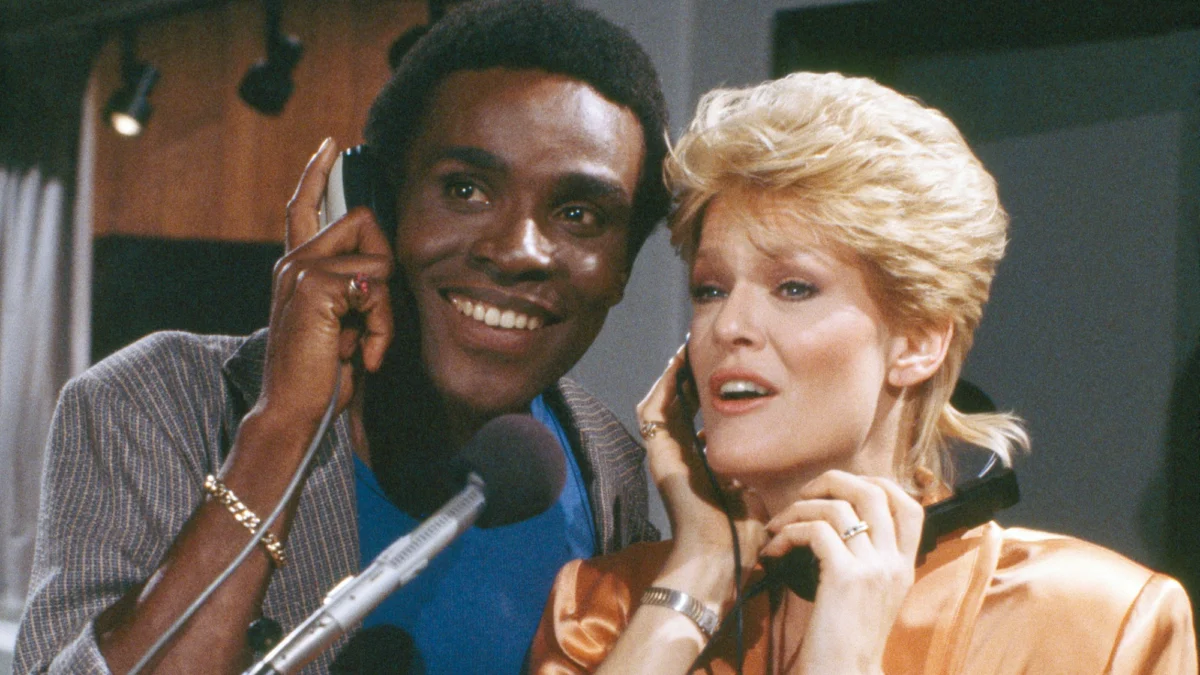
The ascent of "Friends and Lovers" to the upper echelons of the Billboard Hot 100 remains one of the more unique chart stories of the 1980s. Written by Jay Gruska and Paul Gordon, the song was not initially conceived as a radio juggernaut but rather as a narrative tool for the NBC soap opera Days of Our Lives. Gloria Loring, who portrayed Liz Chandler on the long-running serial, performed the song on-screen, creating an immediate emotional tether with a dedicated daytime audience. This synergy between television drama and the recording industry capitalized on a "captive" audience, a strategy that had previously worked for artists like Rick Springfield and Jack Wagner.
The track, a lush ballad featuring a duet with Carl Anderson, peaked at No. 2 on the Billboard Hot 100 in late 1986. Anderson, an accomplished actor and singer best known for his portrayal of Judas Iscariot in the film and stage versions of Jesus Christ Superstar, provided a soulful counterpoint to Loring’s polished delivery. Despite the song’s massive success—it spent 22 weeks on the charts—neither artist saw a follow-up hit of comparable magnitude.
Data from the era suggests that "Friends and Lovers" benefited significantly from the "slow-burn" effect of daytime syndication. Unlike traditional singles that relied on heavy radio rotation or MTV play, Loring’s hit was reinforced daily in millions of households. However, the specialized nature of its success also proved to be its limitation. While the song became a staple of weddings and adult contemporary radio, the lack of a cohesive "pop image" for the duo meant that once the Days of Our Lives storyline concluded, the momentum dissipated. Carl Anderson continued to find success in theater and as a session vocalist, but "Friends and Lovers" remains his singular entry into the pop canon.
The Songwriter’s Transition: Robbie Nevil and the Global Appeal of C’est La Vie
While Gloria Loring’s success was rooted in television, Robbie Nevil’s "C’est La Vie" was the product of a seasoned songwriter stepping into the spotlight. Prior to his 1986 debut, Nevil had established himself as a reliable writer for established acts, including the Pointer Sisters and El DeBarge. This technical proficiency is evident in the construction of "C’est La Vie," a track that blends funk-inflected guitar work with the polished synth-pop production that defined the mid-80s.
Released as the lead single from his eponymous debut album, "C’est La Vie" reached No. 2 on the Billboard Hot 100 and achieved international acclaim, hitting the top ten in the United Kingdom, Canada, and several European markets. The song’s lyrical theme—a fatalistic yet upbeat acceptance of life’s unpredictability—resonated with a global audience. Ironically, Nevil initially intended the song for the legendary funk group Kool & the Gang. When the group declined the track, Nevil recorded it himself, a decision that transformed him from a behind-the-scenes contributor into a global pop star.
Despite the song’s ubiquity, Nevil’s subsequent releases, such as "Dominoes" and "Wot’s It to Ya," failed to maintain the same level of cultural penetration. Industry analysts point to the rapidly changing tastes of the late 80s, where the "blue-eyed soul" aesthetic was being supplanted by the rise of New Jack Swing and hair metal. Nevil, however, executed a successful pivot back to songwriting and production. In the decades following his one-hit wonder status, he became a central figure in the Disney music machine, contributing heavily to the High School Musical franchise and Hannah Montana. His trajectory illustrates that a "one-hit wonder" designation on the charts does not necessarily equate to a lack of industry longevity or influence.
The Madonna Influence and the Dance-Pop Boom: Regina’s Baby Love
The mid-1980s were dominated by the "Madonna effect," a phenomenon where record labels sought to replicate the success of the "Queen of Pop" by signing female artists with similar vocal timbres and dance-oriented production styles. Regina Richards, known professionally as Regina, became the most prominent example of this trend in 1986 with her hit "Baby Love."
Regina was not a newcomer to the music scene; she had previously fronted a New Wave band, Regina Richards and Red Hot, which had a presence in the New York underground circuit. However, it was her collaboration with Stephen Bray that catapulted her to mainstream fame. Bray, a frequent collaborator and co-writer for Madonna (contributing to hits like "Into the Groove" and "Papa Don’t Preach"), brought a specific, high-energy dance sensibility to Regina’s solo debut, Curiosity.
"Baby Love" peaked at No. 10 on the Billboard Hot 100 and No. 1 on the Hot Dance Music/Club Play chart. The song’s success was bolstered by its sonic similarity to Madonna’s contemporary work, leading many casual listeners at the time to mistake the two artists. While "Baby Love" was a certified dance-floor anthem, Regina’s solo career struggled to move beyond the shadow of her more famous contemporary. Her label, Atlantic Records, found it difficult to differentiate her brand once the initial novelty of the single wore off. Regina eventually stepped away from the spotlight, but her hit remains a vital document of the 1986 dance-pop explosion and the specific production techniques of Stephen Bray.
Chronology of 1986: A Year of Sonic Diversity
To understand why these three disparate tracks succeeded in the same year, one must look at the broader musical timeline of 1986. The year began with the continued dominance of Lionel Richie and Whitney Houston, but as the months progressed, the charts became increasingly eclectic.
- January – March 1986: The industry was still processing the impact of "We Are the World" and the Live Aid benefit concerts. Soft rock and polished R&B dominated the airwaves.
- April – June 1986: The rise of "Friends and Lovers" began on daytime television, slowly building a grassroots following that would eventually force radio programmers to take notice.
- July – September 1986: "Baby Love" and "C’est La Vie" entered the rotation. This period saw a surge in dance-pop and the "new funk" sound. It was also the summer that Peter Gabriel’s "Sledgehammer" and Janet Jackson’s Control album redefined music video production.
- October – December 1986: The year concluded with a mix of veteran acts (Bon Jovi’s "You Give Love a Bad Name") and the peak chart positions for Loring and Nevil.
This timeline reveals a market that was highly receptive to "cross-platform" hits. Whether a song came from a soap opera, a seasoned songwriter, or a dance-club veteran, the 1986 audience was less concerned with an artist’s pedigree than with the immediate catchiness and production quality of the single.
Supporting Data and Market Dynamics
The success of these one-hit wonders can be quantified through the Billboard metrics of the time. In 1986, the Hot 100 was calculated using a combination of retail sales and radio airplay.
- Friends and Lovers: Its peak at No. 2 was remarkable for a ballad released on a smaller label (Carrere Records). Its longevity (over five months on the chart) indicates a sustained demand that outlasted many "flash-in-the-pan" dance tracks.
- C’est La Vie: Nevil’s hit was a "triple threat" on the charts, appearing on the Hot 100, the Hot R&B/Hip-Hop Songs, and the Adult Contemporary charts. This broad appeal is rare for a debut artist and explains the song’s enduring presence in 80s-themed media.
- Baby Love: The track’s No. 1 status on the Dance charts was the primary engine for its crossover success. In 1986, the "club-to-radio" pipeline was at its most efficient, with DJs in New York and Chicago acting as the primary gatekeepers for what would eventually become a national hit.
The economic reality for these artists was also influenced by the transition from vinyl to compact discs. 1986 was a year where consumers were beginning to buy "singles" in multiple formats, including the 12-inch extended mix, which was crucial for the success of Robbie Nevil and Regina.
Broader Impact and Musical Implications
The legacy of the 1986 one-hit wonders extends beyond mere nostalgia. These tracks represent the peak of a specific production philosophy where the "hook" was paramount. The use of the Yamaha DX7 synthesizer and the LinnDrum machine across all three tracks created a cohesive "1986 sound" that is instantly recognizable today.
Furthermore, these artists highlight the democratization of fame in the pre-internet era. Gloria Loring’s success proved that television could be a more powerful promotional tool than a traditional tour. Robbie Nevil’s success demonstrated that the line between "songwriter" and "performer" was increasingly porous. Regina’s success showed how a specific production "vibe" could launch a career, even in a crowded marketplace.
In a modern context, these songs have found a second life through digital streaming and sync licensing in film and television. "C’est La Vie" is frequently used to evoke a sense of mid-80s optimism, while "Friends and Lovers" remains a touchstone for the "power ballad" era of daytime television.
Conclusion: The Endurance of the Singular Hit
While none of these artists managed to secure a second Top 10 hit, their contributions to the musical fabric of 1986 are undeniable. The "one-hit wonder" label, often used pejoratively, fails to capture the immense difficulty of reaching the Billboard Top 10 even once. For Loring, Anderson, Nevil, and Regina, their 1986 success was the result of a perfect alignment of production, promotion, and public appetite.
As the music industry continues to evolve into a landscape dominated by viral moments and algorithmic play-listing, the stories of these 1986 hits serve as a reminder of a time when a single song could capture the attention of a nation, regardless of whether the artist ever stepped back into the winner’s circle. They remain "classics" not because of the artists’ subsequent catalogs, but because, for a few months in 1986, they provided the definitive soundtrack to the lives of millions.
