

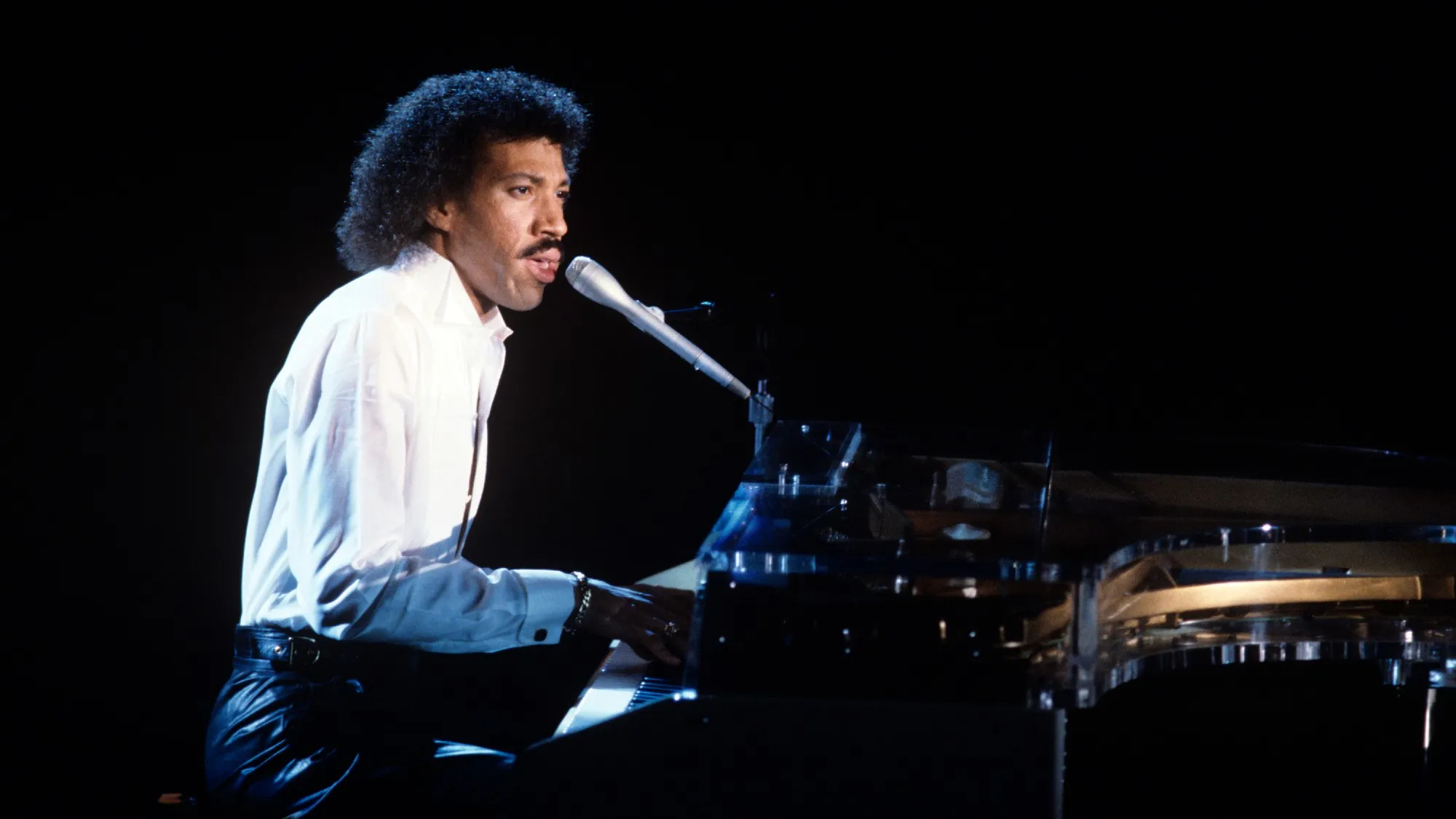
Lionel Richie stands as one of the most significant architects of the modern popular ballad, a songwriter whose work transitioned seamlessly from the funk-infused rhythms of the 1970s to the polished, emotive pop that defined the 1980s. Throughout a career spanning over five decades, Richie has cultivated a reputation for crafting melodies that resonate across generational and cultural boundaries. While his catalog includes uptempo hits and social anthems, it is his mastery of the love song that has secured his place in the pantheon of American music. By examining the production history, chart performance, and creative evolution behind his most enduring romantic compositions—specifically "Truly," "Endless Love," and "Hello"—one can discern the meticulous craftsmanship and the occasional creative friction that birthed some of the most recognizable music in history.
The Evolution of a Songwriter From Tuskegee to the Top of the Charts
Lionel Richie’s journey into the heart of the American songbook began at the Tuskegee Institute in Alabama, where he helped form The Commodores in 1968. Originally a high-energy funk and soul outfit, the group’s trajectory shifted significantly as Richie’s penchant for melodic storytelling became more pronounced. During the mid-to-late 1970s, Richie penned hits such as "Three Times a Lady" and "Still," which signaled a departure from the group’s "Brick House" origins. This shift toward the ballad was not merely a stylistic choice but a commercial masterstroke that expanded the group’s demographic reach.
By the early 1980s, the internal dynamics of The Commodores and Richie’s own burgeoning creative ambitions led to his departure for a solo career. This transition was a pivotal moment in music history, occurring just as the industry was moving toward the synthesizer-heavy, highly produced sound of the 1980s. Richie, however, maintained a focus on the fundamental elements of songwriting: a clear narrative, a relatable emotional core, and a melody that could be hummed by listeners of all ages.
Truly The Definitive Solo Debut and the End of an Era
In 1982, Richie released "Truly," his debut single as a solo artist. The stakes were exceptionally high; transitioning from a successful group to a solo act is a maneuver fraught with risk. However, "Truly" served as a definitive statement of Richie’s individual identity. The song is a masterclass in sincerity, characterized by its sparse arrangement and Richie’s soulful, direct vocal delivery.
The commercial reception was immediate and overwhelming. "Truly" ascended to the number one position on the Billboard Hot 100, the Adult Contemporary chart, and the R&B chart. This "triple crown" of chart success was a rarity and underscored Richie’s broad appeal. Beyond the numbers, the song represented Richie’s personal growth. He has frequently noted that his time with The Commodores was essential in overcoming a natural shyness. Speaking to industry observers and media outlets, Richie has described the band as a "wonderful vehicle" and a brotherhood that forced him into the spotlight, ultimately giving him the confidence to stand alone at the microphone.
The production of "Truly" also marked the beginning of Richie’s long-term collaboration with producer James Anthony Carmichael. Carmichael’s ability to refine Richie’s melodic ideas without stripping away their emotional honesty became a hallmark of the singer’s solo work throughout the 1980s.
Endless Love A Masterclass in Collaborative Tension
Prior to his official solo debut, Richie achieved a monumental success with "Endless Love," a duet with Diana Ross released in 1981. The song was commissioned by director Franco Zeffirelli for the film of the same name, starring Brooke Shields. Originally, Richie was tasked with providing an instrumental piece, but the project evolved into a lyrical composition that Zeffirelli eventually envisioned as a duet between two of Motown’s biggest stars.
The recording of "Endless Love" is a storied chapter in music production history. Richie has recounted the chaotic nature of the session, noting that Ross arrived at the studio with specific demands regarding the vocal parts. Because the song had to be delivered to the film studio the following day, there was no time for extensive rehearsals or re-recording. Richie was forced to adapt his performance on the fly, adjusting his vocal range to accommodate Ross.
Despite—or perhaps because of—this spontaneous energy, the song became a cultural phenomenon. It spent nine weeks at number one on the Billboard Hot 100, becoming the most successful duo of the era and the biggest hit of Diana Ross’s career. From a technical perspective, the song is noted for its soaring bridge and the intricate interplay between the two vocalists, setting a gold standard for the "power ballad" duets that would dominate the 1980s and 1990s.
Hello and the Fine Line Between Sentiment and Sincerity
Perhaps no song in Richie’s catalog is as recognizable or as debated as "Hello," released in 1984 as part of the Can’t Slow Down album. While it is now considered a quintessential love song, Richie himself was initially skeptical of the track. He famously viewed the song as "corny" and was hesitant to finish it, believing it lacked the sophistication of his other work.
The intervention of producer James Anthony Carmichael was crucial. Carmichael recognized the universal appeal of the simple, yearning lyrics and the haunting piano melody. Richie eventually relented, completing the verses and recording a vocal performance that captured a sense of vulnerability and unrequited longing.
"Hello" became a global juggernaut, reaching number one in the United States, the United Kingdom, Australia, and several other countries. Its music video, featuring a blind student and a clay bust of Richie, became a staple of early MTV, further cementing the song’s place in the cultural zeitgeist. The success of "Hello" demonstrated a key aspect of Richie’s songwriting philosophy: the power of simplicity. By leaning into an emotion that others might find too sentimental, Richie tapped into a collective human experience that resonated with millions of listeners.
Analytical Perspective The Richie Formula
The enduring success of Lionel Richie’s love songs can be attributed to several specific musical and lyrical factors:
- Melodic Accessibility: Richie’s melodies are often built on diatonic scales and predictable but satisfying harmonic resolutions. This makes his songs easy to remember and sing along to, a vital component for radio longevity.
- Lyrical Directness: Unlike many of his contemporaries who utilized abstract metaphors or complex wordplay, Richie’s lyrics are conversational. Phrases like "I love you," "Truly," and "Is it me you’re looking for?" are direct emotional appeals that bypass intellectual barriers.
- Vocal Delivery: Richie possesses a warm, mid-range baritone that conveys intimacy. He rarely relies on excessive vocal gymnastics, preferring a steady, soulful delivery that emphasizes the narrative of the song.
- Cross-Genre Appeal: By blending elements of R&B, pop, and even country (as seen in his later work), Richie’s songs found a home on multiple radio formats, ensuring maximum exposure.
Broader Impact and Industry Legacy
Lionel Richie’s influence extends far beyond his own discography. His success in the early 1980s helped define the "superstar" era of Motown, alongside artists like Michael Jackson and Stevie Wonder. He proved that an artist could maintain soul credentials while achieving massive crossover success in the pop market.
In the decades since his peak chart dominance, Richie has transitioned into a respected elder statesman of the music industry. His role as a judge on American Idol has introduced his catalog to a new generation of listeners, while his 2022 induction into the Rock and Roll Hall of Fame served as a formal acknowledgment of his contributions to the American musical landscape.
The data supports his status as a titan of the industry. With over 100 million records sold worldwide, four Grammy Awards, and an Academy Award, Richie’s commercial achievements are matched by few. However, his true legacy lies in the emotional utility of his music. His love songs have become the soundtrack to countless weddings, anniversaries, and personal milestones, proving that Richie’s ability to capture the complexities of the human heart is, as his hit suggests, truly endless.
As the music industry continues to evolve through the digital age, the foundational principles of Richie’s songwriting—clarity, emotion, and melody—remain a blueprint for aspiring artists. He remains a singular figure who understood that sometimes, the most "corny" sentiments are the ones that the world needs to hear the most.
