

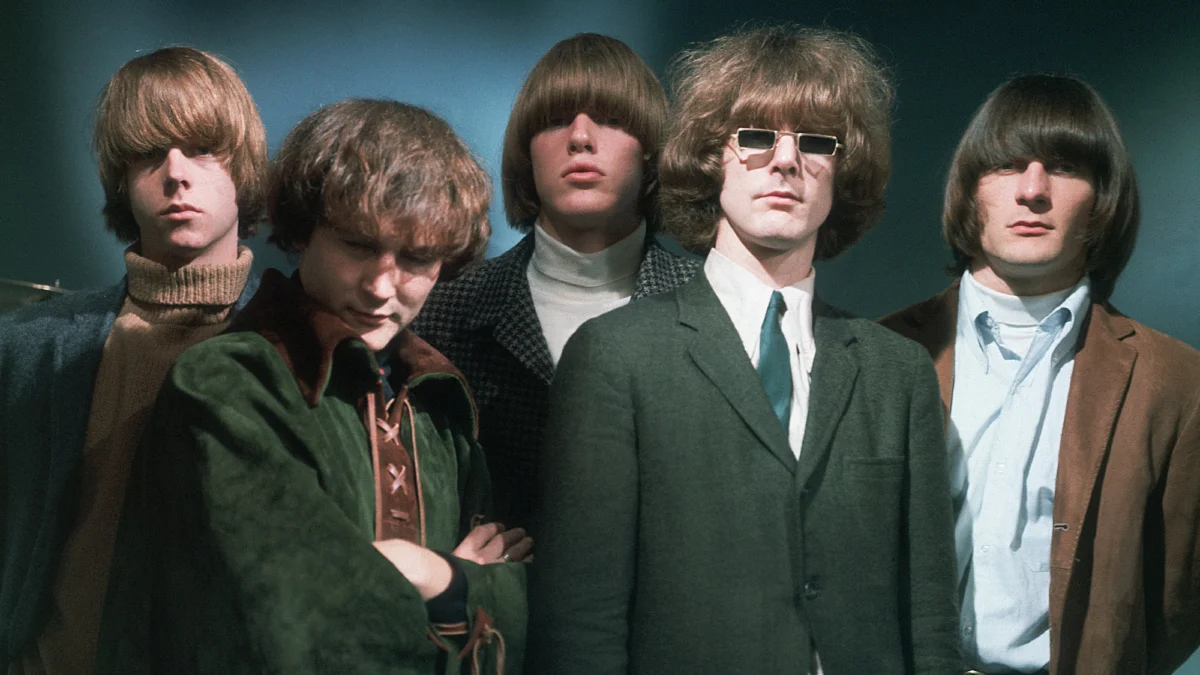
The Byrds occupy a singular position in the pantheon of American rock music, often credited with the invention of folk-rock and the pioneering of country-rock. Formed in Los Angeles in 1964, the band—originally consisting of Roger (then Jim) McGuinn, Gene Clark, David Crosby, Chris Hillman, and Michael Clarke—bridged the gap between the lyrical depth of Bob Dylan and the melodic accessibility of The Beatles. While the group secured legendary status with chart-topping hits like "Mr. Tambourine Man" and "Turn! Turn! Turn! (To Everything There Is a Season)," a significant portion of their discography consists of high-quality singles that, despite their artistic merit, failed to achieve the same level of commercial dominance. Between 1965 and 1967, The Byrds released a series of tracks that challenged the conventions of the Top 40 format, integrating social commentary, science fiction, and avant-garde instrumentation. An analysis of "All I Really Want To Do," "Mr. Spaceman," and "So You Want To Be A Rock ‘N’ Roll Star" reveals a band that was frequently ahead of its time, often sacrificing immediate radio success for long-term cultural impact.
The Folk-Rock Foundation and the Dylan Connection
The Byrds’ relationship with the works of Bob Dylan was foundational to their early success. Their debut single, a cover of Dylan’s "Mr. Tambourine Man," reached No. 1 on both the U.S. Billboard Hot 100 and the UK Singles Chart in mid-1965. This success created high expectations for their follow-up material. The band’s third single, "All I Really Want To Do," was another Dylan composition, originally featured on his 1964 album Another Side of Bob Dylan. Released by The Byrds in June 1965, the track was placed strategically as the opening song on the second side of their debut LP.
Despite its pedigree and the band’s burgeoning popularity, "All I Really Want To Do" struggled to climb the charts in the United States. While it was a significant hit in the United Kingdom, peaking at No. 4, it stalled at No. 40 on the Billboard Hot 100. The commercial performance of the song was hampered by a "chart battle" with Cher, who released a competing version of the same song almost simultaneously. Cher’s version, produced by Sonny Bono, featured a more traditional pop arrangement and ultimately outperformed The Byrds’ version in the U.S., reaching No. 15.
The Byrds’ rendition of "All I Really Want To Do" was notable for its intricate vocal harmonies and McGuinn’s signature 12-string Rickenbacker guitar jangle. Lyrically, the song moved away from the protest-heavy themes of early 1960s folk, opting instead for a playful, egalitarian approach to a relationship. The lyrics—"No, I ain’t lookin’ to fight with you / Frighten you or uptighten you / Drag you down or drain you down / Chain you down or bring you down"—offered a refreshing departure from the possessive tropes common in mid-60s pop music. The failure of this track to reach the Top 10 signaled a shift in the band’s trajectory, as they began to move away from being viewed primarily as a "Dylan cover band" toward becoming an experimental force in their own right.
Scientific Inquiry and the Country-Rock Transition in Mr. Spaceman
By 1966, The Byrds were undergoing significant internal and stylistic changes. Gene Clark, the band’s primary songwriter during their first two albums, departed in early 1966 due to a fear of flying and internal tensions. This left Jim McGuinn as the central figure in the band’s creative direction. The third album, Fifth Dimension, reflected this shift, incorporating elements of raga rock and psychedelic experimentation. One of the standout tracks from this era was "Mr. Spaceman," a song written solely by McGuinn.
Released in September 1966, "Mr. Spaceman" is often cited by music historians as one of the earliest examples of country-rock. While the lyrics dealt with the contemporary fascination with Unidentified Flying Objects (UFOs) and extraterrestrial life, the musical arrangement featured a distinct country lilt, characterized by a steady 4/4 beat and melodic guitar lines that predated the band’s full-scale immersion into the genre on the 1968 album Sweetheart of the Rodeo.
"Mr. Spaceman" reached No. 36 on the Billboard Hot 100, a respectable but underwhelming performance for a band that had been at the top of the charts just a year prior. McGuinn’s inspiration for the song was rooted in his interest in aviation and technology; he famously stated that he hoped the song might be broadcast into space and intercepted by extraterrestrials. The whimsical lyrics—"Hey Mr. Spaceman, won’t you please take me along / I won’t do anything wrong / Hey Mr. Spaceman, won’t you please take me along / For a ride"—captured the Cold War era’s obsession with the Space Race while maintaining a lighthearted, folk-inflected tone. The song’s modest chart performance indicated that the mainstream audience was perhaps not yet ready for the fusion of science fiction themes with traditional American roots music.
Industry Satire and the Evolution of Sound in So You Want To Be A Rock ‘N’ Roll Star
As the "Summer of Love" approached in 1967, The Byrds released "So You Want To Be A Rock ‘N’ Roll Star," a scathing critique of the music industry. Written by Jim McGuinn and Chris Hillman, the song appeared on the album Younger Than Yesterday. The track was a direct response to the manufactured nature of the music business, specifically the rapid rise of The Monkees, who had been cast for a television show rather than forming organically as a band.
Musically, the song was groundbreaking. It featured a driving bassline from Hillman and a propulsive rhythm that leaned closer to hard rock than the band’s previous work. Most notably, the track included a trumpet solo by South African jazz musician Hugh Masekela, marking one of the first times a rock band incorporated jazz-inflected brass into a hit single. The song also utilized the sound of screaming fans—recorded at a Byrds concert in Bournemouth—to ironically highlight the chaotic nature of fame.
The lyrics provided a cynical "how-to" guide for aspiring musicians: "Then it’s time to go downtown / Where the agent man won’t let you down / Sell your soul to the company / Who are waiting there to sell plasticware." Despite its high energy and innovative production, the single peaked at No. 29 on the Billboard Hot 100. Its legacy, however, far outstripped its initial chart position. The song became an anthem for future generations of musicians who felt alienated by the commercial machinery of the industry. It has since been covered by a wide array of artists, including Tom Petty and the Heartbreakers, Patti Smith, and Black Oak Arkansas, cementing its status as a rock standard.
Chronological Development of The Byrds’ Mid-60s Singles
To understand the commercial context of these songs, it is necessary to examine the timeline of The Byrds’ releases during their most influential period:
- April 1965: Release of "Mr. Tambourine Man." The song reaches No. 1, establishing the folk-rock genre.
- June 1965: Release of "All I Really Want To Do." The single reaches No. 40 in the U.S., overshadowed by Cher’s cover.
- October 1965: Release of "Turn! Turn! Turn! (To Everything There Is a Season)." The song reaches No. 1, becoming the band’s second and final chart-topper.
- March 1966: Release of "Eight Miles High." Despite its influence on psychedelic rock, it reaches only No. 14, partly due to radio bans over alleged drug references.
- September 1966: Release of "Mr. Spaceman." It peaks at No. 36, introducing country-rock elements to the mainstream.
- January 1967: Release of "So You Want To Be A Rock ‘N’ Roll Star." It reaches No. 29, offering a satirical take on the industry.
Data and Commercial Impact Analysis
The discrepancy between The Byrds’ critical acclaim and their mid-60s chart performance can be attributed to several factors. Data from the era suggests that the Top 40 radio landscape was becoming increasingly crowded with British Invasion acts, Motown artists, and emerging psychedelic groups. While "Mr. Tambourine Man" sold over one million copies, the singles that followed saw a steady decline in immediate sales, even as the band’s albums continued to sell well to a dedicated "counter-culture" audience.
For instance, the Fifth Dimension album (1966) reached No. 24 on the Billboard 200, and Younger Than Yesterday (1967) reached No. 24 as well. This indicates that while The Byrds were losing their grip on the "singles" market—which was increasingly driven by younger teenagers—they were successfully transitioning into an "album-oriented" band. This shift was a precursor to the FM radio revolution of the late 60s and early 70s, where artistic experimentation was valued over three-minute pop hooks.
Broader Implications and Cultural Legacy
The failure of these three songs to reach the upper echelons of the charts did not diminish their influence; rather, it highlighted the band’s role as innovators who frequently outpaced the tastes of the general public. "All I Really Want To Do" helped define the aesthetic of 1960s folk-rock, proving that Dylan’s complex lyricism could be adapted for a wider audience. "Mr. Spaceman" broke the barriers between Nashville and Los Angeles, paving the way for the country-rock movement that would eventually dominate the 1970s through bands like the Eagles and Poco. "So You Want To Be A Rock ‘N’ Roll Star" provided a blueprint for the "meta" commentary that would become common in punk and New Wave music.
The Byrds’ trajectory from 1965 to 1967 serves as a case study in the tension between commercial viability and artistic evolution. By refusing to replicate the formula of their initial hits, the band ensured their longevity in musical history, even if they sacrificed contemporary chart positions. Today, these three tracks are regarded not as "flops," but as essential components of a discography that redefined the boundaries of American popular music. Their enduring relevance in the modern era, evidenced by continued airplay and frequent covers, confirms that the true value of a song is rarely measured by its peak position on a weekly chart.
