

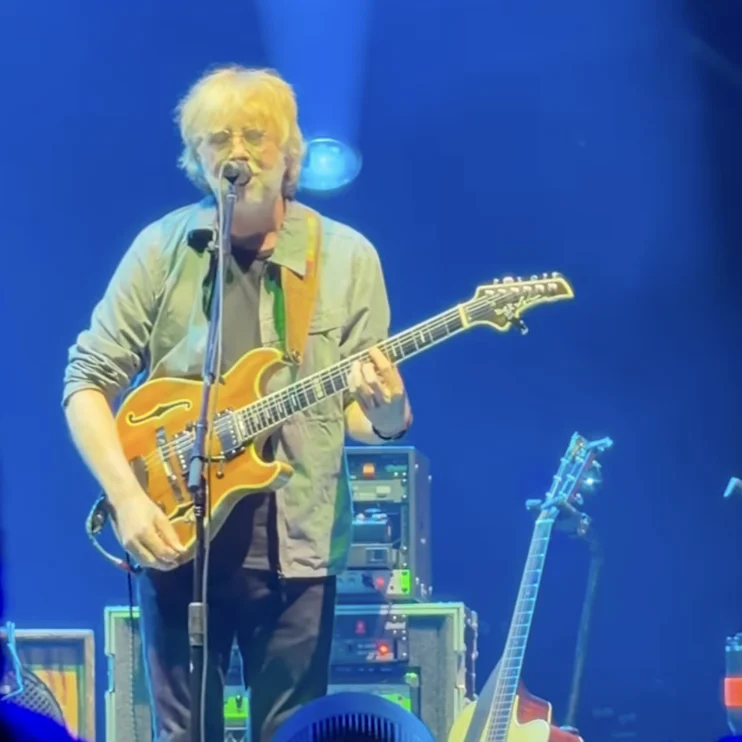
Boston, MA – The legendary jam band Phish etched a new chapter into their storied history on Friday, July 31, 2026, at Boston’s iconic Fenway Park, delivering a performance that broke their own record for the longest "bustout" in the band’s extensive career. The moment arrived with the unexpected unveiling of XTC’s "Melt The Guns," a deep cut from the British new wave pioneers’ 1982 album English Settlement, which had not graced a Phish setlist since April 29, 1987 – a staggering gap of 39 years and three months. This monumental return shattered a record Phish had set just the previous week, underscoring a year already marked by significant musical exploration and a whimsical "Salute to Dairy" to ring in 2026.
The performance of "Melt The Guns" at Fenway Park was not merely a brief nod to the past; Phish delivered a sprawling, improvisational rendition that stretched for approximately 15 minutes, featuring guitarist Trey Anastasio augmenting the band’s sonic tapestry with a segment of percussion in the middle. This extended and dynamic interpretation transformed the original’s tightly wound, politically charged narrative into a vast canvas for Phish’s signature improvisational prowess, delighting a capacity crowd and sending ripples of excitement throughout the global Phish fan community.
The Unveiling of "Melt The Guns": A Nearly Four-Decade Wait
The significance of the "Melt The Guns" bustout cannot be overstated within the unique lexicon of Phish fandom. A "bustout" refers to the reappearance of a song in a band’s setlist after a considerable absence, often eliciting fervent reactions from long-time followers who meticulously track every performance. The nearly four-decade hiatus for "Melt The Guns" represents an unprecedented span, eclipsing the previous record set just days prior.
XTC’s "Melt The Guns" hails from English Settlement, an album widely regarded as a critical high point for the Swindon-based band, showcasing their blend of intricate songwriting, melodic sophistication, and often sardonic social commentary. The track itself is a poignant anti-war anthem, lyrically exploring themes of disarmament and the futility of conflict with a characteristic blend of earnestness and art-rock abstraction. For Phish, known for their eclectic tastes in covers ranging from Talking Heads to Led Zeppelin, the selection of an XTC deep cut speaks volumes about their musical connoisseurship and willingness to delve into less obvious corners of popular music history. The band’s interpretation, stretching the song’s original structure into a 15-minute journey, highlights their ability to not just replicate but to reimagine and personalize borrowed material, making it distinctly their own through collective improvisation.
The last recorded performance of "Melt The Guns" by Phish dates back to a show on April 29, 1987, a period when the band was still in its nascent stages, primarily performing in small clubs and college venues across the Northeast. At that time, Phish’s repertoire was still forming, and covers played a more prominent role in their sets as they honed their craft and developed their original material. The return of such a deeply buried track from this foundational era provides a fascinating glimpse into the band’s continuity and their playful acknowledgement of their own extensive history.
Anatomy of a Bustout: The Fan Phenomenon
The culture surrounding Phish’s setlists and "bustouts" is a defining characteristic of their fan base. Unlike many acts that adhere to a fixed setlist for an entire tour, Phish is renowned for crafting unique setlists for nearly every performance, often never playing the same song twice in a row, and frequently digging deep into their vast catalog of over 300 original songs and countless covers. This unpredictability fuels a fervent online community dedicated to tracking every song played, every gap between performances, and predicting potential bustouts.
When a song like "Melt The Guns" emerges after decades, it transcends mere novelty; it becomes a shared experience of collective surprise and joy. Social media platforms, fan forums, and live stream chats exploded with reactions in real-time, as attendees and remote viewers alike grasped the historical significance of the moment. The meticulous record-keeping by fans, often through dedicated websites and databases, means that such records are immediately verified and celebrated, reinforcing the unique bond between the band and its audience. The thrill of witnessing such a rare event live is a powerful draw, encouraging fans to travel extensively and attend multiple shows in the hopes of catching a truly singular moment.
The Precedent: "Cold As Ice" at Madison Square Garden
The Fenway Park record-breaker arrived hot on the heels of another significant bustout. Just the week prior, at New York City’s venerable Madison Square Garden, Phish surprised audiences with a rendition of Foreigner’s classic rock hit "Cold As Ice." That performance, following a gap of 1,469 shows, had itself set a new record for the band’s longest bustout, only to be eclipsed seven days later.
Foreigner’s "Cold As Ice," released in 1977, is a quintessential arena rock anthem, known for its powerful vocals and straightforward rock arrangement. The decision to cover such a mainstream, universally recognized track stands in stark contrast to the more esoteric XTC selection. This juxtaposition highlights Phish’s broad musical palette and their ability to playfully subvert expectations. While "Cold As Ice" might be a more familiar tune to a wider audience, its rarity in Phish’s live performances made its return at Madison Square Garden equally impactful, albeit for a shorter duration as the reigning champion of bustouts. Madison Square Garden, often referred to by fans as "The World’s Most Famous Arena," holds a special place in Phish lore, having hosted numerous multi-night runs and iconic New Year’s Eve performances over the decades. The choice of such a hallowed venue for a record-breaking moment adds another layer of significance to the "Cold As Ice" bustout.
Phish’s 2026 Trajectory: From Dairy Salute to Record Books
The record-breaking events of July 2026 are not isolated incidents but rather culminations within a year that began with characteristic Phish flair. The band rang in 2026 with an elaborate New Year’s Eve celebration featuring a "Salute to Dairy." These multi-set New Year’s Eve shows are renowned for their theatricality, often incorporating intricate stage props, choreographed performances, and conceptual themes that are both whimsical and grand. The "Salute to Dairy" likely involved visual elements and perhaps even musical arrangements referencing the theme, setting a tone of playful creativity and high-concept performance for the year ahead.
This commitment to unique experiences, whether through elaborate stage productions or unprecedented setlist choices, underscores Phish’s enduring appeal. Their ongoing summer tour of 2026 has been closely watched by fans, not just for the musical performances themselves, but for these moments of historical significance and unexpected spontaneity. The successive record-breaking bustouts suggest a band deeply engaged with its own history and actively seeking new ways to surprise and delight its audience, ensuring that no two shows, and indeed no two years, are ever quite the same.
Musical Exploration and Performance Nuance
The extended 15-minute rendition of "Melt The Guns" at Fenway Park offers a prime example of Phish’s unique approach to live music. The band, comprising Trey Anastasio (guitar, vocals), Mike Gordon (bass, vocals), Jon Fishman (drums, vocals), and Page McConnell (keyboards, vocals), is celebrated for its virtuosic musicianship and deep improvisational chemistry. When covering a song, Phish rarely delivers a note-for-note reproduction. Instead, they often use the original structure as a launching pad for extensive instrumental improvisation, known as "jams."
The inclusion of Trey Anastasio on percussion during the "Melt The Guns" jam is particularly noteworthy. While Anastasio is primarily known for his distinctive guitar work, he occasionally steps away from his primary instrument to add texture with other percussive elements, a move that signals a deeper exploration of the song’s rhythmic possibilities and often opens new avenues for the band’s collective improvisation. This kind of instrumental swapping and adventurous arrangement is a hallmark of Phish’s live performances, demonstrating their commitment to musical spontaneity and their ability to continually evolve their sound, even within the confines of a cover song. The transformation of a concise new wave track into a sprawling, multi-faceted jam speaks volumes about their creative process and their dedication to pushing musical boundaries.
Fenway Park and Madison Square Garden: Iconic Stages
The choice of venues for these record-breaking events further amplifies their significance. Fenway Park, home to the Boston Red Sox, is one of the oldest and most revered baseball stadiums in the United States. Beyond sports, it has become a prominent concert venue, hosting some of the biggest names in music. Its rich history and distinctive architecture provide a unique backdrop for live performances, imbuing concerts with a sense of tradition and grandeur. For Phish, playing Fenway Park represents performing on one of America’s most iconic stages, a testament to their enduring popularity and their status as a major touring act.
Madison Square Garden, as mentioned, is another landmark venue, synonymous with legendary sporting events and concerts. Phish has a particularly deep connection with MSG, having played dozens of shows there, including numerous multi-night runs and their famous New Year’s Eve residencies. These venues, with their massive capacities and storied histories, provide the perfect setting for moments that transcend typical concert experiences and become indelible parts of music history. The fact that both record-breaking bustouts occurred at such iconic locations only adds to their legend.
The Enduring Appeal of Phish
With a career spanning over four decades, Phish has cultivated a fiercely loyal global fanbase. Their success can be attributed to several factors: their unparalleled improvisational skill, their vast and ever-evolving catalog, their commitment to unique live experiences, and the strong community fostered among their fans. The band’s willingness to constantly reinvent their live show, whether through setlist surprises, elaborate stage production, or deep musical exploration, ensures that their audience remains engaged and excited.
These recent record-breaking bustouts are not just historical footnotes; they are reaffirmations of the band’s core ethos. They demonstrate Phish’s dedication to keeping their music fresh, unpredictable, and exciting, not just for their fans, but seemingly for themselves as well. This sustained creative energy is a key reason for their longevity and their continued relevance in the contemporary music landscape.
Broader Implications for Live Music
The phenomenon surrounding Phish’s bustouts and their dedicated fan culture carries broader implications for the live music industry. In an era dominated by digital streaming and curated playlists, the unique, unrepeatable experience of a live concert, especially one with elements of spontaneity and historical significance, holds immense value. Phish’s model demonstrates that a band can sustain a vibrant career by prioritizing the live experience, fostering deep fan engagement, and consistently delivering moments that transcend mere entertainment.
These events also highlight the power of fan communities in shaping the narrative and experience of live music. The collective memory and meticulous documentation by fans transform individual performances into shared historical milestones. This active participation from the audience creates a dynamic feedback loop that influences the band’s choices and reinforces the unique cultural ecosystem surrounding Phish.
Amidst the celebration and analysis of this historic evening, some within the community noted the absence of long-time fan or commentator Jim E. Brown, adding a poignant, if personal, footnote to the otherwise exhilarating proceedings. The sentiment underscores the deep, almost familial connection many fans feel to the band and its journey.
As Phish continues its 2026 tour, the question now becomes: what other surprises lie in store? Having shattered their own records twice in as many weeks, the precedent has been set for a year defined by unprecedented musical adventure and a continued commitment to the unpredictable magic that has defined their illustrious career. The "Melt The Guns" bustout at Fenway Park will undoubtedly be remembered as a landmark moment, cementing Phish’s legacy as true innovators in the realm of live performance and reminding everyone that in the world of Phish, anything is possible.
