

The year 1965 stands as a monumental pivot point in the history of popular music, representing a bridge between the polished early-sixties pop and the experimental, socially conscious era that would follow. It was a year characterized by the intensification of the British Invasion, the peak of the Motown Sound, and a burgeoning folk-rock movement that began to weave personal and political narratives into the mainstream consciousness. As the post-World War II "Baby Boomer" generation entered their peak adolescent years, the music industry responded with a level of creative output and commercial sophistication that remains a benchmark for excellence. To understand the impact of 1965 is to examine the specific hits that dominated the airwaves, reflecting a society in the midst of rapid cultural and technological transformation.
The Peak of the Motown Sound: The Supremes and "Stop! In The Name Of Love"
In early 1965, the Motown Record Corporation, under the leadership of Berry Gordy Jr., was no longer just a regional success; it was a global powerhouse. The release of "Stop! In The Name Of Love" by The Supremes in February 1965 marked a definitive moment in the "Motown Sound." Written and produced by the legendary team of Holland–Dozier–Holland, the track was recorded in January of that year and quickly ascended the charts, reaching the number one spot on the Billboard Hot 100 on March 27, 1965.
The song’s success was driven by its distinctive production, featuring the "Funk Brothers" house band and the soaring lead vocals of Diana Ross, supported by Mary Wilson and Florence Ballard. Beyond the melody, the song’s cultural footprint was expanded by the group’s iconic choreography—the outstretched hand and the palm-forward gesture—which became a visual shorthand for the group’s elegance and authority.
From a technical standpoint, "Stop! In The Name Of Love" utilized a sophisticated arrangement of Hammond organ and vibraphone, which helped it stand out on AM radio. The track stayed at the top of the charts for two weeks and earned a Grammy nomination for Best Contemporary Rock & Roll Group Vocal Performance. For African American artists in 1965, this level of crossover success was vital. It demonstrated that Motown could compete with and often surpass the British acts that were otherwise dominating the American market. The song’s international performance was equally impressive, reaching the top 10 in the United Kingdom, Canada, and several European territories.
The Rise of Folk-Rock and the Romantic Duet: Sonny & Cher’s "I Got You Babe"
By the summer of 1965, the musical landscape was shifting toward a more relaxed, folk-influenced sound. This was epitomized by Sonny & Cher’s "I Got You Babe," released in July 1965. Written by Sonny Bono, the song was intended to be a modern-day anthem for the burgeoning youth counterculture, emphasizing loyalty and companionship in a world that often misunderstood the younger generation.
Recorded at Gold Star Studios in Hollywood, the track featured the "Wrecking Crew," the elite group of session musicians who defined the California sound. The arrangement was notable for its use of the oboe and the glockenspiel, instruments rarely heard in rock and roll at the time. This gave the song a "baroque pop" feel that resonated with a wide demographic.
The song reached number one on the Billboard Hot 100 in August 1965 and held the position for three weeks. It also topped the charts in the United Kingdom and Canada. Critics of the era noted that the song successfully bridged the gap between the traditional pop ballad and the emerging hippie aesthetic. While the lyrics were simple, the production was complex, reflecting a shift in how pop records were constructed. The success of "I Got You Babe" propelled Sonny & Cher into international stardom, paving the way for their subsequent television career and Cher’s long-standing solo dominance.
The Beatles and the Evolution of Songwriting: "Help!"
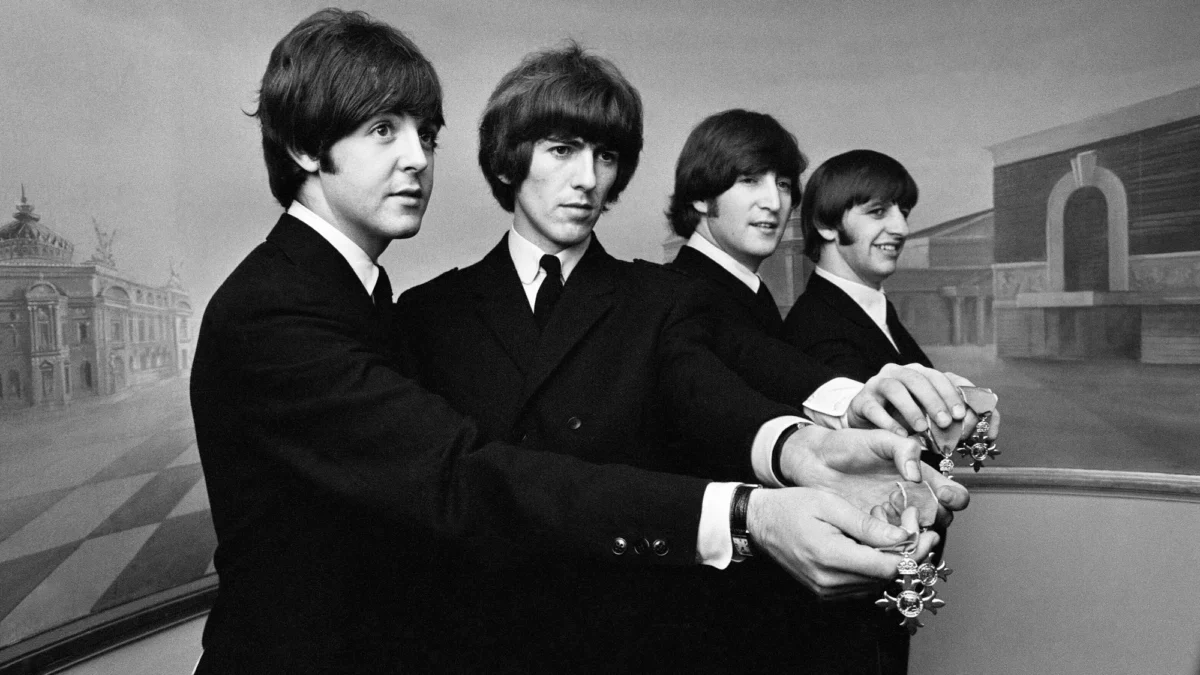
No analysis of 1965 is complete without addressing the continued dominance of The Beatles. By 1965, the band was moving away from the simplistic "boy-meets-girl" themes of their early work and began experimenting with more introspective lyrics. The title track of their second feature film, "Help!", released in July 1965, is a prime example of this evolution.
While the song is an upbeat, high-tempo pop-rock track, its lyrical content was deeply personal. John Lennon later revealed in interviews that the song was a literal "cry for help" as he struggled with the pressures of global fame and the "Fat Elvis" period of his life. This vulnerability was a departure from the bravado usually found in mid-sixties pop.
The song was a commercial juggernaut, reaching number one in the United States, United Kingdom, Australia, and Canada. It spent three weeks at the top of the Billboard Hot 100 in September 1965. Musically, the track is celebrated for its descending lead guitar riffs and its complex vocal counterpoints, which showcased the band’s maturing vocal arrangements. The recording sessions for the Help! album also saw the band beginning to utilize more tracks on their recording equipment, allowing for more layers and a denser sound. This period of The Beatles’ career is often viewed as the precursor to their experimental masterpiece, Rubber Soul, which would be released later that same year.
The Spiritual Crossover: Elvis Presley and "Crying In The Chapel"
While the British Invasion and Motown were defining the "new" sound of 1965, the "King of Rock and Roll," Elvis Presley, proved his enduring relevance with a surprising hit. "Crying In The Chapel," originally recorded by Artie Glenn and covered by various artists, was recorded by Presley in 1960 during the sessions for his gospel album His Hand in Mine. However, the track remained unreleased for five years.
RCA Records eventually released the song in April 1965, and it became a massive success, reaching number three on the Billboard Hot 100 and number one in the United Kingdom. Its success in 1965 was significant because it occurred during a period when Presley was primarily focused on making formulaic movie musicals. The song’s popularity demonstrated that there was still a massive audience for Presley’s more sincere, spiritual recordings.
"Crying In The Chapel" served as a reminder of the deep roots of American music. At a time when the "mod" culture was taking over London and folk-rock was rising in California, a simple gospel-inflected ballad could still dominate the airwaves. This track eventually led to the 1967 release of Presley’s second gospel album, How Great Thou Art, which earned him his first Grammy Award.
Chronology of Major Musical Events in 1965
To provide context for these hits, it is essential to look at the timeline of 1965:
- January-March: Motown establishes its dominance with hits from The Supremes and The Temptations ("My Girl"). The Beatles begin filming Help! in the Bahamas.
- April-June: "Crying In The Chapel" marks Elvis Presley’s return to the top tier of the charts. The Rolling Stones record "(I Can’t Get No) Satisfaction" in May, which would become the definitive rock anthem of the year.
- July-September: "I Got You Babe" and "Help!" battle for the top of the charts. Bob Dylan performs his controversial electric set at the Newport Folk Festival, changing the trajectory of rock music.
- October-December: The Beatles release Rubber Soul, signaling a shift toward psychedelic and more complex musical structures. The year ends with the industry seeing record-breaking sales, largely driven by the teenage demographic.
Supporting Data: The 1965 Market Expansion
The music industry in 1965 was in a state of unprecedented growth. According to historical RIAA (Recording Industry Association of America) data, total industry sales in the United States surpassed $600 million for the first time in 1965. This growth was fueled by two factors: the popularity of the 45 RPM single among teenagers and the increasing sales of 33⅓ RPM Long Play (LP) albums as artists began to treat albums as cohesive artistic statements rather than just collections of singles.
Radio also played a crucial role. In 1965, AM radio remained the primary medium for music discovery, but the groundwork for FM radio’s later dominance was being laid. The "Top 40" format reached its zenith this year, with stations like WABC in New York and KHJ in Los Angeles exerting immense power over what became a hit.
Broader Impact and Implications
The hits of 1965 did more than just provide entertainment; they mirrored the societal shifts of the decade. The success of The Supremes occurred against the backdrop of the Civil Rights Movement, providing a soundtrack of sophistication and excellence for Black Americans. The introspection of The Beatles’ "Help!" signaled a move toward the "me generation" and the exploration of mental health and personal identity. Sonny & Cher’s "I Got You Babe" provided a non-threatening entry point for mainstream audiences into the burgeoning hippie culture.
Furthermore, 1965 marked the end of the "producer era" (typified by Phil Spector’s Wall of Sound) and the beginning of the "artist-as-creator" era. Bands were increasingly writing their own material and taking control of the studio process. This shift would lead directly to the experimentalism of 1966 and the "Summer of Love" in 1967.
In conclusion, the popular music of 1965 was characterized by a rare balance of commercial appeal and artistic growth. The hits of The Supremes, Sonny & Cher, The Beatles, and Elvis Presley were not just transient chart-toppers; they were the building blocks of modern popular culture. For the baby boomer generation, these songs are more than nostalgic melodies—they are the sonic markers of a year that changed the world. As the industry continues to evolve in the digital age, the lessons of 1965—innovation, emotional resonance, and the power of a three-minute pop song—remain as relevant as ever.
