

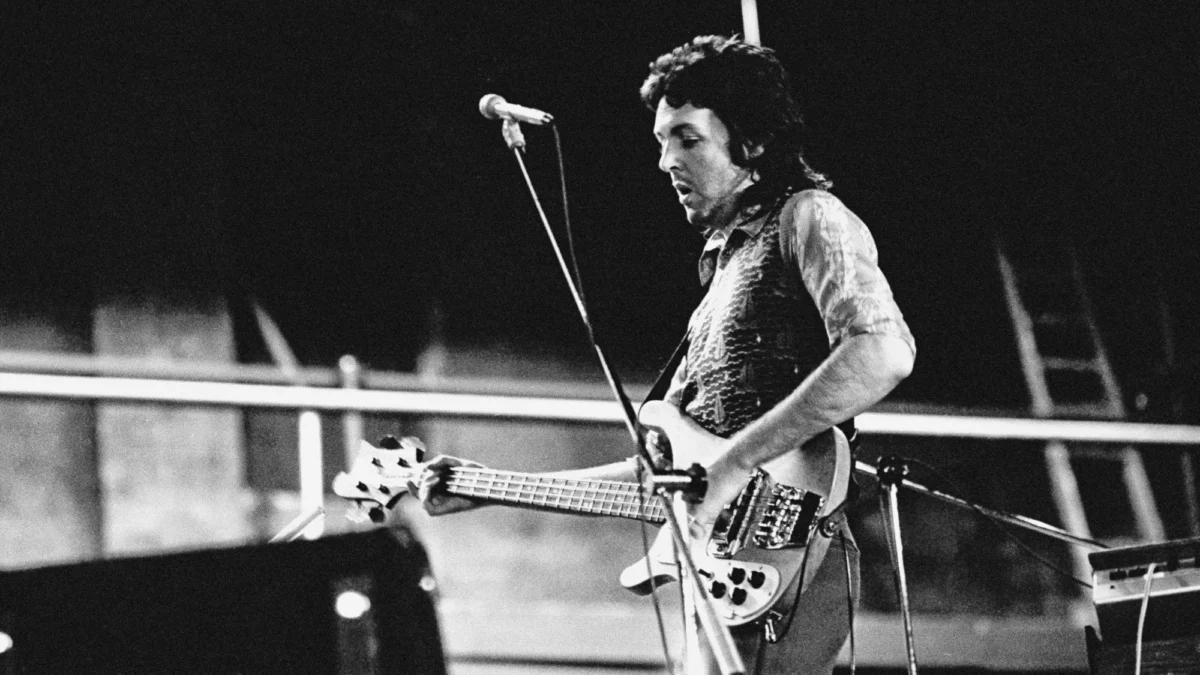
The guitar solo has long served as the emotional centerpiece of the classic rock genre, often transcending the lyrical content of a song to become its most recognizable feature. While many compositions are built around catchy choruses or driving rhythms, a select few are defined by the instrumental prowess displayed during their bridge or climax. In these instances, the guitarist does not merely supplement the track but fundamentally alters its trajectory, transforming a standard radio hit into a timeless piece of musical history. This phenomenon is evident in the works of legendary acts such as The Beatles, Paul McCartney and Wings, and Steely Dan, where specific solos have achieved a level of cultural saturation that rivals, and sometimes exceeds, the songs themselves.
The Collaborative Mastery of The Beatles’ Final Statement
In the annals of rock history, few albums carry the weight of Abbey Road (1969). As the final recording project of The Beatles, the album was a showcase of the band’s evolving technical sophistication. The track "The End" serves as a literal and metaphorical conclusion to their discography, notable for its unique structure that highlights each member’s contribution. Beyond featuring the only recorded drum solo by Ringo Starr during his tenure with the group, the song is anchored by a rotating sequence of guitar solos that remain a subject of intense study by musicologists.
The "guitar duel" in "The End" was a strategic creative decision facilitated by George Harrison. It features Paul McCartney, George Harrison, and John Lennon taking turns in two-bar increments. McCartney leads with a sharp, stinging tone, followed by Harrison’s more melodic and fluid style, and concluded by Lennon’s distorted, rhythmic aggression. This sequence repeats three times, totaling eighteen bars of high-intensity improvisation.
Data from the recording sessions indicates that the three guitarists recorded these solos simultaneously in the studio, a rarity for the group during their later, more fractured years. This live interaction captured a final moment of synergy, contrasting with the interpersonal tensions that defined the Let It Be sessions. The impact of this solo sequence is reflected in the album’s enduring commercial success; Abbey Road spent 17 weeks at number one on the UK charts and continues to be one of the highest-selling vinyl records in the modern era.
Henry McCullough and the Improvisational Shift of My Love
Following the dissolution of The Beatles, Paul McCartney faced the challenge of establishing a new identity with his band, Wings. The 1973 album Red Rose Speedway sought to balance McCartney’s penchant for melodic pop with a more robust rock sound. The lead single, "My Love," is a traditional romantic ballad that, while commercially successful, faced criticism for being overly sentimental. However, the song’s legacy was secured by the contributions of Irish guitarist Henry McCullough.
The story behind the "My Love" solo is one of the most famous instances of creative rebellion in 1970s rock. McCartney had originally written a specific, note-for-note solo for the track. Moments before the tape rolled at Abbey Road Studios, McCullough approached McCartney and asked if he could try something different. McCartney reportedly agreed, albeit with some hesitation. McCullough then performed a soulful, blues-inflected solo in a single take, completely departing from the pre-arranged melody.
This improvisational approach gave "My Love" a grit and emotional depth that the original arrangement lacked. The solo helped propel the song to the top of the Billboard Hot 100, where it remained for four weeks. Music critics often cite this moment as a turning point for Wings, demonstrating that the band was more than a mere backing group for McCartney. The solo remains a staple of classic rock radio, frequently analyzed for its use of vibrato and phrasing that bridges the gap between pop and blues.
Technical Precision and the Electric Sitar in Steely Dan’s Do It Again
Steely Dan, led by the duo of Donald Fagen and Walter Becker, was renowned for its obsessive attention to detail and the frequent use of elite session musicians. Their 1972 debut album, Can’t Buy a Thrill, introduced a sophisticated blend of jazz, rock, and Latin influences. The track "Do It Again" became an immediate hit, but its most distinctive element was not a traditional guitar solo, but rather a performance on a Coral Electric Sitar by Denny Dias.
The use of the electric sitar was a bold choice in 1972, a period when the instrument was often associated with the psychedelic movement of the late 1960s. However, Dias’s execution was grounded in jazz theory, providing a sharp, metallic texture that complemented the song’s cynical lyrics and minor-key groove. The solo is characterized by its rapid-fire delivery and intricate modal runs, which added an "exotic" flair to the Southern California rock sound.
"Do It Again" reached No. 6 on the Billboard Hot 100 and helped establish Steely Dan as a formidable force in the industry. The solo is often highlighted in technical journals for its clean execution and the unique tonal qualities of the Coral Sitar, which uses sympathetic strings to create its signature drone. The track’s success proved that unconventional instrumentation, when handled with technical mastery, could find a place at the top of the mainstream charts.
The Broader Evolution of the Guitar Solo: 1969–1979
The period between the late 1960s and the end of the 1970s represented the "Golden Age" of the guitar solo. This era saw the transition from the short, radio-friendly breaks of early rock and roll to the extended, narrative-driven solos of progressive and hard rock. This shift was driven by advancements in amplifier technology, the development of effects pedals (such as the wah-wah and fuzz box), and a growing audience appetite for instrumental virtuosity.
A chronological look at the decade reveals a clear trajectory:
- 1969: The Beatles’ "The End" introduces the concept of the multi-guitarist duel as a narrative device.
- 1971: Led Zeppelin’s "Stairway to Heaven" features Jimmy Page’s iconic solo, which was voted the greatest of all time by Guitar World readers. Page notably used a 1959 Telecaster for the solo, rather than his signature Les Paul.
- 1973: Henry McCullough brings improvisational blues to the pop balladry of Paul McCartney’s "My Love."
- 1977: The Eagles’ "Hotel California" concludes with a harmonized dual-guitar solo by Don Felder and Joe Walsh, setting a new standard for melodic interplay.
- 1979: Pink Floyd’s "Comfortably Numb" showcases David Gilmour’s use of sustain and phrasing, creating what many consider the emotional peak of the album The Wall.
Critical Analysis: The Impact on Gear and Industry
The cultural impact of these solos extended far beyond the music charts. They directly influenced the musical instrument industry, sparking a surge in demand for specific guitars and equipment. For instance, the popularity of David Gilmour’s tone led to the widespread adoption of the Big Muff distortion pedal, while the "Hotel California" solo cemented the Gibson Les Paul and Fender Deluxe Reverb as the "gold standard" setup for aspiring rock musicians.
Furthermore, the prominence of the guitar solo in the 1970s gave rise to the "Guitar Hero" archetype. This shifted the focus of rock music from the collective band identity toward individual technical brilliance. This era established the solo as a critical component of a song’s commercial viability; a memorable instrumental break could increase a track’s longevity on FM radio, which favored longer, more complex compositions over the 2-minute singles of the AM era.
Official Responses and Artistic Legacy
In retrospective interviews, the artists themselves have often expressed surprise at which solos became the most iconic. Paul McCartney has frequently lauded Henry McCullough’s contribution to "My Love," admitting that his own original idea for the solo would have been inferior. David Gilmour has noted in interviews that his solos on The Wall were the result of a painstaking process of "comping," where multiple takes were edited together to create the perfect melodic arc.
From a contemporary perspective, the "overshadowing" guitar solo is a relic of a different production philosophy. In the modern era of digital streaming and shorter attention spans, the extended instrumental break has largely disappeared from Top 40 radio. However, the solos of the 1970s continue to serve as the foundation for music education and remain the primary draw for the classic rock touring circuit.
The enduring popularity of these tracks suggests that the guitar solo is more than just a display of skill; it is a vital form of storytelling. Whether it is the collaborative spirit of The Beatles, the spontaneous emotion of Henry McCullough, or the technical innovation of Denny Dias, these solos provided a voice to the music that words alone could not express. They remain definitive proof that in the world of rock and roll, sometimes the most important things to be said are not spoken, but played.
