

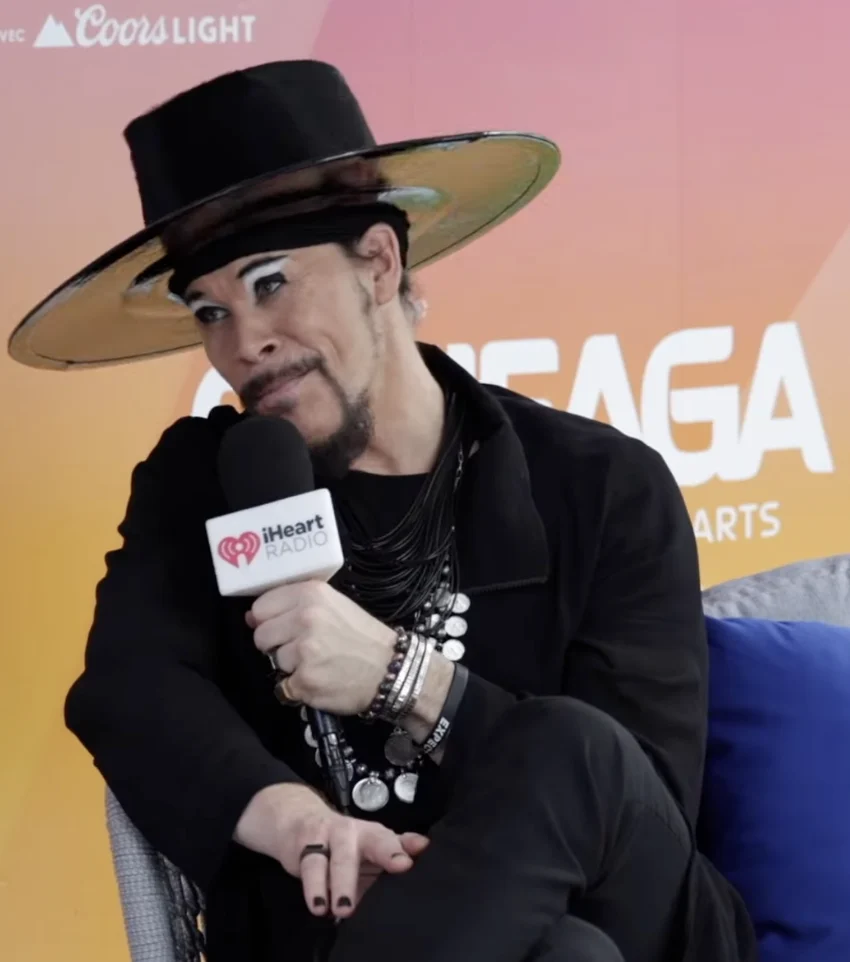
The discourse surrounding artificial intelligence (AI) within the creative industries, particularly music, has reached a critical juncture, characterized by a spectrum of views ranging from fervent adoption to staunch opposition. Amidst this ongoing debate, Luke Steele, the enigmatic frontman of the acclaimed Australian electronic music duo Empire Of The Sun, offered a candid perspective during a recent interview with iHeartRadio at the Osheaga Festival. When directly questioned about his use of AI in his artistic process, Steele’s enthusiastic affirmation, "Of course!", immediately set a distinct tone, suggesting a pragmatic acceptance of the technology. However, the subsequent elaboration on his views quickly revealed the nuanced and, at times, perplexing nature of AI’s integration into modern artistry, reflecting a broader industry grappling with rapid technological evolution.
Steele’s Candid Acknowledgment and Pragmatic View
Steele’s initial, unhesitating "Of course!" stood in stark contrast to the more cautious or outright resistant stances adopted by many of his contemporaries. The interviewer, acknowledging this divergence, pressed Steele on the ease of his response, highlighting the significant number of musicians who advocate for a complete exclusion of AI from the creative process. Steele, however, maintained a surprisingly detached yet realistic posture. He characterized the "humans versus AI" narrative as "quite exciting," but quickly demystified the technology by stating, "it’s just another tool." This analogy was further clarified with a relatable comparison: "It’s like a really smart guitar pedal." This framing suggests an view of AI as an augmentation rather than a replacement for human ingenuity, positioning it within a long lineage of technological advancements that have historically reshaped music production, from synthesizers to digital audio workstations (DAWs).
The Osheaga Festival, held annually in Montreal, Quebec, Canada, provides a significant platform for such discussions. Established in 2006, the multi-day music and arts festival has grown into one of North America’s premier events, attracting hundreds of thousands of attendees and featuring a diverse lineup of international artists across various genres, including indie, rock, hip-hop, and electronic music. Its reputation as a hub for contemporary music culture makes it a relevant venue for artists to share their evolving perspectives on industry trends and technological shifts. Empire Of The Sun, known for their distinctive blend of electronic music, theatrical live performances, and fantastical imagery, have carved a unique niche since their formation in 2007. Their artistic identity, often embracing futuristic and otherworldly themes, lends a certain resonance to Steele’s willingness to engage with cutting-edge technologies like AI. Their global success, including multiple ARIA Awards and Grammy nominations, underscores their influence and the weight of their artistic statements.
The "Boogie Monster" Warning: A Glimpse into AI’s Perceived Inevitability
The conversation took a more dramatic turn when Steele was asked to address artists who believe AI should not be involved in artistic creation at all. His response was both striking and unsettling: "I think you gotta be careful because it’s so powerful that AI is going to empower artists that know how to use it, and they’re going to become unstoppable. The artists that are against it have got to be careful, because it’s going to come and swallow you like a boogie monster at night."
This vivid, almost apocalyptic imagery of AI as a "boogie monster" presents a dual interpretation. On one hand, it could be seen as a stark warning about the overwhelming power of AI and the potential for it to marginalize those who resist its integration, painting a picture of technological inevitability. On the other, it might be interpreted as a cynical acknowledgment of a future where technological prowess, rather than purely human creativity, dictates artistic dominance. This statement encapsulates the anxieties prevalent in the creative community: the fear of being left behind, the potential for creative displacement, and the perceived existential threat that AI poses to traditional artistic roles. It also highlights a common sentiment that the tide of technological advancement is difficult, if not impossible, to stem, and that adaptation may be the only viable path forward.
The Broader Context: AI’s Ascent in Music and Industry Divisions
Steele’s comments are situated within a rapidly evolving landscape where AI’s presence in music production, composition, and distribution is becoming increasingly pronounced. Over the past decade, AI tools have moved from academic curiosities to practical applications. Early examples include algorithms for mastering (e.g., LANDR, introduced in 2014) and rudimentary composition (e.g., AIVA, founded in 2016, which became the first AI to compose a film soundtrack). More recently, generative AI models like OpenAI’s Jukebox (2020) and Google’s MusicLM (2023) have demonstrated the ability to create complex, high-fidelity music across various genres from text prompts or existing audio, mimicking specific styles or even vocalists.
This rapid advancement has ignited intense debate. Proponents often highlight AI’s potential to democratize music creation, offering powerful tools to independent artists with limited resources, accelerating production workflows, and opening new avenues for sonic exploration. For instance, AI can assist with tasks like generating variations of melodies, perfecting vocal harmonies, or optimizing mixing and mastering, thereby allowing human artists to focus on higher-level creative decisions. Data from market research firms suggests a significant growth trajectory for AI in music. Reports indicate that the global AI in music market, valued at approximately $200-300 million in the early 2020s, is projected to reach several billion dollars by the end of the decade, reflecting widespread adoption and investment.
Conversely, a substantial segment of the music industry expresses profound concerns. These include issues of intellectual property theft, particularly when AI models are trained on copyrighted material without explicit permission or compensation. The ethical implications of AI-generated music mimicking the voices or styles of existing artists without their consent are also a major point of contention. Major industry bodies, including the Recording Industry Association of America (RIAA) and the International Federation of the Phonographic Industry (IFPI), have released statements emphasizing the need for robust copyright protections and ethical guidelines for AI use, advocating for transparency and fair compensation for creators whose work is used to train AI models. Artists’ unions and advocacy groups have also voiced fears about job displacement for session musicians, composers, and producers, and the potential devaluation of human artistry if AI-generated content becomes indistinguishable or even preferred by some audiences. In early 2023, a widely publicized open letter signed by thousands of artists and industry professionals called for responsible AI development that respects human creativity and rights.
Historical Parallels and the Inevitability of Technological Integration
Steele’s "just another tool" perspective echoes historical precedents in the music industry. Each significant technological leap – from the introduction of electric guitars and synthesizers to drum machines, samplers, and digital audio workstations – initially faced resistance and skepticism. Early jazz musicians debated the authenticity of electric instruments, rock purists decried synthesizers, and traditionalists questioned the artistic merit of sampled music. Yet, each of these technologies ultimately became integral parts of the musical lexicon, empowering new genres, sounds, and artistic expressions. The MIDI (Musical Instrument Digital Interface) standard, introduced in 1983, revolutionized how electronic instruments communicated, transforming music production forever. Similarly, the widespread adoption of DAWs like Pro Tools and Ableton Live in the late 20th and early 21st centuries democratized music production, making studio-quality recording accessible to a broader range of artists.
In this context, Steele’s view aligns with a technological determinism that suggests AI, like its predecessors, will inevitably be absorbed into the creative workflow. His "if you can’t beat ’em, join ’em" stance, while perhaps cynical, reflects a pragmatic assessment of this historical pattern. The "boogie monster" metaphor, then, might not be solely about fear, but about the overwhelming force of a technological wave that demands adaptation.
Implications for the Future of Music Creation
The implications of AI’s growing role in music are multifaceted. Creatively, AI could unlock entirely new sonic palettes and compositional approaches, pushing the boundaries of what is possible. It might also allow artists to overcome creative blocks or explore ideas more rapidly. However, it raises fundamental questions about authorship, originality, and the definition of art itself when a significant portion of the creative input comes from an algorithm.
Economically, the challenges are immense. The current legal frameworks for copyright were not designed for generative AI, leading to complex battles over ownership and compensation. Record labels, publishers, and streaming services are all navigating how to manage, license, and monetize AI-generated content. New business models may emerge, potentially involving licensing AI models themselves or creating hybrid human-AI artistic collectives.
Ethically, the industry faces a critical need for transparency. Consumers and creators alike need to know when music is AI-generated or AI-assisted. The potential for deepfakes and the manipulation of artistic identities also poses significant challenges to trust and authenticity.
Steele’s somewhat understated yet forceful contribution to this dialogue at Osheaga encapsulates a sentiment of weary realism. He may not be a vocal advocate for AI’s utopian potential, nor an ardent opponent of its dystopian threats. Instead, he appears to represent a growing number of artists who view AI as an undeniable force that must be understood and, perhaps, even leveraged, rather than simply resisted. His comments serve as a snapshot of an industry at a crossroads, where the "smart guitar pedal" of today could indeed be the "boogie monster" of tomorrow, reshaping the very fabric of artistic creation in ways we are only just beginning to comprehend. The conversations sparked at festivals like Osheaga underscore the urgent need for comprehensive industry-wide strategies, ethical guidelines, and legal frameworks to navigate this transformative era.
