

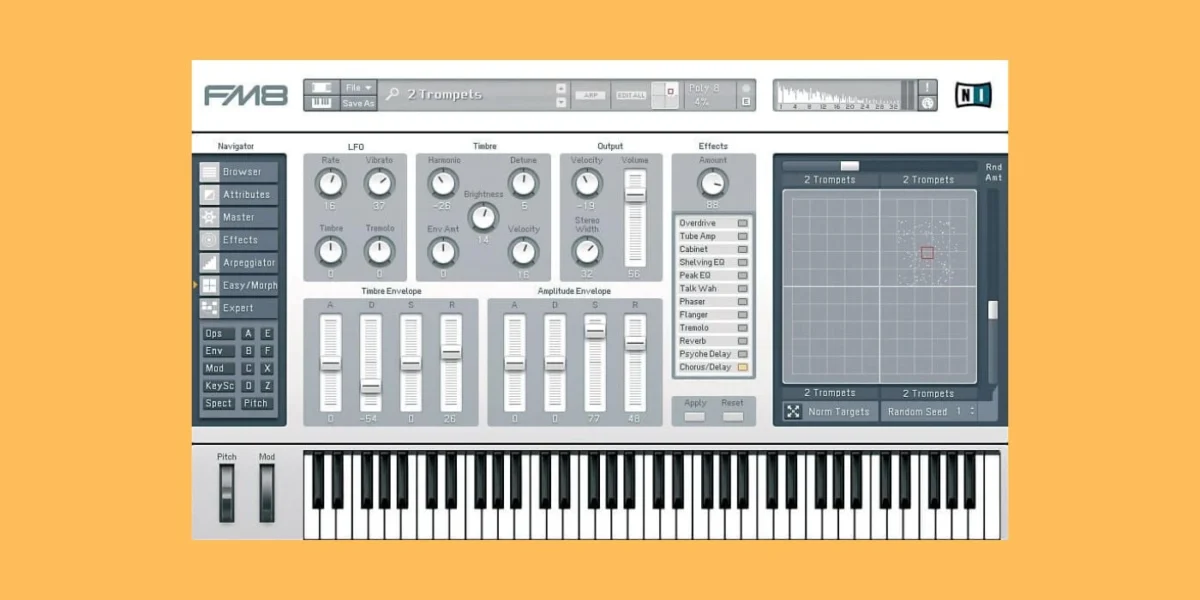
The digital audio workstation (DAW) landscape is currently witnessing a notable event as Plugin Boutique announces an exceptional offer for Native Instruments FM8, making the revered FM synthesizer available for an unprecedented price of $10. This promotional period is set to conclude on August 16th, presenting a rare opportunity for music producers and sound designers to acquire a cornerstone software instrument at its lowest recorded price point. This strategic pricing move by Plugin Boutique and Native Instruments underscores evolving market dynamics in the software instrument sector, making high-quality tools more accessible to a broader demographic of creators.
A Historic Price Point for a Classic Synthesizer
The current $10 price tag for Native Instruments FM8 represents a significant departure from its historical pricing, making it an attention-grabbing event within the music technology community. Previous promotions, as documented by industry outlets, have seen FM8 offered at $24.50 last year, and broader Native Instruments synth sales have occasionally dropped individual instruments to around $19. However, the current offer marks the first instance of FM8 dipping below the $10 threshold, establishing a new benchmark for affordability for this particular instrument. This aggressive pricing strategy is likely to stimulate considerable interest and adoption, particularly among aspiring producers and those looking to expand their sonic palette without substantial financial outlay.
The Enduring Legacy of FM Synthesis and FM8’s Role
To fully appreciate the significance of FM8, it is crucial to understand the foundational role of Frequency Modulation (FM) synthesis in the history of electronic music. Pioneered by Stanford University’s John Chowning in the late 1960s and early 1970s, FM synthesis became commercially viable with the release of the Yamaha DX7 in 1983. The DX7 revolutionized music production with its distinct, often metallic, bell-like, and percussive sounds, dominating the 1980s pop music landscape. Unlike traditional subtractive synthesizers, which shape sound by filtering harmonics from a rich waveform, FM synthesis generates complex timbres by modulating the frequency of one oscillator (the carrier) with another (the modulator). This method can create a vast array of sounds, from rich pads and evolving textures to sharp, percussive elements and deep basses, often characterized by their digital clarity and unique sonic qualities.
Native Instruments’ FM8, first released in 2006, was developed as a modern interpretation and significant enhancement of classic FM synthesis principles. It aimed to overcome some of the usability challenges associated with early hardware FM synthesizers, which were often criticized for their complex menu-diving interfaces. FM8 achieved this by presenting a highly intuitive graphical interface that demystified the intricate relationships between operators, making the powerful synthesis method more approachable for a new generation of sound designers. Despite its initial release nearly two decades ago, FM8 has maintained its relevance, consistently being cited as one of the most flexible and musically expressive software FM instruments available. Its continued utility in 2026, long after its initial launch, speaks volumes about its robust architecture and timeless sound engine.
Detailed Features and Design Philosophy of FM8
FM8’s design philosophy centers on making complex FM synthesis manageable and inspiring. At its core is the FM Matrix, a visual routing interface that allows users to connect up to six operators (sine wave oscillators) and precisely set modulation amounts between them. This graphical representation eliminates the need for navigating multiple sub-menus, streamlining the sound design process. Each operator within FM8 is a powerful sound source in itself, offering detailed editing pages for waveform selection (expanding beyond simple sine waves to include various complex waveforms), frequency settings, MIDI response, panning, amplitude, and multi-breakpoint envelopes. This level of granular control enables the creation of incredibly nuanced and dynamic sounds.
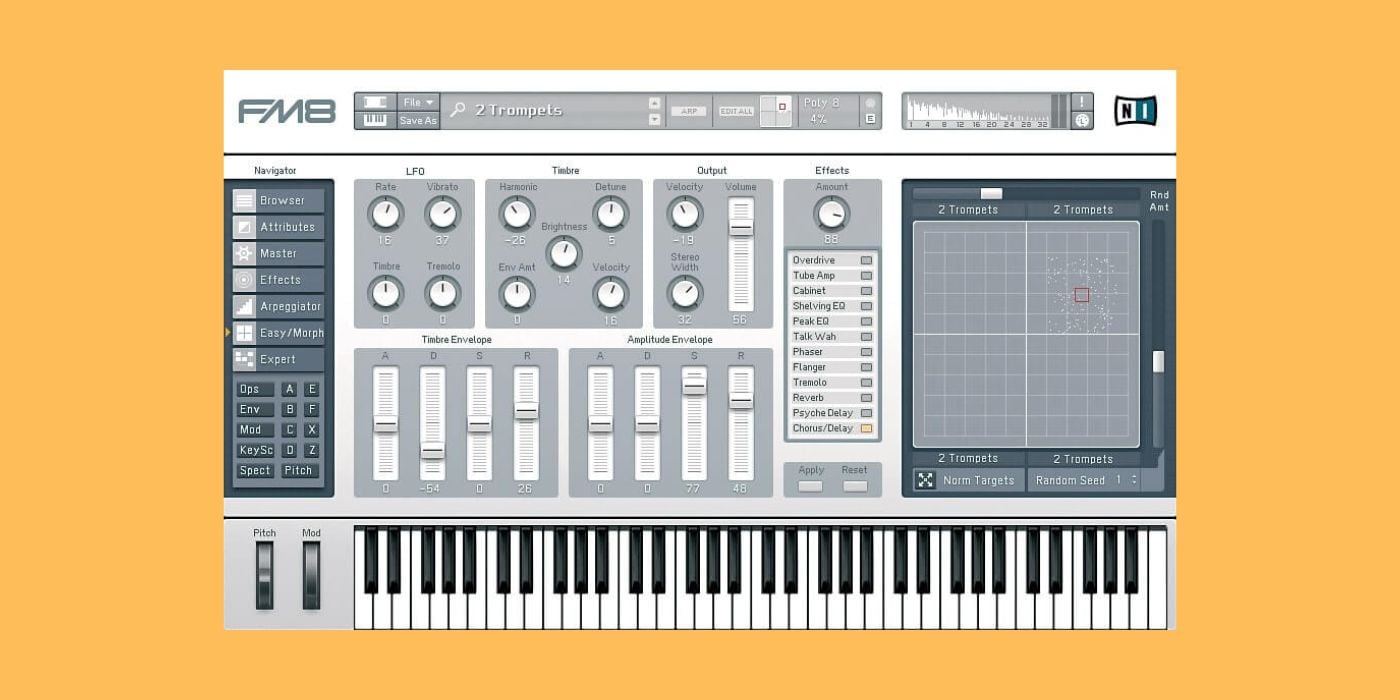
For users seeking a quicker entry point into sound design, the Easy Edit page provides macro-style controls. These simplified parameters adjust multiple complex settings simultaneously behind the scenes, allowing for intuitive tweaking without deep knowledge of FM principles. This feature is particularly valuable for producers who prioritize speed and immediate sonic results. Additionally, the Operator Overview page offers a consolidated view of the most crucial operator settings, providing a quick snapshot of the synthesis architecture. The Envelope Expert page further enhances usability by allowing users to view and edit multiple envelopes concurrently, facilitating the creation of intricate rhythmic and evolving timbres.
Beyond its core FM engine, FM8 expands its sonic capabilities with several innovative features. The inclusion of over 1,200 presets serves as an extensive library, covering a wide spectrum of sounds from the classic glassy bells, digital keys, and plucked tones reminiscent of the DX7 era, to modern basses and metallic percussion. This vast collection provides immediate inspiration and practical starting points for diverse musical genres. The Morph Square is another distinctive feature, enabling users to seamlessly blend between four different timbres, offering dynamic sound transformation and expressive performance possibilities. The sophisticated arpeggiator further enhances musicality, featuring 48 templates, shuffle controls, adjustable note length, velocity, transposition, repeats, and keyboard split options, allowing for complex rhythmic patterns and melodic sequences.
FM8 also integrates a comprehensive suite of 12 effects, including Overdrive, Tube Amp, Cabinet, Talk Wah, shelving and peak EQ, Phaser, Flanger, and Tremolo. These effects can be strategically applied to individual operators or the master output, significantly enhancing the character and depth of the generated sounds, from subtle warmth to aggressive distortion.
Native Instruments’ Market Strategy and Ecosystem
Native Instruments (NI) has long been a dominant force in the music technology industry, renowned for its innovative software instruments, effects, and hardware. Products like Kontakt, Reaktor, Massive, and the Komplete bundles have become industry standards. NI’s strategy often involves creating comprehensive ecosystems, where individual products integrate seamlessly and users are encouraged to upgrade to larger bundles like Komplete, which offers a vast collection of instruments and effects at a discounted collective price.
The current deal on FM8 can be viewed within this broader strategic context. Offering a classic instrument like FM8 at such an accessible price point serves multiple purposes for Native Instruments:
- Market Penetration: It lowers the barrier to entry for new users, potentially introducing them to the NI ecosystem for the first time.
- Brand Loyalty: Existing NI users may take advantage of the deal, reinforcing their commitment to the brand.
- Upselling Potential: While FM8 is a standalone powerhouse, its affordability might entice users to explore other NI products or eventually invest in a Komplete bundle, which frequently includes FM8 alongside many other acclaimed instruments.
- Community Engagement: Such deals generate significant buzz within the music production community, fostering discussions and renewed interest in NI products.
This particular offer also aligns with other recent promotions. The original article notes the deal’s proximity to another Plugin Boutique offer for the Native Instruments Reaktor Synthesizer Bundle, also available until August 16th, suggesting a coordinated promotional push. Historical references to the $19 Native Instruments synth sale and the Komplete 26 release further illustrate NI’s consistent engagement with its user base through strategic pricing and product development cycles. The Komplete series, in particular, represents a cornerstone of NI’s business model, offering substantial value through bundling a wide array of instruments and effects.
Plugin Boutique’s Role in Digital Distribution
Plugin Boutique has established itself as a leading digital storefront for music production software, acting as a crucial intermediary between developers like Native Instruments and the global community of music creators. Their business model thrives on offering competitive pricing, exclusive deals, and bundled offers, making them a go-to platform for acquiring software instruments and effects.
For Plugin Boutique, offering FM8 at $10 is a powerful traffic driver. Such an attractive price point draws a significant volume of visitors to their website, increasing exposure to their entire catalog of products. This heightened traffic also creates opportunities for cross-selling and upselling, as customers browsing for FM8 might discover other deals or complementary plugins. The practice of including free gifts with purchases, as highlighted by Plugin Boutique, further enhances the perceived value of the offer. For this FM8 deal, purchasers are listed to receive a selection of valuable additional software, including Melodyne 5 Essential, Baby Audio TAIP, Serato Hex FX, Bitwig Studio 8-Track, and Excite Audio Evolve Alloy Lite. These bundled gifts significantly augment the value proposition, providing additional tools that complement a wide range of production workflows. This strategy benefits both the customer, who receives more for their money, and Plugin Boutique, by fostering loyalty and driving sales for partner developers.
Broader Implications for Music Producers and the Industry
The implications of this $10 offer extend beyond individual transactions. For independent and aspiring music producers, the accessibility of professional-grade tools like FM8 at such a low cost is transformative. It democratizes access to high-quality sound design capabilities that were once either prohibitively expensive or required specialized hardware. This trend empowers more creators to produce professional-sounding music, fostering innovation and creativity across various genres.
From an industry perspective, such aggressive pricing can set new expectations for software instrument affordability. While it may lead to debates about the long-term value perception of software, it undeniably benefits the end-user by making essential tools more attainable. It also highlights the competitive nature of the software market, where developers and distributors must constantly innovate not only in product features but also in pricing and promotional strategies to capture market share. The longevity of FM8, still relevant in 2026, also underscores the value of well-designed, robust software that can stand the test of time, proving that cutting-edge technology doesn’t always need to be brand new.
Technical Specifications and Compatibility
Native Instruments FM8 is designed to integrate seamlessly into modern production environments. For Windows users, it requires Windows 10 or 11 and supports VST and AAX plugin formats. macOS users, running versions 13, 14, or 15, can utilize FM8 in VST, AU, and AAX formats, with the crucial addition of native Apple Silicon support. This native compatibility ensures optimal performance on the latest Mac hardware, taking full advantage of the M-series processors’ capabilities.
An internet connection is necessary for the initial download and activation of FM8. However, once activated, the software can be used offline, providing flexibility for producers working in various settings. This standard practice in software licensing ensures secure distribution while maintaining user convenience.
Conclusion: A Moment for Enhanced Sonic Exploration
The availability of Native Instruments FM8 for $10 until August 16th, 2026, is more than just a fleeting deal; it represents a significant moment in the ongoing evolution of music production software accessibility. It brings a classic, powerful, and versatile FM synthesizer within reach of virtually any producer, regardless of budget. This strategic move by Plugin Boutique and Native Instruments not only celebrates the enduring legacy of FM synthesis but also reinforces the commitment to empowering creators with high-quality tools. For anyone looking to delve into the rich, distinctive sonic landscape of FM synthesis or expand their existing toolkit, this limited-time offer provides an unparalleled opportunity to acquire a legendary instrument that continues to inspire and innovate in 2026 and beyond.
Download: Native Instruments FM8 ($10 until August 16th) available via Plugin Boutique.
