

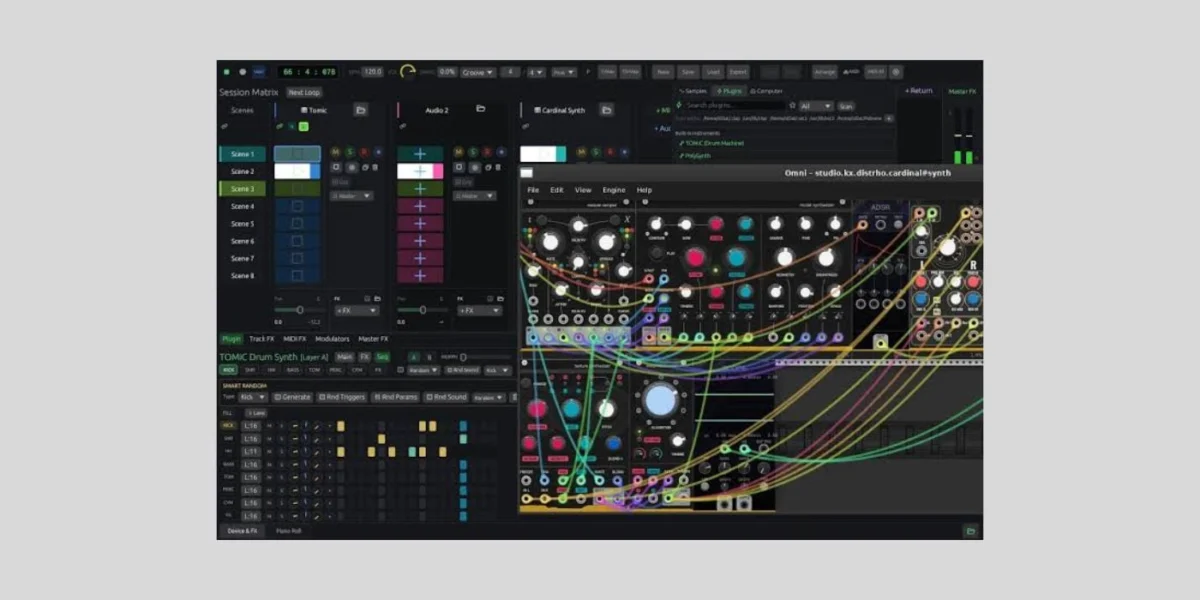
Developer Tomasz Głuc has officially launched the alpha version of OMNi, a new digital audio workstation (DAW) distinguished by its entirely Rust-based architecture, free accessibility, and pioneering integration of native artificial intelligence (AI) for sample generation and image-to-sound synthesis. This introduction marks a significant development in the competitive landscape of music production software, offering a unique blend of cutting-edge technology and a commitment to performance and stability. Currently in its v0.1 alpha stage, OMNi is available as a standalone application for Windows and Linux users, with no immediate plans announced for a macOS version.
The Emergence of OMNi: A New Contender in a Mature Market
The digital audio workstation market is characterized by a high degree of user loyalty. Musicians and producers often commit to a single DAW for extended periods, building muscle memory, project archives, and extensive plugin libraries around their chosen platform. Established giants like Ableton Live, Logic Pro, Cubase, Pro Tools, and FL Studio have cultivated dedicated user bases over decades, making it challenging for new entrants to gain traction. However, the continuous evolution of technology and the growing demand for accessible, high-performance tools occasionally pave the way for disruptors. OMNi enters this environment not merely as another DAW but as a proposition built on a foundation designed for modern computing challenges, coupled with forward-looking AI integration. Its free pricing model further lowers the barrier to entry, potentially attracting a broad spectrum of users from aspiring producers to seasoned professionals curious about novel workflows.
Rust at the Core: Engineering for Performance and Stability
A foundational element of OMNi’s design is its complete development in Rust, a systems programming language that has garnered significant attention for its emphasis on safety, concurrency, and performance. Unlike many other DAWs, which often rely on languages like C++ or Objective-C, OMNi’s choice of Rust is a deliberate engineering decision aimed at addressing common pitfalls in real-time audio processing. Rust’s compiler enforces strict rules regarding memory management, ownership, and borrowing, which virtually eliminate common programming errors such such as null pointer dereferences and data races that can lead to crashes, glitches, or security vulnerabilities.
For audio software, where uninterrupted, low-latency performance is paramount, Rust’s guarantees are particularly advantageous. The language’s built-in mechanisms for thread safety ensure that concurrent operations—like processing multiple audio tracks or plugins simultaneously—can be managed without introducing instability. OMNi leverages a lock-free audio architecture, a sophisticated design pattern that allows different parts of the audio engine to operate without requiring explicit locks that can introduce delays or "dropouts." This architecture is critical in preventing slow background tasks from impeding the high-priority, real-time audio thread, thereby safeguarding against audio interruptions that can be detrimental to the creative process and live performance. While Rust development can entail longer compile times due to its rigorous compile-time checks, the resulting binaries are often more robust, efficient, and reliable, a trade-off that developers of performance-critical applications increasingly find worthwhile. The growing adoption of Rust by major technology companies for critical infrastructure underscores its rising prominence as a language capable of delivering high-quality, dependable software.
Innovation in Sound Creation: Native AI and Beyond
OMNi distinguishes itself by integrating artificial intelligence directly into its core functionalities, making it the world’s first DAW to feature native AI sample generation and image-to-sound synthesis. These features represent a significant leap in creative workflow, offering users new avenues for sonic exploration.
The native AI sample generation capability allows users to create audio samples directly within the DAW by providing text prompts and adjusting parameters such as length, prompt influence, and looping behavior. This process, reportedly powered by ElevenLabs technology, rapidly generates unique audio assets, potentially revolutionizing how producers source and create sounds. While traditional methods of sample acquisition, such as exploring digital libraries or "crate-digging" for vinyl, foster a particular creative interaction, AI-driven generation offers immediate access to bespoke sounds tailored to specific creative visions. This functionality caters to a growing segment of the production community seeking expedited creative processes and unique sonic textures that might be difficult to achieve through conventional means.
Complementing this is the image-to-sound synthesis feature, exemplified by OMNi’s Iris spectral synth, which is powered by Google’s Gemini 2.5 Flash. This innovative capability allows users to translate visual inputs into sonic landscapes, opening up possibilities for synesthetic creativity. By analyzing the spectral characteristics or compositional elements of an image, the AI can generate corresponding audio textures, melodies, or soundscapes, blurring the lines between visual art and sound design. Such features position OMNi at the forefront of AI-assisted music production, offering tools that extend beyond traditional synthesis and sampling methods. The implications for experimental music, sound art, and multimedia projects are substantial, providing artists with novel ways to conceive and execute their creative ideas.
Interface and Workflow: Familiarity Meets Modern Design
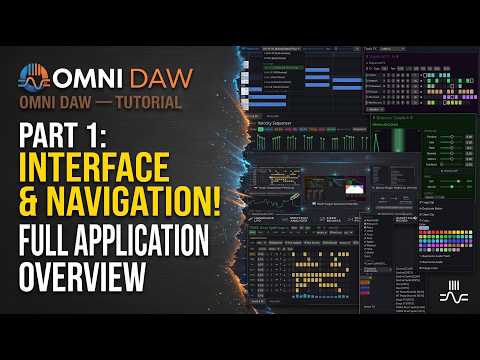
Navigating a new DAW can be a steep learning curve, but OMNi appears to blend familiar elements with thoughtful design choices. The developer has provided an extensive interface overview on YouTube, guiding potential users through the graphical user interface (GUI) sections, controls, and displays. This transparency regarding the workflow is crucial for an alpha product, allowing users to assess its suitability before committing to a download.
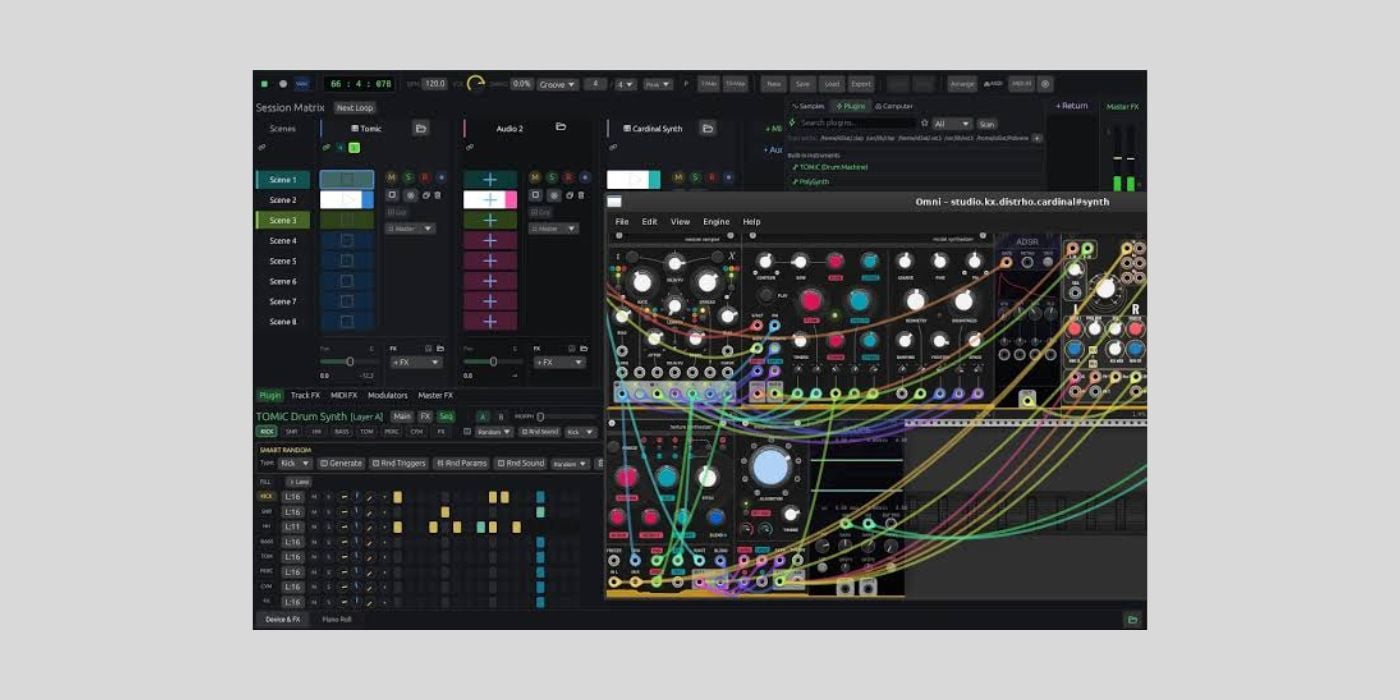
OMNi incorporates standard DAW paradigms such as transport controls, time/tempo settings, and load/save functions, arranged in a logical manner. The two primary work screens are the Arrangement View and the Session View. The Arrangement View offers a linear timeline, characteristic of most DAWs, where audio, MIDI, and automation data are laid out chronologically. The Session View, in contrast, provides a dedicated clip launcher, drawing parallels to the highly popular workflow found in Ableton Live’s Session View. This non-linear approach is particularly favored for live performance, improvisation, and rapid idea generation, allowing users to trigger, loop, and combine musical clips in a flexible manner.
A notable design choice is the absence of a dedicated mixing window. Instead, mixing tools are integrated into each track’s mixer strip. While some producers prefer a separate mixing console for multi-monitor setups, OMNi’s approach streamlines the interface, keeping all relevant controls accessible within the main workspace. Common elements for track manipulation are housed in a tab bar at the bottom of the screen, including the Device & FX and Piano Roll tabs. The Device & FX tab offers multiple sub-tabs for managing Plugins, TrackFX, MIDI FX, and Modulators assigned to the selected track, along with access to Master FX. A particularly user-friendly feature is the drag-and-drop workflow for arranging effect chains within Track FX, providing a visually intuitive method for customizing signal flow that enhances user experience. While the core elements feel familiar to experienced DAW users, the true measure of OMNi’s intuitiveness will emerge with sustained use and community feedback.
Comprehensive Feature Set: Instruments, Effects, and Modulation
Despite its alpha status, OMNi boasts an impressive array of built-in features, underscoring its ambition to be an "OMNi-capable" workstation.

The DAW includes fourteen distinct synth engines, catering to a wide range of sound design needs. These encompass traditional virtual analog synthesizers, physically modeled acoustic instruments (such as piano, violin, flute, and harp), and specialized engines like the TOMiC Drum Synth (a KVR Developer Challenge entrant), Bass Synth, PolySynth, Alchemy, Iris (the image-to-sound spectral synth), and Scratch Deck. The PolySynth, for instance, offers extensive capabilities including 16-voice polyphony, 8-voice unison, 31 oscillator shapes, 10 filter models with various distortion types, a JUNO-style chorus, three ADSR envelopes, a robust modulation matrix, and over 140 automatable parameters. This level of depth in a built-in instrument is notable for a new DAW, suggesting a focus on providing powerful native sound generation without immediate reliance on third-party plugins. The quality and versatility of these instruments will be key to OMNi’s appeal, and the developer’s provision of strong demo content in future updates will be crucial for showcasing their sonic capabilities.
In addition to its synthesis capabilities, OMNi features sixteen built-in effect plugins, which the developer has described as "engineering masterpieces." While a specific list of these effects was not detailed in the initial announcement, a comprehensive DAW typically includes a range of processors such as EQs, compressors, reverbs, delays, modulation effects (chorus, flanger, phaser), and possibly unique creative effects. An interesting addition is the FX parameter sequencer, which allows for precise, step-based variation of effect parameters over time, offering new possibilities for dynamic sound processing and rhythmic manipulation.
The DAW also provides robust modulation and MIDI FX capabilities. Users have access to fifteen modulation sources, enabling complex routing and dynamic parameter control. A sixteen-step sequencer is available per-track, facilitating intricate rhythmic and melodic patterns. Furthermore, OMNi includes nineteen MIDI FX and generators, enhancing its MIDI processing prowess. A highlight in this category is the native implementation of the Bjorkland algorithm, also known as the Euclidean Sequencer. This algorithm allows users to generate mathematically precise, often complex, rhythmic patterns by distributing a specified number of "beats" evenly within a given number of "steps." With adjustable parameters, the Euclidean Sequencer offers a powerful tool for creating unique grooves and experimental rhythms, appealing to producers interested in algorithmic composition and non-traditional time signatures.
Compatibility and Accessibility
OMNi’s current release as a standalone application supports Windows and Linux operating systems. The inclusion of Linux support is particularly noteworthy, as the Linux audio community, while passionate, is often underserved by major software developers. This commitment expands OMNi’s reach to a demographic that values open-source principles and highly stable, customizable computing environments. The absence of a macOS version at launch may limit its initial market penetration, given the significant number of music producers who utilize Apple’s ecosystem. However, this could change as the project evolves.
Regarding plugin compatibility, OMNi supports the widely used VST3 format, ensuring access to a vast library of third-party virtual instruments and effects. Crucially, it also supports the newer CLAP (CLever Audio Plugin) format and the long-standing LV2 format. CLAP, developed by U-He and Bitwig, aims to address some of the limitations of older plugin standards by offering features like thread-safe processing, advanced modulation capabilities, and improved metadata handling. LV2, primarily popular in the Linux audio ecosystem, provides a robust, extensible framework for audio plugins. By supporting these diverse formats, OMNi ensures broad interoperability and future-proofing, allowing users to integrate their existing plugin collections and explore new ones.
The AI Transparency Debate and Developer Stance
The integration of AI in creative software, including DAWs, has sparked considerable debate within the music production community, with discussions often centering on concepts like "vibe-coding" and the broader implications of AI-generated content. As OMNi features pioneering AI capabilities, questions naturally arise regarding the extent to which AI tools were utilized in the development of the DAW itself.
When approached for comment on the use of AI in OMNi’s development, Tomasz Głuc explicitly stated a preference not to engage in that specific conversation, requesting focus on other aspects of the DAW. This stance, while within the developer’s prerogative, highlights a tension between developer autonomy and a growing user demand for transparency regarding AI’s role in software creation. In a journalistic context, the objective reporting of such a position is essential, as it forms part of the product’s narrative and can influence user perception. The discussion around "vibe-coding" — a term often used to describe software components potentially generated with minimal human oversight or through AI — becomes more pertinent in this context. While OMNi is a substantial project, comprising over 270,000 lines of Rust code, the broader industry conversation emphasizes that transparency regarding AI’s involvement can foster greater trust and understanding within the user community. As AI becomes increasingly ubiquitous, open communication about its application, both in product features and development processes, is likely to become a key differentiator for software providers.
Alpha Stage Development: A Call for Community Engagement
As an alpha (v0.1) release, OMNi is in its earliest public development stage. This status inherently implies that users should expect bugs, stability issues, and incomplete features. The primary purpose of an alpha release is to gather initial feedback from early adopters, identify critical flaws, and validate design choices before proceeding to more stable beta versions.
For users on Windows and Linux considering OMNi, participation in this early phase is a critical contribution to its future development. Reporting bugs, suggesting improvements, and providing detailed feedback on workflow and performance are invaluable to the developer. The iterative nature of software development means that features and functionalities will be refined over time. For OMNi, with its ambitious scope, a period of focused refinement on existing instruments, effects, and modulation systems, rather than immediate expansion with new major creative elements, would likely benefit the product’s overall stability and quality. This strategic approach would allow Tomasz Głuc to solidify the core functionalities and address user feedback comprehensively before embarking on further feature additions, ensuring a robust foundation for future growth.
Conclusion: OMNi’s Potential Impact on the DAW Landscape
OMNi represents a bold new entry into the digital audio workstation market. Its unique combination of a Rust-based architecture, free accessibility, and pioneering native AI capabilities for sound generation positions it as a potentially disruptive force. The emphasis on performance, reliability, and stability through its lock-free audio architecture, coupled with a comprehensive suite of built-in instruments, effects, and modulation tools, makes it a compelling option for a wide array of producers.
While its alpha status means it is still in its nascent stages and requires community engagement for refinement, OMNi’s innovative features, particularly in AI-driven sound design, could reshape creative workflows. The decision to support Windows and Linux, along with multiple plugin formats, broadens its potential user base, even as the absence of macOS support might limit initial adoption. The developer’s stance on AI transparency, while a point of discussion, does not detract from the technical ambition and potential of the software. As OMNi progresses through its development cycle, its ability to refine existing features, maintain stability, and continue innovating will determine its long-term impact on a market traditionally dominated by established players. It stands as a testament to independent development pushing the boundaries of what a DAW can be in the era of advanced programming languages and artificial intelligence.
