

The Evolution and Definition of Chiptune Music
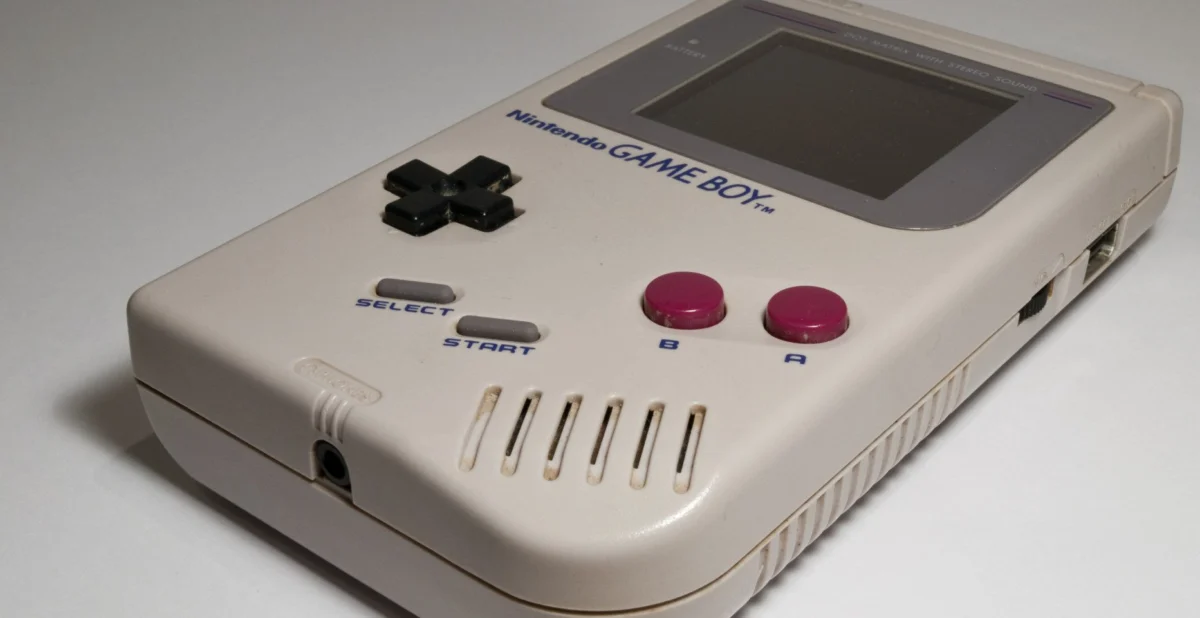
Chiptune, often referred to as 8-bit music, is a genre characterized by synthesized electronic music produced by the programmable sound generator (PSG) chips found in vintage arcade machines, computers, and video game consoles. While the genre originated as a necessity of hardware limitations in the late 1970s and 1980s, it has evolved into a deliberate aesthetic choice. The Game Boy, released by Nintendo in 1989, became a cornerstone of this movement due to its unique four-channel sound architecture and portability.
The sound of the Game Boy is defined by its specific hardware constraints. It utilizes two pulse wave channels, which provide the melodic and harmonic foundations; one programmable custom wave channel for basslines or unique timbres; and one noise generator for percussion and atmospheric effects. By mastering these four channels, artists can create complex arrangements that defy the perceived simplicity of the hardware. The guide highlights that the appeal of chiptune lies in this "creative limitation," forcing the composer to focus on melody and rhythmic ingenuity rather than an infinite palette of modern digital sounds.
The Game Boy as a Musical Instrument: A Historical Context
The transition of the Game Boy from a gaming device to a musical instrument began in earnest during the late 1990s and early 2000s. The development of homebrew software allowed musicians to bypass the standard gaming cartridges and access the sound chip directly.
The chronology of this development is essential for understanding the current landscape:
- 1989: Nintendo releases the Game Boy (DMG-01), featuring the Sharp LR35902 processor.
- 1998: Oliver Wittchow releases Nanoloop, a minimalist sequencer for the Game Boy.
- 2000: Johan Kotlinski releases Little Sound DJ (LSDJ), which would become the industry standard for Game Boy composition.
- 2010s: The rise of "Pro-sound" modifications and backlight kits expands the hardware’s viability for live performances.
- Present: A robust secondary market for flash cartridges and MIDI interfaces allows for seamless integration with modern Digital Audio Workstations (DAWs).
The guide emphasizes that the original "Gray Brick" (DMG-01) remains a favorite among purists due to its superior internal bass response and the relative ease with which it can be modified for better audio output.
Little Sound DJ (LSDJ) and the Tracker Interface
Central to the beginner’s journey is the mastery of Little Sound DJ (LSDJ). Unlike modern DAWs that use a horizontal timeline and piano roll, LSDJ utilizes a "tracker" interface. Trackers are vertical sequencers where music is programmed using hexadecimal values (0-F) to represent notes, volumes, and effects.
The guide breaks down the LSDJ workflow into four primary screens:
- The Song Screen: The macro view where patterns are arranged into a full composition.
- The Chain Screen: A bridge that links multiple phrases together.
- The Phrase Screen: The micro view where individual notes and commands are entered.
- The Instrument Screen: Where the specific parameters of the sound—such as envelopes, vibrato, and wavetables—are sculpted.
For beginners, the transition to a hexadecimal-based system can be daunting. However, the guide argues that this system offers unparalleled precision. By manipulating "commands" within the tracker, users can achieve effects such as "arpeggio" (rapidly cycling through notes to simulate chords) and "tables" (automated changes to pitch or volume at high speeds), which are hallmarks of the 8-bit sound.
Hardware Requirements and Modifications
A significant portion of the guide is dedicated to the hardware necessary for high-quality chiptune production. While emulation is an option for beginners, the consensus among professional chiptune artists is that original hardware provides a "warmth" and "grit" that digital recreations often lack.
The guide categorizes hardware into several tiers:
- Game Boy DMG-01: Preferred for its high-quality analog output and aesthetic value. It is often modified with a "Pro-sound" mod, which involves soldering a new jack directly to the volume pot to bypass the noisy internal headphone amplifier.
- Game Boy Color (GBC): Offers a faster processor, which can be beneficial for complex LSDJ files, though the stock audio output is often considered thinner than the DMG.
- Game Boy Advance (GBA): Capable of running LSDJ via backward compatibility, though the audio scaling can sometimes introduce unwanted artifacts.
Furthermore, the guide explores the necessity of "Flash Carts." Since LSDJ is software, it must be loaded onto a physical cartridge to run on the Game Boy. Products like the EverDrive or the BennVenn ElCheapo allow users to load the LSDJ ROM onto an SD card, which the Game Boy then reads as a standard game.
Synchronization and Modern Integration
As chiptune has moved from a niche hobby to a component of broader music production, the ability to sync the Game Boy with other gear has become vital. The Game Boy features a "Link Port," originally intended for multiplayer gaming, which can be repurposed to receive or send clock signals.
The guide details several methods for synchronization:
- Analog Sync: Using a specialized cable to sync the Game Boy with pocket operators or modular synthesizers.
- MIDI Sync: Utilizing devices like the "Arduinoboy"—an open-source MIDI interface based on the Arduino platform. This allows the Game Boy to act as a slave to a master clock from a DAW like Ableton Live, ensuring the 8-bit sequences are perfectly in time with modern percussion and synthesizers.
- WAV Recording: For those who prefer a non-live setup, the guide explains how to record individual tracks (stems) from the Game Boy into a computer for further mixing and mastering.
Market Analysis and Cultural Impact
The demand for Game Boy chiptune tools has created a thriving micro-economy. According to market observations within the DIY electronics community, the price of original Game Boy units has seen a steady increase over the last decade, driven in part by the music production scene. Modified consoles with IPS screens and upgraded power regulators now retail for significantly more than their original MSRP, reflecting their status as legitimate musical instruments.
Industry analysts note that the "lo-fi" movement in popular music—ranging from hip-hop to indie rock—has contributed to the legitimization of chiptune. Artists like Anamanaguchi and Chipzel have demonstrated that 8-bit hardware can be used to headline major festivals and score successful video games (such as Super Hexagon and Scott Pilgrim vs. The World: The Game). This cultural shift has transformed what was once a "toy" into a specialized tool for sound design.
Technical Analysis of Implications
The continued relevance of Game Boy chiptune production carries several technical and philosophical implications for the music industry. First, it challenges the "software arms race," where producers feel compelled to constantly purchase the latest high-resolution plugins. Chiptune demonstrates that creative excellence can be achieved through the mastery of extremely limited resources.
Second, the DIY nature of the scene encourages technical literacy. To produce chiptune at a high level, an artist often must learn basic soldering, understand hexadecimal math, and grasp the fundamentals of subtractive synthesis. This "maker" ethos fosters a deeper connection between the artist and their tools.
Finally, the guide highlights the importance of archival and preservation. As original Game Boy hardware eventually succumbs to "bit rot" or component failure, the community’s efforts to develop modern clones (such as the Analogue Pocket) and robust emulation ensure that the unique sonic signature of the LR35902 chip will be available for future generations of composers.
Conclusion
The Ultimate Beginner’s Guide to Making Game Boy Chiptune provides more than just a technical walkthrough; it offers a gateway into a global community of artists dedicated to the preservation and expansion of 8-bit sound. By covering everything from the fundamental architecture of the Game Boy’s sound chip to the intricacies of MIDI synchronization, the guide empowers beginners to contribute to a genre that continues to influence the broader musical landscape. As the boundaries between "retro" and "modern" continue to blur, the Game Boy stands as a testament to the enduring power of purposeful limitation in the creative arts.
